Feeds:
Posts
Comments

Posts Tagged ‘Reflections on the Mass Readings’

Auto generated by WordPress AI

Readings for February 9, 2025:

  1. Isaiah 6:1-2a, 3-8
  2. Psalm 138:1-2, 2-3, 4-5, 7-8
  3. 1 Corinthians 15:1-11 or 1 Corinthians 15:3-8, 11
  4. Luke 5:1-11

What stands out to me from this week’s readings:

The following messages:

  • An encounter with God is more than reading about God or learning about God. An encounter with God is tangible. It’s personal and intimate.
  • An encounter with God changes how the person who has the encounter sees him or herself.
  • This new view of himself/herself and the tangible, personal encounter with God is uncomfortable, humbling and overwhelming. These feelings because the person to retreat and to cower.
  • God says, in different ways, “I don’t seek personal encounters with you just to make you uncomfortable. Take heart in My presence. Stand with me in this new perception of who you are. Let Me work through and in the midst of your anxieties and weaknesses. Let me heal your wounds and work through what you’ve learned from them. When you let Me, you can do for others what I do for you.”
  • God says, “If you’re having trouble encountering Me right now, look for those who have encountered Me. You’ll recognize the effects of those encounters. Companions changed by them will remind you of what you’re worth to me. I’ve died with you so you can live with Me.”

What I’m saying (to the readings and beyond) this week:

I had the most visceral reaction to the epistle for this week. It’s embarrassing to admit. Initially, I felt resistant to the passage. I didn’t know how to fit it into the theme I was discerning for this week’s post. The Old Testament passage and the Gospel passage describe profound, face-to-face encounters with God. We aren’t allowed as directly into such an encounter when we read the psalm excerpt. However, it seems to be the words of someone who has had a personal encounter with God. The narrator has experienced God’s providence.

Now St. Paul, the author of the letters to the Corinthians, has had this kind of encounter. But that blinding light through which Christ speaks is not what I read about in this week’s epistle. This passage isn’t where I can read about the details of that encounter. Instead, Paul mentions large number of people who encountered the risen Christ before he did. Then he points out that the risen Christ appeared to him last, “as to one born abnormally” (1 Cor. 15:8).

His assessment of himself bothered me. It’s one thing to feel humbled in the presence of God by becoming aware of the ways your choices fall short of self-giving love. But no one chooses when he or she is born. Why should characteristics a person doesn’t choose mean he or she is chosen last? I reminded myself that when the letter was written, perspectives on birth were very different. Views on disability and many other human experiences were also very different. Still, the phrase was jarring to read. What happened to “the last shall be first, and the first shall be last” (Matt. 20:16)? An answer to this question is that the verse from the Gospel of Matthew reflects a perspective gained later, from a memory recorded later. Matthew was written down after 1 Corinthians. But back to the passage from 1 Corinthians that we’re looking at this week.

The day after I first revisited the passage, I saw the note that accompanies 1 Corinthians 15:9. If I understand this note correctly, it says verses 8 and 9 reflect the attacks his opponents leveled at him. The note reminds me of an important question to ask when reading Scripture: how might the experiences of the human writer affect how the message is expressed? How might God work through the wounds revealed in the expression of the message?

Paul says he was chosen to be an apostle not thanks to his own merit but thanks to God’s grace. This message at the end of the passage means it actually does fit in with the theme I had discerned for the February 9 readings.

Nevertheless, in other ways it still doesn’t seem to fit as well as the other passages do. As I wrote above, the passage doesn’t include much of a recap of what Paul experienced on the road to Damascus. Instead, Paul says indirectly that happened. He says that because it happened, he came to believe and to preach what the other apostles had experienced with regard to Jesus’s resurrection. He seems to want the letter’s readers to persevere in faith based on his words and the words of the apostles. He seems to suggest that a personal encounter with God isn’t essential to a faith that perseveres in difficult times.

Or does he? He writes, “I am reminding you… of the gospel I preached to you, which you indeed received and in which you also stand” [emphasis mine] (1 Cor. 15:1). I usually associate receiving with something concrete coming into my possession. I don’t usually associate it with merely hearing. “Receiving” suggests something sinking in, settling. To me, receiving implies more than intellectual acceptance. Furthermore, it’s hard to imagine “stand[ing] in” something merely heard from someone else, even if that something heard comes from people who say they actually saw it. Maybe he’s suggesting that the experiences he’s had and the ones that have been shared with him open the door for the Corinthians to have their own personal encounters with God’s grace.

What someone else is sharing about this week’s readings:

Leah Sealey reflects on the readings for February 9, 2025. As she does so, she suggests ways to make encounters with Scripture personal encounters with God. Some of the approaches I’d heard of. Others I hadn’t, such as asking what a passage doesn’t say and imagining myself saying it to Jesus. Usually, I read the reflections from Catholic Women Preach after I’ve written the first section of that week’s post. But I wish I’d read Ms. Sealey’s reflection before I wrote my own this week.

This week’s prayer:

Lord, open the doors of my heart and soul to encounters with You. May I recognize encounters with others as encounters with You, and may others do the same when they meet me. Grant us the grace to experience encounters with You and with others as occasions to experience clarity and compassion. Amen.

Scripture Translation Used:

“Fifth Sunday in Ordinary Time — Lectionary: 75.” Daily Readings, Lectionary for Mass for Use in the Dioceses of the United States, Confraternity of Christian Doctrine, 2nd typical ed, United States Conference of Catholic Bishops, 2025, https://bible.usccb.org/bible/readings/020925.cfm

Read Full Post »

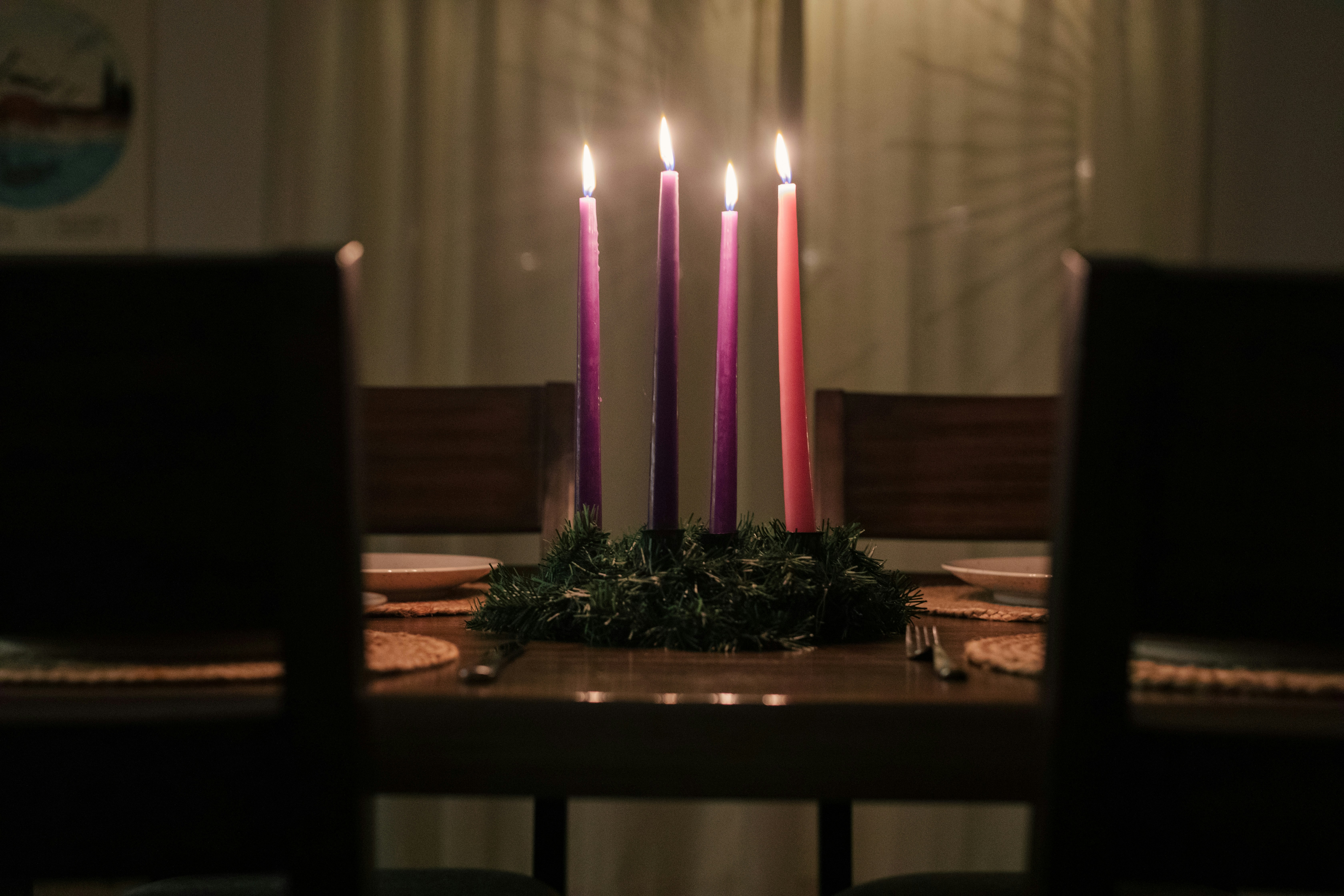
Photo by Grant Whitty on Unsplash

Readings for December 22nd:

  1. Micah 5:1–4a
  2. Psalm 80:2–3, 15–16, 18–19
  3. Hebrews 10:5–10
  4. Luke 1:39–45

What stands out to me from this week’s readings:

What stands out to me from this week’s readings is a theme of gathering together.

The first reading describes the Messiah coming from

Bethlehem-Ephrathah,
too small to be among the clans of Judah . . . .

and yet the passage says of "one who is to be ruler in Israel":

". . . the rest of his kindred shall return
    to the children of Israel.
He shall stand firm and shepherd his flock . . . 

and they shall remain, for now his greatness
    shall reach to the ends of the earth;
    he shall be peace. (Micah 5:1-4)

The passage strikes me as a movement from the individual to the society, from the seemingly insignificant to the infinite. We read about the Messiah first and the flock second, but the movement of the passage is really in the other direction. The passage predicts the Messiah drawing all people to himself.

While the Old Testament reading strikes me as being about how the people will move toward God, the psalm strikes me as asking God to move toward the people. It asks God to protect and to save the people.

The epistle says that Christ is the fulfillment of what the Old Testament reading and the psalm foretell and ask for.

In the gospel passage, we read about Mary and Elizabeth being gathered together. God draws Mary to visit Elizabeth, and Elizabeth is drawn to the sound of Mary’s voice, as is John. Why? Because Mary brings Christ to Elizabeth and John.

What someone else is sharing about this week’s readings:

Sarah Simmons, CSJ, is inspired by the readings for December 22 to reflect on the role of bodies in bringing Christ to the world — Elizabeth’s body, Mary’s body, my body, and your body.

What I’m saying (to the readings and beyond) this week:

For we are a people of the incarnation, we believe that Christ is within all of us, including you.  How do you long to express it?

Sarah Simmons, CSJ

This question is delightfully attention grabbing for me. I would have expected a similar question to ask what I should do, what the Holy Spirit is prompting me to do? But how do I long to express Christ within me? That feels like a different question with a different answer. Longing to express something is a different experience than being expected to express something. Both experiences feel familiar. And how authentic is the expression of something that I’m saying because I’m expected to. Am I expressing what I am only because I think I’m expected to? What is my answer to the question that was actually the end of the reflection?

I long to express the incarnation of Christ within me by helping to create spaces where people feel safe. In these spaces, they can be honest with themselves and each other. This honesty happens because they recognize the many ways their experiences and desires overlap.

I believe the way a space is arranged and decorated can allow experiences of safety and connection. This belief is why many forms of design and decorating interest me. I also believe that how stories —both fictional and nonfictional ones — are told is crucial. They are key vehicles for creating spaces that allow room for growth and connection.

I’m always longing to share my own story more fully and more effectively, and to help others share theirs. It’s my experience that the storytelling journey is never a linear one, and it requires cooperation and vulnerability. It requires wrestling with what to hold on to and what to let go of. It invites a person to ponder when to take advice and when to follow God’s voice within. It involves gathering people together. It also celebrates the uniqueness of every person. Participating in stories is an intimate activity. It takes members of crowds who may start as strangers and builds relationships between them.

This week’s prayer:

Lord, work through us so that we draw each other to You. Help us recognize Your presence within us and in each other. May we recognize the people around us bringing You to us. Thank You, Lord, for our fellow Christ-carriers. Gather us together. Lead us on the path to peace both within and around us. Amen

Work cited (but Not Linked to):

Confraternity of Christian Doctrine, Inc. “4th Sunday of Advent — Sunday 22 December 2024: Readings at Mass.” The New American Bible, 2001. Universalis for Windows, Version 2.198, Universalis Publishing Ltd., 13 Dec. 2024, https://universalis.com/n-app-windows.htm.

Read Full Post »

Photo by KaLisa Veer on Unsplash

Readings for December 8th:

  1. Zephaniah 3:14–18a
  2. Isaiah 12:2–3, 4, 5–6
  3. Philippians 4:4–7
  4. Luke 3:10–18

What stands out to me from this week’s readings:

I generally think of the readings for this season being about God’s people rejoicing because God is with them, drawing them close. I especially think this about the readings for the third week of Advent. Or I did until I actually read the passages.

This week’s first reading says that God rejoices in God’s people. The psalm reflects what I expect to read in this week’s readings. Together, the readings describe the relationship between God and God’s people.

The epistle describes how prayer strengthens that relationship. It’s a relationship that needs trust, openness, and gratitude to thrive. It’s a relationship that when nurtured, calms anxieties and prompts rejoicing. It’s a relationship that spreads its qualities to other relationships. The gospel passage supports this message about the effects of a relationship with God on relationships with others. It also reminds me that my relationships with others, and indeed, with all of creation, affect the strength of my connection with God.

The strength of God’s love never changes. In other words, God never stops rejoicing over us because we are not our sins and shortcomings. We’re God’s children, expressions of God’s love. Imagine the connection between a person and God like the connection between two phones. God is represented by one of the phones, and God never cuts off communication. Rather, it’s the phones of our minds, hearts and souls that often don’t receive the strongest signals.

What I’m saying (to the readings and beyond) this week:

The truth of everything I typed above is just sitting on the surface of my consciousness. Lord, let Your love permeate my being.

What someone else is sharing about this week’s readings:

What great wisdom in the Church’s tradition, to put a day for joy in this season of stillness, to remind us that joy comes when we slow down, when we accept silence and waiting and inactivity, and when we remember that everything good is a gift from God. Yes, indeed, Advent is a time for joy.

Kate Ward

Check out the full reflection on the readings for December 15th that includes this quote.

This week’s prayer:

Lord, help me experience and share Your joy. Amen.

Read Full Post »

Photo by Livin4wheel on Unsplash

This week’s readings:

  1. Genesis 22:1–2, 9a, 10–13, 15–18
  2. Psalm 116:10, 15, 16–17, 18–19
  3. Romans 8:31b–34 
  4. Mark 9:2–10

What this week’s readings say to me:

The message I first get from the first reading is that the one who withholds nothing from God receives blessings now and into eternity.

The message of the psalm is a challenge to trust God, especially when doing so is most difficult. Actually, the first and third readings issue this challenge as well. The third reading also asserts that God blesses and saves whomever trusts God. And the Transfiguration in the Gospel promises the same. It also reminds us who Jesus is, and who we are. When we listen to Jesus and show that we’ve been paying attention by following Him, we regain a clear perspective of who we are, the perspective that Jesus shared about himself and about us. When we live this perspective, acting as beloved sons and daughters of God, we’re family members connected by more than DNA or choice, and someday, neither time nor any other force will be able to limit the reach of our light or our love. This is a promise that runs through each of this week’s readings.

What someone else is sharing about this week’s readings:

Selena Ibrahim offers a reflection to help us apply lessons from the first reading to our lives.

Beyond this week’s readings:

I’m grateful to have access to Ms. Ibrahim’s perspective on the first reading, because I find the Old Testament passage disturbing. If someone today said God commanded the literal sacrifice of his or her child, even if the person later said God had stopped the sacrifice, people inside and outside religious communities would express certainty that God had not commanded the sacrifice. They’d say the parent was mentally ill and/or hearing the voice of Satan or a demon.

As with the actions attributed to God in last week’s Old Testament reading, it can be very tempting to smooth over the disturbing content and implications of the passage by saying that the Old Testament reading prefigures God the Father not withholding the sacrifice of his Son on the cross to save the rest of humanity.

But I can think of some differences between the two sacrifices. First, thankfully, in the first reading, God prevents the sacrifice, Second, Jesus is an adult who accepted the cross, not a child, as Isaac is in this week’s Old Testament passage. I see other differences as well, but I think I’ll save these observations for a future Palm Sunday reflection.

Both the crucifixion and the story of Abraham’s almost-sacrifice of Isaac inspire me to pray about violence. Especially on my mind is how these parts of Scripture present violence done in the name of God. I offer the following prayer:

Lord, grant us the grace to trust You to keep Your promises and the freedom to live in friendship with You. Help us to recognize the vulnerable among us. Guide us and to care for them and protect them. Guide us in discernment as we seek to do Your will. Deliver us from temptation and evil masquerading as Your will. Protect us from violence, especially violence that claims to be done in Your name, but only harms the people and other living things and resources that are most vulnerable in this world rather than protecting them. Amen.

Read Full Post »

Photo by David Brooke Martin on Unsplash

This week’s readings:

  1. Genesis 9:8–15
  2. Psalm 25:4–5, 6–7, 8–9
  3. 1 Peter 3:18–22
  4. Matthew 4:4b

What this week’s readings say to me:

This week’s readings remind me that neither suffering nor pleasure is eternal in the universe. Only God is eternal and all-powerful. Sin is rejecting that which gives life and treating something else as if it were eternal and all-powerful. The readings invite me to re-examine what the things I think, do, and say reveal about what I treat like God. The passages encourage me to step back from my routines, to start fresh, and to rearrange my priorities so that I treat only God as eternal, all-wise, and all-powerful. They propose that committing to a period of abstaining from something that, while not harmful, is also not necessary, can help me reorder my life and clarify and broaden my perspective. In other words, the readings propose spiritual decluttering for the sake of gaining that broader perspective and increased clarity.

This week’s readings also remind me that actions have consequences, but I don’t believe this reality means that God sends the consequences. Certain choices yield unpleasant results, but God can take those results and use them for good. I can also use my choices to practice self-control and to help avoid experiences that are more unpleasant than the temporary inconveniences that practicing self-control can entail.

What someone else is sharing about this week’s readings:

Diana Marin offers her perspective on what a spiritual desert feels like, means, and can provide.

Beyond this week’s readings:

The first reading communicates that a rainbow is a reminder of God’s promise never again to destroy the earth and almost everyone who lives on it with a flood. The psalm says that God is good, “shows sinners the way,” and “guides the humble to justice” (Psalm 25: 8-9). I have a hard time reconciling what the psalm says about God with the story about a massive flood that kills all but two of each species and one human family. My experience of the world around me and with what I’ve been taught tells me that people are made up of varying combinations of positive and negative traits. No one I’ve known has possessed either all positive traits or all negative ones. I’ve also been taught that everyone around me is created by God and loved by God, while also being vulnerable to temptation and sin. So wouldn’t Noah and his family have these characteristics too? I can imagine some arguing in response to this question that maybe Noah’s family asked for God’s forgiveness and others didn’t. Nobody outside of Noah’s family? Really?

I’m not actually bothered by these questions because I don’t view the first reading as a historical account. I think there was a massive flood because several cultures have passed down stories about it, but I also think it’s important not to be too literal about what the flood says about human nature and Divine nature.

The third reading offers a lens through which Christians can look at the flood and the rainbow that Genesis says followed it. I read the epistle as proposing that between His death and resurrection, Christ redeemed the victims of the flood, a comforting understanding to have after the resurrection and ages after that flood. Because of Christ’s total surrender to death and His victory over it, physical death is not final. Yet it’s important not to minimize that death is often painful for anyone touched by it in any way. Therefore, it’s important not to minimize the tragic nature of a massive flood, even as we look at such an event through the lens of Scripture passages written later, when understandings of God and how God interacts with the material world had evolved.

The third reading proposes that the flood prefigures baptism. It’s jarring to think of baptism as a flood that kills unjust people and establishes a new relationship, renewing promises to the people who come after the flood. The Good News is that the death of baptism isn’t a physical one. Neither is the other death, the death of selfish-centeredness I’m called to surrender to each day to keep my priorities from getting out of whack, to keep me from letting someone or something not God masquerade as God in my life.

Lord, every time I see a rainbow, remind me that my baptism was a death that inaugurated a new life, one stronger than weakness and physical death. Grant me the grace to keep returning to You, the Source of that life, to reignite the fire of Your eternal life within me. Amen.

Work cited

Confraternity of Christian Doctrine, Inc. “1st Sunday of Lent, Sunday 18 February 2024: Readings at Mass.” The New American Bible, 2001. Universalis for Windows, Version 2.185, Universalis Publishing Ltd., 29 Jan. 2024, https://universalis.com/n-app-windows.htm.

Read Full Post »

Photo by KaLisa Veer on Unsplash

This week’s readings:

  1. Isaiah 61:1–2a, 10–11
  2. Luke 1:46–48, 49–50, 53–54
  3. 1 Thessalonians 5:16–24 
  4. John 1:6–8, 19–28

What this week’s readings say to me:

This week’s readings remind me that we’re all called to be a mirror for the Holy Spirit, and like Jesus, to share the mind, the heart, and the eyes of God. We are called to use this mind, this heart, these eyes, and the rest of our bodies to do God’s work rather than to be a boulder the Holy Spirit has to go around. While each of our callings has what I just mentioned in common, none of us can know all that God knows, I see all that God sees, or can have compassion on all that God has compassion on. Unlike God, we’re limited — not omnipotent. We can’t be everywhere, do everything, and know everything all at once.

But this isn’t bad news. Rather, it points to the Good News. One way aspect of this Good News is that the limitations mean we need each other and God. Another aspect of this Good News is that, as Richard Rohr said, God’s nature is relationship, and as we are made in God’s image, we are made for relationships — with God and one another. We were made to depend on God and one another and, by being open to the movement of the Holy Spirit within us, to be dependable for God and each other. We are dependable for each other and God when we reflect the unique combination of God’s qualities that each of us is able to.

This week’s readings show how four different people will read with God so they can reflect Divine qualities in different ways. Perhaps the first reading demonstrates how two people do this. Through a prophet, this passage foretells what life will be like when God takes on a human existence and when God reigns over the “. . . new heavens and a new earth in which righteousness dwells” that we were promised in the third reading last week (2 Peter 3:13). In the second reading, Mary proclaims that despite her apparent insignificance in her culture, God has blessed her. God’s ways are not like human ways, and so she rejoices in who God is and what God and will do. In the fourth reading, John the Baptist reflects who God is by demonstrating humility, honesty, and an unflinching dedication to the mission God has given him. The readings themselves illustrate better than I can by just pointing to specific verses how Isaiah, Mary, John the Baptist and Jesus each invited the Holy Spirit to work through them in ways that are unique to who they are in the situations in which they find themselves.

Yes, I’ve skipped the third passage so forth because it doesn’t show us how a famous biblical figure invited God to work through him or her (except that the passage comes from a letter a letter attributed to Paul who is letting God work through him and reflecting God in a way that only he can by composing the letter). Instead, it instructs us in how to invite the Holy Spirit to work through us. It urges us to become a link in the chain of love, some other links of which we’ve met in the rest of this week’s readings.

No link in this chain is a copy of the others around it. It’s not a dull, rough restraint that rubs skin raw. I propose it’s more like a bracelet on which each charm or jewel is unique, each reflecting the light in a different way and reflecting a different, significant moment.

What someone else is sharing about this week’s readings:

Bridget McDermott Flood reflects on a theme given to the third Sunday of Advent every year — joy — and how to experience it.

Beyond this week’s readings:

This reflection from Jeff Cavins was released in response to last week’s readings. However, I heard it right before I looked into this week’s readings as I prepared to draft this post, and I heard influenced how I read this week’s passages. You’ll need to login to listen to the reflection, and even after you login, this particular session may not be available on the free version of the Hallow app. In case you are unable to listen to it without subscribing to the paid version of the app, the gist of Mr. Cavins’ message is that each of us is called to “Prepare the way of the Lord,” even though each of us may not be called to do so in the same way as the person next to us (Isa. 40:3).

When I hear “prepare,” I think of doing something, but I’m realizing how often changing my habits would involve not doing something. Yes, I say hurtful things, and a version of me in perfect union with God wouldn’t. But as I reflect on this blaming, these barbs, I realize that even they come from my wanting to make the pieces around me fit where I want them to, instead of accepting that I can’t make them fit.

Maybe I and the people around me aren’t connected like precious charms on a bracelet, but more like pieces of broken, yet beautiful differently colored pieces of glass that God brings together to form a beautiful picture. A few days ago, I saw a Christmas movie whose title I’ll only link to here so that anyone who wants to can avoid having me spoil its plot. For these readers, I just want to acknowledge that the plot of that movie inspired my colored-glass metaphor. In my life and in any life, the pieces are the shapes and colors they are. All I can do is accept the pieces as they are, let God polish the piece that is me, and seek where I fit best.

It’s difficult enough to seek where I belong in the mosaic and to let God polish me. I didn’t come up with the concept for the overall picture the picture or any of its elements, nor do I know what the whole picture looks like, so its components usually don’t connect the way I’d like them to, I feel frustrated and embarrassed that I can’t complete the picture as I would like because I can’t see the whole picture. I respond to these feelings by lashing out and making edges on the multicolored, reflective shards sharper and the gaps between them wider. I scatter the pieces, accomplish the opposite of what I want by trying to force what I want to happen, to make it take place when and how I want it to. What would do the most good is surrendering instead. In addition to the prayers I linked to last week, this prayer is one I find myself turning to for help with surrendering:

Take, Lord, and receive all my liberty,
My memory, my understanding
And my entire will,
All I have and call my own.
You have given all to me.
To you, Lord, I return it.
Everything is yours; do with it what you will.
Give me only your love and your grace.
That is enough for me.
Amen.

Prayer of St. Ignatius of Loyola

Lord, help me experience Your love and grace as enough for me. Help me to mean the words of the above prayer, trusting that when I offer the gifts You’ve given me back to You, You’ll remove any distortion caused by sin from them and they’ll do the good you intend them to do. Amen.

Work cited (but not linked to)

Confraternity of Christian Doctrine, Inc. “3rd Sunday of Advent, Sunday 17 December 2023: Readings at Mass.” The New American Bible, 2001. Universalis for Windows, Version 2.183, Universalis Publishing Ltd., 31 Oct. 2023, https://universalis.com/n-app-windows.htm.

Read Full Post »

Photo by Belinda Fewings on Unsplash

This week’s readings:

  1. Isaiah 56:1, 6–7
  2. Psalm 67:2–3, 5, 6, 8
  3. Romans 11:13–15, 29–32
  4. Matthew 15:21–28

What this week’s readings say to me:

This week’s readings say to me that God’s love knows no limits. It plays no favorites. It operates to the extent that trust in it allows it to operate. Therefore, because both the Canaanite woman in this week’s Gospel and Jesus trust in it, it works through both of them. No geopolitical border or cultural distinction can limit this love. Only lack of trust born of human frailty can.

But this week’s readings remind me that Good News can be found in the midst of this unfortunate reality. People’s egos and fears give God an opportunity to show just how boundless divine love is. When I see this love causing barriers to disappear, when I see it at work around me as it is in the Canaanite woman of this week’s Gospel, persevering in a life that reflects faith feels possible.

The third reading tells me Paul understands this relationship between love and growth. It’s why he has hope that the people who nurtured him, who taught him and with whom he studied and worshipped would come to reap the rewards of the covenant God had with them, even though his ministry had taken him far from them.

Lord, I ask you for this hope for myself and for the people in my life, especially for the people who have shaped and continue to shape me. I also ask that the people who seem furthest from me, the most different, also receive this hope, the hope that is the reassurance of God’s mercy. Amen.

What someone else is sharing about this week’s readings:

Prof. Margaret Susan Thompson reminds us that we ask God for mercy at every Mass. She also helps us understand the Gospel reading in light of the cultures that gave birth to it, as well as helping us find inspiration in the reading for the cultures in which we find ourselves today.

Beyond this week’s readings:

I told you I was eager to see where the Spirit would lead, and as you can probably tell based on the fact that the content of this post doesn’t relate to the book I recommended last week, that Spirit is already leading me somewhere I didn’t expect.

When I heard last week’s readings, I wished I had at least briefly written about what they said to me. They included some of my favorite passages. The readings were:

  1. 1 Kings 19:9a, 11–13a
  2. Psalm 85:9, 10, 11–12, 13–14
  3. Romans 9:1–5
  4. Matthew 14:22–33

The truth is, other commitments mean that I’m just not able to spend as much time working on this blog each week that I have in the past. This reality is the reason it makes sense not always to reflect on the weekly readings. I’m giving myself permission to publish posts that are influenced by the calendar. I still want to publish a post every week, but that may not always happen, and I need that to be okay with myself and with you. It means so much to me that you’ve taken the time to follow this blog, whether by subscribing or by checking in occasionally. Whatever interaction with this blog works for you, I’m glad that it does.

I’m wrestling with the relationship between acceptance and action in the spiritual journey. In future weeks, I may sometimes use God, I Have Issues: 50 Ways to Pray No Matter How You Feel by Fr. Mark Thibodeaux, as a guide in this process, or I may write about some quotations relating to the subject. I may also post my general reflection on Scripture readings, or I may link to someone else’s more developed reflection on them. Thank you for coming along with me while I work on keeping an open mind and heart about the ways we can find grace in this space on the web that we share.

Read Full Post »

“. . .whoever is angry with his brother will be liable to judgment . . .”

Jesus— Matthew 5:22
Photo by Rohan Makhecha on Unsplash

The verse above and the reading from which it comes, Matthew 5:17-37, is one of those that I have visceral reactions to and not pleasant ones. Until I make myself focus on inhaling and exhaling a few times, I feel suffocated by darkness. I can’t see a sliver of light, and I feel nothing I can grab onto to move forward. I experience temporary despair when I revisit verses like the one I’ve highlighted, they awaken my anxiety and depression like the slightest unusual sound that can startle me out of a sound sleep at night.

I suppose such passages are meant to jar anyone who receives them out of complacency, and they do that. But I find it difficult to see what to do long-term after the jarring. I confess my anger, resentments, and wounds, and mentally, I surrender them to God again and again. Yet anger, resentment, envy, and self-service are such a part of my heart. They cut through every layer of my being. These emotions feel like thorny weeds embedded in a soul that’s filled with concrete. As time passes, uprooting them feels more and more impossible. I feel disappointed in myself for letting poison spread in my own heart and from there the world around me over and over despite repeated and sincere intentions to spread healing and light.

When I heard Matthew 5:17-37 again this weekend, I thought maybe this was one of the weeks I’d link to someone else’s reflection. I didn’t want to spread despair. After all, even though truths can be difficult to share and to receive, I have faith that despair is not truth. I asked God where I could find hope and the truth in the midst of the weeds in my heart and on the hamster wheel of my mind.

Two answers came to me:

  1. Imagine your emotions as electricity, and rather than thinking you need to make them go away, ask God to help you channel them toward creativity and the service of love, rather than simply unleashing them with the result being that they electrocute everyone and everything around you (by “you,” I mean me).
  2. Don’t give up on inviting the gardener of your heart to tend it. Maybe to be alive means not to give up.

It’s easier to imagine #1 coming to fruition for someone else, thanks to an individual being personally affected by a societal wound. Mothers Against Drunk Driving came to my mind. The Wikipedia article about the organization says MADD: “was founded on September 5, 1980, in California by Candace Lightner after her 13-year-old daughter, Cari, was killed by a drunk driver. There is at least one MADD office in every state of the United States and at least one in each province of Canada. These offices offer victim services and many resources involving alcohol safety. MADD has claimed that drunk driving has been reduced by half since its founding.”

The article goes on to say that “[a]ccording to MADD’s website, ‘The mission of Mothers Against Drunk Driving is to end drunk driving, help fight drugged driving, support the victims of these violent crimes and prevent underage drinking'” (qtd. in “Mothers Against Drunk Driving”).

But then there are the experiences that make people angry, that hurt them, that aren’t obviously catastrophic. There are the deep-seated wounds in ourselves, and by extension, in our relationships. I wonder if it’s true that the longer we’ve known someone, the more power they have to hurt us, and the more power we have to hurt the other person. The injuries from these connections may be older and deeper. They may have festered almost as long as we can remember. Elements of them are probably relatable to most people, and yet other aspects of them are unique to the people and situations involved. (Actually, even high-profile traumatic events probably share this quality of being a mixture of painful universality and uniqueness)

As I’ve wrestled with Matthew 5:22 the last few days, I’ve been reminded of the importance of naming emotions and then sitting with them, of saying to myself and to God, “Okay, I’ve just had an experience or an encounter that’s stirred some intense feelings. What are they? Anger, resentment, disappointment, sadness. In the past, I’ve tried to label them and then go on.

But earlier today, I found myself repeating, “I’m angry and hurt. I really wish things were different. I felt a lot more peace and relief when I vented to myself and to God about the feelings rather than hoping that I could simply name them and expect them to go away. Once I had allowed myself this time of confrontation and release, I felt for a good while that Jesus was with me in this pain and that I was a tiny bit grateful to share Jesus’ pain. I prayed that my accepting this pain would do some spiritual good I can’t understand yet. I really did feel like God had helped me harness at least some of the electricity, though the harnessing took a different form than the one that firs occurred to me when I asked for help.

I know that all too soon, I’ll forget to invite God into my struggles. Maybe the key as soon as I realize I’ve forgotten, is to extend the invitation again, to reopen the gate to the garden of my heart repeatedly. Thank You, Lord, for whispering gentleness to my mind when I forget You are there and for knocking on the gate of my heart. Amen.

Works cited

The Bible. The New American Bible Revised Edition, Kindle edition, Fairbrother, 2011.

“Mothers Against Drunk Driving.” Wikipedia: The Free Encyclopedia, Wikimedia Foundation Inc. 28 Nov. 2022, https://en.wikipedia.org/wiki/Mothers_Against_Drunk_Driving.

Read Full Post »

Photo by Darius Bashar on Unsplash

“If anyone comes to me without hating his father and mother, wife and children, brothers and sisters, and even his own life, he cannot be my disciple . . . . In the same way, anyone of you who does not renounce all his possessions cannot be my disciple.

Luke 14: 26, 33

The message of Luke 14:26 sounds like one to which I’m inclined to respond, “Jesus, I don’t think you’re the one to follow after all. Hating someone, anyone, especially my parents seems like too much to ask of me and a bad idea. It doesn’t bring about good. And besides, it seems to break one of the Ten Commandments. As for Luke 14:33, I like my stuff a lot. Most of it, I’m never going to hate, so it would be disingenuous for me to pretend otherwise.”

Fortunately, to paraphrase my pastor, in using the word “hate,” Jesus is using dramatic, extreme language to get the attention of his audience and to make a point. In an effort to relate to this communication choice, I can’t help but think of a little kid saying after spending eight hours at an amusement park, “This is the best day ever!” When that person looks back on the trip as an adult, will he or she really recall that they as the best one ever? Maybe not. But the kid is making a point about the overwhelming enthusiasm he or she feels about the experiences of the day. Viewed in light of this analogy, Jesus’ point isn’t that we should hate anyone. It’s about how overwhelmingly he loves God and wants us to experience the same love. I think loving God means having an overwhelming love for doing good. It means, the pastor said, that we shouldn’t “let our possessions possess us.”

Accordingly, rather than thinking in terms of hating everything that isn’t God, I find it not necessarily easier but more attractive to think of the verses above in terms of not letting anything but God possesses me.

I find my phone useful, and I really like to play games on it, but I definitely don’t want to think of my phone possessing me, nor do I want to think of my parents or any other person owning me. I don’t want to own anyone either. I say, “This is my friend,” or “This is my sister. This is my niece.” to clarify how someone is connected to me, but I would be alarmed at someone treating another person in like an object he or she possesses. It would be wrong of me to try to control every move of someone I care about. To do so would be abuse.

To abuse anyone or anything won’t help me grow into the person God means me me to be. Instead, abusing anyone or anything will disfigure God’s image in me. It will draw me away from union with God because my energies will be devoted to hanging on as tightly as I can to the person or thing I’m abusing. My first and last thoughts each day may be about that person or thing. I won’t be free because of the tight grip that person or thing has on me, and I may not be able to appreciate and that person or thing as the gift that he, she, or it is. Instead, more than anything else that might matter to me I may fear losing what I abuse. I may want more and more of or from him, her, or it. The pursuit of him, her, or it may push aside whatever else matters to me. The pursuit will mean that I’m never at rest in God.

This isn’t the life God wants for me—or you. God created us to be free, even when it comes to our relationship with the Divine. It’s up to us to invite God into our lives, to ask God to fill us. God doesn’t take us by force.

Lord, help us recognize your presence and to invite you into our choices, so we can love as you love—in freedom and without the possessiveness that comes from fear. Amen

Work cited

The Bible. The New American Bible Revised Edition, Kindle edition, Fairbrother, 2011.

Read Full Post »