Feeds:
Posts
Comments

Posts Tagged ‘Ordinary Time’

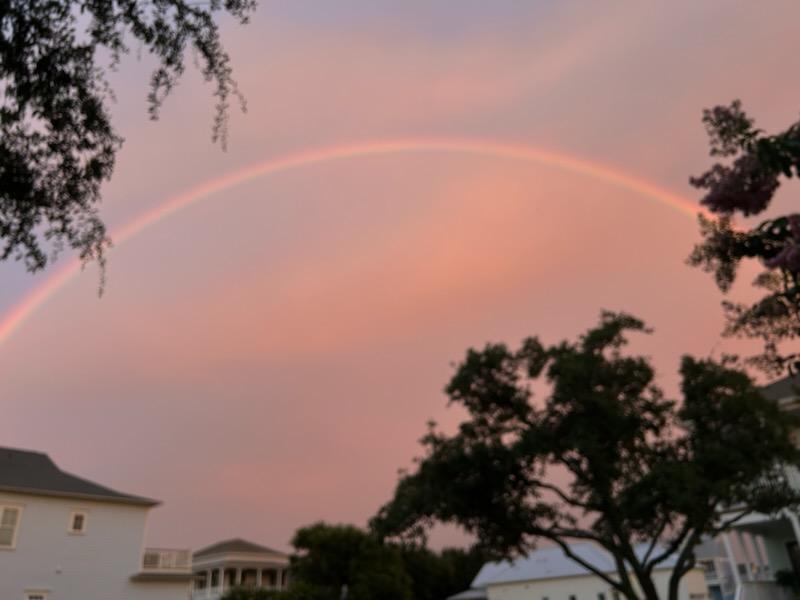
Photo by Sammie Chaffin on Unsplash

This week’s readings:

  1. Jeremiah 20:7–9
  2. Psalm 63:2, 3–4, 5–6, 8–9
  3. Romans 12:1–2
  4. Matthew 16:21–27

What this week’s readings say to me:

This week’s readings say to me that the room within me created for faith by humility and perseverance is not a comfortable space. It’s a space the Holy Spirit fills with its fire, and fire burns, and this fire cannot be contained. So it doesn’t let people who carry it be still in the place where they were before the fire sparked. People within whom it burns cannot help but move as it moves. They can’t help but spread it because their movement feeds it, and they give it room to spread. Spreading it means the next person who makes room for and fuels the fire can’t stay where he or she is either. As we witness this these effects of the spread, our inclinations toward convenience and self-preservation tell us to stop it. We don’t want to move. We don’t want to change. We don’t want to be different from earlier versions of ourselves or from the people around us. And we can’t stop these processes. We can increase our discomfort with the Spirit’s transformative power by resisting it, or we can find a peace that comes from freedom by accepting and participating in its transformative power.

The Good News is this transformative power. Its burning isn’t one that destroys but one that gives life. That life just won’t look the way our desires for convenience and self-preservation want it to because it changes us from the inside out and changes our relationship with our surroundings, including how we think about them, see them, and interact them. This change won’t let a person blend in, and the reading from Romans encourages us to ask for the grace not to want to blend in — at least not just for the sake of blending in. Any blending a person might do must be done for the Spirit. And any work done for the Spirit can only be done in cooperation with the movement of the Spirit.

The Gospel tells us not even to let fear for our lives get in the way of the movement of the Spirit. It says caving to such fear won’t save us, even though we may feel as if listening to fear will save us.

I used to think of this reading as being only about the importance of living faith and sharing it regardless of any risks that living it and sharing it might pose to my life. Of course, this is the literal message of the reading. However, I’ve come to want to apply it more broadly to life’s difficult situations. I wonder if my broader understanding will relate to someone else’s reflection on these readings. Let’s find out in the next two sections.

What someone else is sharing about this week’s readings:

These days, I interpret the Gospel reading as telling me “to be and to do what God calls [me] to be and to do,” as Dr. Phyllis Zagano says. Follow this link to read or watch her reflection on how Sts. Phoebe and Gregory did just that and how their stories relate to this week’s readings.

Beyond this week’s readings:

God called Phoebe and Gregory to bring the Gospel to others in word and action. We are called to do the same, though not always by using the texts and trappings of our faith.

There are people all over the world for whom living their faith costs them their freedom and even their earthly lives. I hope none of us seeing these words ever have to pay those prices.

But even if we never have to, each of us dies and finds life regularly, but if we don’t surrender to these smaller deaths, we miss opportunities to find life.

For me, as a person with anxiety and cerebral palsy, one of these smaller deaths can mean doing things my mind says are not safe to do, such as:

  • Joining a group with whom I might share an interest or a goal when I don’t know any of the members or when I don’t know how accessible the place where then be is going to be
  • Having the courage to be who I am and share my perspective when I don’t fit totally into one camp or another in a world that’s divided and subdivided into camps.
  • Having the courage to get to know someone whose experience is different from my own and may make me uncomfortable and encourage me to ask myself questions about my own views.
  • Not avoiding situations that remind me of difficult ones I have faced in the past. Please understand that with this example, I’m not advocating that anyone stay in abusive situations. I’m saying that there’s a difference between an unpleasant or uncomfortable situation and an unhealthy or unsafe one. I’m also saying that anxiety likes to lie to me and tell me that these two types of situations are the same. They aren’t.

I’ve also come to believe that losing my life to save it encompasses surrendering control and ideas of what I want various situations and people to be like. I think this is such a difficult thing for all of us to do. I don’t know whether the difficulty of doing this increases depending on how great a sense of independence a person is used to having or if the desire and frustration are equally strong regardless of a person’s circumstances.

Either way, I can think of a few different ways to express the ironic truth in this week’s Gospel passage:

  • However tightly I cling to life on earth I cannot make it last forever.
  • Surrounding myself with different types of walls or with metaphorical bubblewrap might save my body, for a time, but these actions won’t save my soul. In fact, they might kill it. Furthermore, a withering soul withers the body, eventually – in one way or another. (I’m pretty sure too much isolation and too few contacts are unhealthy for the body and the soul. And eating one’s emotions, an attempt at treating the pain of the soul, I’d say, can kill the body if it isn’t moderated.)
  • Staying alive is not the same as living; surviving is not the same as thriving.

Lord, help me neither to fear my death to earthly life, nor the precursors to this death that I face each day so that I can live in the freedom of the life you have planned for me. Amen.
Read Full Post »

This week’s readings:

  1. Isaiah 22:19–23
  2. Psalm 138:1–2, 2–3, 6, 8
  3. Romans 11:33–36
  4. Matthew 16:18

What this week’s readings say to me:

This week’s readings say to me that the power of faith comes not only from perseverance, as I was reminded last week, but also from humility. A person in with a humble mindset is able to trust even when he or she doesn’t understand a situation. Trust isn’t rooted in knowing all the details. It’s rooted in hope, and not speaking and acting on behalf of oneself but on behalf of God. Not speaking and acting on behalf of God as if we have God’s perspective — more like making room in and around us for God to speak and act through us, for it is God who “builds up strength within” us — if we allow the construction (Psalm 138:3). “For from him and through him and for him are all things” (Rom. 11:36). The “servant” in the reading from Isaiah understands this (Isa. 22:20). His understanding of this must be why God gives the trappings and responsibilities of authority to him, after apparently having removed it from someone people recognized as a leader (22:21-22)

From what I understand about Jewish culture when Jesus walked the earth, the family, friends, and community of the man eventually called Peter wouldn’t have seen spiritual leader material in him. Before Jesus called him, he wasn’t studying with a rabbi. He must not have been considered a skilled enough student to do that. He was working in his earthly father’s business. And yet, the Holy Spirit gives Peter the heart knowledge that Jesus is the Christ and gives him the grace, the humility, to acknowledge who Jesus is.

Outside of the grace of humility, he can’t acknowledge needing a Messiah — the Messiah — knowing him, or trusting in him. When Peter doesn’t have room for the gift of humility because his fear and/or pride crowds it out, Jesus doesn’t refer to him as “the rock on which [He] builds [His] church” (Matt. 16:18). Instead, Jesus tells Satan to “get behind” Him (16:23). At these times, he knows Peter is relying on his own mind to make sense of the world around him — not God’s — as the Holy Spirit allows him to do when his fear and pride don’t get in the Spirit’s way.

When he doesn’t start to think that his fear is more powerful is than God is, he not only can recognize Jesus as the Christ, but also he can walk on water, and he can share the message of Jesus’s ministry and his resurrection despite the risk to his earthly life, a life that he will eventually hand over as a result of the mission that Jesus gives him. It’s a mission that, thanks to the work of the Holy Spirit in him and his spiritual siblings and descendants, we can be bound together by what gives life and freed from what doesn’t.

What someone else is sharing about this week’s readings:

While this week’s readings spoke to me about humility as another fuel for faith, for the ability to recognize Christ, along with perseverance, Mary Margaret Schroeder invites us to explore how each of us recognizes Christ personally. She invites us to recognize Christ in our everyday experiences rather than by relying only on knowledge and ways of talking about that knowledge that have been handed down to us.

Beyond this week’s readings:

So who do I say Christ is:

  • the ultimate storyteller, the hero of that story, and the author of my story within that master story.
  • the One who walks ahead of me, beside me, stands behind me, and lives within me.
  • the One who carries me
  • The experience I have when I read a book and
    • relate to what we find there — pain, joy, fear, and every mixture of emotion
    • don’t relate to what I read, but what I read makes me appreciate what I have
    • long for the friendship, love, transformation, and growth I find there
  • the experience of driving alone in my neighborhood — not in a car, but in my wheelchair — and I feel the sun warming my neck, back, and shoulders. I feel the breeze, too, and I see roses blooming in front of my neighbors’ houses. Flowers spill over the brick retaining walls between the sidewalks and the streets.
  • the experience of my family and my neighbors throwing a surprise party for my birthday
  • the experience of wanting to say something that, at best, won’t help a situation, and might make it worse and actually succeeding in not saying it.
  • the experience of seeing a task through rather than putting it off for another day and instead playing games on my phone
  • the experience of not pretending to be somebody someone other than God wants me to be
  • The relief of being able to acknowledge to myself and God that I’m not the person God plans to love me into becoming, and yet experiencing that God loves me anyway

Now I have this list. Maybe I’ll revisit these memories when God feels distant. Maybe I’ll think of things to add to this list over time. Help me, Lord, Amen.

Who is Christ to you, personally? Maybe you’d like to journal or to pray about this yourself. Share your thoughts here, if you’d like.

Work cited

Confraternity of Christian Doctrine, Inc. “Sunday 27 August 2023: Readings at Mass.” The New American Bible, 2001. Universalis for Windows, Version 2.181, Universalis Publishing Ltd., 8 Aug. 2023, https://universalis.com/n-app-windows.htm.

Read Full Post »

Photo by Belinda Fewings on Unsplash

This week’s readings:

  1. Isaiah 56:1, 6–7
  2. Psalm 67:2–3, 5, 6, 8
  3. Romans 11:13–15, 29–32
  4. Matthew 15:21–28

What this week’s readings say to me:

This week’s readings say to me that God’s love knows no limits. It plays no favorites. It operates to the extent that trust in it allows it to operate. Therefore, because both the Canaanite woman in this week’s Gospel and Jesus trust in it, it works through both of them. No geopolitical border or cultural distinction can limit this love. Only lack of trust born of human frailty can.

But this week’s readings remind me that Good News can be found in the midst of this unfortunate reality. People’s egos and fears give God an opportunity to show just how boundless divine love is. When I see this love causing barriers to disappear, when I see it at work around me as it is in the Canaanite woman of this week’s Gospel, persevering in a life that reflects faith feels possible.

The third reading tells me Paul understands this relationship between love and growth. It’s why he has hope that the people who nurtured him, who taught him and with whom he studied and worshipped would come to reap the rewards of the covenant God had with them, even though his ministry had taken him far from them.

Lord, I ask you for this hope for myself and for the people in my life, especially for the people who have shaped and continue to shape me. I also ask that the people who seem furthest from me, the most different, also receive this hope, the hope that is the reassurance of God’s mercy. Amen.

What someone else is sharing about this week’s readings:

Prof. Margaret Susan Thompson reminds us that we ask God for mercy at every Mass. She also helps us understand the Gospel reading in light of the cultures that gave birth to it, as well as helping us find inspiration in the reading for the cultures in which we find ourselves today.

Beyond this week’s readings:

I told you I was eager to see where the Spirit would lead, and as you can probably tell based on the fact that the content of this post doesn’t relate to the book I recommended last week, that Spirit is already leading me somewhere I didn’t expect.

When I heard last week’s readings, I wished I had at least briefly written about what they said to me. They included some of my favorite passages. The readings were:

  1. 1 Kings 19:9a, 11–13a
  2. Psalm 85:9, 10, 11–12, 13–14
  3. Romans 9:1–5
  4. Matthew 14:22–33

The truth is, other commitments mean that I’m just not able to spend as much time working on this blog each week that I have in the past. This reality is the reason it makes sense not always to reflect on the weekly readings. I’m giving myself permission to publish posts that are influenced by the calendar. I still want to publish a post every week, but that may not always happen, and I need that to be okay with myself and with you. It means so much to me that you’ve taken the time to follow this blog, whether by subscribing or by checking in occasionally. Whatever interaction with this blog works for you, I’m glad that it does.

I’m wrestling with the relationship between acceptance and action in the spiritual journey. In future weeks, I may sometimes use God, I Have Issues: 50 Ways to Pray No Matter How You Feel by Fr. Mark Thibodeaux, as a guide in this process, or I may write about some quotations relating to the subject. I may also post my general reflection on Scripture readings, or I may link to someone else’s more developed reflection on them. Thank you for coming along with me while I work on keeping an open mind and heart about the ways we can find grace in this space on the web that we share.

Read Full Post »

Sara Fairbanks, OP, reflects through this week’s readings on love’s power to sustain us in the midst of fear and pain.

Yet pain can feel consuming and take so many forms – physical and emotional, yes. But emotional pain can be named more specifically. I tend to name it resentment, envy, anger, frustration, anxiety, and negativity-filled longing. These are the names I’ve learned to give my spiritual struggles. So that these struggles don’t overwhelm me, I need clarity, renewal, and strength the Holy Spirit can provide when I’m open to receiving these gifts.

I’m going to turn to Fr. Mark E. Thibodeaux’s God: I have Issues: 50 Ways to Pray No Matter How You Feel to shine the light of the Holy Spirit on the feelings I listed above. In doing so, I trust that with time and persistence, I will more often recognize light and love as more powerful than any emotion darkness tries to use to make me unable to recognize its opposite.

I also trust that making this book a companion to this blog for the time being will remind me to invite God into and recognize God’s presence in my pleasant, joyful, and simply routine experiences as well as my unpleasant ones.

Fr. Thibodeaux’s book is a guide to living and praying through the gamut of human emotions. Each chapter is dedicated to a different emotion or life experience and begins with a story from the author’s life about when he experienced or shared in someone else’s experience of that emotion.

After each introductory story, which is imbued with relatability and often humor. comes a long list of related scripture passages taken from both the Old and New Testaments.

After this list comes the “Prayer Pointers” section. I’ve consulted this book on and off for years, and while I’m not offering a professional perspective here, I would say that this section combines the wisdom of counseling, meditative, and pastoral approaches. Fr. Thibodeaux often suggests imaginative prayer and visualizations. This section also makes clear that the issues each chapter touches on are not resolved in one day. They are wrestled with in a healthy way by praying to be open to a shift in perspective and practice and by giving helpful habits a chance to become deeply rooted in daily life.

After the “Prayer Pointers” come inspirational or thought-provoking quotes. These are from sources other than scripture.

At the end of each chapter is a list of other chapters that might be related to the one I’ve just worked through. This section acknowledges that emotions are complex. (For example, grief can involve a mixture of sadness, anger, and guilt.) The index is also helpful when I’m not sure which chapter is most relatable to whatever I’m currently experiencing. In it I can look up experiences that weren’t used in the chapter titles.

Maybe in some future posts I’ll share a story of my own that the author’s story made me think of. Maybe I’ll share how his story got me thinking. Maybe I’ll reflect on one of the suggested scripture passages using approaches similar to those of used in the past. Or maybe I’ll share my experience with a visualization. Whatever happens, I’m eager to see where the Spirit leads and to hear what God has to tell me — and us.

Work cited

Thibodeaux, Mark E. God, I Have Issues: 50 Ways to Pray No Matter How You Feel, St. Anthony Messenger Press, 2005.

Read Full Post »

Photo by Elena Joland on Unsplash

That’s what the Transfiguration is, according to Julie Vieira, IHM, MA. Click here to read her explanation and reflection on this week’s Gospel passage.

The question I’m currently wrestling with, courtesy of the daily spiritual writing prompts from the Hallow app is:


Where do you need the light and grace of the Holy Spirit in Your life today? Write to yourself as if you are God. What does He tell you? What do you want to say back?

I’m going to copy these questions and paste them into a blank post, so I can begin using writing to reflect on them there. Perhaps you’ll find it helpful to reflect on this prompt and/or to journal about it along with me.

Read Full Post »

Photo by Ashin K Suresh on Unsplash

This week’s readings:

  1. 1 Kings 3:5, 7–12
  2. Psalm 119:57, 72, 76–77, 127–128, 129–130
  3. Romans 8:28–30
  4. Matthew 13:44–52

This week’s readings are about the value of wisdom, what wisdom looks like — and what it doesn’t look like. They tell me that wisdom means wanting to know right from wrong. It also means knowing that without God’s grace, I can’t know right from wrong. It means having hope because the ultimate form of the many forms this grace takes is that God was carried and delivered by a woman, entering personally into the human experience. God entered into the darkest parts of that experience, giving everything possible to those darkest experiences so the Light could overpower them. Nowhere the Light breaks through can remain as dark as it was before Light’s entry, and the more Light is allowed in, the more darkness is pushed out. The way I’m thinking about this in terms of Jesus is that once the Spirit had left his human body, suffering and death no longer had metaphorical fingers on God.

They still have fingers on God’s creation, but those fingers no longer have a chokehold on it because the darkness cannot be stronger than unfettered Light. Because Light’s now unfettered, it shines on all of creation — or it would if it could shine through everyone.

But we all block the Light in some ways; I know I do. My desire to have only what I want when I want it and nothing I don’t gets in the way of the light shining through me. This desire lets ingratitude and covetousness spread in my heart. From my heart, it spreads to my mouth and comes out as criticism and self-righteousness fueled by unchecked anger and resentment. Fears about not getting only what I want when I want also get in the way of me being a conduit for the Light.

Such desire and fear is selfishness. It’s the result of looking at myself, others, and God only through the lens of my own pain and my desire to avoid it. I can’t honestly say I’m willing to sell everything that seems to allow me to avoid it so that I can make room for the Kingdom of God that Jesus has purchased for me. I don’t honestly trust myself to protect the treasure of the kingdom that is within and around me. I’m not even sure I can honestly say I want to. But I know that I want to want to. So my prayer for this week is for the Spirit to give me true wisdom so that I can recognize in a personal, heart-based way what a treasure the Kingdom of God is. Amen.

I sense that I received one answer to this prayer before putting it into words here. I sense that I may find what I’m seeking by approaching this blog differently in the future. One part of my idea – we’ll see if it’s God’s idea too — is to post links to others’ reflections on the readings each Sunday after this one. I don’t mean to say that I envision this blog becoming merely a place where I post links to other people’s writing and videos. On the contrary, the other part of my idea is to make this blog a place where I journal and pray through what ever form of expression seems most meaningful at a given time.

I feel called to shift what I write here from being focused on interpretation and application to being focused on conversation with God and with you. I suspect I’ll find it helpful to use prayer journaling prompts as inspiration for some future posts here. I hope they’ll inspire me to ask questions and to listen to and look for God. I also hope my exploration will encourage you to explore with God too. I’m discerning that I need more time for this exploration.

Taking this time may mean posting links to weekly reflections from others here and sharing journaling prompts and responses of my own more or less often than I have posted so far. I don’t know which. How often I post will probably vary what I’m wrestling with or sitting with. I’m looking forward to this new approach, this approach of noticing how the Spirit moves within and around me and not being in a rush to interpret what I notice or to tie it up in a very defined bow. Join me on this new adventure of following where the Wind blows and seeking the Light within and at each end of every tunnel. Lead me, Lord. Help me to dive deeper into love of You and everything and everyone that You love. Amen.

Read Full Post »

In addition to Mary of Magdala, Mary and Martha of Bethany, the sisters of Lazarus have helped to shape the vision for this blog. Today, the Church thanks God for the gift of their example as well.

Dr. Shannon Sterringer shared this reflection about these siblings in April 2017.

Read Full Post »

Photo by MΛTΞ on Unsplash

This week’s readings:

  1. Wisdom 12:13, 16–19
  2. Psalm 86:5–6, 9–10, 15–16
  3. Romans 8:26–27
  4. Matthew 13:24–43

Last week, I wrote about how, being human, I have a tendency to turn flowers into plans that stunt growth. Either that, or I tend to expect weeds to be ugly, and when they aren’t, I let them choke growth. This week’s readings have more to say about these tendencies and how God responds to them. The readings also concerning the weeds I didn’t plant or allow to takeover and yet they still pop up in the fields and gardens of life.

Because I anticipate not having the amount of time this week that I’d normally have to work on this blog, I invite you to join me in being enriched by a reflection on this week’s readings from Sr. Erin McDonald.

I invite you also to join me in this prayer: Lord, I surrender the weeds within me to Your gardening. Thank You for your patience with me. Help me to extend this patience to the people and experiences in my life and to discern how to be just and merciful as You are just and merciful. Amen.

Read Full Post »

Photo by Mateus Souza on Pexels.com

In honor of Mary of Magdala, who I consider a patron of this blog, Sr. Antoinette Gutzler reflects on a command Jesus gives in my favorite scripture passage.

Read Full Post »

Photo by Flash Dantz on Unsplash

This Week’s Readings:

  1. Isaiah 55:10–11
  2. Psalm 65:10, 11, 12–13, 14
  3. Romans 8:18–23
  4. Matthew 13:1–23

I found myself conversing with what stood out to me in each of this week’s readings, and the conversation felt familiar. The familiarity wasn’t comfortable. It was boring, and the boredom I experienced in response to each reading was a bit anxiety-inducing.

Now that I’ve been writing this blog for a year and a half, I worry I’m the responding to these passages the same way I did the last time I wrote about each one here. And I want to receive and share new insights — for my own sake and for yours.

Nonetheless, I trust that the Spirit is working on me, in me, and through me even when I feel like I’m following the same old tracks and in doing so, may be getting stuck in the same ruts over and over.

The first reading reassures me:

my word shall not return to me void,
but shall do my will,
achieving the end for which I sent it.

Isaiah 55:11

This reading suggests that at least I can’t totally stop the ability of Love’s winds from re-forming creation, I said to myself as I read this verse. I can only force these Winds to choose a different tunnel. Yet when I interrupt their course, I miss out on being enlivened by them — maybe more often than I don’t miss out on this gift.

Fortunately, for me, God, I want to be the dirt in the second stanza of this week’s psalm, and I suppose I am. This isn’t as bad as it sounds. The stanza speaks to God as follows:

Thus have you prepared the land: drenching its furrows,
breaking up its clods,
softening it with showers,
blessing its yield.

Psalm 65:11

The question for me is, will I appreciate what it takes to break up or to avoid the unhelpful knots in my life, what the psalm characterizes as clods of dirt? Will I appreciate what it takes to soften what has hardened within me so that it can yield growth? Often not, because spiritual clods and hardness, like muscular hardness, develop over time and in uncomfortable, sometimes extreme conditions. Going through the softening process is no different. This process might mean taking a pounding, like meat that needs tenderizing. It definitely means experiencing rebirth and changing my world.

The concept of rebirth sounds nice. It sounds like a sudden shift, something that happens in between blinks, but the third reading’s characterization of the process provides a reality check. It says:

We know that all creation is groaning in labor pains even until now; and not only that, but we ourselves, who have the firstfruits of the Spirit, we also groan within ourselves as we wait for adoption, the redemption of our bodies.

Romans 18:22-23

This excerpt tells me that spiritual restoration is a process, a laborious and often painful one. It also tells me that I’m undergoing the process here and now, but I will also be undergoing it, in what, to me, is the future. To God, everything is happening now and all at once in a way I can’t comprehend.

Because I can’t comprehend not being bound by time, in the reading from Matthew, Jesus uses a parable to compare the process of spiritual growth to the process by which a crop grows — or doesn’t.

In the reading, Jesus gives an interpretation of the parable, and I’m grappling with how to apply this parable and its interpretation my life. I know that, to grow, a seed needs a certain depth of soil that isn’t too rocky for the plant to put down roots. It also needs room to grow. To me, this means the seed that is me needs a deep trust in God to grow. Having such trust would keep the often difficult conditions of life from stunting my growth. Reaching out to God in the midst of difficulties just might transform them from obstacles to opportunities. Spiritual fertilizers, I might call these experiences.

For me, the weeds in the parable are the distractions that take up time I could be using to love God, myself, and others as God loves me. Sometimes these distractions are unpleasant. They feel like the anxieties Jesus says the weeds represent. Other times, they’re harder recognize as weeds because they’re activities I enjoy and use to forget about feelings I don’t want to feel and to put off doing what I don’t want to do.

It’s useful for me to distract myself sometimes, to break myself out of a pattern of unhelpful thinking, a pattern of replaying unpleasant past experiences or of dreading a future experience that I anticipate will be difficult. But there are questions I know I’d benefit from asking myself about my favorite distractions:

  • How often am I turning to these distractions?
  • How long do the benefits I get from these activities last, and how satisfying are they? Can I do them in moderation, or do they leave me only wanting more?
  • How much time are these enjoyable activities taking away from activities that have longer-lasting benefits for me and others?
  • What activities with longer-lasting and broader benefits could I use instead to break myself out of unhelpful thinking? (For the record, no, memorizing comforting or inspiring Bible verses hasn’t served this purpose for me, though I’ve tried this approach and won’t rule out trying it again. Getting outside and/or getting exercise have helped.)
  • What do I want to avoid dealing with, and how much better have I felt in the past when I dealt with whatever I didn’t want to rather than distracting myself from it?

Lord, open the ears of my heart and mind to hear and listen to Your answers to these questions. Thank You for hearing me. Amen.

Work cited

Confraternity of Christian Doctrine, Inc. “Sunday 16 July 2023: Readings at Mass.” The New American Bible, 2001. Universalis for Windows, Version 2.180, Universalis Publishing Ltd., 29 June 2023, https://universalis.com/n-app-windows.htm.

Read Full Post »

« Newer Posts - Older Posts »