Feeds:
Posts
Comments

Posts Tagged ‘Communion’

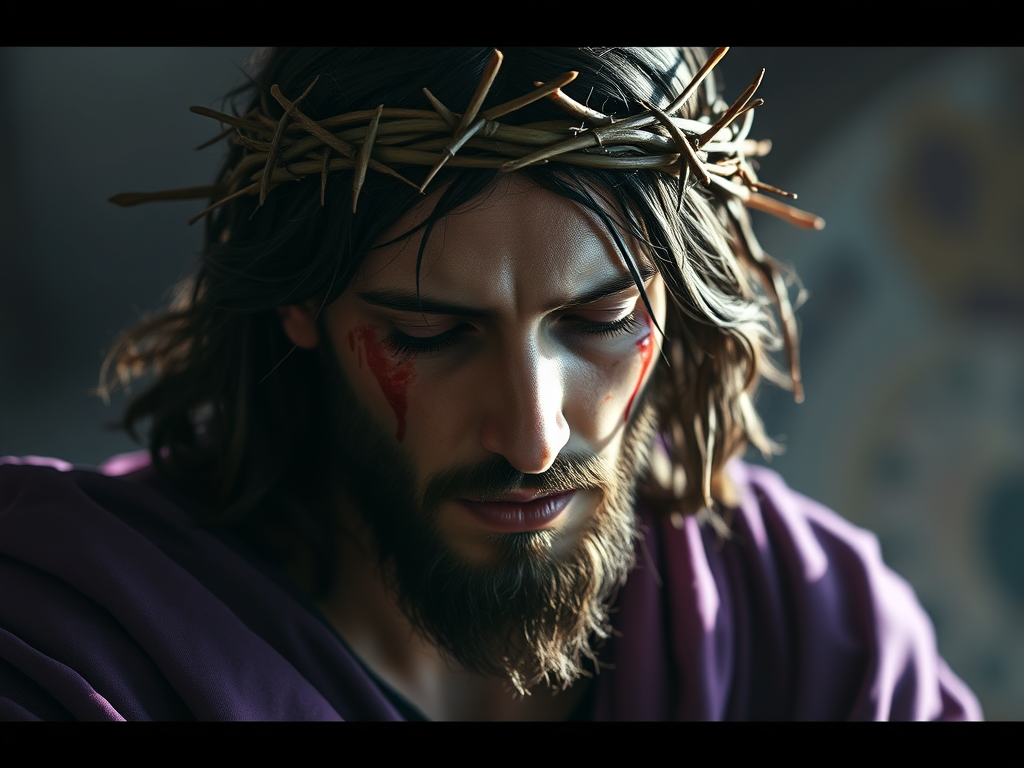
Image Generated by WordPress AI

Readings for November 24th:

  1. Daniel 7:13–14
  2. Psalm 93:1, 1–2, 5
  3. Revelation 1:5–8
  4. John 18:33b–37

What this week’s readings say to me:

In last year’s post for the Solemnity of Christ the King, I wrote about the name of the solemnity. The name highlights how difficult it is for humans to describe who God is. Despite this difficulty, we try to use language to describe who God is. By its nature as a human creation, language is limited and imperfect. And yet we have no other means but language to describe Someone who is both omnipotent and personal both the ultimate leader and the ultimate servant at the same time. So we give God a name that we would give to a powerful human leader — king.

Phrases and individual words stand out to me as I read the readings for the solemnity this year. And yes, I’ve heard many of these words used to describe a king. Why? What does the dictionary say these words mean? What do their definitions tell us about us and about God?

The words that stand out to me from the Old Testament passage are “like a Son of man,” “Ancient One,” and “dominion” (Dan. 7:13-14). The passage prefigures Christ, and the translation “Son of Man” highlights what Christ shares with us — Human nature. “Ancient One” points to what separates Christ from other men — His divinity. The combination of the two natures within Him gives Him dominion over everything. Miriam–Webster.com defines “dominion” as “supreme authority.” What do the other passages say about how He exercises this authority? What does it look like?

The word that first stood out from the psalm is “majesty” (Psalm 93:1 Merriam-Webster.com defines majesty as “impressive stateliness dignity, or beauty.” Merriam-Webster.com defines stateliness as “ marked by lofty or imposing dignity.” It defines dignity as “formal reserve or seriousness of manner, appearance, or language.” (And yet, books have been written about Jesus’ sense of humor as it is portrayed in the Gospels. Between Heaven and Mirth is one book that discusses the topic. It’s written by James Martin, SJ.)

Merriam-Webster.com defines dignity as also “the quality or state of being worthy, honored, or esteemed.” Additionally, the entry says dignity can mean “high rank, office, or position” or “a legal title of nobility or honor.” So majesty does carry associations with royalty, but it also carries associations with dignity and beauty. These are qualities each of us reflects in unique ways. Furthermore, in baptism, a person is anointed “[p]riest, [p]rophet, and [k]ing.” We use these titles to describe missions and ministries we share with Christ.

“Firm” and its synonyms also stand out to me from the psalm (93:2). God isn’t merciless and unyielding but does offer stability and is trustworthy.

The word that jumps out at me from the epistle is “firstborn”(Rev.1:5). It reminds me that God who is trustworthy and offers stability also offers constant renewal. God became one of us, suffered, and died to offer this stability and constant renewal. In His birth, His growth, His ministry, and His death, He showed us what we can become through Him. He offers us the gift of being reborn as priests, prophets, and kings.

The passage from Revelation recognizes Christ’s power and that that power has been shared with other human beings. It gives the power back to Christ willingly. The passage isn’t worded as if Christ has seized that power. Christ is Lord but doesn’t Lord over people.

Instead, He tells the truth and lives it. Nothing more, nothing less. He simply is who He has been, is and will be. It’s we who name things with our limited means. It is we who call Him king. The Gospel passage reinforces this message.

What someone else is sharing about this week’s readings:


When Jesus says, “everyone who belongs to the truth listens to my voice,” I think he’s asking for more than simple obedience and piety. He’s inviting us to create spaces of true belonging by connecting through shared stories and experiences. I believe he’s calling us, not just to spread his message through words, but to embody and live out his teachings in our actions and relationships. To belong to the truth is to form genuine connections, where love, empathy, and understanding bring the Gospel message to life in a way that reaches others deeply and meaningfully.

Olivia Catherine Hastie in her reflection on the readings for November 24th

What I’m saying (to the readings and beyond) this week:

Ms. Hastie says the above perspective “is best exemplified through the story of [her] adoption.” I encourage you to read more about that story here.

She concludes her reflection with these questions: What are your shared truths of belonging? And whom do you share them with?

Using Ms. Hastie’s examples as a guide, I’d say my “shared truths of belonging” are:

  • We all have lots of experiences with feeling like we don’t belong, with feeling rejected. Maybe many of us spend more time feeling like we don’t belong than that we do. Jesus did too.
  • We are all vulnerable, and this can be a difficult reality to come to terms with.
  • Each of us has different gifts and limitations. It’s helpful to recognize both.
  • Everything and everyone is interconnected, interdependent.
  • God loves everyone. Nothing anyone can do increases or decreases God’s love.

Whom do I share these truths with? You.

I considered not including this section in this post. Ms. Hastie’s concept of “shared truths of belonging” was difficult for me to reflect on. When I thought about this, I realized I spend much more time focusing on the ways I don’t belong. I spend less time considering the ways I do belong. I often feel like even my family is a collection of people with incompatible personalities and approaches to life. This perception bothers me. I have trouble letting my family members belong as they are. I pray to grow in the ability to be more accepting, and I would always appreciate your prayers.

I don’t think I’ll be posting on the readings for December 1. Or at least those readings won’t get their own post. I think I’ll make a combined post about the readings for December 1 and December 8. I’ll plan to post it before December 8.

We’ll see if the plan comes to fruition. It’s a busy time of year.

Between now and whenever I publish the next post, I want to focus on recognizing the “shared truths of belonging” in my life. I want to be present for others and for God.

I wish you and yours a happy Thanksgiving. This time of year can be one of joyful re-connection. I also recognize that it’s a very difficult time for so many people. My prayers are with you.

This week’s prayer:

Lord, Thank You for living, dying, and rising for us. Help us all to experience Your “shared truths of belonging.” Help us experience Your comfort and Your presence in times of loneliness and grief. Help us to work with Your graces to strengthen the bonds of the human family. Help us to see each other with Your eyes. Help us to build communities and societies that find their foundation in truth lived in love. Amen.

Work cited (but not linked to)

Confraternity of Christian Doctrine, Inc. “Christ the King — Solemnity — 24 Nov. 2024: Readings at Mass.” The New American Bible, 2001. Universalis for Windows, Version 2.195, Universalis Publishing Ltd., 29 Oct. 2024, https://universalis.com/n-app-windows.htm.

Read Full Post »

Photo by Josh Applegate on Unsplash

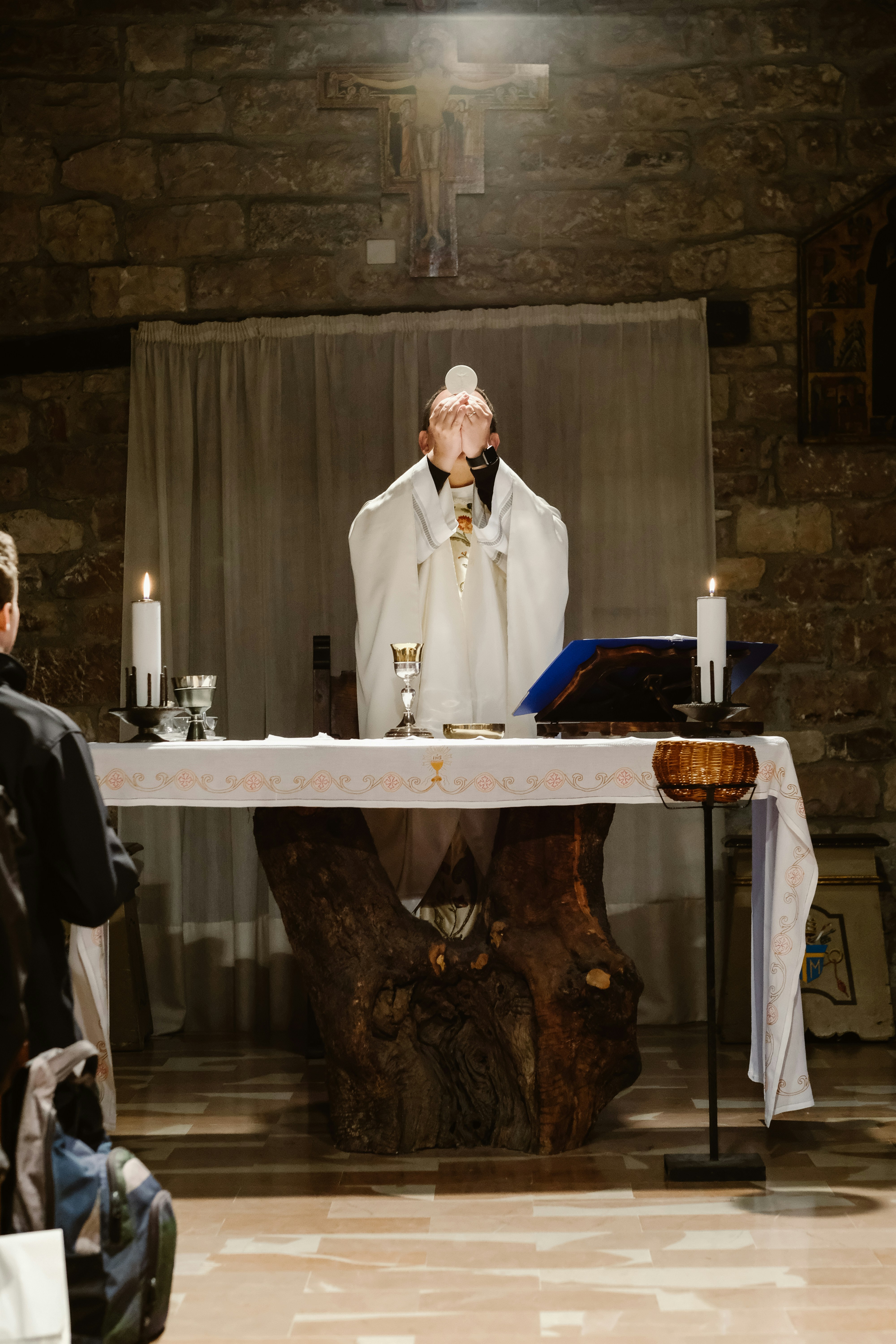
Readings for June 2:

  1. Exodus 24:3–8
  2. Psalm 116:12–13, 15–16, 17–18
  3. Hebrews 9:11–15 
  4. Mark 14:12–16, 22–26

What this week’s readings say to me:

The transition from spring to summer and the changes in schedules that it brings has invited me to be open to new routines. But I’ve never been naturally inclined toward this kind of openness, and this week has been no exception. It’s Saturday afternoon, and I haven’t worked on this post since I typed this week’s readings above a week ago. I’m short on time, so I’m going to write what’s been on my mind to write in honor of this week’s Solemnity of the Most Holy Body and Blood of Christ.

I’ve been thinking about this solemnity in light of last week’s solemnity, thinking that this weekend we celebrate the sacrificial love of the Trinity’s incarnation. It’s a love is willing to live for others to the point of suffering and dying for them. This death allows the sacrificial love of the Trinitarian God to take a different form, one I can see, touch, taste, and consume, even though I’m not living during Jesus’ earthly ministry.

Of course, I’m not the only one who can receive this gift. It’s been available to Jesus’ spiritual family members since the Last Supper—before Christ made His final sacrifice on the cross, and it continues to be offered and will continue to be offered until the end of time. The offerings of the Trinitarian God aren’t limited by time and space.

Yet these gifts are not merely abstract, spiritual, and mystical, though they can have all of these qualities. They’re tangible and consumable. These physical qualities allow the incarnate Trinity to become part of the physical body of anyone who takes and eats them. The physical forms of bread and wine allow us to receive the Body, Blood, Soul, and Divinity of the Trinity, and when we live lives that make our souls homes for these gifts, more and more, we become what we eat and carry it into the world around us.

What someone else is sharing about this week’s readings:

Sr. Julia Walsh. FSPA reflects on how this week’s solemnity reminds us that what’s ordinary is also sacred. She tells of times when this reality has been particularly palpable for her, times when she’s experienced it in communion with others.

This week’s prayer:

Lord, thank You for feeding me spiritually and physically. Restore in my body and soul a dwelling place for You so that You can be recognized in me, and I can do my part to heal the wounds in Your Body. I ask this in the name of the Father, and of the Son, and of the Holy Spirit. Amen.

Read Full Post »

Image generated by WordPress AI

This week’s readings:

  1. Acts 2:1–11
  2. Psalm 104:1, 24, 29–30, 31, 34
  3. Galatians 5:16–25
  4. Pentecost Sequence
  5. John 15:26–27; 16:12–15

What this week’s readings say to me:

What stands out to me about the first reading Pentecost is that the Spirit first draws Jesus’ earliest followers together for prayer. Then it pours gifts on each member of the group. These gifts prepare each person receiving them to share the gifts of the Spirit with other individuals. The Spirit gathers people together to set them apart, to prepare each of them to work with others and to do work that only each one of them can do.

The psalm recognizes that every resource and everything that lives is the work of the Spirit. Nothing exists without the Holy Spirit, though the work of this Spirit can be corrupted by other spirits that tempt us to actions that the Holy Spirit must work around instead of with.

The third reading, the epistle, reminds us that what we do says a lot about which spirit has the upper hand within us. The Holy Spirit is unselfishness in all its forms. It isn’t divisive, but the spirits, attitudes, and actions that oppose it are. The passage also tells us that the Holy Spirit can’t be contained. When we become vessels for it, it fills us up and spills out of us, sharing its fruits with the next person and then the next one and with the tasks we’ve been given. Come to think of it, the first reading also teaches the same lesson.

The Gospel passage reminds us that the Holy Spirit comes from God to dwell within us and among us because Jesus Christ is one of us and lives in union with the Holy Spirit and the Father, which are the active life force and its Source. Christ shares the Spirit with us so that we can live as children of God now and forever and continue to grow in our knowledge and experience of what it means to be children of God.

What someone else is sharing about this week’s readings:

This week’s readings help Maureen O’Connell reflect on what it means to be “a people” and by being “a people,” to evangelize. She also applies the Pentecost Sequence to our present moment in a powerful way.

Beyond this week’s readings:

Almost a year ago, in celebration of Pentecost, I linked to a musical adaptation of the Pentecost Sequence. It’s called “Come Holy Spirit.” Its music is composed and performed by John Michael Talbot. I find this music in these lyrics helpful for letting the words of the sequence sink in. Taking a look at one or the other of the sources linked in this section adds its context to the adaptation of the sequence included in Maureen O’Connell’s reflection.

This week’s prayer:

May my life reflect the fruits of the Holy Spirit: “love, joy, peace, patience, kindness, generosity, faithfulness, gentleness, self-control” (Gal 5:22-23). through the Father, the Son, and the Holy Spirit. Amen.

Work cited (but not linked to)

The New American Bible Revised Edition, Kindle edition, Fairbrother, 2011.

Read Full Post »

Photo by Paul Jai on Unsplash

This Week’s Readings:

  1. Zechariah 9:9–10
  2. Psalm 145:1–2, 8–9, 10–11, 13–14
  3. Romans 8:9, 11–13
  4. Matthew 11:25–30

I read the first two readings and thought it would probably be good for me to read and reread them and internalize their expressions of faith and praise. Maybe if I read them enough, their words would feel more like they could be my own. However, where is my mind is right now, it can embrace them as true but my heart hesitates to do the same, even as I recognize the justice of praising God even when the praise feels inauthentic coming from me. The third reading seems to present the ideal response to faith in another way that I’m discouraged by not living up to.

The Good News for me this week is the Gospel’s affirmation of my feeling that I can’t live up to the ideals of the first two readings. I’m not meant live up to the ideals on my own strength. The ideals aren’t even about doing the right things on my own or even thinking the right things or understanding difficult situations or concepts on my own. Jesus speaks to his Father in Matthew Chapter 11, saying, “I give praise to you, Father, Lord of heaven and earth, for although you have hidden these things from the wise and the learned you [italics mine] have revealed them to little ones” (25-26). Once I revisited this verse, it helped me see in a new light two verses from the third reading. They say:

If the Spirit of the one who raised Jesus from the dead dwells in you, the one who raised Christ from the dead will give life to your mortal bodies also, through his Spirit that dwells in you. Consequently, brothers and sisters, we are not debtors to the flesh, to live according to the flesh.

Romans 8:11-12

I don’t give life to myself. The Spirit “that raised Christ from the dead” and “dwells in me” will give life to [my] mortal body” (Rom. 8:11).

I tend to think of the mind as more closely related to the Spirit than to the “mortal body” or “flesh,” and to sinful actions, what Romans calls “the deeds of the body” (Rom. 8: 13). I don’t think I’m alone in having this dualistic perspective.

However, the reality is that what the mind does is as much the result of brain activity as anything else the body does, whether consciously or unconsciously. And the brain is part of the mortal body. It isn’t necessarily more spiritual than anything else the body does. To say this is not to say that the body is inherently opposed to the Spirit. Rather, the body, which includes the workings of the mind, is healed by the Spirit of the effects of sin. The Spirit restores to each person—each body, mind, spirit combination— to his or her unique way of reflecting God’s image each, provided that the person invites the Spirit in by joining him or herself to His Body.

Because of the doctrine of the Trinity and because of Scriptures that characterize followers of Christ as members of His body, I understand the Spirit’s body in three ways: as the body of Jesus, the body of an individual believer, and as the community of believers. I unite myself to him and become this body, inviting the Spirit to work in my life whenever I trust in these realities and when my life reflects this trust. It reflects this trust when I share the joys and the burdens of Jesus and others, and I find the humility and courage to accept the offers of Jesus and others to share my joys and burdens.

It’s this communion, not being able to handle or understand everything on my own that gives life. I make this statement not to minimize the acquisition of knowledge and expertise or the pursuit of moral and ethical behavior but to reiterate that no knowledge increases or decreases a person’s value from God’s perspective. An article by Guy Consolmagno and Christopher M. Graney inspires me to offer this reminder. It also provides thought-provoking analysis of the justifications humans throughout history have used for thinking and behaving otherwise.

Lord, don’t let me forget your unconditional love for me and for everyone else, indeed for all of Your creation. Don’t let me forget that Your wisdom and understanding is greater than human wisdom and understanding. Also don’t let me forget that though Your wisdom and understanding are greater than human understanding and wisdom, You have given me places and people I can go to for wisdom and support. Thank You for giving life to all of me and to all of Your creation. Amen.

Works cited

Confraternity of Christian Doctrine, Inc. “Sunday 9 July 2023: Readings at Mass.” The New American Bible, 2001. Universalis for Windows, Version 2.179, Universalis Publishing Ltd., 26 Feb. 2023, https://universalis.com/n-app-windows.htm.

Consolmagno, Guy and Christopher M. Graney “Reject the cult of ‘intelligence.’ You’re worth more than that.” America: The Jesuit Review, 29 June 2023, https://www.americamagazine.org/faith/2023/06/29/consolmagno-graney-cult-intelligence-245530.

Read Full Post »

Photo by Helena Lopes on Unsplash

This week’s readings:

  • Acts 2:42–47
  • Psalm 118:2–4, 13–15, 22–24
  • 1 Peter 1:3–9
  • John 20:19-31

As I rejoin Jesus’ first followers, they have been praying behind locked doors, huddling in fear. In their time with Jesus, they’ve experienced hope, joy, grief, and fear. These experiences are repeated and shared in Christian life, and indeed, in human life.1 Peter reflects this reality, acknowledging, “now for a little while you may have to suffer through various trials, so that the genuineness of your faith . . . may prove to be for praise, glory, and and honor at the revelation of Jesus Christ,” the perfect union with others in Him that is Heaven (1 Peter: 7). This union in its fullness won’t be revealed now, but is “ready to be revealed in [that] final time” (1 Peter: 5).

There are times, even prior to that perfect union, when the pouring out of Divine Love becomes apparent in overtly supernatural ways. One such occasion is when Jesus comes through that locked door into the room where the apostles are praying and breathes the Holy Spirit onto them. (To read a story based on John’s account of when the apostles received the Holy Spirit, follow this link to a post I wrote around this time last year.) Another comes later in the same chapter when Jesus comes again through the locked doors and shows Thomas his wounds (John 20: 26-28).

The other account of the descent of the Holy Spirit is in Acts. In Acts 2:4-11, The Spirit allows the apostles to speak languages they haven’t previously known. In my my imagination, they not only speak these languages but do so enthusiastically, animatedly — to the point where observers think they must be drunk (Acts 2: 13).

But they aren’t. What’s happened is the Holy Spirit has given the disciples what they need to fulfill their calling. They have new skills and greater understanding of what they’ve experienced. The Holy Spirit has replaced their grief and confusion with faith, joy, and generosity. The reading from Acts tells me, “All who believed were together and had all things in common; they would sell their property and positions and divide them among all according to each one’s need” and that “[e]very day they devoted themselves to meeting together in the temple area into breaking bread in their homes” (Acts 2: 44-45). The reading adds, “They ate their meals with exultation and sincerity of heart, praising God and enjoying favor with all the people” (Act 2:46-47). This description doesn’t paint a picture of a reserved or sedately appreciative people. These people are overflowing with qualities that draw others to their community.

I read that “many signs and wonders were done through the apostles,” but it stands out to me that I read this after I read that the first Christians “devoted themselves to the teaching of the apostles . . . to the communal life, to the breaking of the bread and to the prayers” (Act 2:42-43). It’s after I read this summary of what early Christian life was like that I’m told “Awe came upon everyone, and many signs and wonders were done through the apostles” (Acts 2:43) The passage doesn’t focus on these “signs and wonders” (Acts 2:43). Instead, it focuses on the wonders that come forth from the soil, along with the gifts of generosity, sincerity, faith, community, and joy. These qualities are just a few of the facets of God’s mercy. It isn’t made visible only through a single supernatural event. It “endures forever”(Psa. 118:4). It works in acts of sincerity, faith, gratitude, generosity, and joy and has immeasurable power to bring people along on a journey toward God.

Lord, I ask that the gifts of your Holy Spirit shine forth from me and from the communities in which I share so that they may draw everyone to You. Amen.

The Bible. The New American Bible Revised Edition, Kindle edition, Fairbrother, 2011.

Confraternity of Christian Doctrine, Inc. “Sunday July, 2 2023: Readings at Mass.” The New American Bible, 2001. Universalis for Windows, Version 2.179, Universalis Publishing Ltd., 26 Feb. 2023, https://universalis.com/n-app-windows.htm

Read Full Post »

Photo by charlesdeluvio on Unsplash

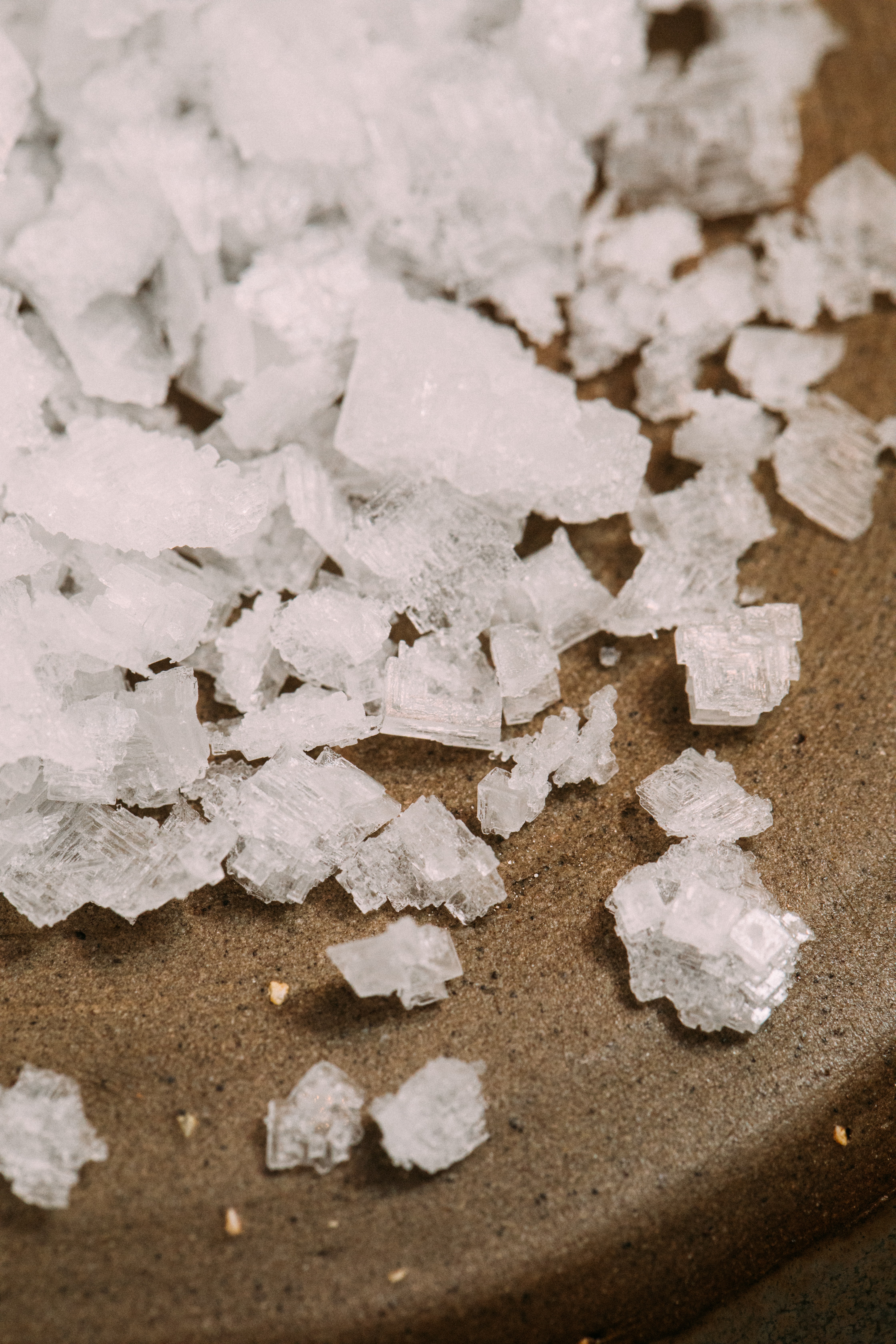
Jesus said to his disciples: “You are the salt of the earth. But if salt loses its taste, with what can it be seasoned? It is no longer good for anything but to be thrown out and trampled underfoot.

Matthew 5:13

I am the salt of the earth. Hearing this, I’m inclined to wonder if a little bit of me goes a long way. Am I overpowering if someone relies on me too much? Does too much of me contribute to high blood pressure? Undoubtedly, the answer to these questions is sometimes “yes.”

But I don’t think salt had these associations for people in Jesus’ time. Wikipedia’s entry, “Salt in the Bible,” says salt is used in the Scriptures “signify permanenceloyaltydurabilityfidelityusefulnessvalue, and purification . . . . Salt was widely and variably used as a symbol and sacred sign in ancient Israel Numbers 18:19 and 2 Chronicles 13:5 illustrate salt as a covenant of friendship. In cultures throughout the region, the eating of salt is a sign of friendship.” (Yes, I know Wikipedia is not a foolproof source of information, but I’d like to be able to make this post available to you sometime this week.)

Before embarking on this post, I was aware that humans have used to salt as a preservative for a long, long time, so it makes sense to me that, especially before the advent of refrigeration, salt would be associated with permanence, durability, usefulness, and value. The association with fidelity also makes sense in that food must be preserved to remain what it is.

The human body needs salt to function properly— just not as much as many of us put into our bodies. An article from Harvard’s T.H. Chan School of Public Health reports:

The human body requires a small amount of sodium to conduct nerve impulses, contract and relax muscles, and maintain the proper balance of water and minerals. It is estimated that we need about 500 mg of sodium daily for these vital functions. But too much sodium in the diet can lead to high blood pressure, heart disease, and stroke. It can also cause calcium losses, some of which may be pulled from bone. Most Americans consume at least 1.5 teaspoons of salt per day, or about 3400 mg of sodium, which contains far more than our bodies need.

“Salt and Sodium” — The Nutrition Source

An article from the Department of Health, State Government of Victoria, Australia adds:

Some people believe that salt needs be replaced during hot weather or strenuous exercise to avoid muscle cramps. This is not correct. What you need to replace is water.

The human body can happily survive on just one gram of salt a day, as hormones keep a check on sodium levels and make adjustments for hot weather. A genuine sodium shortage brought on by hot weather or exercise is extremely rare, even among hard-working athletes.

The muscle cramps that sometimes follow a bout of sweating are due to dehydration, not lack of salt. To prevent cramps, drink plenty of water on hot days and before, during and after exercise. This will also help to even out the water–sodium ratio in the body.

“Salt” — Better Health Channel

When salt is used judiciously, when one might say it’s treated like it has value rather than used carelessly, it brings out the best not only in our bodies but in our food. It enhances other flavors rather than overpowering them. Maybe the ability of salt to have a positive effect on other flavors is good to remember as we seek to have healthy relationships with the people around us. Our call and our challenge is not to take charge all the time but to journey with one other and to work on building communities that bring out and benefit from the best qualities of their members.

I’m sorry to say I don’t always bring out the best qualities in the people around me. Why? Because I’m not the pure salt. A footnote in my Bible says the following: “The unusual supposition of salt losing its flavor has led some to suppose that the saying refers to the salt of the Dead Sea that, because chemically impure, could lose its taste” (Mat. 5:13n).

The website Natural Pioneers has this to say about Dead Salt’s limited effectiveness for flavoring food: “Dead Sea Salts are made up of about 60% magnesium and potassium, 8% sodium and some rare minerals. . . .While a small percentage of extracted Dead Sea salts are washed and processed to edible salt, the majority is not” (Dead Sea Salts Vs. Sea Salt Are They The Same? [Studies]).

Lord, help me to come to You so that You can wash me. Refine me into the pure salt You created me to become. Grant me the grace to treat others as my valued brothers and sisters rather than carelessly. Help me to cooperate with those around me to flavor our surroundings with Your Love. In other words, grant me the grace to be salt for the world but not salty. Amen.

Works cited

The Bible. The New American Bible Revised Edition, Kindle edition, Fairbrother, 2011.

Natural Pioneers. “Dead Sea Salts Vs. Sea Salt | Are They The Same? (Studies).” 2023, https://naturalpioneers.com/dead-sea-salts-vs-sea-salt/.

“Salt.” Better Health Channel, Department of Health, State of Victoria, 23 June 2022, https://www.betterhealth.vic.gov.au/health/healthyliving/salt.

“Salt in the Bible.” Wikipedia: The Free Encyclopedia, Wikimedia Foundation Inc., 13 Oct. 2023, https://en.wikipedia.org/wiki/Salt_in_the_Bible.

“Salt and Sodium.” The Nutrition Source, Harvard T.H. Chan School of Public Health, The President and Fellows of Harvard College, 2023, https://www.hsph.harvard.edu/nutritionsource/salt-and-sodium/.

Read Full Post »