
Feeds:
Posts
Comments

Archive for the ‘Easter’ Category

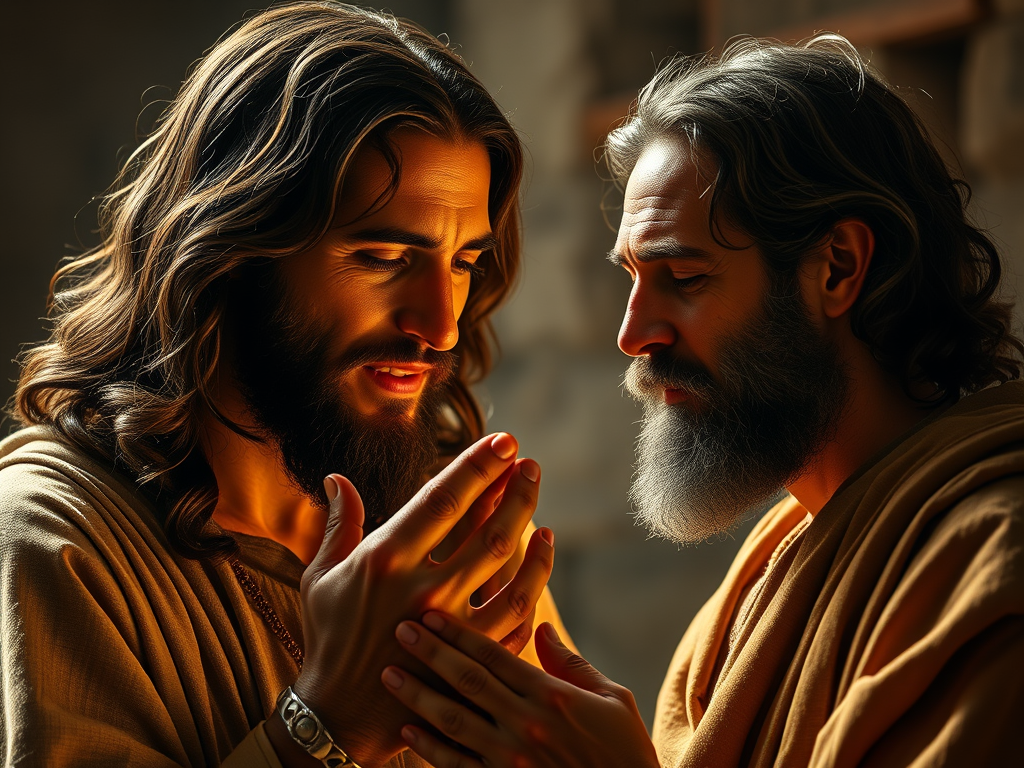
Image Generated by WordPress AI

Readings for May 4, 2025:

All in one place:

https://bible.usccb.org/bible/readings/050425.cfm

In the context of each Bible book:

  1. Acts 5:27-32, 40b-41
  2. Psalm 30:2, 4, 5-6, 11-12, 13
  3. Revelation 5:11-14
  4. John 21:1-19 

What stands out to me from this week’s readings:

In the gospel for May 4, Jesus calls the apostles, including Peter, “children” (John 21:5) as if they are elementary school students, and he’s the teacher. In the previous chapter, he called them “brothers” (John 20:17). What’s the reason for the difference? Well, maybe this video reflection with Jeff Cavins and Jonathan Roumie provides an answer. In going fishing, the apostles try to go back to where they started, as if they haven’t seen the empty tomb, as if they haven’t seen Jesus alive at least twice.

What I’m saying about the readings:

So if you still struggle to have faith and hope, if you’re tempted to give up, if it’s ever taken you a lot of study and a lot of mistakes before you learned or accepted something, you’re in the company of the apostles in the Gospel passage for May 4. And you haven’t seen Jesus the way they do in the passages that come before this one.

What someone else is saying about this week’s readings:

Jenny Jackson poses to us the question Jesus poses to Peter in the Gospel for May 4. I need time to reflect on the answer to this question. I trust that taking this time will allow the Holy Spirit to give to me what Jenny Jackson wanted during the time she describes in her reflection. Okay, so I don’t entirely trust, but I trust enough to declare my intention of trusting, of being open.

What I’m saying that doesn’t have to do with the readings:

As I’ve written so often here, I may not post next week. In fact, unless something surprising happens, I won’t. I feel like I’m just going through the motions on this blog lately. I do want to acknowledge that going through the motions when one doesn’t feel like it often has value. It builds perseverance. And I believe in a God who works behind the scenes and under the surfaces of life.

But I also read on another blog recently about prioritizing quality over quantity. That’s what I want to do. I’m seeing that the post on this blog that gets the most views is one that when I wrote it, I felt I had an insight to share that I wasn’t seeing in a lot of other places. Most weeks, I don’t feel that way. Most of my posts get one or two views.

Writing this blog has helped me appreciate in a new way the work that preachers and spiritual writers do. It’s quite a challenge to keep stories and messages that are so familiar feeling fresh and resonant. The challenge feels like an even greater one to face every week, as so many spiritual leaders do.

Now I’ve never published this blog to get followers or to go viral. I’ve always said that if what I write here resonates with one other person, it’s worth doing. And sometimes it has helped me feel like I’m getting my perspective out there in a world where it feels like homilies mainly have non-disabled married people with kids and without mental health struggles as their target audience. Other times, I’ve felt sure that despite my original vision for this blog, I’m not reaching spiritual seekers who may feel invisible in many spiritual communities. I’ve felt like I’m not really engaging with the texts, not bringing myself as I am to them.

So what now? I’ll tell you what I’m not doing. I’m not deleting this blog. Therefore, if there are posts that resonate with you, I want to let you know they aren’t going anywhere. I’m just going to come back to this blog when I have something I really need to share. As I was bothered by something yesterday and praying this morning, I got a couple ideas for spiritual essays. I may develop these ideas at my own pace and share them here if and when I’m ready.

I plan to journal whenever I feel prompted to and not put any pressure on myself to share what I write in my journal. Maybe this low-pressure practice will also generate writing I want to share here.

This week’s prayer:

Come, Holy Spirit! Bring my heart to life with Your love. Help me recognize it everywhere. Show me how to use the gifts You gave me to share it. Amen.

Works cited:

Cavins, Jeff, and Johnathan Roumie. “Holy Land: Easter Sunday.” Hallow, 20 Apr. 2025, hallow.com/prayers/1077275/.

Jackson, Jenny. “Third Sunday of Easter: May 04, 2025.” Catholic Women Preach, FutureChurch, 2025, www.catholicwomenpreach.org/preaching/05042025.

“Third Sunday of Easter — Lectionary: 48.” Daily Readings, Lectionary for Mass for Use in the Dioceses of the United States, Confraternity of Christian Doctrine, 2nd typical ed, United States Conference of Catholic Bishops, 2025, https://bible.usccb.org/bible/readings/050425.cfm.

Read Full Post »

Readings for

All in one place:

https://bible.usccb.org/bible/readings/042725.cfm

In the context of each Bible book:

  1. Acts 5:12-16
  2. Psalm 118:2-4, 13-15, 22-24
  3. Revelation 1:9-11a, 12-13, 17-19
  4. John 20:19-31

What stands out to me from this week’s readings:

We read more than once in this week’s Gospel that the disciples find Jesus in their midst, even though they’re behind locked doors. It also stands out that Jesus greets the disciples by saying “Peace be with you” and by showing them his wounds.

What I’m saying (about the readings and beyond) this week:

About the Readings

It’s as if Jesus is saying,” Don’t be afraid. It’s me. I’m here with you, and nothing can stop me from being with you now. I’ve gone to battle with everything that pushes you away from me. I won. See these wounds? They’re an everlasting reminder of my victory over suffering and death. This victory gives new meaning to your suffering and death. United to mine, your suffering will transform you. Like me, you’ll be someone new. And you’ll be that someone because of what you went through — what we went through — before.”

And beyond

We’ve lost, in Pope Francis, someone I would call the world’s pastor. From what I’ve seen, this is true, to some extent among people of various beliefs.

And here we are in the Easter season. Face tells me that the Easter he is experiencing now is different from the one that I’m experiencing. And my Easter share similarities and differences with the Easter you’re experiencing. You may not be experiencing the emotions you think of when you think of Easter. I’m not. I’m sad and uncomfortable with the unknowns the Church and the world faces. I grieve because of the many forms of violence (greed and selfishness, for example) and loss in the world.

Last Sunday’s readings and this Sunday’s readings tell me the experiences of Jesus’ followers on the first Easter were no different. They tell me the cross and the resurrection are two sides of the same coin. And neither experience is something only Christ goes through. Rather, we all share in both experiences again and we can’t have one without the other. When we have both, nothing can separate us from each other and from God — no suffering — not even death.

Still, sometimes a living sense of communion is hard to perceive on the earthly side of life. Jesus and his first spiritual family members understand that as well as anyone.

What someone else is sharing about this week’s readings:

In Marissa Papula’s reflection for Divine Mercy Sunday, she explores how trauma and healing can coexist. She unpacks how the gospel passage for this week illustrates this coexistence.

This week’s prayer:

Jesus, help us to see You and to touch You in our midst despite any obstacles to being enlivened by Your presence. Renew us to do Your work in the world, and bring us to rest together with You and all Your beloved departed in eternity. Amen.

Works cited:

“Second Sunday of Easter, Sunday of Divine Mercy — Lectionary: 45.” Daily Readings, Lectionary for Mass for Use in the Dioceses of the United States, Confraternity of Christian Doctrine, 2nd typical ed, United States Conference of Catholic Bishops, 2025, https://bible.usccb.org/bible/readings/042725.cfm.

Read Full Post »

Image Generated by WordPress AI

Readings for the Resurrection of the Lord:

All in one place (well, almost):

https://bible.usccb.org/bible/readings/042025.cfm

In the context of each Bible book:

  1. Acts 10:34a, 37-43
  2. Psalm 118:1-2, 16-17, 22-23
  3. Colossians 3:1-4 or 1 Corinthians 5:6b-8
  4. John 20:1-9
  5. See also John 20:11-18

What stands out to me from this week’s readings:

Peter refers to himself as one of the few people chosen in advance to be witnesses to all Jesus did in his earthly life and after His resurrection. These few witnesses have been given the responsibility and the grace to “bear witness that everyone who believes in [Christ] will receive forgiveness through his name” (Acts 10:43).

“‘[The Lord’s] mercy endures forever'” (Psalm 118:2-4).

There are two choices of epistle readings. The second option tells us to “clear out the old yeast… of malice and wickedness” and “celebrate the feast” … with the unleavened bread sincerity and truth (1 Cor. 5:7-8).

In the gospel passage we’re given for Easter Sunday, Mary of Magdala doesn’t yet understand that Jesus is risen. She tells the disciples, “They have taken the Lord from the tomb, and we (the women who went to pay their respects at the tomb) or they put him” (John 20:2).

In response, Peter and another disciple run to the tomb, and the disciple who is not Peter gets there first, yet Peter goes into the tomb first. He sees the burial cloths but not the body of Jesus. We aren’t told much about what he makes of this discovery. We are told that the other disciple sees the burial cloths, which are apparently neatly set aside separately from each other, and believes. What the disciple believes we aren’t told. I find the question of what he believes even more perplexing because of the last sentence: “For they did not yet understand the Scripture that he had to rise from the dead” (John 20:9).

What I’m saying (about the readings and beyond) this week:

So if you’re wrestling with doubt and/or confusion this Easter, you’re in the company of more than one disciple.

If you’ve arrived at this Easter and are still clear[ing] out the old yeast of sins, habits and wounds, the second option for the epistle is a reminder that the journey to union with Christ and the members of his body is a lifelong one. It doesn’t end this Easter. Otherwise, we wouldn’t need the exhortation to “[c]lear out the old yeast” (1 Cor. 5:7).

If you’re bothered because the first reading refers to “witnesses chosen by God,” but the disciples in the Gospel passage for Easter Mass during the day don’t see the risen Lord, you’re not alone. I’m with you (Acts 10:41).

Now right after the Gospel excerpt for that Mass ends, Mary of Magdala does see and speak with Jesus, who is risen. The passage that describes this encounter is my favorite in the Bible. It’s more detailed than many passages. It’s easier with this passage than with many others to use my imagination to engage all five senses in the scene it describes. For me, it conveys confusion, grief, tenderness, and intimacy in a way that few other Gospel passages do. In the Gospel of John, it’s because of, or at least after, this encounter between Jesus and Mary Magdalene that other disciples become chosen witnesses of Christ’s resurrection. That’s why, although this encounter isn’t included in the lectionary until the Tuesday after Easter, I’ve linked to it at the top of this post. Several years ago, I also wrote this short story based on the passage.

What someone else is sharing about this week’s readings:

Dr. Cynthia Bailey Manns offers her own celebration of Mary Magdalene’s love for Jesus. She powerfully conveys the importance of this love in salvation history. I was particularly inspired by her reflections on the ways Mary expresses this love in the days leading up to the resurrection.

This week’s prayer:

Lord, help us to live in ways that reflect that You live and are with us in every circumstance of our lives. May our lives bring this truth to all of creation. Amen.

Works cited:

“Tuesday in the Octave of Easter” — Lectionary: 42.” Daily Readings, Lectionary for Mass for Use in the Dioceses of the United States, Confraternity of Christian Doctrine, 2nd typical ed, United States Conference of Catholic Bishops, 2025, https://bible.usccb.org/bible/readings/042025.cfm.

“The Resurrection of the Lord: The Mass of Easter Day”— Lectionary: 262.” Daily Readings, Lectionary for Mass for Use in the Dioceses of the United States, Confraternity of Christian Doctrine, 2nd typical ed, United States Conference of Catholic Bishops, 2025, https://bible.usccb.org/bible/readings/042225.cfm.

Read Full Post »

Photo by 𝗔𝗹𝗲𝘅 𝘙𝘢𝘪𝘯𝘦𝘳 on Unsplash

This week’s readings:

  1. Acts 1:1–11
  2. Psalm 47:2–3, 6–7, 8–9
  3. Ephesians 4:1–13
  4. Mark 16:15–20

What this week’s readings say to me:

This week’s readings are the readings that commemorate the Ascension of the Lord. The themes of this week’s passages call to mind themes we’ll revisit near the end of the year, on the last Sunday before Advent, the feast of Christ the King. On this day and on that one, we honor Christ’s kingship.

Today, the first reading gives us a summary of what happened during Christ’s reign on earth. It reflects on the past. In the same passage, the apostles ask the risen Lord what His resurrection means in terms of the prophecies about the Messiah that have been handed down to them. They wonder what the prophecies and the resurrection mean for their futures. He tells them this is no time to sit back and wonder what God is going to do. He tells them instead to focus on what He has asked them to do, which is to do as He has done and to share what He has taught them.

This week’s psalm is one that praises God’s kingship.

In the epistle, the third passage listed above, Paul tells the church in Ephesus how to live as Christ lived and how to teach what He taught. He says the key to communion with others and Christ is practicing “humility and gentleness” so that we might “preserve the unity of the spirit through the bond of peace” (Eph. 4:2-3). Embracing these qualities allows God, who is Love, to reign “over all and through all and in all” (Eph. 4:6).

To me, the passage seems to go on to say that Christ didn’t ascend to reign “over all” without descending into death and into a tomb first so He could loosen the grip of death on creation (Eph. 4:6-10). By ascending He cannot only reign but rain gifts on all of creation. These gifts prepare each of us to grow in union with God, to help others grow in that union and to care for what we have in different ways (Eph. 4:10-12).

The Gospel passage reminds us that if we don’t grow in union with God, we die. Furthermore, if we don’t care for the people and resources we’ve been given, we lose them. We run out of resources. The Gospel passage also reminds us to share what we’ve been given and that the gifts we have possessed great power.

What someone else is sharing about this week’s readings:

This week, Martha Ligas proposes that the natural world can teach us how to live out the mission that Jesus gave the apostles.

Beyond this week’s readings:

These signs will accompany those who believe: in my name they will drive out demons, they will speak new languages. They will pick up serpents with their hands, and if they drink any deadly thing, it will not harm them. They will lay hands on the sick, and they will recover.

(Mark 15:17-18)

The above excerpt reminds me that for we flawed human beings, every gift brings with it temptations. Humans sometimes use this verse and the fact that they can receive, live in, and share God’s spirit as justification to put God to the test. We read that when the spirit drives Jesus into the desert, Satan tempts him to put God to the test by commanding a stone to turn into bread and by throwing Himself off the parapet of the temple and expecting God to rescue Him (Luke 4:3 and 9-11). Jesus responds by telling us and Satan that neither we nor He should put God to the test (Luke 3:12). Possessing God’s spirit doesn’t mean we should act without employing reason and exercising prudence. The rules in place in the natural world are just as much reflections of who God is as are events humans are more inclined to call miracles. Let’s celebrate the beauty of nature and laws of the universe and respect that God works within and beyond these gifts. God’s vision is deeper, wider, and clearer than ours is. To respect and to celebrate this reality is to live with gratitude and humility.

This week’s prayer:

The following prayer has a lot of work to do to come to fruition in me: Lord, may we not invite trouble and danger, fear what trouble may come, or be afraid when You allow difficult times to invite us to turn to you and be transformed into the people we can become in You. Amen.

Work cited (but not linked to)

The New American Bible Revised Edition, Kindle edition, Fairbrother, 2011.

Read Full Post »

This week’s readings:

  1. Acts 10:25–26, 34–35, 44–48
  2. Psalm 98:1, 2–3, 3–4
  3. 1 John 4:7–10
  4. John 15:9–17

What this week’s readings say to me:

This week’s readings are about who God is and what it means to live with God by living like Jesus did when he walked the Earth. This week’s readings tell us that God doesn’t have favorites. God doesn’t care what country, or culture, or group someone who wants to be in a relationship with God comes from. And God isn’t stingy, selfish, or secretive.

God has invited us into us into a covenant, a bond like a marriage, so God wants to share the present moment and what we think of as the future with us. God asks us to be life partners who can share in God’s dreams and take part in making them a reality. God wants to form and grow an eternal family with us.

God wants all of the above, so God through Christ came and comes to meet us as we are. He holds back no part of himself from anyone who’s ready to commit or to re-commit to Him. Because He wants to share a loving, committed relationship with us, He wants us to choose that relationship and respects our freedom to decline it or to walk away from it. He’s not controlling and knows better than anyone else how important open communication is to the health of that relationship.

What someone else is sharing about this week’s readings:

In Meghan Larsen-Reidy’s reflection on this week’s readings, she includes thought-provoking and provocative contributions from Servant of God Dorothy Day and from David Brooks.

Beyond this week’s readings:

I only really love God as much as the person I love the least.

Dorothy Day, quoted by Meghan Larsen-Reidy

David Brooks writes about the difference between résumé virtues and eulogy virtues. We often worry about appearing the best that we forget we should simply love the best.

Meghan Larsen-Reidy

This week’s prayer:

Lord, I ask You for the grace not to limit through my actions, words, or finite imagination how, where, and through whom You can work. Amen.

Read Full Post »

Photo by Rohit Tandon on Unsplash

This week’s readings:

  1. Acts 9:26–31
  2. Psalm 22:26–27, 28, 30, 31–32
  3. 1 John 3:18–24
  4. John 15:1–8

What this week’s readings say to me:

Last week, I wrote about turning to discernment before deciding who and what to trust. Here I’d like to begin by reflecting on what discernment means to me. It means inviting God to help me use all the tools God puts at my disposal to make a decision. These tools are the gifts of the mind, the body, and the spirit. Realizing this brings me back to the theme that revealed itself in my reflection two weeks ago. discernment encompasses the mind because it asks us to imagine having made each of the choices we’re considering. It encompasses the body because it can be helpful to pay attention to whether we have different physical reactions when imagining the results of choosing each option. It embraces the spirit because it invites God into decision-making and because physical reactions to the various options can correspond to the promptings of the spirit or can call attention to struggles and weaknesses that we can invite God’s grace to work in spite of and through.

Normally, I begin this section of a post by summarizing the reading, but I began this week by laying out my understanding of discernment because the first reading gives an example of how challenging, all-encompassing, and yet necessary careful discernment is. The disciples are understandably afraid of the man they know as Saul because of his history as a zealous persecutor of Jesus’ followers. His history makes it also understandable that they are seriously skeptical that Saul has become a disciple himself. He first counters their skepticism by sharing his experience of a life-changing encounter with the Lord. This experience must have been physically and emotionally searing. After all, we read in Acts prior to this week’s passage that the encounter caused him temporary physical blindness, and for three days after the experience, he didn’t eat or drink. (Acts 9: 8-9). I find it easy to imagine that his dramatic account would have been emotionally and intellectually engaging for the apostles to hear.

But he doesn’t expect them to accept him into their group based on this account alone. “He move[s] about freely with them in Jerusalem, and spoke out boldly in the name of the Lord” (Acts 9:28). To share the Gospel message, he subjects himself to the same rebukes and dangers faced by those who walked with Jesus during His time on Earth. Some Greeks even try to kill Saul when he preaches to and engages in debates with them (Acts 9:29). Saul’s willingness to surrender to death in the process of fulfilling the commission the Lord had given his disciples persuades the group in Jerusalem that Saul is now a follower of the Way. The conversion of this man who has been a zealous opponent of the first followers of this Way also seems to provide them with confirmation of the growth-giving and thus life-giving power rooted in service that Jesus has shared with them and asked them to share with others. God has engaged the minds, bodies, and spirits of the apostles to help them in a process of careful discernment.

Saul who would change his name to Paul would have been familiar with this week’s psalm. I imagine that when he read it after becoming a follower of Jesus, he read the words as a means of praise and a promise from him to God through Christ.

The next two passages encourage us to nurture a relationship with God by embracing God’s life in mind, body, and spirit as St. Paul did by accepting the grace and mission given to him by Christ. The third reading urges us to allow others to witness the truth of what we believe by letting it shape our actions and not just our words.

Honestly, whenever I get past the first sentence of the second reading, I’m perplexed. Should I trust what my heart says or not? Would my heart and not condemn me if I had perfect faith? As I sought answers to these questions, I wondered if the passage was telling me I could ensure I’m embracing God in mind, body, and spirit by trusting in the words that have been handed down to me from Christ and by treating others as Christ treats us. I thought perhaps the message was that living a life of service that’s specific to my circumstances and guided by discernment is what’s important. I don’t need to listen to internal or external voices that aren’t guided by the intention to do live a life of service guided by discernment.

My limited experience has taught me that the same passage (in any text, not just the Scriptures) can teach different lessons at different times depending on how I approach it, who I am, and what circumstances I find myself in when I approach it. So I decided to get a little contextual information on this passage and then come back to it. I consulted The Workbook for Lectors Gospel Readers and Proclaimers of the Word for its perspective.

The commentary from this workbook suggests that, as is to be expected when humans gather into groups, there was dissension among the community of Christians that the letter addresses. The members of the community are falling short of loving one another as Christ has loved them. Apparently, some of the community members have recognized they’ve fallen short and are making an effort to live differently, yet they are still haunted by how they treated their spiritual family members. Their “hearts condemn” them (Acts 9:20). The writer reassures them that although they remember how they’ve fallen short, Christ offers them grace because of their repentance, and they should have confidence in that grace.

On the other hand, according to the workbook, it seems that other members of the community aren’t mindful of having sinned in the ways their brothers and sisters have. The writer reminds these members that if they haven’t fallen short of loving one another, it’s thanks to God’s grace. It’s God they should have confidence in. The Holy Spirit allows all members to keep God’s commandments and by keeping them, to receive what they ask God for. The workbook commentary says that according to the Gospel of John and the letter 1 John, a person keeps God’s commandments by trusting Christ words and as a result, loving his or her neighbor as Christ has loved him or her.

This week’s Gospel passage uses the metaphor of a fruit bearing vine to characterize someone who keeps the commandments referred to in the previous paragraph. It describes how Christ touches the mind and the spirit when it says to Christ’s disciples, “You are already pruned because of the word I spoke to you” (John 15:3). The passage includes the body in Christ’s ministry because it says, “Remain in me as I remain in you” (John 15:4). It also includes the body because the images of fruit, vines, and branches are concrete images on the physical world. The passage also focuses on what remaining attached to that vine allows the branches to do and that someone not attached to the vine “can do nothing” (John 15:5). It focuses on actions. Someone who nurtures a relationship with God can nurture the Holy Spirit within him or herself and others. Someone who nurtures a relationship with God gives and receives spiritual and material gifts.

What someone else is sharing about this week’s readings:

Lisa Merserau, CT reflects on the timeless imagery of this week’s Gospel passage and on what it means what it takes to remain in Christ.

This week’s prayer:

Lord, help us to recognize everywhere Your reminders that You are with us always. Prompt us to treat ourselves and others in ways that honor this reality. Amen.

Works cited (but not linked to):

Barga, Maria Enid, et al. Workbook for Lectors, Gospel Readers, and Proclaimers of the Word. “Fifth Sunday of Easter: Reading II.” Year B, United States Edition, Fixed Layout E-Book Edition, Liturgy Training Publications, 2024, p. 168.

Confraternity of Christian Doctrine, Inc. “5th Sunday of Easter 28 April 2024: Readings at Mass.” The New American Bible, 2001. Universalis for Windows, Version 2.188, Universalis Publishing Ltd., 15 April 2024, https://universalis.com/n-app-windows.htm.

Read Full Post »

Photo by Taylor Smith on Unsplash

This week’s readings:

  1. Acts 4:8–12
  2. Psalm 118:1, 8–9, 21–23, 26, 28, 29
  3. 1 John 3:1–2 
  4. John 10:11–18

What this week’s readings say to me:

This week, the readings say to me that they’re about the frailty of vision that isn’t God’s vision. They’re also about the human struggle to accept that while we can’t understand everything that happens in our earthly lives, our inability to see and to understand what we see doesn’t mean God isn’t present in all circumstances.

In the first reading, we have people trying to figure out how a man’s physical impairment disappeared. The people aware of this occurrence are apparently trying to figure this out after the apostles healed this man and announced that they were doing so in the name of Jesus Christ when they did it. We also see Peter declaring that [Jesus] “is the stone rejected by you, the builders, which has become the cornerstone” [the italics are from the source and indicate a reference to an Old Testament passage the hearers would have been familiar with.] (Acts 4:11). The passage is a reminder that Someone condemned to die, especially by the most humiliating, agonizing means possible looks like someone whose leadership should be rejected.

But this Someone is Jesus Christ. He had to suffer and descend into death to bring back to life with Him others who had suffered and died because of sin and still others who would have died had He not opened a door on the other side of death for others to walk through into new life. The name of this same Someone with a carpenter’s training — Jesus Christ — didn’t seem like it ought to be able to heal someone’s impairment. But the passage tells me that the name did just that when it was called upon by men who had faith and experience in and with the power that name has.

The psalm warns:

It is better to take refuge in the LORD
than to trust in man.
It is better to take refuge in the LORD
than to trust in princes.

Psalm 118:8-9

I hear these verses as reminders:

  • not to rush to trust
  • not to base my trust on criteria that are “passing away” (1John 2:17).
  • to invite the Holy Spirit into my decisions about who to trust
  • To allow time for trust to be built and to be earned
  • to practice discernment about my motives when seeking the trust of others
  • to practice discernment about the motives of others when considering whether to follow or to imitate them
  • to ask the Holy Spirit for help with honoring God in others.
  • It’s God’s spirit and having God’s image that makes authentic success and leadership possible.
  • The fact that something has always been done a certain way, or is popular, or is done by those in power doesn’t necessarily mean the action should be imitated or continued.
  • It’s a blessing to follow those who do lead in the name of the Lord; doing so helps us continue experiencing life in the Lord’s presence.
  • Providing holy leaders is one of the ways God cares for us, and this care is one of the many signs of God’s goodness and reasons to thank God.

The last reminder doesn’t mean that everything everyone in a position of leadership does is holy. How could it be when no one is perfect, and everyone’s vision is limited? Furthermore, can anyone truly be a leader if no one follows him or her? I pose this question as I remember that I have roles to play in who leads me, what I follow, and how I lead others. And no matter the limitations and failings of earthly leaders, the Heavenly Leader never stops guiding with wisdom and love and beckoning me to follow.

The third reading reminds me that we’re not only invited to be followers of God. We are children of God and as such, are called to live lives that reflect the dwelling of God’s spirit within us. The passage says that even when we live in ways that reflect our Divine Parent, we aren’t always treated with the dignity we’ve inherited as God’s children, and sadly, we often don’t treat our siblings in God with the dignity they’ve inherited. When we don’t know God as well as we like to think we do, we don’t treat what belongs to God with the dignity that we would if we had God’s unlimited vision. The third reading — the epistle — tells me that if we surrender our vision again and again to God’s cleansing, we’ll better appreciate the gifts offered by the people and things around us, and the more we seek to see as God sees, the better prepared will be to receive gifts we can’t imagine when we pass into the next life. Yet even if we have the grace to open ourselves to these gifts as much as we can, we have no way of conceiving what an eternal life of full communion and total reciprocity of love will be like.

In the gospel reading, Jesus provides additional imagery to convey the lessons of the psalm about who a true leader is and isn’t and what a true leader does and doesn’t do. The true leader isn’t just doing a job. The true leader isn’t playing a role that he’s kept in and out of for his own convenience and benefit. The true leader doesn’t use, abuse, or manipulate those in his care. Instead, he proves himself worthy of their love by being honest with them, serving them, and inviting them to do is he does. He extends this invitation to all. The true leader treats those in his care as beloved family. He gives of himself to those in his care. Jesus is the ultimate leader, who gave of himself to those in his care to the point of offering his very life.

What someone else is sharing about this week’s readings:

Sharon M.K. Kugler reflects on this week’s readings by exploring how our beliefs about ourselves, others, and God affect how we behave.

Beyond this week’s readings:

In the first section of last week’s post, I described the second reading as a reminder that being in a healthy relationship means (I paraphrase myself) communicating, cooperating, sharing priorities, and life. God’s commandments and Jesus’ teachings and modeling of how to fulfill them reveal God’s priorities and how to share in God’s life.

1 John 2:3–5 says that if we know Jesus Christ, [we] “keep his commandments, and if we don’t “keep his commandments” but say we “know him,” we “are liars and the truth is not in [us]. But whoever keeps his commandments, the love of God is truly perfected in him [or her].”

Elsewhere, the Scriptures tell us we are all sinners (Rom. 3:23). It follows from this understanding that we’re all liars sometimes, in the sense that we say we know God, and yet we don’t act like it, so we don’t know God as well as we like to talk as if we do. I know this is true for me. The love of God isn’t perfected in me, and yet, the Good Shepherd sacrificed His life for hypocrites like me, to help us avoid living double lives and following others who do. I close with the following prayer for all of us:

Lord, I tend to take my relationship with You for granted. Help me not to do this. Set my heart on fire withe love for You so I never give up on reacquainting myself with You as my Good Shepherd. Amen.

Works cited

Confraternity of Christian Doctrine, Inc. “4th Sunday of Easter 21 April 2024: Readings at Mass.” The New American Bible, 2001. Universalis for Windows, Version 2.187, Universalis Publishing Ltd., 6 March 2024, https://universalis.com/n-app-windows.htm.

Read Full Post »

Photo by Jamie Street on Unsplash

This week’s readings:

  1. Acts 3:13–15, 17–19
  2. Psalm 4:2, 4, 7–8, 9
  3. 1 John 2:1–5a
  4. Luke 24:35–48

What this week’s readings say to me:

This week’s readings say to me that they are about what it means for us to love God and what it means for God to love us. The first reading reminds us what can happen if we get caught up in the noise, the fear, and the intimidation of chaotic moments. It shows us what can happen if we let a herd mentality confuse our perceptions of what’s holy and what isn’t. The crucifixion is one event that happened in such a climate, the first reading reminds us. But the same passage also gives us Good News. It tells us we can acknowledge when our vision of what’s holy has been clouded, and we can ask the Holy Spirit to sweep the clouds away and help us to refocus our attention on the True Compass. The psalm promises that God won’t abandon us but will give us clarity and healing if we’re open to receiving these gifts.

The third reading says to me that to love means to give to and to receive from the Beloved. It means cooperating and sharing a common purpose. It says that love must be expressed with actions as well as words. It says love that meets these criteria is love of God.

The gospel reading calls attention to some additional characteristics of God’s love. God understands human nature better than any human, so God knows that pleasant surprises are good for relationships, including our relationship with God. Evidence of this knowledge is demonstrated in the way the newly resurrected Jesus enters into situations in which His first followers don’t expect Him to appear. Granted, these followers are surprised to see him largely because they’ve gathered with people who have seen His crucifixion, death and burial, but they might also be surprised because Jesus doesn’t knock on the door and wait for them to open it. I’m imagining He knows they wouldn’t have opened it if He had. They’re too scared of being arrested and meeting the same fate Jesus did. So He seems to simply appear “in their midst,” going around their fear and surprising them to give them what they need (Luke 24:36) — but not before He shows their intellect and their need for food some love. He appears in their midst after two of them have returned from a journey, and He has discussed with them what refers to Him in the Scriptures and then made himself “known to them in the breaking of bread” (Luke 24:35).

I also see this passage as a reminder that God shows Divine love by demonstrating that He knows we need each other. We have opportunities to be for one another a tangible connection to divine love. In this passage, the reports that two followers provide upon returning from the journey are one example of that connection. The other is what Jesus Himself does when he appears in the midst of the group. He points out to the gathering that he has “flesh and bones” he shows them his crucifixion wounds, and he asks for something to eat (Luke 24:39). Once he gives them a tangible connection to his resurrection, he reminds them of what he told them before his death. He reinforces that the physical and the mental/spiritual realms are intertwined and that both are sacred.

What someone else is sharing about this week’s readings:

Mary Erika Bolaños offers a reflection that reminds us Christ’s resurrection isn’t just an event that happened in the past.

Beyond this week’s readings:

I feel reminded by the first reading that the narrowness of my perspective, my weaknesses, and my sins won’t keep God’s ultimate plan from being fulfilled, but I still need to own my narrowness, my weaknesses, and my sins and resolve to work with the Divine Plan instead of against it. Being a conduit for this plan is how I can experience renewal now and in the future.

The psalm invites me to return to it again and again, praying with its words, asking God to help me make them my own and to live them.

The third reading reminds me to make sure my actions are consistent with what I’d like to think is important to me and with what I’d like to think my relationship with God is. It also reminds me to ask God for help with making sure that what matters to me is what matters to God.

The gospel reading reminds me that God embraces all of me — mind, body, and spirit.

Lord, help me to accept the gifts of that embrace so that I can live them and share them. Amen.

Work cited

Confraternity of Christian Doctrine, Inc. “3rd Sunday of Easter 14 April 2024: Readings at Mass.” The New American Bible, 2001. Universalis for Windows, Version 2.187, Universalis Publishing Ltd., 6 March 2024, https://universalis.com/n-app-windows.htm.

Read Full Post »

Photo by Dan Gomer on Unsplash

This week’s readings:

  1. Acts 4:32–35
  2. Psalm 118:2–4, 13–15, 22–24
  3. 1 John 5:1–6 
  4. John 20:19–31

What this week’s readings say to me:

This week’s readings provide a variation on the truth that conversion and growth are ongoing processes. I would express the variation that’s introduced today like this: Easter isn’t just one day. Liturgically, it’s a fifty-day season, just as Lent is a forty-day one. Life is a recurring cycle of Lenten seasons and Easter seasons with seasons that connect one to the other. These between seasons called “Ordinary Time” offer gifts of their own that, perhaps, I don’t always recognize. Life presents a series of highs and lows. We don’t get to summits directly from valleys and vice-versa. We can’t teleport ourselves from one to the other. Moving in either direction is a gradual and often painful process.

On this year’s encounter, this week’s readings say to me that the Easter season presents a process. Last week, we read that on the first Easter morning, Jesus’ followers saw the empty tomb with only their physical eyes — at least that’s how I interpreted last week’s Gospel passage. In this week’s Gospel passage, Jesus helps those who have locked themselves away after running from the empty tomb to develop their spiritual sight. The first way He does this is by letting them see His resurrected body with their physical sight. Second, He gives them his spirit so they can use it to carry the Easter message beyond their group.

He sends them to take part in reconciling His brothers and sisters to Himself and to each other. He tells them that the process of reconciliation isn’t cosmetic work or lip service. It requires action on the part of both the one who forgives and the one seeking forgiveness. It also requires openness of heart and willingness to support with a combination of honesty and compassion others who want to make difficult changes in their lives. While the passage shows Jesus’ first followers getting the physical proof and spiritual support they need to move beyond the locked doors, it also offers encouragement to the disciples who wait beyond those doors and in the future. “Blessed are those who have not seen and have believed,” John 20:29 says.

The second reading reminds us what it means to follow Jesus and offers further encouragement to His disciples:

In this way we know that we love the children of God when we love God and obey his commandments. For the love of God is this, that we keep his commandments. And his commandments are not burdensome, for whoever is begotten by God conquers the world. And the victory that conquers the world is our faith. Who indeed is the victor over the world but the one who believes that Jesus is the Son of God?

1 John 2-6

The message I’m getting is that the way of the Trinity doesn’t keep people who follow it behind spiritual locked doors. The Trinity helps us see healthy guardrails and giving, not as deprivations but as gains. Giving and living within guardrails are the ways to receive and to share the unending mercy the psalm praises. The first reading describes what living that mercy look liked for the early church. That passage brings to my mind the corporal works of mercy and the spiritual works of mercy and how the two types of works are inextricably linked to each other. We are called to take part in these works, to do our part in helping the world experience that “[God’s] mercy endures forever” (Psalm 118:4).

What someone else is sharing about this week’s readings:

Layla A. Karst shares that this week’s readings explore “what it means to be church.”

Beyond this week’s readings:

It’s easy to read that ” his commandments are not burdensome, for whoever is begotten by God conquers the world. And the victory that conquers the world is our faith” (1 John: 3-4) But I’d be lying if I wrote that it felt true. I don’t know about all of you, so I’ll speak for myself. Hanging onto can feel burdensome when I’m surrounded by so many events that test faith. And taking part in the spiritual and corporal works of mercy can feel burdensome because they ask me to get out of my comfort zone, to put the basic needs of others ahead of my own wants, to risk being criticized or rejected. The part of my nature that isn’t in union with God’s doesn’t want to do these things, so the necessity of doing them can feel burdensome — even though I feel lighter after doing them.

Lord, help me to accept the crosses You call me to carry for my own sake, for the sake of my brothers and sisters, and for the natural world You’ve given me the privilege of caring for. Because You accepted Your cross, died, and rose from the dead, I can find new life by carrying my crosses, by helping others carry theirs, and by accompanying others into the life of communion and dignity You intend for all of us to have. Thank You.

Give me the courage to trust in Your mercy so that I can seek it, receive it, and share it. Help me to embrace and to extend mercy in all its forms.

Thank You for being with me both in times of faith and doubt and in situations in which I experience a mixture of both. Amen.

Work cited (but not linked to)

Confraternity of Christian Doctrine, Inc. “Divine Mercy Sunday (Second Sunday) of Easter 7 April 2024: Readings at Mass.” The New American Bible, 2001. Universalis for Windows, Version 2.187, Universalis Publishing Ltd., 6 March. 2024, https://universalis.com/n-app-windows.htm.

Read Full Post »

Photo by Bruno van der Kraan on Unsplash

This week’s readings:

  1. Acts 10:34a, 37–43
  2. Psalm 118:1–2, 16–17, 22–23
  3. Colossians 3:1–4 
  4. John 20:1–9

What this week’s readings say to me:

Happy Easter! This week’s readings present me with contrasts. The contrast I find in the first reading is that Jesus came to minister, to suffer, to die and to rise so that “everyone who believes in him will receive forgiveness through his name ” (Acts 10:43). Yet relatively few people had the privilege of being witnesses to His ministry, His suffering, His death and His resurrection. Yet the small group chosen for this purpose was “commissioned to preach to the people and testify that [Jesus is] the one appointed by God as judge of the living and the dead (Acts 10:42).

The third reading says:

Brothers and sisters: If then you were raised with Christ, seek what is above, where Christ is seated at the right hand of God. Think of what is above, not of what is on earth. For you have died, and your life is hidden with Christ in God.

Colossians 3:1-3

It sets up a contrast between what’s above and what’s below.

The Easter Gospel reading and that the contrast between what Jesus’ first followers thought the disappearance of his body from the tomb meant — having Jesus taken from them — and what they later came to understand the disappearance of his body from the tomb— having Jesus restored to them in His glory. The third reading testifies to the greater understanding of the events of Easter morning that Jesus’ followers came to over time.

At the same time, I think the contrasts presented in the third reading point to how understandings of Jesus’ mission for us have developed since the third reading was committed to paper. It’s my understanding that the first recipients of the third passage assumed Christ’s return was imminent. I think I’d be a lot less inclined to worry about what’s going on around me if I thought I was about to be taken out of those circumstances.

This is not the only scripture passage that tells Christians what not to worry about. For example, Jesus tells us not to worry about what to wear and what to eat (Matt. 6:31-32). But when looked at alongside other teachings of Jesus and of Paul, I don’t think either person was advising us to be passive and wait for what we need and what others need to materialize from Heaven. 2 Thessalonians 3:10 says “… we instructed you that if anyone was unwilling to work, neither should that one eat.” (As an aside, this verse is often used as a political weapon, so I’d like first to make a distinction between someone who cannot work enough to support him or herself and someone who could but doesn’t. A person on the outside of an individual’s situation is unlikely to have enough information to assess with perfect clarity whether a person is doing all he or she can to support him or herself. Secondly, I’d like to offer that a person who supports others doesn’t necessarily get income from that work with which to feed him or herself. This reality doesn’t mean the person is lazy.) Jesus says, “If anyone wants to go to law with you over your tunic, hand him your cloak as well” (Matt 5: 40). In these examples, Paul and Jesus are concerned with the challenges of life here on earth. They aren’t focused on a future reality where these challenges don’t exist.

So I propose that the lesson of the third reading is not “Think only about God, angels and saints rather than what’s going on around you. Instead, the lesson is to look at what’s around us and what we have and don’t have through eyes of faith. Perhaps the third reading offers a different way of bringing us back to the message we received at the start of Lent. Perhaps we are being reminded that only God is eternal. We are eternal when we unite ourselves to God by trusting Jesus and doing as He does. What we celebrate today reminds us of that promise and that reality.

Some aspects of life are gifts from God — and we can recognize them as such – but aren’t eternal. Other aspects of life aren’t welcome, and the promise that they aren’t eternal is good news. For both cases, perhaps this week’s passage from Colossians is a reminder to discern what’s eternal — the qualities of God — and not to treat what’s not eternal as if it were.

What someone else is sharing about this week’s readings:

Dr. C. Vanessa White invites us on this Easter Sunday to be to the world around us what Mary Magdalene was for the apostles on the first Easter Sunday.

Beyond this week’s readings:

Here it is, Easter Sunday. Do I feel or think I’ve moved any closer to God than I was at the beginning of Lent? I wish I could say I do, but I don’t. But what I decided to offer to God this Lent did teach me. It taught me how important my favorite free-time activities are in my life and how much they feel like additional ways to express myself. They make me grateful for the many forms beauty takes in this world.

I’m also grateful that taking time away from these activities made me appreciate them more and helped me be more present to what’s happening around me and not to rush to these activities rather than expressing myself through writing first. Still, letting myself be bored and/or uncomfortable, and struggle with practicing the discipline of focus has been a strain.

I think that during these weeks of Lent, I’ve gotten used to making time for ways of expressing myself that have greater potential to serve others than my favorite hobbies do so that now I can continue benefiting from these flexible practices every day while reintroducing other hobbies.

Learning from and living with Jesus changed the lives of those who walked with him on Earth. But experiencing life with Jesus didn’t erase the pasts of His spiritual brothers and sisters, their personalities, or all their concerns. Instead, sharing life with Jesus changed how his disciples saw the other components of their lives. Experiences with Jesus planted the seeds of being open again and again to changes in circumstance and perspective.

The understanding Jesus’ followers had of the significance of the empty tomb and how it related to their mission evolved over time. Similarly, I hope that as time goes by, I’ll recognize that greater spiritual growth and significance came out of this Lent then I can recognize today.

Open my heart to the significance of the empty tomb, Lord. You have left the tomb. Come and fill my heart to overflowing so that I can’t help but share Your love. Amen.

Work cited

The New American Bible Revised Edition, Kindle edition, Fairbrother, 2011.

Read Full Post »

Older Posts »