
Feeds:
Posts
Comments

Posts Tagged ‘Spiritual Challenges’

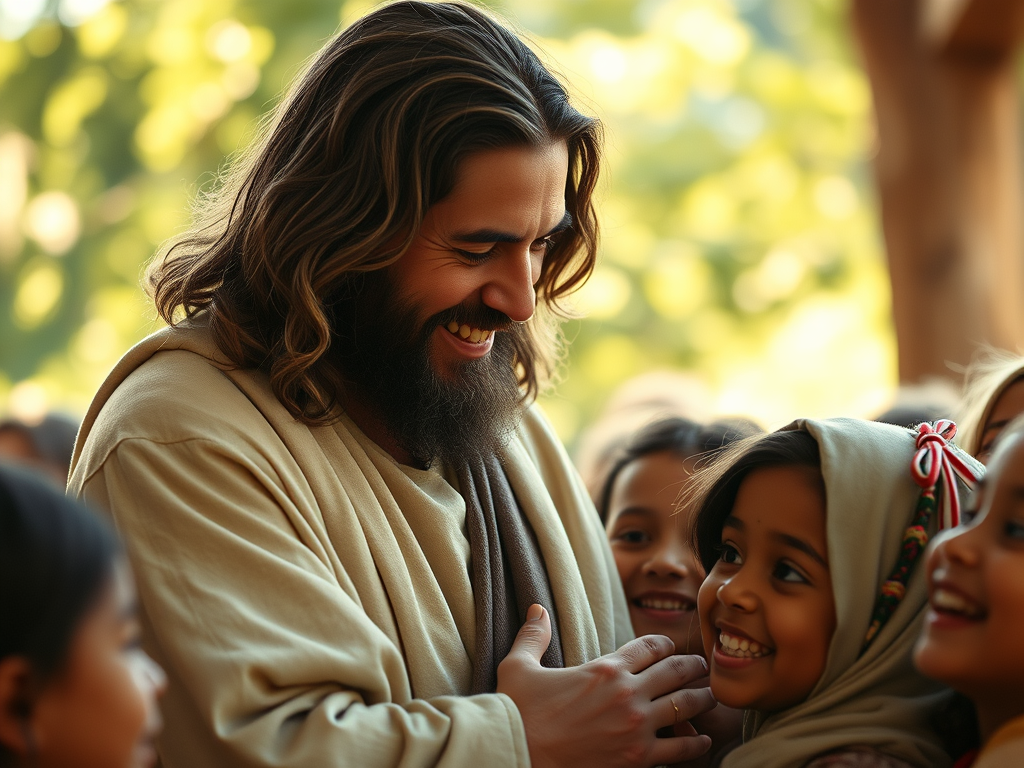
Image Generated by WordPress AI

Readings for November 3rd:

  1. Deuteronomy 6:2–6
  2. Psalm 18:2–3, 3–4, 47, 51
  3. Hebrews 7:23–28
  4. Mark 12:28b–34

What this week’s readings say to me:

The first reading reminds me:

  • to approach the world around me with humility. Remember that I don’t yet have the fullness of God’s vision or understanding.
  • that God’s vision wants only the prosperity and growth of God’s family. God’s instructions serve only these purposes. With this understanding, we receive the words of Moses to the people of Israel:
  • “[Y]ou shall love the LORD, your God, with all your heart, and with all your soul, and with all your strength. (Deut. 6:5-6).

The psalm features the perspective of someone permeated by the above instruction from Moses. The permeation spills into the person’s recollections and words. I imagine voicing the recollections helps them keep their power for the narrator.

The epistle for October 26th focused on Jesus’ humanity in his role as the perfect high priest. The epistle for November 3rd focuses on his divinity in his role as the perfect high priest. He can live Moses’ his teaching more fully than any other human being because of his divine nature. This nature also allows Him to continue living Moses’ teaching. He has conquered death because he is fully human and fully divine. A priest who isn’t fully human and fully divine can’t conquer death on his own.

Often, Gospel passages provide insight into Old Testament passages. However, the November 3rd Gospel passage simply reminds hearers and readers of the central message of the Old Testament passage. It urges hearers and readers to put that message into practice.

What I’m saying (to the readings and beyond) this week:

The commandment from Deuteronomy is beyond hard to live out. If I said “I lov[ed] God with all [my] heart, all [my] soul, and with all [my] strength [emphasis mine],” I’d be lying to myself, to you, and to the Lord (Deut. 6:5-6) .

First, the verse prompts me to think about what it means to love. I’ve often heard in churches that love is an action, not just a feeling. But I experience love as a feeling. It’s a feeling that’s a response to an action or years of actions, but a feeling, nonetheless. And it’s beyond hard to have that feeling for Someone I can’t see. Sure, I can use my mind to accept what I’ve been told about the Lord. I can also accept what I’ve been told the Lord does and has done for me. My heart, however, seems to have a difficult time letting the reality of it all sink in. I have a hard time experiencing it, and I’m a person who wants to experience intense feelings. I long for concrete experiences of God’s presence.

As for a soul, how does it love? By obeying and imitating God? As I consider this as a possible answer, I think of the verse that talks about the disciples being friends of Jesus rather than his slaves (John 15:16). They’re his friends because they know what he’s doing. He’s shared everything with them. They know Him intimately. They collaborate with Him because they want what He does, not because they’re afraid of Him.

When I think of loving with all my strength, I imagine hanging onto the edge of a cliff. I hang there until I have no energy left to hold on. I suppose God is the cliff. However, I can’t lose my grip on God unless I shove myself away from the ledge.

It seems impossible to love God with every last drop of energy, endurance, and maybe even blood. Yet Jesus did it. And I remember reading that “nothing is impossible with God” (Luke 1:37). I try to think of times in my life when what seemed impossible became possible. Nothing comes to mind right now. I can think of times when I did what was difficult, but difficult is different than impossible.

I wonder when faith softens impossible into difficult and when the impossible becoming possible is nothing less than a miracle. But then I suppose faith is a type of miracle too. Maybe it often goes unappreciated for the miracle it is.

What someone else is sharing about this week’s readings:

Eilis McCulloh, HM reflects on how we can begin loving “the Lord your God with your whole being.”

This week’s prayer:

Lord, may we experience the grace of Your presence in our lives every day. May we recognize that You are the source of all that lives and all that provides. Help us to share everything with You and to receive everything you share with us. Help us to remember that love in all its forms begins with listening. It continues with discerning and is made authentic by responding to careful discernment with action. Amen.

Work cited:

The New American Bible Revised Edition, Kindle edition, Fairbrother, 2011.
Read Full Post »

Photo Generated by WordPress AI

A note before I dive in:

Yes, this post responds to more readings than my posts usually do. I won’t have much time for the blog in the next couple of weeks. That’s the reason for this change. So I’m going to handle this reality by reflecting on two weeks’ passages in one post. What will it be like to look at two weeks’ worth of passages in one week? Let’s see.

Readings for September 29 and October 6:

  1. Numbers 11:25–29
  2. Psalm 19:8, 10, 12–13, 14
  3. James 5:1–6
  4. Mark 9:38–43, 45, 47–48
  1. Genesis 2:18–24
  2. Psalm 128:1–2, 3, 4–5, 6
  3. Hebrews 2:9–11
  4. Mark 10:2–16

What this post’s readings say to me:

The action of the Spirit defies human categories and divisions. It brings us breath and clarity of vision that we don’t have without it. It makes us brothers and sisters of Christ who can speak and act as He does. It allows us to recognize one another as children of God. It allows us to recognize that we all need one another’s gifts. It allows us to recognize that we need the gifts of nature, and the grace of God’s love and mercy. The movement of the Spirit unites us to God and to one another. At the same time, it gives different gifts to each of us.

What I’m saying (to the readings and beyond) this week:

I’m saying to the readings, “I feel left out of your message. It’s not obvious how to find a way to apply your message to my life.” The readings for October 6th have a lot to say about marriage. I’ve never been married, so it doesn’t seem helpful for me to reflect on what the passages say about marriage. I encourage reading the passages for both weeks and reflecting on what they say to you and about marriage.

What someone else is sharing about this week’s readings:

  1. Click here to read what Veronique Dorsey says about the readings for September 29th.
  2. Click here to read Mary M. Doyle Roche has to say about the readings for October 6th.

This week’s prayer:

Lord, help us to honor the commitments that are not harmful to us. Help us to be loyal and compassionate in the relationships that are not harmful to us and those around us. Help us to celebrate each other’s differences and to remember that unity and equality don’t mean sameness. Grant us the grace to care for the resources around us and to use them wisely. Thank you for your providence, Lord, and for making us for relationship and communion. Amen.

Read Full Post »

Image Generated by WordPress AI

Readings for August 4:

  1. Exodus 16:2–4, 12–15 
  2. Psalm 78:3–4, 23–24, 25, 54
  3. Ephesians 4:17, 20–24
  4. John 6:24–35

What this week’s readings say to me:

The path to true peace, joy, and freedom — which is to say the path to union with God — isn’t often the same as the path to comfort. The first path I mentioned will require setting off without knowing what the journey will involve or what the destination will be like. In other words, following the path to union with God will ask us to trust what lies beyond our wounds, fears, and desires.

The journey will remind us that listening only to our instinct for self-preservation has led us astray in the past. It has isolated us, keeping us from finding true peace, joy, and freedom together, which is the only way we can find these gifts. We can’t find them alone.

We’re relational creatures who find our deepest sense of meaning beyond ourselves and our experiences, even beyond the communities we build with each other. We find lasting peace, joy, and true freedom when we recognize that while it’s essential to acknowledge our experiences and communities, as well as our practical needs, there is Someone who promises to provide for all of our needs and more, and we’re able to live in this reality.

What someone else is sharing about this week’s readings:

“That feeling of holy discontent doesn’t mean that yesterday’s prayer didn’t work; it means that God is building a relationship of trust with you. Just like the Israelites’ physical hunger kept them looking to the heavens for manna, our spiritual hunger turns us toward God.”

Ariell Watson Simon, in her reflection on this week’s readings

This week’s prayer:

Lord, help me not to confuse comfort with true peace, joy, and freedom. Give me the faith and courage to trust you and to follow You when doing so feels most difficult so that I can find true peace, joy, and freedom. Amen.

Read Full Post »

Photo by NASA on Unsplash

This week’s readings:

  1. Job 7:1–4, 6–7
  2. Psalm 147:1–2, 3–4, 5–6
  3. 1 Corinthians 9:16–19, 22–23
  4. Mark 1:29–39

What this week’s readings say to me:

The first reading reminds me I’m not alone when life feels like a burden and everything life involves feels like nothing more than an ending and unwelcome obligation. It reminds me it’s okay to share these feelings with God in an unfiltered way. It also encourages me to consider the ways the situations I find myself in might be different than the trials Job finds himself in the midst of. It reminds me to look for blessings, however insignificant they sometimes seem.

This week’s psalm is one of praise. It characterizes God as a healer of all kinds of wounds, a healer whose wisdom has no limits.

The third reading returns to the subject of obligations, specifically the obligation to preach the gospel. When I read the parts of 1 Corinthians that come before and after this reading, I’m reminded that preaching the gospel is about so much more than talk. It’s about living like Jesus so that his message will come alive for others through me. Living like Jesus means giving of myself to others, acknowledging my feelings and desires and what I’m experiencing in a given moment, without forgetting that these realities are for from permanent.

Therefore, I have the obligation to preach the gospel with my life regardless of how I feel about having that mission. If I’m eager to fulfill that mission, the fulfilling of it is its own reward. If I’m not eager, then I’ve been asked to share the gifts that God has given to me anyway. I’m also challenged when I share these gifts not to expect to receive anything from the person with whom I’m sharing. The promise of the reading, perhaps, is that the reward whenever I offer nothing beyond my obedience will be grace received from giving without expectations. Such giving promises the grace of spiritual freedom. It seems to me that this freedom paradoxically offers the ability to reach out to people from many different walks of life because a spiritually free person isn’t preoccupied with the concerns of only one individual or group. A person can get a more expansive perspective from this situation because she hasn’t zoomed in on the picture too closely.

In the fourth reading, I see Jesus living what this paradox of spiritual freedom looks like. Peter’s mother-in-law is ill, and Peter brings this situation to Jesus, who cares for His friend by making the mother-in-law well. Yet Jesus doesn’t just help His closest companions or the people in one town. We read about Him moving on to the next town. But before He does so, He makes time for rest, quiet, prayer, and reflection, showing that these activities are essential to fulfilling His mission, which is a mission you and I have been asked to share with others and with Him.

What someone else is sharing about this week’s readings:

Mary Anne Sladich-Lantz’s reflection on this week’s reading calls attention to what Jesus does when He heals Peter’s mother-in-law. I find it inspiring that she zeros in on the very human detail that she does. Read here to find out what I mean. Her reflection also includes a quotation I’ll turn into a pull quote that makes a good summary of this week’s readings, as well as a words to bring to prayer.

Discovering wholeness, healing, and joy do not save us from the inevitability of hardship and heartbreak.  In fact, we may cry more easily, but we will laugh more easily, too. Perhaps we are just more alive.  Yet as we are healed and discover more joy, we can face suffering in a way that ennobles rather than embitters.  We have hardship without becoming hard.  We have heartbreak without being broken.

From The Book of Joy:  Lasting Happiness in a Changing World, as quoted by Mary Anne Sladich-Lantz

Beyond this week’s readings:

I’m not writing this post as a person who practices what this week’s readings preach. My natural inclination right now and at almost all other times, it seems, is to crawl in a hole in the ground with a device whose battery somehow never dies and lose myself in games, music, and movies. Forever. Because silence and reality feel too heavy to bear.

Now movies, games, aren’t necessarily bad things. In fact, I believe they can be part of rest. It’s the desire to turn only to these things that’s problematic, to say the least. My experience is that these activities don’t provide rest that’s truly restorative. Maybe an activity’s ability to restore makes the difference between its ability to provide escape and its ability to provide rest. The things that are easy for me to turn to offer escape, while prayer and reflection provide rest.

Can listening to music to be a form of prayer? Absolutely. But my experience is that even music or a movie with a spiritual message sometimes offers the illusion of a preferable change in feelings or perspective, an illusion that fades once the music or the picture fades.

I guess this experience is a reminder that so much of life is fleeting, and that the only constants are God and change and that God is the source of true rest. And yet God isn’t calling me to rest all the time — even in God. The time for eternal rest comes after this life. While I still have this life, God calls me to a varying rhythm of work and rest.

Lord, help me to resist the constant desire to withdraw and to stay withdrawn. Help me to reach out to others rather than lash out at them. Amen.

Work Consulted but Not Linked to

The New American Bible Revised Edition, Kindle edition, Fairbrother, 2011.

Read Full Post »

Photo by Flash Dantz on Unsplash

This Week’s Readings:

  1. Isaiah 55:10–11
  2. Psalm 65:10, 11, 12–13, 14
  3. Romans 8:18–23
  4. Matthew 13:1–23

I found myself conversing with what stood out to me in each of this week’s readings, and the conversation felt familiar. The familiarity wasn’t comfortable. It was boring, and the boredom I experienced in response to each reading was a bit anxiety-inducing.

Now that I’ve been writing this blog for a year and a half, I worry I’m the responding to these passages the same way I did the last time I wrote about each one here. And I want to receive and share new insights — for my own sake and for yours.

Nonetheless, I trust that the Spirit is working on me, in me, and through me even when I feel like I’m following the same old tracks and in doing so, may be getting stuck in the same ruts over and over.

The first reading reassures me:

my word shall not return to me void,
but shall do my will,
achieving the end for which I sent it.

Isaiah 55:11

This reading suggests that at least I can’t totally stop the ability of Love’s winds from re-forming creation, I said to myself as I read this verse. I can only force these Winds to choose a different tunnel. Yet when I interrupt their course, I miss out on being enlivened by them — maybe more often than I don’t miss out on this gift.

Fortunately, for me, God, I want to be the dirt in the second stanza of this week’s psalm, and I suppose I am. This isn’t as bad as it sounds. The stanza speaks to God as follows:

Thus have you prepared the land: drenching its furrows,
breaking up its clods,
softening it with showers,
blessing its yield.

Psalm 65:11

The question for me is, will I appreciate what it takes to break up or to avoid the unhelpful knots in my life, what the psalm characterizes as clods of dirt? Will I appreciate what it takes to soften what has hardened within me so that it can yield growth? Often not, because spiritual clods and hardness, like muscular hardness, develop over time and in uncomfortable, sometimes extreme conditions. Going through the softening process is no different. This process might mean taking a pounding, like meat that needs tenderizing. It definitely means experiencing rebirth and changing my world.

The concept of rebirth sounds nice. It sounds like a sudden shift, something that happens in between blinks, but the third reading’s characterization of the process provides a reality check. It says:

We know that all creation is groaning in labor pains even until now; and not only that, but we ourselves, who have the firstfruits of the Spirit, we also groan within ourselves as we wait for adoption, the redemption of our bodies.

Romans 18:22-23

This excerpt tells me that spiritual restoration is a process, a laborious and often painful one. It also tells me that I’m undergoing the process here and now, but I will also be undergoing it, in what, to me, is the future. To God, everything is happening now and all at once in a way I can’t comprehend.

Because I can’t comprehend not being bound by time, in the reading from Matthew, Jesus uses a parable to compare the process of spiritual growth to the process by which a crop grows — or doesn’t.

In the reading, Jesus gives an interpretation of the parable, and I’m grappling with how to apply this parable and its interpretation my life. I know that, to grow, a seed needs a certain depth of soil that isn’t too rocky for the plant to put down roots. It also needs room to grow. To me, this means the seed that is me needs a deep trust in God to grow. Having such trust would keep the often difficult conditions of life from stunting my growth. Reaching out to God in the midst of difficulties just might transform them from obstacles to opportunities. Spiritual fertilizers, I might call these experiences.

For me, the weeds in the parable are the distractions that take up time I could be using to love God, myself, and others as God loves me. Sometimes these distractions are unpleasant. They feel like the anxieties Jesus says the weeds represent. Other times, they’re harder recognize as weeds because they’re activities I enjoy and use to forget about feelings I don’t want to feel and to put off doing what I don’t want to do.

It’s useful for me to distract myself sometimes, to break myself out of a pattern of unhelpful thinking, a pattern of replaying unpleasant past experiences or of dreading a future experience that I anticipate will be difficult. But there are questions I know I’d benefit from asking myself about my favorite distractions:

  • How often am I turning to these distractions?
  • How long do the benefits I get from these activities last, and how satisfying are they? Can I do them in moderation, or do they leave me only wanting more?
  • How much time are these enjoyable activities taking away from activities that have longer-lasting benefits for me and others?
  • What activities with longer-lasting and broader benefits could I use instead to break myself out of unhelpful thinking? (For the record, no, memorizing comforting or inspiring Bible verses hasn’t served this purpose for me, though I’ve tried this approach and won’t rule out trying it again. Getting outside and/or getting exercise have helped.)
  • What do I want to avoid dealing with, and how much better have I felt in the past when I dealt with whatever I didn’t want to rather than distracting myself from it?

Lord, open the ears of my heart and mind to hear and listen to Your answers to these questions. Thank You for hearing me. Amen.

Work cited

Confraternity of Christian Doctrine, Inc. “Sunday 16 July 2023: Readings at Mass.” The New American Bible, 2001. Universalis for Windows, Version 2.180, Universalis Publishing Ltd., 29 June 2023, https://universalis.com/n-app-windows.htm.

Read Full Post »

Photo by Artem Beliaikin on Unsplash

This week’s readings:

  • Acts 2:1–11
  • Psalm 104:1, 24, 29–30, 31, 34
  • 1 Corinthians 12:3b–7, 12–13
  • Pentecost Sequence
  • John 20:19–23

For this post, I’m going back to listing all the readings at the beginning in case you want to revisit them and pray with them. I’m not going to dive deeply into any one of them. My memory, limited though it is, says I’ve already sat with the first, third, and fifth readings and written about them here You can read posts related to these readings by going back to “Earth,Wind, and Fire,” and “Locked Doors.”

Nothing jumped out at me about those passages when I returned to them this time around. This experience seems ironic, given that today is Pentecost this year, and Pentecost celebrates the opposite of the spiritual blahs, a.k.a “spiritual dryness.” Pentecost celebrates the Holy Spirit giving the apostles what they need to witness to what they’ve experienced and learned so they can care for those who follow Jesus and help their spiritual family grow in numbers.

The psalm is a wonderful prayer of invocation and praise for this celebration. I need to pray with it, and I will, but when I read it this week, I just felt prompted to pray with its words, not to explore it more deeply.

I think what’s going on with me ties to what I posted about last week. Thanks to the first, third, and fifth readings, I can read about how the Holy Spirit moved within the early church. These passages are great reminders and great stories, but receiving the same reminder, reading the same story over and over, isn’t the same as experiencing for myself what the early church experiences in this week’s readings.

So I’m going to invite the Holy Spirit to enlighten my senses — my eyes, ears, mind, heart, and lips. I’m going to extend this invitation using the Pentecost Sequence. I consider it a beautiful example of sacred poetry, and more specifically, liturgical poetry. (These are the names I’m giving it. I don’t know if these are some names the professionals apply to it.) As far as I’m concerned, it cries out with all the longings of the human soul in ways that paint pictures on the canvas of the mind. The comprehensive quality and the vividness of the sequence as well as its musicality are the reasons it resonates with me this week. For me, these qualities are enhanced by John Michael Talbot’s musical version,, “Come Holy Spirit.” You may want to have headphones on when you click the previous link, as it leads to the original version posted on the song on the musician and composer’s YouTube channel.

When you have headphones, and you’re able to set time aside to enjoy beautiful prayers, music, and poetry, I hope you’ll join me in following the links in this post. These links lead to expanded forms of the prayer I’ll close this week’s post with: Come, Holy Spirit. Amen.

Read Full Post »

Photo by Florian Klauer on Unsplash

This Week’s Readings:

  • Isaiah 2:1–5
  • Psalm 122:1–2, 3–4, 4–5, 6–7, 8–9
  • Romans 13:11–14
  • Matthew 24:37–44

Also Cited

  • Isaiah 55: 8-9
  • Colossians 3:2

As a whole, the readings above offer a lot of hope. They tell me that people from every nation, regardless of their circumstances, are invited to enter God’s kingdom. They remind me that “[my] salvation is nearer now than when [I] first believed” (Rom 13:11, The New American Bible Revised Edition).

Yet even as these readings inspire me, I find them daunting. The first reading tells me that its promises won’t be fulfilled without me first fighting a battle that won’t just be an uphill one. It will be an “upmountain” one. Isaiah envisions the place where God dwells as being on the summit of a mountain because the Jewish people had a long history of meeting God on peaks. These settings seem fitting because Scripture reminds me that God’s ways are not my ways. They are high above [my] own (Isa. 55:8-9). In Paul’s letter to the Colossians, he reminds me to “think about what is above” (3:2).

However, if I take the concept of “climb[ing] the Lord’s mountain” out of the context of the rest of the passage, the words carry connotations of a meeting with God being the result of an achievement on my part (Isa. 2:3, The New American Bible, 2001) It isn’t. Isaiah calls me to make the trip “that [God] may instruct [me] in his ways and [I] may walk in his paths (Isa. 2:3). I have a lot left to learn and to do. The learning and doing will mean letting go in order to transcend “what is on earth” (Col. 3:2). It will mean letting go of the weights of selfishness and self-centeredness. It will mean recognizing that whatever is not God or does not share God’s character is temporary and may act like a weight that holds down the balloon of my soul and keep it from ascending to God. The heavier the weight, the harder it is to get out from under. I can’t just shrug it off. Only Someone above me can lift it, and that Someone is God. But God often doesn’t pry out of my hands what I have a white-knuckle grip on. Instead God waits for me to release to Him the burdens of selfishness that I clutch to myself, though His cross would lift them from me if I let it.

Still, it feels like another kind of burden to lay the burden of selfishness on the cross because it can be hard to recognize selfishness for what it is. It can feel like a weighted blanket I hide under. To come out from under this blanket is to be at my most vulnerable, to be naked, to stand out rather than be camouflaged by the temporary trappings of day-to-day life.

I won’t have forever to act as the Divine reflection on earth that I was born to be — that each of us is born to be. My time on earth may well end when I least expect it to end, on a day that previously seemed as uneventful as the one before it. May I recognize opportunities to act selflessly, to build community, and to make peace while I have these opportunities. This is the prayer that the New Testament reading I cite at the beginning of this post inspires me to offer. Amen.

The Bible. The New American Bible Revised Edition, Kindle edition, Fairbrother, 2011.

Confraternity of Christian Doctrine, Inc. “Sunday July, 2 2023: Readings at Mass.” The New American Bible, 2001. Universalis for Windows, Version 2.179, Universalis Publishing Ltd., 26 Feb. 2023, https://universalis.com/n-app-windows.htm

Read Full Post »