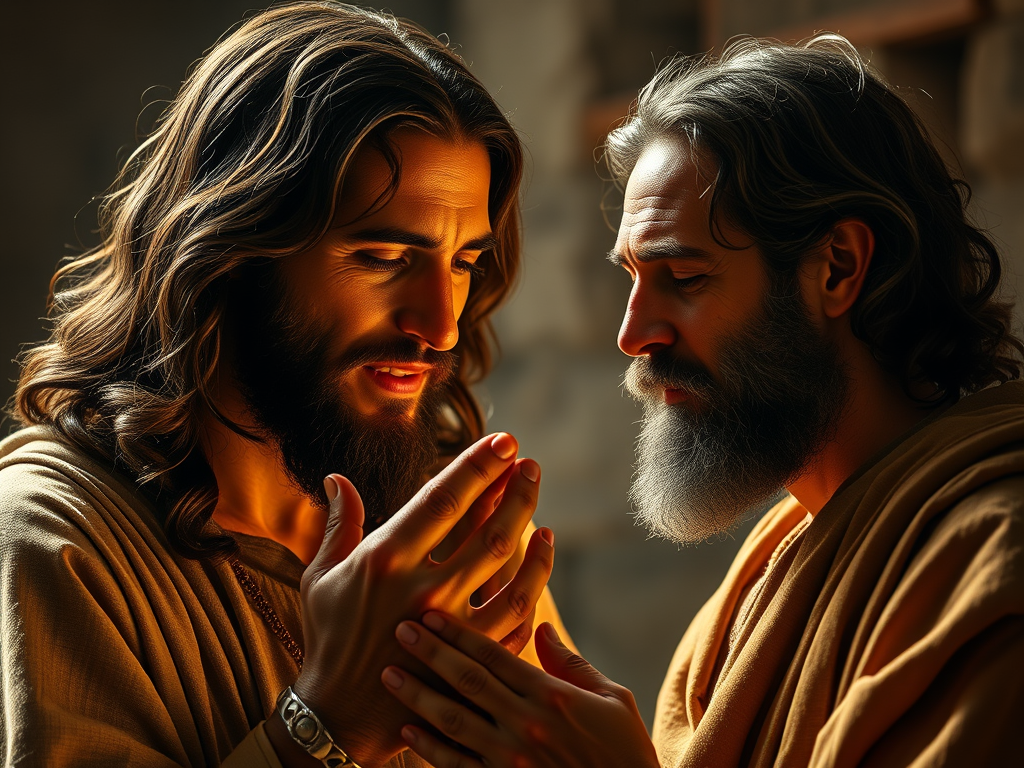
We read more than once in this week’s Gospel that the disciples find Jesus in their midst, even though they’re behind locked doors. It also stands out that Jesus greets the disciples by saying “Peace be with you” and by showing them his wounds.
What I’m saying (about the readings and beyond) this week:
About the Readings
It’s as if Jesus is saying,” Don’t be afraid. It’s me. I’m here with you, and nothing can stop me from being with you now. I’ve gone to battle with everything that pushes you away from me. I won. See these wounds? They’re an everlasting reminder of my victory over suffering and death. This victory gives new meaning to your suffering and death. United to mine, your suffering will transform you. Like me, you’ll be someone new. And you’ll be that someone because of what you went through — what we went through — before.”
And beyond
We’ve lost, in Pope Francis, someone I would call the world’s pastor. From what I’ve seen, this is true, to some extent among people of various beliefs.
And here we are in the Easter season. Face tells me that the Easter he is experiencing now is different from the one that I’m experiencing. And my Easter share similarities and differences with the Easter you’re experiencing. You may not be experiencing the emotions you think of when you think of Easter. I’m not. I’m sad and uncomfortable with the unknowns the Church and the world faces. I grieve because of the many forms of violence (greed and selfishness, for example) and loss in the world.
Last Sunday’s readings and this Sunday’s readings tell me the experiences of Jesus’ followers on the first Easter were no different. They tell me the cross and the resurrection are two sides of the same coin. And neither experience is something only Christ goes through. Rather, we all share in both experiences again and we can’t have one without the other. When we have both, nothing can separate us from each other and from God — no suffering — not even death.
Still, sometimes a living sense of communion is hard to perceive on the earthly side of life. Jesus and his first spiritual family members understand that as well as anyone.
What someone else is sharing about this week’s readings:
Jesus, help us to see You and to touch You in our midst despite any obstacles to being enlivened by Your presence. Renew us to do Your work in the world, and bring us to rest together with You and all Your beloved departed in eternity. Amen.
Works cited:
“Second Sunday of Easter, Sunday of Divine Mercy — Lectionary: 45.” Daily Readings, Lectionary for Mass for Use in the Dioceses of the United States, Confraternity of Christian Doctrine, 2nd typical ed, United States Conference of Catholic Bishops, 2025, https://bible.usccb.org/bible/readings/042725.cfm.
Contrasts stand out. I see contrasts between fertility and barrenness, between emptiness and fullness, and between sorrow and joy. The readings tell me that making room for God makes room for life and growth. In contrast, putting all one’s trust in the ways of human beings, especially in individual humans, is misleading. It prevents a person from being part of a circle that expands easily so he she can grow and embrace life. It leads to dissatisfaction instead of openness and depth because no human is all-knowing or all-powerful.
What Someone Else Is Sharing about This Week’s Readings:
The readings for February 16 inspired Julia Murphy to reflect on the effect privilege can have on a person’s relationship with God. She reflects on this topic through the memory of a service immersion trip experience. She also points out that, regardless of how a person is or isn’t privileged, the Beatitudes aren’t telling the people who receive them to be passive. She reminds us that God calls us to wake up so we can tell the difference between wants and needs. Once we’ve discerned what’s needed, God calls us to cooperate with each other and with the prompting of the Holy Spirit to address our needs and the needs of others.
What I’m Saying:
Before I read Julia Murphy’s words, I didn’t know what to write in this section other than to repeat the themes of the text in different ways. The passages seem pretty self-explanatory, and especially in the case of the Beatitudes in the gospel passage, so familiar. What could I say about the Beatitudes that’s more than a list of “shoulds?” How does my gut react to the Beatitudes?
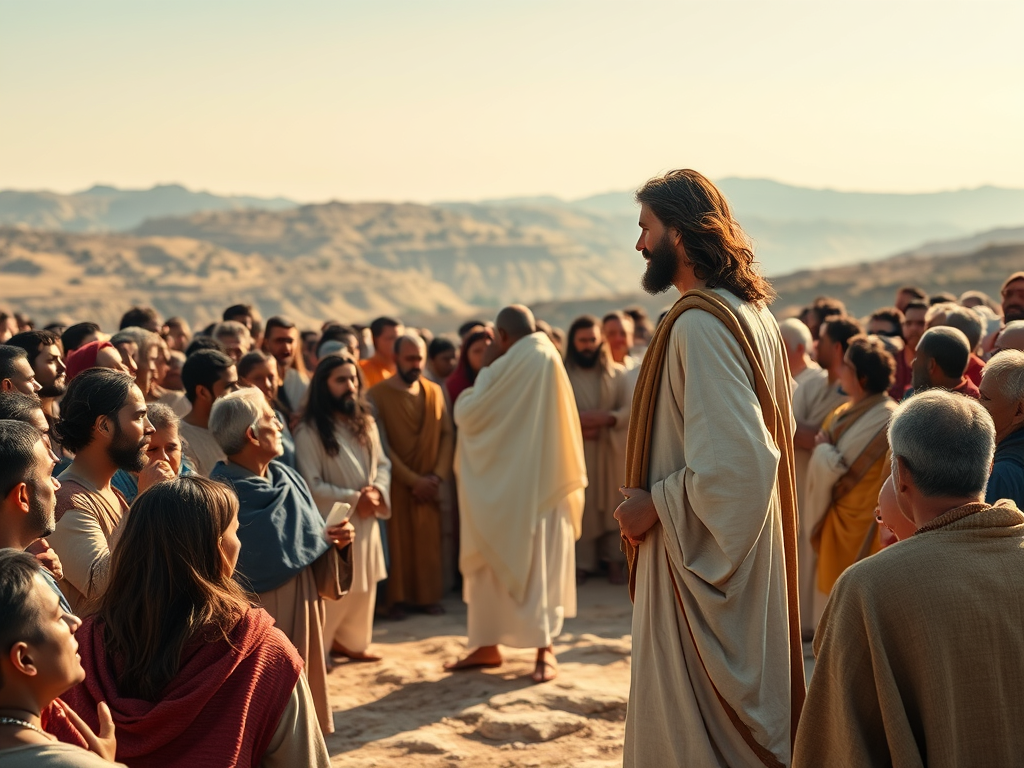
When I went back to this week’s gospel passage seeking answers to these questions, the passage reminded me of something that stood out when I first revisited it. The reading makes a point of telling us that when Jesus preached about the Beatitudes, he didn’t stand on a mountain or in a boat. He’s not depicted as looking down on the great crowd of his disciples. He’s not separated from them by the framework of a boat. Rather, we are told “he stood on a stretch of level ground” (Luke 6:17). I get the idea He was scanning the crowd as he spoke, meeting the eyes of this individual, then that one. I imagine Him seeming to each person as if he spoke only to him or her.
To anyone who sees him or herself in the blessed group, he offers encouragement. To anyone who recognizes him or herself in the opposite group, His warnings might imply questions:
If you’re rich, how did you get that way? Who helped you get there? Have they reaped the benefits as well? How can you show your appreciation? How can you share your more-than-enough with those who don’t have enough?
If you’re filled, what are you filled with? Does it take care of and treat kindly the body and mind God has given you? Where do you make room for God? For recognizing the injustice in your midst?
If you’re laughing now, what are you laughing at? Are you laughing at someone else’s expense? Someone else’s misfortune? Or can you laugh at your own frailty, imperfections, weaknesses? Can you left so that you don’t take them so seriously that you think God can’t work with you through them and despite them.
Many of us who can read these words might be rich by the standards of the much of the world. And yet lack of privilege can take different forms in different people’s lives at different times. Why? Because different factors contribute to each person’s sense of agency and independence. The truth is, a sense of independence isn’t permanent for anyone. We’re born needing others, and we die needing others. So many events in between lead us to ask God and one another for help. And that’s okay. That’s honest.
This Week’s Prayer:
Lord, grant us the grace to make room for You in our lives so we can see and hear as You do. Amen.
Scripture Translation Used:
Sixth Sunday in Ordinary Time — Lectionary: 78.” Daily Readings, Lectionary for Mass for Use in the Dioceses of the United States, Confraternity of Christian Doctrine, 2nd typical ed, United States Conference of Catholic Bishops, 2025, https://bible.usccb.org/bible/readings/021625.cfm.
An encounter with God is more than reading about God or learning about God. An encounter with God is tangible. It’s personal and intimate.
An encounter with God changes how the person who has the encounter sees him or herself.
This new view of himself/herself and the tangible, personal encounter with God is uncomfortable, humbling and overwhelming. These feelings because the person to retreat and to cower.
God says, in different ways, “I don’t seek personal encounters with you just to make you uncomfortable. Take heart in My presence. Stand with me in this new perception of who you are. Let Me work through and in the midst of your anxieties and weaknesses. Let me heal your wounds and work through what you’ve learned from them. When you let Me, you can do for others what I do for you.”
God says, “If you’re having trouble encountering Me right now, look for those who have encountered Me. You’ll recognize the effects of those encounters. Companions changed by them will remind you of what you’re worth to me. I’ve died with you so you can live with Me.”
What I’m saying (to the readings and beyond) this week:
I had the most visceral reaction to the epistle for this week. It’s embarrassing to admit. Initially, I felt resistant to the passage. I didn’t know how to fit it into the theme I was discerning for this week’s post. The Old Testament passage and the Gospel passage describe profound, face-to-face encounters with God. We aren’t allowed as directly into such an encounter when we read the psalm excerpt. However, it seems to be the words of someone who has had a personal encounter with God. The narrator has experienced God’s providence.
Now St. Paul, the author of the letters to the Corinthians, has had this kind of encounter. But that blinding light through which Christ speaks is not what I read about in this week’s epistle. This passage isn’t where I can read about the details of that encounter. Instead, Paul mentions large number of people who encountered the risen Christ before he did. Then he points out that the risen Christ appeared to him last, “as to one born abnormally” (1 Cor. 15:8).
His assessment of himself bothered me. It’s one thing to feel humbled in the presence of God by becoming aware of the ways your choices fall short of self-giving love. But no one chooses when he or she is born. Why should characteristics a person doesn’t choose mean he or she is chosen last? I reminded myself that when the letter was written, perspectives on birth were very different. Views on disability and many other human experiences were also very different. Still, the phrase was jarring to read. What happened to “the last shall be first, and the first shall be last” (Matt. 20:16)? An answer to this question is that the verse from the Gospel of Matthew reflects a perspective gained later, from a memory recorded later. Matthew was written down after 1 Corinthians. But back to the passage from 1 Corinthians that we’re looking at this week.
The day after I first revisited the passage, I saw the note that accompanies 1 Corinthians 15:9. If I understand this note correctly, it says verses 8 and 9 reflect the attacks his opponents leveled at him. The note reminds me of an important question to ask when reading Scripture: how might the experiences of the human writer affect how the message is expressed? How might God work through the wounds revealed in the expression of the message?
Paul says he was chosen to be an apostle not thanks to his own merit but thanks to God’s grace. This message at the end of the passage means it actually does fit in with the theme I had discerned for the February 9 readings.
Nevertheless, in other ways it still doesn’t seem to fit as well as the other passages do. As I wrote above, the passage doesn’t include much of a recap of what Paul experienced on the road to Damascus. Instead, Paul says indirectly that happened. He says that because it happened, he came to believe and to preach what the other apostles had experienced with regard to Jesus’s resurrection. He seems to want the letter’s readers to persevere in faith based on his words and the words of the apostles. He seems to suggest that a personal encounter with God isn’t essential to a faith that perseveres in difficult times.
Or does he? He writes, “I am reminding you… of the gospel I preached to you, which you indeed received and in which you also stand” [emphasis mine] (1 Cor. 15:1). I usually associate receiving with something concrete coming into my possession. I don’t usually associate it with merely hearing. “Receiving” suggests something sinking in, settling. To me, receiving implies more than intellectual acceptance. Furthermore, it’s hard to imagine “stand[ing] in” something merely heard from someone else, even if that something heard comes from people who say they actually saw it. Maybe he’s suggesting that the experiences he’s had and the ones that have been shared with him open the door for the Corinthians to have their own personal encounters with God’s grace.
What someone else is sharing about this week’s readings:
Leah Sealey reflects on the readings for February 9, 2025. As she does so, she suggests ways to make encounters with Scripture personal encounters with God. Some of the approaches I’d heard of. Others I hadn’t, such as asking what a passage doesn’t say and imagining myself saying it to Jesus. Usually, I read the reflections from Catholic WomenPreach after I’ve written the first section of that week’s post. But I wish I’d read Ms. Sealey’s reflection before I wrote my own this week.
This week’s prayer:
Lord, open the doors of my heart and soul to encounters with You. May I recognize encounters with others as encounters with You, and may others do the same when they meet me. Grant us the grace to experience encounters with You and with others as occasions to experience clarity and compassion. Amen.
Scripture Translation Used:
“Fifth Sunday in Ordinary Time — Lectionary: 75.” Daily Readings, Lectionary for Mass for Use in the Dioceses of the United States, Confraternity of Christian Doctrine, 2nd typical ed, United States Conference of Catholic Bishops, 2025, https://bible.usccb.org/bible/readings/020925.cfm
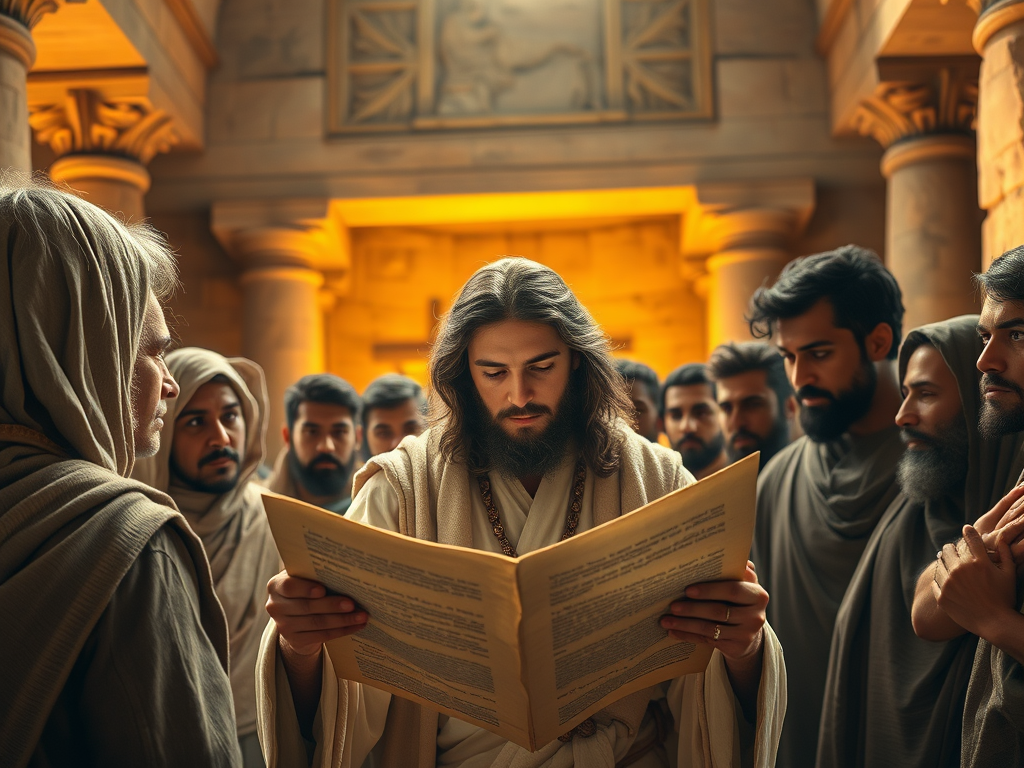
In the first reading, the people in the temple don’t seem encouraged by hearing God’s law. They seem in awe of it. They seem to accept that it’s trustworthy, that it’s wise to obey it. At the same time, they seem bowed down by it. They seem to focus on how they fall short of fulfilling it. But Ezra, Nehemiah, and the Levites tell them, ““Today is holy to the LORD your God. Do not be sad, and do not weep” (Neh. 8:10).
The psalm reinforces that the law of the Lord “is trustworthy,” “refresh[es] the soul ” and is cause for “rejoicing” (Psalm 19: 8-9). The Lord’s words “are spirit and life” (John 6:63).
The epistle presents God as a life giver through the Spirit. The passage also highlights the human tendency to focus on the gifts we lack rather than the ones we have.
This focus affects how the people see who’ve grown up with Jesus see Him. The reaction of the listeners isn’t included in this week’s passage, but when I read past this week’s excerpt, I see that they say the following about what Jesus reads and says:
“. . . all spoke highly of him and were amazed at the gracious words that came from his mouth. They also asked, ‘Isn’t this the son of Joseph?'”
Luke 4:22
They can’t envision this son of Joseph, who trained to work with his hands, bringing “glad tidings to the poor,” “sight to the blind,” and “liberty to the captives” (Luke 4:18). Perhaps behind their questions is not only that Jesus isn’t prepared for the mission he tells them he’s on. Maybe the townspeople also remember that he was born too soon after Mary and Joseph’s marriage. Their vision of who Jesus is limited by their preconceived notions and biases.
What I’m saying (to the readings and beyond) this week:
Often, I don’t experience the law of the Lord as “refreshing” to the soul (P Psalm 8). l feel smug and indignant when I think of God’s commands and perceive myself as the one whose been wronged. I sometimes feel constrained when I’m tempted to do something that might not refresh my soul or someone else’s, something that could make my reflection less like God’s.
As I reflect on this reality of my experience, I think about what might change my feelings about God’s commandments. I remember something I once heard a priest say in a homily. I’ll paraphrase what he said like this: rephrase the commandments as statements about what we should do.
I don’t remember how he rephrased them, so I’m going to do that in my own words as follows:
Remember that the material world is passing away; hold onto and prioritize what isn’t.
Remember that you didn’t get where you are alone. Give back those who have given to you.
Recognize that a holy and healthy life is one with a routine that balances work and rest, activity and contemplation. Celebrate the resurrection and its message for all of us. Recognize that we all need community. When one of us suffers, we all suffer. This happens whether we realize it or not. When one of our community members is absent, we are all affected, whether we realize it or not. Live as if you know you are made to belong.
Take care of the life you’ve been given, and take care of the lives of those around you.
Make commitments and enjoy the security and stability of honoring them.
Be mindful of what you have. Be happy with others for what they have.
Respect others and what belongs to them.
Tell the truth with love.
As I read this week’s epistle, I see it can celebrate the beauty of differences. It can teach that the Spirit makes individuals members of Christ’s body. It teaches that these members are indispensable to the function of Christ’s body, no matter how different the gifts of one member may be from another member’s. It can be used as an antidote against envy and resentment.
Still, I can’t help but think how it can be used to justify never speaking out against inequities, never considering change to be necessary. It could be used to justify rigid social structures. It could be used to justify unjust discrimination and the perpetuation of stereotypes. It could be used to confirm biases and preconceived notions. “What? You don’t feel your voice is being heard, I can hear someone with more authority and/or education asking someone with less. What? You don’t feel seen? You don’t feel your gifts are being appreciated to the fullest?” Don’t worry. Jesus uses them fully even if you don’t feel like the Church, or your work, or your family, or the organization you volunteer with does. You’ll know this someday. You’re important to your communities even though you don’t and can’t have high-profile roles in them. Your communities need you to do work their leaders aren’t doing while they’re busy doing other, more visible, things. You’re essential. Be content and at peace with this. “
I think to myself, “What if Jesus had believed He couldn’t fulfill his mission because of who Joseph was? What if Jesus had thought the fact that Joseph was a carpenter meant that the Spirit wasn’t calling Him to His ministry?
Let’s not underestimate the value of contributions that go unnoticed. Let’s look more closely, deeper, for the gifts in ourselves and those around us. Let’s respect the Spirit’s freedom of movement in us and around us.
What someone else is sharing about this week’s readings:
Lord help us to see in ourselves the gifts that others may or may not see in us. Help us to be open-minded and creative in how we use the gifts You give to care for Your creation. Help us to trust that when our gifts are employed by cooperate with Your spirit, they will accomplish what You had in mind when You gave them to us. Help us to experience Your commandments as gifts to us. Amen.
Reflection on the Gospel Passage for December 29th: Luke 2:41–52
Like many of us, the family in this week’s gospel passage has been traveling as a part of its observance and celebration of a religious festival. Like many of us, this nuclear family has been sharing in traditions and customs with family and friends. The passage describes this nuclear family as having “completed [the] days” of the festival (Luke 2:46).
Perhaps this wording is simply a reflection of the culture in which the passage was written. Perhaps such observances represented obligations that needed to be fulfilled, tasks that needed to be completed. And yet, it was undoubtedly not just God that these rituals served. They also served the family members, providing welcome variance in their day-to-day routines and helping them to think not only in terms of days but in terms of centuries, maybe even millennia. They strengthened the connections between generations. And not just because people of different ages might share in these customs, not just because of what might be enjoyable about the customs either.
Holiday travel can be a pain these days, but I feel like any conception that I might come up with for how difficult it must’ve been in Jesus’ childhood would be woefully inadequate. Yet, this week’s gospel passage tells me, Jesus’ family and friends have traveled to Jerusalem and continued Passover traditions in what must have been a crowded city.
Then the time comes to head home, and, lo and behold, Joseph and Mary can’t find their boy. For a while, they assume he’s with their friends and extended family. It’s no wonder. They’ve been traveling with a large group.
And part of me imagines they just weren’t ready to grapple with the reality that their boy wasn’t with that group. This possibility would be beyond difficult for any parents to face. Add to that what the possibility would mean for Mary and Joseph — that they have lost God’s son, the Messiah Israel that has been promised and has been waiting for for so long.
I imagine them wondering why God would let this happen. Would God let their failures get in the way of God’s promises to his people being kept. How could it be God’s will that any son disobey his parents, let alone this Son?
We’re told that it takes Mary and Joseph three days to find Jesus. Yes, groups of three have symbolic importance in Scripture. I’m not sure what the official interpretation of the symbolism of three in the Bible is, and to be quite frank, I’m probably not going to look it up before I publish this post. I’m writing these particular words for days before Christmas and probably won’t get them published much before the twenty-ninth. I want to spend most of the time in between being present with my family and friends.
At some point in school, I learned that the triangle is the strongest shape, so the number three makes me think of strength. Its association with the Trinity makes me think of strong bonds. Its association with the time between Jesus’ Last Supper and his resurrection makes me think of perseverance in the face of suffering. It makes me think of how waiting itself can be a form of suffering. Time passing more quickly than I would like can bring suffering with it too.
I imagine Mary and Joseph experiencing many forms of suffering when they have to accept, after having traveled a day’s distance, that Jesus isn’t with them or any of their traveling companions. Maybe they didn’t even feel like they ought to take time to eat or sleep while they searched for Jesus. Maybe they didn’t have appetites anyway and couldn’t relax enough to rest even if they thought God wanted them to. These possibilities mean more suffering.
In the midst of their suffering, Mary and Joseph find Jesus in the temple. He’s listening to the teachers there, “and asking them questions” (Luke 2:46). The phrase in quotation marks stands out to me. It reminds me of how important listening and asking questions is to forming and growing relationships, even my relationship with myself. It reminds me that these are no less important components of my relationship with God.
After I read that Jesus is “sitting in the midst of the teachers, listening to them and asking them questions,” I read that “all who heard him were astonished at his understanding and his answers” (Luke 2:46-47). It seems like the listening and understanding are going in multiple directions. There’s a message about what it means to grow and to grow in all kinds of relationships in that detail as well. The same detail also says that God listens to and understands me. And by me, I mean you, too.
Maybe, at the age Jesus was when he found his way to the temple, didn’t understand human nature quite as well as he would come to as he “advanced in wisdom and age and favor before God and man” (Luke 2:52). After all, in the passage, he doesn’t seem to understand his parents’ anxiety and confusion. He seems to think they should have known why he left the group and where he went. Nevertheless, despite his young age, he seems to have a clearer grasp of who He is and what that means then they do.
Maybe Mary and Joseph have become comfortable in their day-to-day and annual duties and with their own ideas of what the future will hold for them and for Jesus. Maybe they’ve consoled each other by saying that the suffering they were warned about when he was eight days old hasn’t come yet. And then he disappears, and when they find him, he reminds them who he is. He invites them, once again, to trust God in the face of uncertainty — just when they’ve begun to believe they understood the parts they’d been given in that plan.
How many times have we acted and felt like Mary and Joseph, even though we haven’t been tasked with bringing up God’s son, and some of us haven’t been given children to bring up all? On the other hand, what about times we’ve wandered from the path of others thought we would follow on our quest to become the person God calls us to be and to do what God calls us to do? Do we have the courage to listen to the questions of others, as well as to their answers. Do we have the courage to learn from each other? Do we have the courage to ask the questions and listen to the answers? Do we have the courage to trust that God listens to us even when it’s hard for us to see the evidence of that listening. Lord, give us the courage. Holy family, pray for us. Amen.
What stands out to me from this week’s readings is a theme of gathering together.
The first reading describes the Messiah coming from
Bethlehem-Ephrathah,
too small to be among the clans of Judah . . . .

and yet the passage says of "one who is to be ruler in Israel":

". . . the rest of his kindred shall return
    to the children of Israel.
He shall stand firm and shepherd his flock . . .

and they shall remain, for now his greatness
    shall reach to the ends of the earth;
    he shall be peace. (Micah 5:1-4)
The passage strikes me as a movement from the individual to the society, from the seemingly insignificant to the infinite. We read about the Messiah first and the flock second, but the movement of the passage is really in the other direction. The passage predicts the Messiah drawing all people to himself.
While the Old Testament reading strikes me as being about how the people will move toward God, the psalm strikes me as asking God to move toward the people. It asks God to protect and to save the people.
The epistle says that Christ is the fulfillment of what the Old Testament reading and the psalm foretell and ask for.
In the gospel passage, we read about Mary and Elizabeth being gathered together. God draws Mary to visit Elizabeth, and Elizabeth is drawn to the sound of Mary’s voice, as is John. Why? Because Mary brings Christ to Elizabeth and John.
What someone else is sharing about this week’s readings:
What I’m saying (to the readings and beyond) this week:
For we are a people of the incarnation, we believe that Christ is within all of us, including you. How do you long to express it?
Sarah Simmons, CSJ
This question is delightfully attention grabbing for me. I would have expected a similar question to ask what I should do, what the Holy Spirit is prompting me to do? But how do I long to express Christ within me? That feels like a different question with a different answer. Longing to express something is a different experience than being expected to express something. Both experiences feel familiar. And how authentic is the expression of something that I’m saying because I’m expected to. Am I expressing what I am only because I think I’m expected to? What is my answer to the question that was actually the end of the reflection?
I long to express the incarnation of Christ within me by helping to create spaces where people feel safe. In these spaces, they can be honest with themselves and each other. This honesty happens because they recognize the many ways their experiences and desires overlap.
I believe the way a space is arranged and decorated can allow experiences of safety and connection. This belief is why many forms of design and decorating interest me. I also believe that how stories —both fictional and nonfictional ones — are told is crucial. They are key vehicles for creating spaces that allow room for growth and connection.
I’m always longing to share my own story more fully and more effectively, and to help others share theirs. It’s my experience that the storytelling journey is never a linear one, and it requires cooperation and vulnerability. It requires wrestling with what to hold on to and what to let go of. It invites a person to ponder when to take advice and when to follow God’s voice within. It involves gathering people together. It also celebrates the uniqueness of every person. Participating in stories is an intimate activity. It takes members of crowds who may start as strangers and builds relationships between them.
This week’s prayer:
Lord, work through us so that we draw each other to You. Help us recognize Your presence within us and in each other. May we recognize the people around us bringing You to us. Thank You, Lord, for our fellow Christ-carriers. Gather us together. Lead us on the path to peace both within and around us. Amen
Yes, this post responds to more readings than my posts usually do. I won’t have much time for the blog in the next couple of weeks. That’s the reason for this change. So I’m going to handle this reality by reflecting on two weeks’ passages in one post. What will it be like to look at two weeks’ worth of passages in one week? Let’s see.
Readings for September 29 and October 6:
Numbers 11:25–29
Psalm 19:8, 10, 12–13, 14
James 5:1–6
Mark 9:38–43, 45, 47–48
Genesis 2:18–24
Psalm 128:1–2, 3, 4–5, 6
Hebrews 2:9–11
Mark 10:2–16
What this post’s readings say to me:
The action of the Spirit defies human categories and divisions. It brings us breath and clarity of vision that we don’t have without it. It makes us brothers and sisters of Christ who can speak and act as He does. It allows us to recognize one another as children of God. It allows us to recognize that we all need one another’s gifts. It allows us to recognize that we need the gifts of nature, and the grace of God’s love and mercy. The movement of the Spirit unites us to God and to one another. At the same time, it gives different gifts to each of us.
What I’m saying (to the readings and beyond) this week:
I’m saying to the readings, “I feel left out of your message. It’s not obvious how to find a way to apply your message to my life.” The readings for October 6th have a lot to say about marriage. I’ve never been married, so it doesn’t seem helpful for me to reflect on what the passages say about marriage. I encourage reading the passages for both weeks and reflecting on what they say to you and about marriage.
What someone else is sharing about this week’s readings:
Lord, help us to honor the commitments that are not harmful to us. Help us to be loyal and compassionate in the relationships that are not harmful to us and those around us. Help us to celebrate each other’s differences and to remember that unity and equality don’t mean sameness. Grant us the grace to care for the resources around us and to use them wisely. Thank you for your providence, Lord, and for making us for relationship and communion. Amen.
The first thing this week’s readings say to me is something I heard in the homily last week: (I paraphrase here, even though I’m putting the following in quotation marks): “Read all Scripture in light of Christ.” If I apply this instruction, Jesus Christ is “the just one” and “the wicked” are those who crucified Him (The New American Bible, Wisd. 2:12) It also characterizes “the wicked” as:
finding it extremely distasteful when someone else takes a stand against the self-serving things they do and voices opposition to these activities, holding them accountable and wanting their actions to reflect the good they’ve been taught to do
trying to trap the person who does justice, make that person look untrustworthy and to stop others from doing what he does and says
taking the name of God in vain, in a way, by talking about God as if their faith in God excused them from acting with justice themselves
Plotting to break the resolve of just one through violence and then justifying their actions by saying that God would spare him from this violence if, in fact, God were on his side.
The psalm is written from the perspective of a person of faith who strives to act with justice. It acknowledges the power of God — even the power of God’s name. It calls out to that power for help. The speaker is frank with God about the suffering he’s experiencing. But after talking to God about his suffering, he reminds himself that God “is [his] helper, by resolving to give of himself to God and to just causes, and to recall God’s faithfulness even in the midst of circumstances that tempt him to doubt.
The epistle gives answers as to what leads to the “wicked” behavior described in the first reading: “jealousy and selfish ambition” (Wisd. 2:12; Jas. 3:16).
Behavior that’s inspired by wisdom from above, on the other hand, is “first of all pure, then peaceable, gentle, compliant, full of mercy and good fruits, without inconstancy or insincerity and the fruit of righteousness is sown in peace for those who cultivate peace” (Jas. 3:17).
Conflicts great and small come from “passions” — selfish desires, the passage says (Jas. 4:1). The footnote on James 4:1-3 in The New American Bible Revised Edition says:
Passions: the Greek word here (literally, “pleasures”) does not indicate that pleasure is evil. Rather, as the text points out (Jas 4:2–3), it is the manner in which one deals with needs and desires that determines good or bad. The motivation for any action can be wrong, especially if one does not pray properly but seeks only selfish enjoyment.
In the Gospel passage, I see the apostles struggling with letting their “passions” get the better of them (Jas. 4:1). When Jesus tells them he “is to be handed over to man and they will kill him” (Mark 9:31). I imagine the apostles’ primary response to have been fear. Maybe doubt and discouragement joined the fear.
Maybe their desire to counteract these uncomfortable feelings tempts them to be jealous and selfishly ambitious. The passage tells us that after Jesus warns them that he won’t resist the violence of his opponents, and this lack of resistance will lead to his suffering and death, they discuss “among themselves…who is the greatest” (Mark 9:34). Jesus tells them that the one who is “the greatest” is the one who doesn’t wish or strive to be and instead serves everyone else, especially those who are humblest and most vulnerable.
What I’m saying (to the readings and beyond) this week:
I’ve heard or read most of the passages often enough that I accept their teachings as truth, even though my desires don’t always counteract what the first reading describes as “wicked[ness] (New American Bible, Wisd. 2:12). The first reading feels less familiar. It also uses the sharpest language. Maybe that’s why I reacted most strongly to it.
The passage prompts me to ask myself when someone rubs me the wrong way, why is that? Is he or she mirroring my flaws, and some part of me knows that? Sometimes that’s what’s going on.
Am I tempted to highlight or to bring out someone else’s flaws to avoid confronting my own flaws and to make me feel better about myself? Too often.
How often do I think of prayer as a substitute for doing something to solve a problem rather than as a way of discerning how I can take part in solutions? Sometimes – because I like comfort. I get extremely anxious about the cost of taking stands. At other times, the problems just seem too big, and I can’t see how to break them into small parts, to take part in the small steps.
Are my decisions based on wanting to be a minister of justice? What does being a minister of justice means to me? It means being fair and merciful, seeking to take part in righting wrongs. As I’ve written on this blog before, the quest to right wrongs must be about more than punishing the person who makes poor choices and harms others.
What someone else is sharing about this week’s readings:
While often translated as “betray,” the meaning of “to be handed over” [in the Gospel passage] can be understood—as one scripture scholar notes—“as the idea of God’s plan unfolding.”
Ms. Wright explores what the way we translate that phrase means for our understanding of God and the roles in bringing about God’s vision.
This week’s prayer:
Lord, You know I’m neither totally wicked nor perfectly just. Thank You for allowing me and everyone around me to bear Your image. Grant us the grace to become better and better servant-leaders. Thank You for the servant-leaders among us, of which You are the foremost. Amen.
The first reading presents someone who trusts receives God’s guidance and doesn’t rebel against it. He goes where God’s Spirit prompts him to go, and he hasn’t “turned back” (New American Bible Isa. 50:5). He hasn’t “turned back” even though he’s treated the way Christ will be treated during his passion (New American Bible Isa. 50:5). He never wavers from the path God leads him on despite his being treated this way. Why? Because, as a newer translation of the same addition of the Bible says, “He who declares my innocence is near” (New American Bible Revised Edition, Isa. 50:8). So in this passage, God is the best defense attorney. God knows God’s own law better than the people who are wrongly accusing and abusing Isaiah. The case of the accusers has no foundation.
In the psalm, the narrator explains why he loves the Lord. He says he loves the Lord because the Lord has heard his cries for help. He was in danger of death. His spirit was threatened by other spirits that have rebelled against the Holy Spirit. God saw how vulnerable he was in the face of these forces and stopped them from causing him to stumble and from weeping in hopelessness (New American Bible Revised Edition, Psalm 116:8). As a result, [he] “shall walk before the Lord in the land of the living” (New American Bible Revised Edition, Psalm 116:9). According to a note in the New American Bible Revised Edition, “walk[ing] before the Lord in the land of the living” “probably refers to being present to God in the Temple” (Psalm 116:9; 116:9n). This explanation prompts me to ask the question: what can we do to be active in living with faith?
The first two verses of the Old Testament reading give one answer and the third reading, the epistle, develops that answer further, telling us that wanting others to have what they need doesn’t bring faith to life. It’s taking part in providing what others need that brings faith to life. Faith isn’t demonstrated by prayer alone. Prayer opens us to the guidance that helps us discern how best to respond to the needs around us. Whatever the needs are, God brought us into being to meet them, even in the face of extreme opposition, as is the case in the Old Testament passage.
None of us is alone and having been given this work to do. God has done this work first and has called prophets to take part in it. God has also taken on a human life and suffered for it.
We will struggle. and sometimes suffer when we imitate Him. Why? Because humans have a tendency to want to hold onto power by keeping it to themselves and using it for themselves. Christ’s power, on the other hand, comes from his willingness to share and to surrender it. If we trust that surrendering is the true source of power, we receive that power as well. We receive that life. Turning inward in fear and holding on tightly to what we have isn’t the source of life, the Gospel passage says. Being able to hold loosely to what we have because we trust in God is the source of life.
What I’m saying (to the readings and beyond) this week:
To the first reading I say that I wonder if it’s my experience that “God opens my ear” (New American Bible, Isa. 50-4c). Maybe God does but like a door, I close it again because when my spiritual ear is open, so many voices come in and none of them is perfect, and that includes my own, of course. So when I choose what voices to listen to when and I act accordingly, I’m not sure it’s God or everything less than God that I rebel against.
Because of this experience, I take comfort that Christ encountered both opposition and support from every corner. He didn’t encounter opposition or support from only one group or another that He seemed to belong to or not to belong to or that seemed to some of his contemporaries to have spiritual and/or temporal authority over Him.
It’s a challenge to internalize that God defends me and that “I am not disgraced” when I have trouble recognizing this (New American Bible Revised Edition, Isa. 50:7). It’s a challenge not to be controlled by fear and not to be held back by walls in my mind and the walls I want to build around me to protect myself.
As I reread the psalm excerpt, I see that it’s written from the perspective of someone who feels trapped — “helpless” even (New American Bible Revised Edition Psalm 116: 6). It’s God who saves this person when he cries out to God. This person alone can’t save his own life.
Reaching out to God in the midst of fear is the key to not letting the fear kill the soul. It’s a key that’s most difficult to take hold of in life’s most difficult times, but that’s why God became one of us and then allowed Himself to be killed. He took the worst parts of us onto Himself so that we could become our best selves, so that we could become more and more like Him. That’s why the name for Christ that resonates most deeply with me is “God with us” (New American Bible Revised Edition, Mat. 1:23).
What someone else is sharing about this week’s readings:
Zulma Tellez reflects on Christ on the cross as a profound a profound expression of God with us.
This week’s prayer:
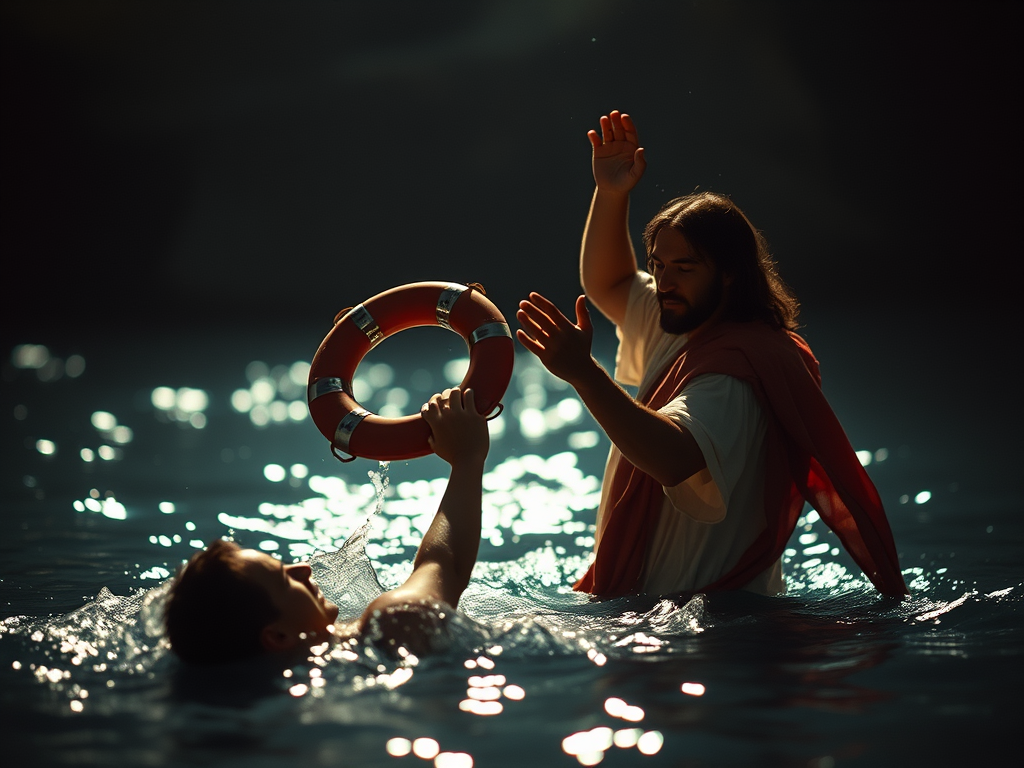
Lord, You have thrown me many spiritual life preservers, the greatest of which is Your sacrifice on the cross. Don’t let me close my spiritual ears to the sound of your voice. Instead, help me tear down any walls that fear has built in my mind and heart to keep me from reaching out to You and my neighbors. Amen.
The path to true peace, joy, and freedom — which is to say the path to union with God — isn’t often the same as the path to comfort. The first path I mentioned will require setting off without knowing what the journey will involve or what the destination will be like. In other words, following the path to union with God will ask us to trust what lies beyond our wounds, fears, and desires.
The journey will remind us that listening only to our instinct for self-preservation has led us astray in the past. It has isolated us, keeping us from finding true peace, joy, and freedom together, which is the only way we can find these gifts. We can’t find them alone.
We’re relational creatures who find our deepest sense of meaning beyond ourselves and our experiences, even beyond the communities we build with each other. We find lasting peace, joy, and true freedom when we recognize that while it’s essential to acknowledge our experiences and communities, as well as our practical needs, there is Someone who promises to provide for all of our needs and more, and we’re able to live in this reality.
What someone else is sharing about this week’s readings:
“That feeling of holy discontent doesn’t mean that yesterday’s prayer didn’t work; it means that God is building a relationship of trust with you. Just like the Israelites’ physical hunger kept them looking to the heavens for manna, our spiritual hunger turns us toward God.”
Lord, help me not to confuse comfort with true peace, joy, and freedom. Give me the faith and courage to trust you and to follow You when doing so feels most difficult so that I can find true peace, joy, and freedom. Amen.





 Sitting with the Sacred