Feeds:
Posts
Comments

Posts Tagged ‘Prayer’

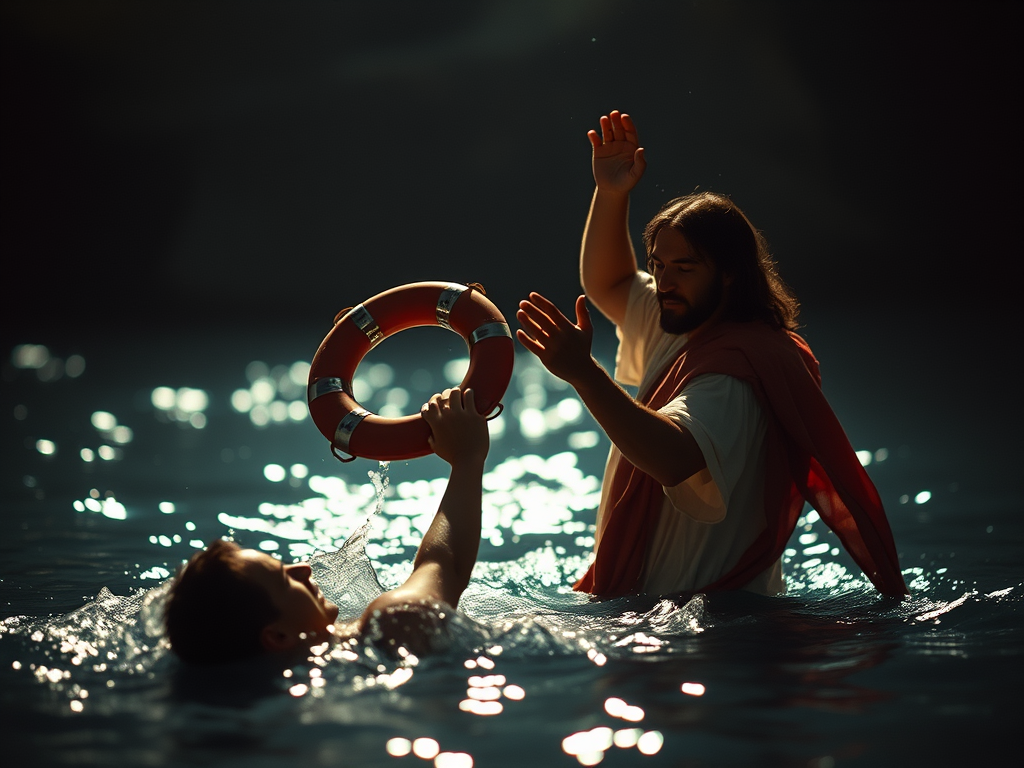
Image Generated by WordPress AI

Readings for September 15th:

  1. Isaiah 50:4c–9a
  2. Psalm 116:1–2, 3–4, 5–6, 8–9
  3. James 2:14–18
  4. Mark 8:27–35

What this week’s readings say to me:

The first reading presents someone who trusts receives God’s guidance and doesn’t rebel against it. He goes where God’s Spirit prompts him to go, and he hasn’t “turned back” (New American Bible Isa. 50:5). He hasn’t “turned back” even though he’s treated the way Christ will be treated during his passion (New American Bible Isa. 50:5). He never wavers from the path God leads him on despite his being treated this way. Why? Because, as a newer translation of the same addition of the Bible says, “He who declares my innocence is near” (New American Bible Revised Edition, Isa. 50:8). So in this passage, God is the best defense attorney. God knows God’s own law better than the people who are wrongly accusing and abusing Isaiah. The case of the accusers has no foundation.

In the psalm, the narrator explains why he loves the Lord. He says he loves the Lord because the Lord has heard his cries for help. He was in danger of death. His spirit was threatened by other spirits that have rebelled against the Holy Spirit. God saw how vulnerable he was in the face of these forces and stopped them from causing him to stumble and from weeping in hopelessness (New American Bible Revised Edition, Psalm 116:8). As a result, [he] “shall walk before the Lord in the land of the living” (New American Bible Revised Edition, Psalm 116:9). According to a note in the New American Bible Revised Edition, “walk[ing] before the Lord in the land of the living” “probably refers to being present to God in the Temple” (Psalm 116:9; 116:9n). This explanation prompts me to ask the question: what can we do to be active in living with faith?

The first two verses of the Old Testament reading give one answer and the third reading, the epistle, develops that answer further, telling us that wanting others to have what they need doesn’t bring faith to life. It’s taking part in providing what others need that brings faith to life. Faith isn’t demonstrated by prayer alone. Prayer opens us to the guidance that helps us discern how best to respond to the needs around us. Whatever the needs are, God brought us into being to meet them, even in the face of extreme opposition, as is the case in the Old Testament passage.

None of us is alone and having been given this work to do. God has done this work first and has called prophets to take part in it. God has also taken on a human life and suffered for it.

We will struggle. and sometimes suffer when we imitate Him. Why? Because humans have a tendency to want to hold onto power by keeping it to themselves and using it for themselves. Christ’s power, on the other hand, comes from his willingness to share and to surrender it. If we trust that surrendering is the true source of power, we receive that power as well. We receive that life. Turning inward in fear and holding on tightly to what we have isn’t the source of life, the Gospel passage says. Being able to hold loosely to what we have because we trust in God is the source of life.

What I’m saying (to the readings and beyond) this week:

To the first reading I say that I wonder if it’s my experience that “God opens my ear” (New American Bible, Isa. 50-4c). Maybe God does but like a door, I close it again because when my spiritual ear is open, so many voices come in and none of them is perfect, and that includes my own, of course. So when I choose what voices to listen to when and I act accordingly, I’m not sure it’s God or everything less than God that I rebel against.

Because of this experience, I take comfort that Christ encountered both opposition and support from every corner. He didn’t encounter opposition or support from only one group or another that He seemed to belong to or not to belong to or that seemed to some of his contemporaries to have spiritual and/or temporal authority over Him.

It’s a challenge to internalize that God defends me and that “I am not disgraced” when I have trouble recognizing this (New American Bible Revised Edition, Isa. 50:7). It’s a challenge not to be controlled by fear and not to be held back by walls in my mind and the walls I want to build around me to protect myself.

As I reread the psalm excerpt, I see that it’s written from the perspective of someone who feels trapped — “helpless” even (New American Bible Revised Edition Psalm 116: 6). It’s God who saves this person when he cries out to God. This person alone can’t save his own life.

Reaching out to God in the midst of fear is the key to not letting the fear kill the soul. It’s a key that’s most difficult to take hold of in life’s most difficult times, but that’s why God became one of us and then allowed Himself to be killed. He took the worst parts of us onto Himself so that we could become our best selves, so that we could become more and more like Him. That’s why the name for Christ that resonates most deeply with me is “God with us” (New American Bible Revised Edition, Mat. 1:23).

What someone else is sharing about this week’s readings:

Zulma Tellez reflects on Christ on the cross as a profound a profound expression of God with us.

This week’s prayer:

Lord, You have thrown me many spiritual life preservers, the greatest of which is Your sacrifice on the cross. Don’t let me close my spiritual ears to the sound of your voice. Instead, help me tear down any walls that fear has built in my mind and heart to keep me from reaching out to You and my neighbors. Amen.

Works cited (but not linked to):

Confraternity of Christian Doctrine, Inc. ” 24nd Sunday in Ordinary Time — 15 Sept. 2024: Readings at Mass.” The New American Bible, 2001. Universalis for Windows, Version 2.192, Universalis Publishing Ltd., 30 July 2024, https://universalis.com/n-app-windows.htm.

The New American Bible Revised Edition, Kindle edition, Fairbrother, 2011.
Read Full Post »

Photo Generated by WordPress AI

Readings for September 8:

  1. Isaiah 35:4–7a
  2. Psalm 146:7, 8–9, 9–10
  3. James 2:1–5 
  4. Mark 7:31–37

What this week’s readings say to me:

The readings for September 8 give me more to work with in the exploration of what justice means that I began in last week’s post. The passages tell me that doing justice means making sure that everyone has what they need to thrive physically, mentally, and spiritually.

Justice serves what gives life by looking beneath the surface for signs of that life. It doesn’t serve that which is fleeting or artificial—except when what is fleeting or artificial serves what’s good and eternal.

Beyond this week’s readings:

In the previous section, I wrote that justice removes barriers rather than that justice heals, even though the readings for September 8 contain more than one reference to what are often called healings. I wrote to “removes barriers” because I’d like to propose that the references to physical healing in the readings don’t have to be as much about removing this physical impairment or that one – any physical impairment, for that matter — as we may be accustomed to thinking they are. (By the way, these perspectives on physical impairment and their relationship to well-known accounts in Scripture are far from unique to me. Ms. Iozzio, whose reflection is linked in the next section, offers a perspective that relates to my own.)

Healing is involved, but I propose that more is being healed than seems apparent. A man’s physical Deafness is removed, and his difficulties with speech are removed so that he can connect with and contribute to his community in different ways than he has before. The event inspires his faith in Jesus as God incarnate.

I find it revealing that Jesus doesn’t say to the man “hear” and “speak clearly” when he lays hands on the man. Instead, He says, “Be opened!” (Mark 7:34). Granted, I can imagine ancient peoples explaining Deafness as being caused by the ears being closed. But I can also see “Be opened!” meaning, “Be open to faith.” For this man, Jesus is also opening the door to relating to his community in a new way. I invite you to read more about that new way of relating by clicking the link in the next section.

Each of us, regardless of what our limitations are and what causes them, are our most God-like selves when we’re open to faith and community. There are multiple ways to facilitate this openness. Healing impairments is only one of them. We can remove barriers. We can also be open to alternate ways of communicating and seeing. Impairments do no mean that a person reflects God’s image any less clearly than someone who seems to be without impairments. Being a member of the Deaf community or having a disability or illness doesn’t make anyone any less complete than anyone else. This perspective affects everyone because no one on this side of heaven has an invincible body.

New Testament support passages support the perspective that, though we are called to do our best to take care of what we have, and God is present to us to us so that we can share our desire to be well, having certain abilities isn’t the ultimate goal of the spiritual life. Consider that:

  • Jesus tells his apostles that a man’s blindness is not reflection of his own sinfulness or the sinfulness of his parents (John 9:1-3).
  • Saul, who will become Paul, goes blind when Jesus speaks to him on the road to Damascus (Acts 9:7).
  • Jesus heals a paralyzed man, telling him to get up and walk so that [onlookers] “may know [He has] the authority to forgive sins (Mark 2:9-12).
  • After healing a woman who’s had a hemorrhage for years, Jesus says to her, “your faith has saved you (Luke 7:50).

The human conditions in the examples above aren’t punishments. Even in Paul’s case, I think it’s the brightness of the light that blinds him, and the blindness helps him rely on God and the people around him (Acts 9:8). Blindness means the loss of physical vision for Paul, but it also means the acquisition of clearer spiritual vision for him.

However, it’s important to note that, in the same way that having an impairment doesn’t make a person less complete, than a person without that impairment, the condition also doesn’t necessarily make a person more spiritually insightful than a person without the same impairment. It’s also important to note that God is at work in different ways in different situations and to be cautious about presuming to understand why circumstances are what they are. Every situation presents its own challenges and its own opportunities for grace.

In each of the examples above, the physical healing isn’t the only or even the primary gift Jesus offers. The miracles treat sick souls, and not just the soul of the person who experiences a physical impact, but also the souls of the people who witness the impact or learn of it more than 2,000 years later.

What someone else is sharing about this week’s readings:

Mary Jo Iozzio brings contemporary perspectives on Deafness and disability into conversation with the Gospel passage for September 8. She helps us consider that that the passage isn’t about just one person “[b]e[ing] opened,” one person receiving the physical abilities that many his neighbors have.

This week’s prayer:

Lord, help us to be open to You and to one another. Help us to respond to Your invitation to healthy relationships, which are two-way streets that can be built in many ways. Amen.

Work cited (but Not Linked to)

The New American Bible Revised Edition, Kindle edition, Fairbrother, 2011.
Read Full Post »

Image Generated by WordPress AI

Readings for August 11:

  1. 1 Kings 19:4–8
  2. Psalm 34:2–3, 4–5, 6–7, 8–9
  3. Ephesians 4:30—5:2
  4. John 6:41–51

What this week’s readings say to me:

I think I’ll use a very current term to distill what the first reading says to me this time. It’s about the importance of self-care. When the passage begins, it seems like Elijah is physically and spiritually depleted. He asks God to end his life because he’s “no better” than anyone who came before him. (1Kings 19:4). I imagine him thanking that realizing this must mean he’s failed at the mission God has given him. After all, how can someone who’s no better than anyone who came before him be an effective prophet?

The situation is a reminder that God is at work even when we’re depleted. Sometimes, we’re most open to God working within and around us precisely when we feel we have nothing left to give. If we turn to God at no other time, many of us do so when we can’t see anywhere else to turn. I acknowledge this truth of human experience not to say that God wants us to be depleted. The Old Testament passage gives evidence to the contrary.

God knows that we need food, drink, rest, and to feel cared about to do our work and to be whole. God usually doesn’t force what we need upon us. Instead, God offers it, and it’s up to us to receive it. It was up to Elijah to acknowledge to God that he felt defeated and depleted, to rest, and then to take the nourishment that God offered.

The psalm reinforces that God provides for those who are open to receiving what God offers and to doing God’s work. It also reinforces the role the speaker has in finding what he needs, but it does so in a different way than the Old Testament passage does. The speaker says, “I will bless the Lord at all times” (Psalm 34: 2).

I had a gut reaction to this line, especially because it’s the first one included in this week’s psalm reading. I thought, “I don’t, and I won’t because there’s a lot that happens in the world that doesn’t seem like the will of a loving God, and I don’t understand why God, who I choose to believe is love, would allow these things to happen.

Thankfully, because I believe God is love, I also believe that a lot of things that happen grieve God. And I believe that sharing my grief and anger at what happens around me built as much of a connection to God is giving praise for God’s providence does.

My gut reaction also begins to feel different when I read later in this week’s psalm excerpt that the speaker “sought the Lord, and he answered me and delivered me from all my fears” (Psalm 34:5). Maybe having a record and so being able to remind himself of the ways the Lord “answered [him] and delivered [him] from all [his] fears is the reason [“God’s] praise shall be ever in [his] mouth” (Psalm 34: 2; 5).

It might be helpful to consider the ways each of us can keep a record of times we’ve felt we’ve had what we needed and were seen and heard. Keeping such a record in whatever way makes sense for each of us may give us strength in those times when we don’t feel we have what we need or when we don’t feel seen and heard.

Maybe keeping a record of those experiences of abundance and connection, of grace, will help us glorify the Holy Spirit rather than “griev[ing]” it (Eph. 4:30). Maybe this practice will help us avoid what the epistle is urging us to avoid and to embrace what the epistle is asking us to embrace. I find the excerpt’s message easy to hear but difficult to put into practice. Maybe keeping track of empowering memories is a way of experiencing God’s presence with us when we find ourselves in situations that feel less empowering.

In the Gospel passage, Jesus’ contemporaries are having trouble recognizing that He’s God in their midst and that learning from Him, imitating him, and taking His words to heart would feed them, giving them life, not only in that moment, but eternally. Listening to Him and receiving what He provides leads to God, and recognizing how God has guided and provided in the past makes God present among us in the current moment. It points to Christ.

What someone else is sharing about this week’s readings:

When we are called on to make sacred sacrifices in order to ‘live in love’ – it is not our very self – our created self- that we are losing. It is the assumptions and projections of who we should be, the expectations and external pressures of others laid onto us by others.

Kasha L. Sanor — in her reflection on this week’s readings

This week’s prayer:

Lord, help us to recognize and to receive You so we can be who we are in You and do what You place on our hearts to do. Amen

Work cited:

The New American Bible Revised Edition, Kindle edition, Fairbrother, 2011.

Read Full Post »

Image Generated by WordPress AI

Readings for July 7:

  1. Ezekiel 2:2–5
  2. Psalm 123:1–2, 2, 3–4
  3. 2 Corinthians 12:7–10
  4. Mark 6:1–6

Beyond this week’s readings:

I’m mostly taking a break from the blog this week, but I wanted to list the readings and offer a prayer.

This week’s prayer:

Lord, help us to experience Your power in our vulnerability and to recognize that Your power is the power of love. Help us not to cling to our expectations and preconceived notions so that neither limit our ability to recognize You and to experience Your love. I pray this prayer in the name of the Father, and of the Son, and of the Holy Spirit. Amen.

Read Full Post »

Image Generated with WordPress AI

Readings for June 23:

  1. Job 38:1, 8–11
  2. Psalm 107:23–24, 25–26, 28–29, 30–31
  3. 2 Corinthians 5:14–17
  4. Mark 4:35–41

What this week’s readings say to me:

Note: I won’t have much time for the blog for the next two or three weeks. Until I have more time to devote to Sitting with the Sacred, I’m planning on keeping this section brief, perhaps by pointing out an overall theme or lesson that stands out to me. So, what’s going to come to me this week?

On my first read-through of the readings for June 23, I noticed lots of imagery relating to stormy seas, the Lord having power over them, and as a result, people being kept safe amid destructive forces.

But the passage from 2 Corinthians doesn’t immediately seem to fit in with this theme. I’ve struggled to unpack it’s meaning, but I think the gist of its meaning is familiar: because Christ withheld nothing from us — not even His life so that he could conquer death and stop it from having the final say, we should withhold nothing from Him. We must instead ask for the grace not to see others only in terms of what is transitory, such as looks and abilities, or in terms of what they can do for us. All of these can and do change.

We are also being encouraged to ask for the grace not to view others in terms of the harm they’ve caused. Looks, abilities, what we can do for each other, and the ways we can hurt each other — none of these things remain as they are. They’re transformed by Christ’s resurrection. So are understandings of what it means to be saved and to die. I suppose that’s why, in the Gospel passage, Jesus is able to sleep while the apostles are terrified of drowning in the storm. He knows that neither the storm nor death have ultimate power over anyone in the boat. He and our free will have the ultimate power — because He and God are one, and it is God’s love that gives life and the freedom to receive God’s love or reject it.

It’s not trusting that love that brings about spiritual death. At one time or another, each of us will undergo physical death. But whenever we trust in God’s love and share it, we receive new life in our spirits.

This week’s prayer:

Lord, protect us as we face the literal and figurative storms of life on Earth. Thank You for being with us in the midst of the storms of all kinds that life sends our way. Help us to experience that storms don’t have the final say — no matter how much they hurt us. Help us to experience that it’s okay to have questions and be angry and afraid when they hurt us.

This week especially, we bring to prayer residents of coastal communities, seafarers, police, firefighters, healthcare workers, lifeguards, pastors, ministers, counselors, aid workers and many others who offer rescue in all its forms. Amen. We offer this prayer in the name of the Father, the Son, and the Holy Spirit.

Read Full Post »

Photo by KaLisa Veer on Unsplash

This week’s readings:

  1. Isaiah 40:1–5, 9–11
  2. Psalm 85:9–10, 11–12, 13–14
  3. 2 Peter 3:8–14
  4. Mark 1:1–8

What this week’s readings say to me:

This week’s readings remind me that for God there are no obstacles. It’s on account of the Divine Nature, which is love, that God doesn’t override our freedom to reject God or to invite God into our lives.

Comfort, give comfort to my people . . . .
A voice cries out:
In the desert prepare the way of the LORD!
Make straight in the wasteland a highway for our God!
Every valley shall be filled in,
every mountain and hill shall be made low . . .

Isaiah 40:1 and 4

No canyons or soaring peaks can get in God’s way. God is neither held back, nor propelled forward, nor weighed upon by time.

Like a shepherd he feeds his flock;
in his arms he gathers the lambs,
carrying them in his bosom . . . .

Isaiah 40:11

And yet you and I are. And so we wait for God to level the steep climbs and fill in the craters, wondering when the Prince of Peace is going to see to it that justice and peace reign. We wish God weren’t delaying so long in making this reign happen.

The third reading suggests the delay is thanks to God’s love. The landowner hasn’t returned to call for an how we’ve managed his resources because he wants as many people as possible to have the chance to use them to heal and to grow. He knows that if we do our part to bring about the world we want to see, the effort will bring about peace and justice within us. Figurative and literal mountains may be obstacles for us, but obstacles can be good for us if we ask God to help us look at them with clear, eternal eyes and to see them as opportunities to give, to depend on God, and to open ourselves to the Holy Spirit.

Kindness and truth shall meet;
justice and peace shall kiss.

Psalm 85:10

That’s what this week’s readings say to me, but the readings themselves express their message were beautifully than I can. I think there are verses in this week’s passages that are familiar and cherished by many, regardless of how regularly someone revisits Scripture passages. So I decided to include pull quotes of my favorite verses from these readings in this post. Also, I suggest that the readings as a whole might be sat with throughout Advent.

. . .we await new heavens and a new earth in which righteousness dwells.

2 Peter 3:13

What someone else is sharing about this week’s readings:

Sarah Hansman reflects on how practicing patience doesn’t conflict with taking an active part in prepar[ing] the way” for Christ to renew all that is by entering into it (Isa. 40:3).

Beyond this week’s readings:

Fr. Roderick Vonhogen shares what it means to have the grace of an Advent mindset year-round.

The theme of waiting for God’s coming to live among us and offering salvation, even as we are invited to take part in bringing about that salvation calls to my mind “The Serenity Prayer,” especially the well-known first stanza. It also brings to mind “A New Serenity Prayer” by Fr. James Martin. To give proper credit to the sources of these prayers, rather than typing them here, I’m just going to link to them and close this post by wishing you a fruitful, grace-filled week of active waiting. As I write this prayer, also on my mind is anyone waiting in suffering and grief. Come to those who are sorrowing. Comfort them with Your presence, Lord Amen.

Work cited (but not linked to)

Confraternity of Christian Doctrine, Inc. “Sunday 10 December 2023: Readings at Mass.” The New American Bible, 2001. Universalis for Windows, Version 2.183, Universalis Publishing Ltd., 31 Oct. 2023, https://universalis.com/n-app-windows.htm.

Read Full Post »

Photo by Josh Applegate on Unsplash

Give to the Most High as he has given to you,
generously, according to your means.

Sirach 35:12 — from the Old Testament reading for May 30.

How much has God given to us? How generous has God been?

Yes, in Jesus, God died for us, but to do that he also had to be born for us and to live for us. Included in the ministry that was His earthly life was praying for us. Sitting with John Chapter 17 for last week’s post reminded me of this. Even so, that chapter presents Jesus’ offering of prayers for the members of His spiritual family as a past event. Yet in the following New Testament, verses, we are assured that he still intercedes for us:

  • Romans 8:34
  • 1 John 2:1
  • Hebrews 7:25

He not only continues to pray with and for us, but he continues to offer himself to us in a form our senses can perceive, though those very same senses don’t see, don’t touch, and don’t take Him in — even as they do. He offers Himself in what we perceive as bread and wine because offering Himself in this way is consistent with His nature that is simultaneously intimate and transcendent. He is more than we can see, yet He wants us to hold Him, to take Him in. He gave His life so we can do this again and again when we receive the Eucharist. Check out this post from April 23, 2023 for a deeper look at the meaning of the Eucharist.

I just skimmed that post again. What it says to me now is that Jesus offers Himself—Body, Blood, Soul and Divinity in bread and wine, and we receive the gifts of this offering by trusting in their presence and by being open to and grateful for them. We express this trust, openness, and gratitude in one way by preparing ourselves with humility to receive and in presenting ourselves to receive the Eucharist — offering ourselves in return, in other words.

But Sirach 35:12 tells me that my offering is not meant to stop with my reception of the Eucharist. Rather, Jesus offers me Himself in the Eucharist so I can give myself completely to Him in worship and in my neighbor. Do I give my life to Him completely as He gave—and gives—His life to and for me? Not yet. But I’m grateful that knowing I couldn’t do it on my own, He gave — and gives me—what I need to be able to give all to Him.

Lord, help me to trust in and find strength in the gift of all of Yourself that You give to me. Amen,

The Bible. The New American Bible Revised Edition, Kindle edition, Fairbrother, 2011.

Confraternity of Christian Doctrine, Inc. “Sunday July, 2 2023: Readings at Mass.” The New American Bible, 2001. Universalis for Windows, Version 2.179, Universalis Publishing Ltd., 26 Feb. 2023, https://universalis.com/n-app-windows.htm

Read Full Post »

Photo by Janine Meuche on Unsplash

The grace of the Lord Jesus Christ and the love of God and the fellowship of the Holy Spirit be with all of you.

2 Corinthians 13:13

Today, we arrive again at Trinity Sunday. Here’s what I posted in honor of Trinity Sunday last year. I wanted to link to it because Richard Rohr’s reflection on the Trinity, which I included in the post, is insightful and helpful. But my plan from here on out is not simply to repost or to link to other posts.

This year, I feel prompted to sit with the Trinity by reflecting on 2 Corinthians 13:13. As I revisit this verse, it’s tempting to put dividers that are too solid between the Persons of the Trinity, to get the impression that the Lord Jesus Christ offers grace, God offers love, and the Holy Spirit offers fellowship, as if each of the Persons has a separate role. Yet I trust that my Creator, my Redeemer, and my sanctifier, a.k.a. my Father, my Brother, and the “love between them” extend grace, sacrificial love, and fellowship (Rohr). This one God in three Persons always has. The redemption began as soon as sin did. I trust that no part of God’s nature has ever not existed, and that the very nature of the Divine Being is grace, love, and fellowship. The theology of the Trinity reminds me that God is so intimate with me as to abide in my soul and body. At the same time, it reminds me that God’s nature and ways are above mine because God is the source and sustainer of all that lives and/or provides, all that is good. God is the ultimate intimacy and the ultimate transcendence. I’d say the way these qualities are entwined with each other like the strands of a braid is expressed as the Trinity.

What can this entwinning of seemingly opposite qualities, this Trinity, mean for my life and yours? As I’ve been mulling over this post the last couple of weeks, John 17 has been among the Gospel readings for each day. In this chapter, Jesus prays and teaches us what the Trinity can do and mean in our lives because of what it does and means in His. It means there’s no distance between Him and His father. is in His father and His father is in him. ( John 14:11). This abiding allows him to draw as near to other people as they will allow. If they don’t put up walls between themselves and him, and thus between themselves and the Father, they will be one with each other and will do God’s work. Their reflection of God and doing of God’s work will glorify the Father, and through the reflection and work the Father will glorify them.

Such glorification will result in those who allow the oneness standing out from whatever isn’t compatible with the life-giving, growth-supporting nature of the oneness. Whatever and whoever embraces and is embraced by this oneness opposes what is not embraced by it and is opposed by whatever or whoever doesn’t welcome the Divine Embrace that is the Trinity. Because Jesus knows the world needs the ones the Father has given to him and that they will face opposition both inside and outside themselves, He asks the Father not “to take [the ones He has given to the Son] out of the world but to keep them “from the evil one” because “[t]hey do not belong to the world anymore than [the Son] belong[s] to the world (John 17:9, 15).

The Son opened the Way to eternal life, and He leads us to it by his life, death, and resurrection. Thanks to his life, death, and resurrection, we are invited into the same embrace of the Trinity in which He lives. I invite this Love of the Trinity into my heart as I join my prayer to the one Jesus offers in John 17.

As another closing prayer, I’m looking to what is sometimes called “St. Patrick’s Breastplate Prayer” because, according to the version of this prayer that’s included with the Hallow app, it is prayed in Ireland not only on St. Patrick’s Day but on Trinity Sunday.

Deliver us deliver us from evil, Lord and protect us in times of temptation. Amen.

The Bible. The New American Bible Revised Edition, Kindle edition, Fairbrother, 2011.

Confraternity of Christian Doctrine, Inc. “Sunday July, 2 2023: Readings at Mass.” The New American Bible, 2001. Universalis for Windows, Version 2.179, Universalis Publishing Ltd., 26 Feb. 2023, https://universalis.com/n-app-windows.htm

Slanz, Julianne, “Lorica of St. Patrick.” Hallow, 17 March 2023, https://hallow.com/prayers/1016394.

Read Full Post »

Photo by Artem Beliaikin on Unsplash

This week’s readings:

  • Acts 2:1–11
  • Psalm 104:1, 24, 29–30, 31, 34
  • 1 Corinthians 12:3b–7, 12–13
  • Pentecost Sequence
  • John 20:19–23

For this post, I’m going back to listing all the readings at the beginning in case you want to revisit them and pray with them. I’m not going to dive deeply into any one of them. My memory, limited though it is, says I’ve already sat with the first, third, and fifth readings and written about them here You can read posts related to these readings by going back to “Earth,Wind, and Fire,” and “Locked Doors.”

Nothing jumped out at me about those passages when I returned to them this time around. This experience seems ironic, given that today is Pentecost this year, and Pentecost celebrates the opposite of the spiritual blahs, a.k.a “spiritual dryness.” Pentecost celebrates the Holy Spirit giving the apostles what they need to witness to what they’ve experienced and learned so they can care for those who follow Jesus and help their spiritual family grow in numbers.

The psalm is a wonderful prayer of invocation and praise for this celebration. I need to pray with it, and I will, but when I read it this week, I just felt prompted to pray with its words, not to explore it more deeply.

I think what’s going on with me ties to what I posted about last week. Thanks to the first, third, and fifth readings, I can read about how the Holy Spirit moved within the early church. These passages are great reminders and great stories, but receiving the same reminder, reading the same story over and over, isn’t the same as experiencing for myself what the early church experiences in this week’s readings.

So I’m going to invite the Holy Spirit to enlighten my senses — my eyes, ears, mind, heart, and lips. I’m going to extend this invitation using the Pentecost Sequence. I consider it a beautiful example of sacred poetry, and more specifically, liturgical poetry. (These are the names I’m giving it. I don’t know if these are some names the professionals apply to it.) As far as I’m concerned, it cries out with all the longings of the human soul in ways that paint pictures on the canvas of the mind. The comprehensive quality and the vividness of the sequence as well as its musicality are the reasons it resonates with me this week. For me, these qualities are enhanced by John Michael Talbot’s musical version,, “Come Holy Spirit.” You may want to have headphones on when you click the previous link, as it leads to the original version posted on the song on the musician and composer’s YouTube channel.

When you have headphones, and you’re able to set time aside to enjoy beautiful prayers, music, and poetry, I hope you’ll join me in following the links in this post. These links lead to expanded forms of the prayer I’ll close this week’s post with: Come, Holy Spirit. Amen.

Read Full Post »

This post is a continuation of my Lenten reflections on the Scriptural Stations of the Cross. The station titles and scripture and verse citations, except where otherwise noted, are published on USCCB.org.

Thirteenth Station: Jesus Dies on the Cross

(Luke 23: 44-46)

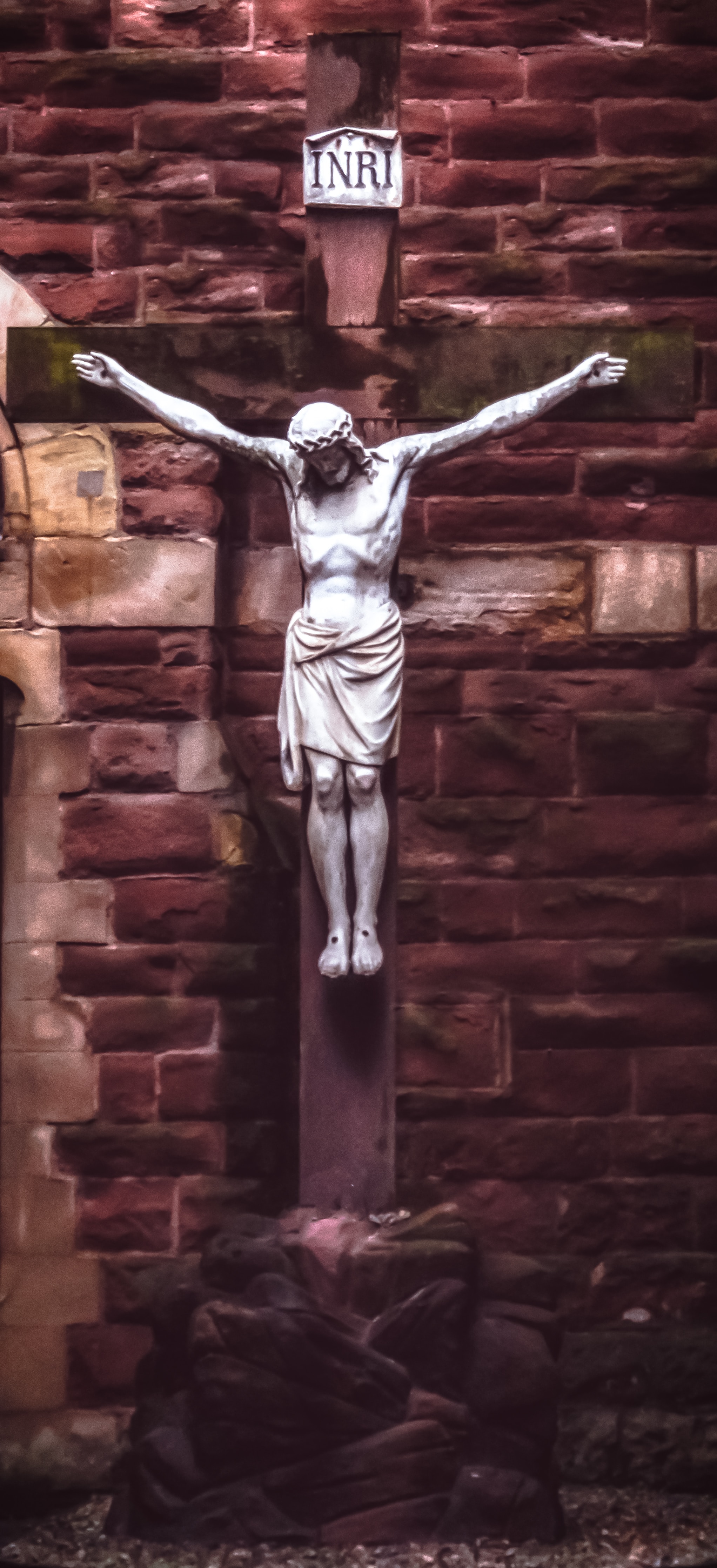
Photo by K. Mitch Hodge on Unsplash —Crucifix in the alleyway next to St. Patrick’s Church in Belfast (Jan., 2020)

Jesus, You began Your journey to the cross, in one sense, in the desert at the start of Your public ministry, and in another sense, in the Garden of Gethsemane. In both places, You let the Spirit lead you away from other people and from material comforts so that You could nurture Your relationship with the One who created You and sent You on Your mission. Times of retreat such as these allowed You to seek and to find the strength You needed to offer Yourself to Your brothers and sisters in the human family despite their spiritual blindness, weakness, greed, lust, fear, and impatience. You were able to surrender Yourself to others because You trusted Your Father would use their sins and frailties to accomplish the work of redemption. You knew that, ultimately, You were surrendering not to evil but to the Good of Your Father. For that purpose, You gave back to Your Father everything You received — Your desires, Your will, Your body, Your blood — every drop of it — and, in the moment to which I now turn my attention, Your spirit. You knew that only by dying, only by commending everything You had received to the Father, would You be free from the grip death had on You.

I, too, must embark on a lifelong journey of surrendering everything I have to Divine Love in order to receive Divine Life. I couldn’t travel this path if You hadn’t done so before me and didn’t continue to do so beside me and within me. I forget the sight and the feel of Your Way again and again, and You are with me to guide me back to it. Thank You for doing for me, with me, and in me what I cannot do by myself. Thank you for creating me for relationship in all its forms. Amen.

Fourteenth Station: Jesus is Placed in the Tomb

(Matthew 27: 57-60)

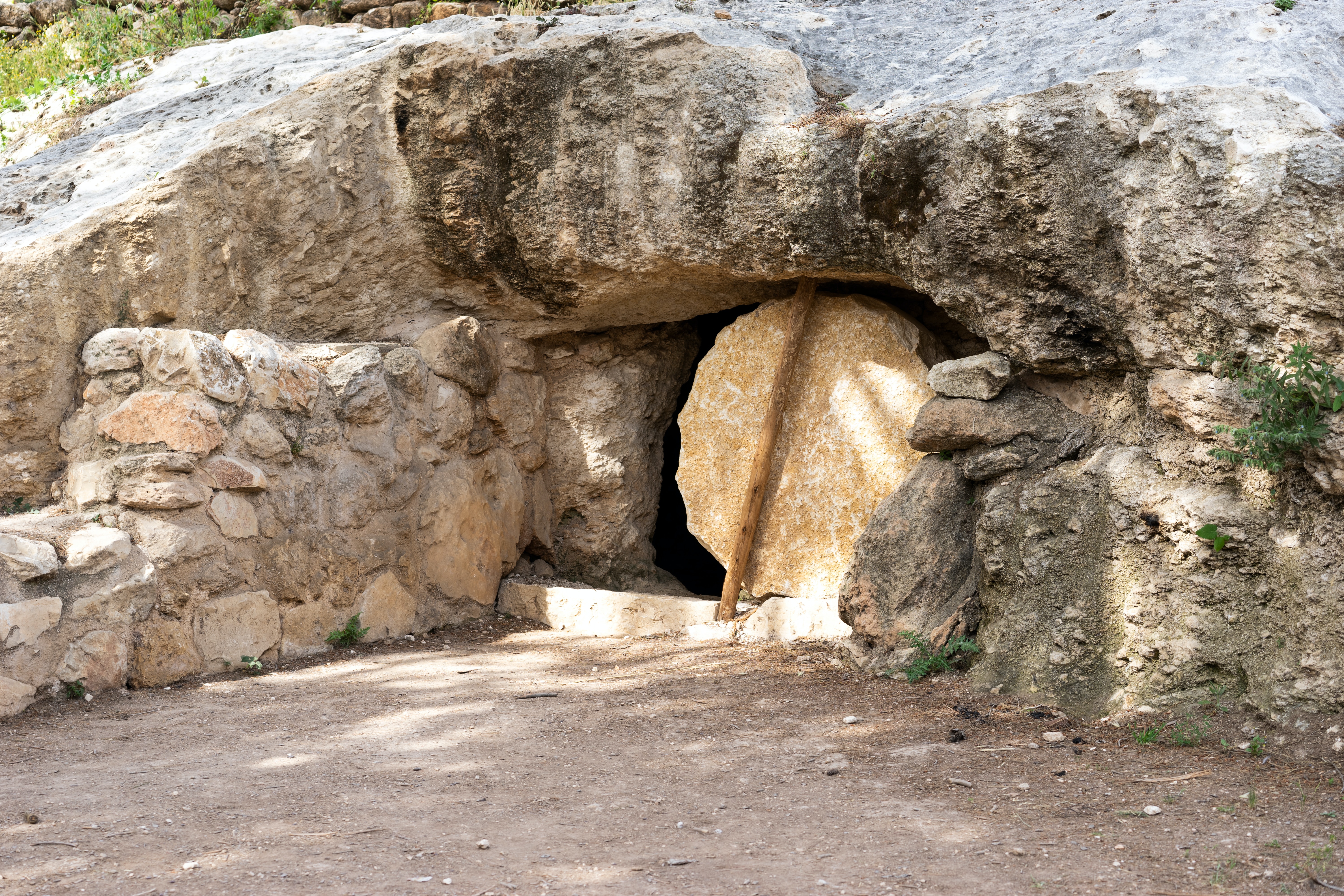
Photo by Jeremy Mura on Unsplash

Jesus, in honor of the care Joseph of Arimathea showed You when You could not express Your gratitude, I offer prayers of thanksgiving.

  • for those who share what they have
  • for those who give of themselves and their possessions without expecting compensation or a reward
  • for those who cannot express their gratitude for the care they receive
  • for those who look after the dignity of the dignity of members of the human family who have died.

I’m grateful that You call to Yourself people from all walks of life.

I pray for those who have died, for those who mourn, for those who wait, and for all of us who grapple with anxiety amid the uncertainty of life. I bring to You Your beloved ones who face situations that seem hopeless.

And I pray for the virtues of patience and charity. Help me to recognize and to accept opportunities to practice these virtues. Teach me to rest in You. Amen.

Read Full Post »

« Newer Posts - Older Posts »