
Feeds:
Posts
Comments

Posts Tagged ‘Pain’

Sara Fairbanks, OP, reflects through this week’s readings on love’s power to sustain us in the midst of fear and pain.

Yet pain can feel consuming and take so many forms – physical and emotional, yes. But emotional pain can be named more specifically. I tend to name it resentment, envy, anger, frustration, anxiety, and negativity-filled longing. These are the names I’ve learned to give my spiritual struggles. So that these struggles don’t overwhelm me, I need clarity, renewal, and strength the Holy Spirit can provide when I’m open to receiving these gifts.

I’m going to turn to Fr. Mark E. Thibodeaux’s God: I have Issues: 50 Ways to Pray No Matter How You Feel to shine the light of the Holy Spirit on the feelings I listed above. In doing so, I trust that with time and persistence, I will more often recognize light and love as more powerful than any emotion darkness tries to use to make me unable to recognize its opposite.

I also trust that making this book a companion to this blog for the time being will remind me to invite God into and recognize God’s presence in my pleasant, joyful, and simply routine experiences as well as my unpleasant ones.

Fr. Thibodeaux’s book is a guide to living and praying through the gamut of human emotions. Each chapter is dedicated to a different emotion or life experience and begins with a story from the author’s life about when he experienced or shared in someone else’s experience of that emotion.

After each introductory story, which is imbued with relatability and often humor. comes a long list of related scripture passages taken from both the Old and New Testaments.

After this list comes the “Prayer Pointers” section. I’ve consulted this book on and off for years, and while I’m not offering a professional perspective here, I would say that this section combines the wisdom of counseling, meditative, and pastoral approaches. Fr. Thibodeaux often suggests imaginative prayer and visualizations. This section also makes clear that the issues each chapter touches on are not resolved in one day. They are wrestled with in a healthy way by praying to be open to a shift in perspective and practice and by giving helpful habits a chance to become deeply rooted in daily life.

After the “Prayer Pointers” come inspirational or thought-provoking quotes. These are from sources other than scripture.

At the end of each chapter is a list of other chapters that might be related to the one I’ve just worked through. This section acknowledges that emotions are complex. (For example, grief can involve a mixture of sadness, anger, and guilt.) The index is also helpful when I’m not sure which chapter is most relatable to whatever I’m currently experiencing. In it I can look up experiences that weren’t used in the chapter titles.

Maybe in some future posts I’ll share a story of my own that the author’s story made me think of. Maybe I’ll share how his story got me thinking. Maybe I’ll reflect on one of the suggested scripture passages using approaches similar to those of used in the past. Or maybe I’ll share my experience with a visualization. Whatever happens, I’m eager to see where the Spirit leads and to hear what God has to tell me — and us.

Work cited

Thibodeaux, Mark E. God, I Have Issues: 50 Ways to Pray No Matter How You Feel, St. Anthony Messenger Press, 2005.
Read Full Post »

This post is a continuation of my Lenten reflections on the Scriptural Stations of the Cross. The station titles and scripture and verse citations, except where otherwise noted, are published on USCCB.org.

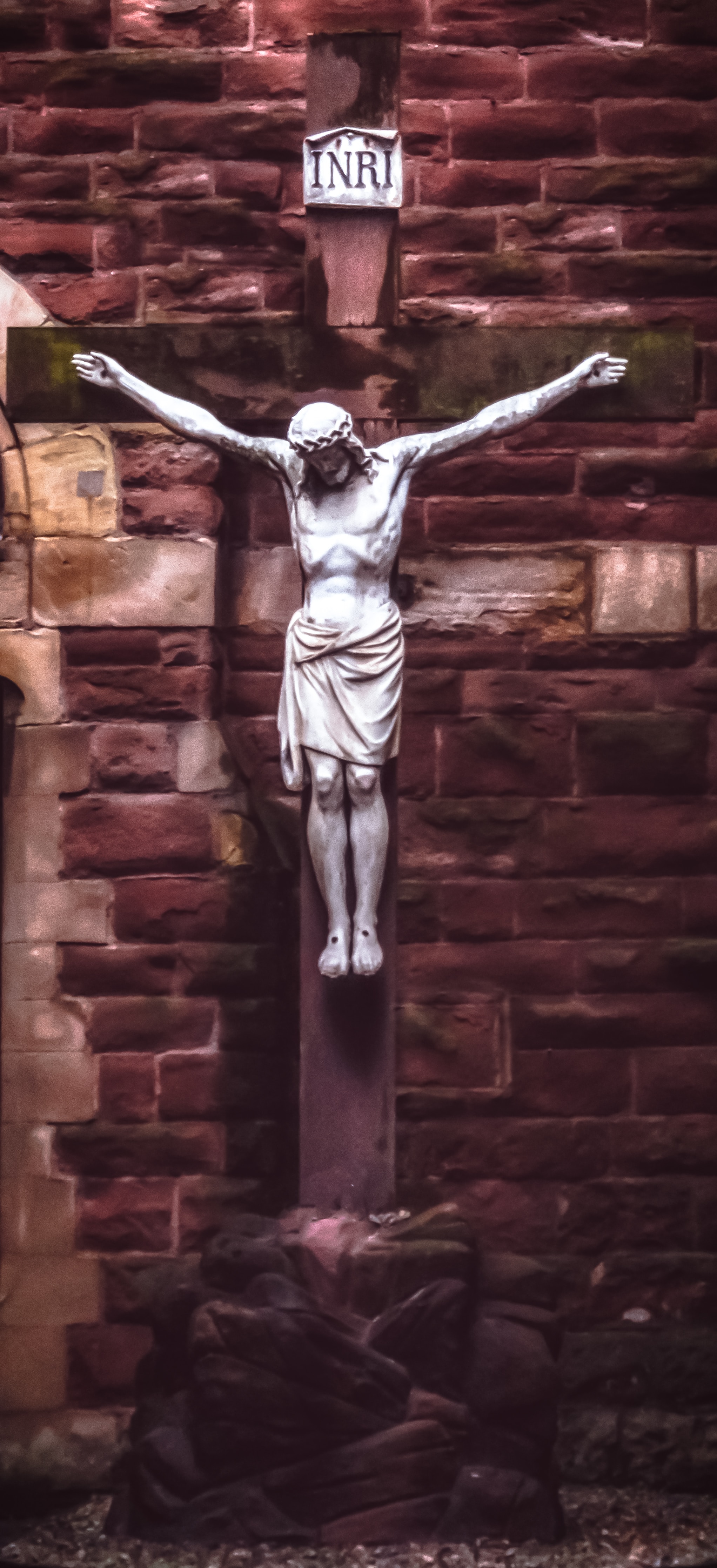
Thirteenth Station: Jesus Dies on the Cross

(Luke 23: 44-46)

Photo by K. Mitch Hodge on Unsplash —Crucifix in the alleyway next to St. Patrick’s Church in Belfast (Jan., 2020)

Jesus, You began Your journey to the cross, in one sense, in the desert at the start of Your public ministry, and in another sense, in the Garden of Gethsemane. In both places, You let the Spirit lead you away from other people and from material comforts so that You could nurture Your relationship with the One who created You and sent You on Your mission. Times of retreat such as these allowed You to seek and to find the strength You needed to offer Yourself to Your brothers and sisters in the human family despite their spiritual blindness, weakness, greed, lust, fear, and impatience. You were able to surrender Yourself to others because You trusted Your Father would use their sins and frailties to accomplish the work of redemption. You knew that, ultimately, You were surrendering not to evil but to the Good of Your Father. For that purpose, You gave back to Your Father everything You received — Your desires, Your will, Your body, Your blood — every drop of it — and, in the moment to which I now turn my attention, Your spirit. You knew that only by dying, only by commending everything You had received to the Father, would You be free from the grip death had on You.

I, too, must embark on a lifelong journey of surrendering everything I have to Divine Love in order to receive Divine Life. I couldn’t travel this path if You hadn’t done so before me and didn’t continue to do so beside me and within me. I forget the sight and the feel of Your Way again and again, and You are with me to guide me back to it. Thank You for doing for me, with me, and in me what I cannot do by myself. Thank you for creating me for relationship in all its forms. Amen.

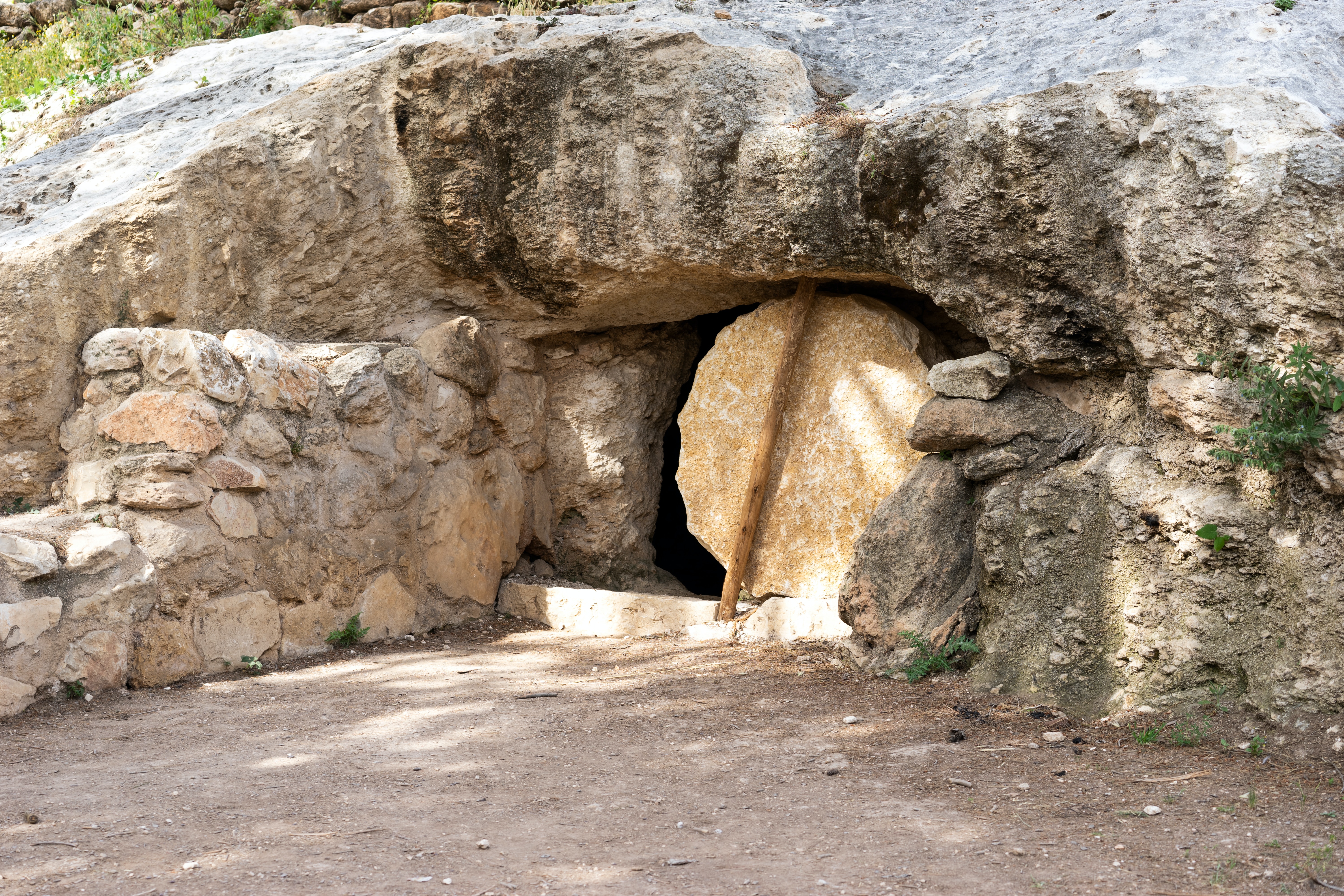
Fourteenth Station: Jesus is Placed in the Tomb

(Matthew 27: 57-60)

Photo by Jeremy Mura on Unsplash

Jesus, in honor of the care Joseph of Arimathea showed You when You could not express Your gratitude, I offer prayers of thanksgiving.

  • for those who share what they have
  • for those who give of themselves and their possessions without expecting compensation or a reward
  • for those who cannot express their gratitude for the care they receive
  • for those who look after the dignity of the dignity of members of the human family who have died.

I’m grateful that You call to Yourself people from all walks of life.

I pray for those who have died, for those who mourn, for those who wait, and for all of us who grapple with anxiety amid the uncertainty of life. I bring to You Your beloved ones who face situations that seem hopeless.

And I pray for the virtues of patience and charity. Help me to recognize and to accept opportunities to practice these virtues. Teach me to rest in You. Amen.

Read Full Post »

This post is a continuation of my Lenten reflections on the Scriptural Stations of the Cross. The station titles and scripture and verse citations, except where otherwise noted, are published on USCCB.org.

The figure of Jesus Christ carrying the cross up Calvary on Good Friday. The sky is dark and ominus.
Photo by https://www.istockphoto.com/portfolio/wwing?mediatype=photography

Seventh Station: Jesus Bears the Cross

(John 19: 6, 15-17)

Words are powerful. Help me, Lord, to remember this, and help me to use their power to do good. Help me to use them to build faith, hope, charity, justice, and mercy. May my words never stand in the way of anyone receiving and sharing Your gifts.

Help me to make the best of every situation by seeking and recognizing Your presence in each one, especially when I’m confronted with and affected by words and actions that don’t seem to foster faith, hope, charity, justice, and mercy.

Help me to do Your will and to feel Your presence, especially when I feel afraid, confused, weak, and alone. Strengthen me when I feel powerless. Increase my faith that you have given and will give me what I need to do what you ask. Amen.

Eighth Station: Jesus is Helped by Simon the Cyrenian to Carry the Cross

(Mark 15: 21)

Photo by Samuel Rios on Unsplash

Lord, help me to remember that when I join my crosses — the annoyances, the struggles, and the pain in my life — to yours, when I don’t allow my crosses to hold me down but instead trust that You will help me move forward while carrying them, I take part in my own redemption and the redemption of Your creation. Thank You for showing me through Simon and others how to do this, and thank You for giving my carrying of my crosses and the crosses of others redemptive power through Your passion and resurrection. Thank You also for teaching me through the role of Simon on the way of Your cross that I take part in Your redemptive work even when I don’t receive crosses willingly. Grant me the grace to accept and to share crosses willingly, nonetheless. Grant me the patience and discernment I need to share the crosses of the brothers and sisters closest to me and the closest those who are suffering throughout the world. Amen.

Read Full Post »

This post is a continuation of my Lenten reflections on the Scriptural Stations of the Cross. The station titles and scripture and verse citations, except where otherwise noted, are published on USCCB.org.

Photo by Francesco Alberti on Unsplash

Fifth Station: Jesus is Judged by Pilate

(Mark 15: 1-5, 15 [John 18:38 and Romans 8:31 — my insertions])

Jesus, as I read this passage, I imagine Pilate being focused on whether You seek power in the way that Pilate understands it. The power that Pilate is concerned about is a power that would come from an ambition to rule in Your place.

When You “You say so” to Pilate’s question about whether You are “the king of the Jews,” I imagine Pilate being reassured that You were no threat to his own power (Mark 15:2-3). He doesn’t see how You being “born . . . to testify to the truth” is a threat to his own power (John 18:38). He hasn’t been challenged by Your teachings as the Jewish authorities have. I imagine he hasn’t sought the true peace that comes from pursuing truth. He seeks only the appearance of peace that consists of making and keeping allies that suit different purposes at different times. This pseudo-peace concerns itself only with self-preservation. I imagine Pilate has this very limited perspective, and that’s why he reminds You of “how many things” the Sanhedrin accuse You of (Mark 15:4) I him.

But Jesus, You didn’t come to save yourself. You came to save creation. You are not concerned with others’ perception of you, except when that perception aligns with how God sees you. For You, the only approval that matters is approval given based on truth.

Jesus, help me to recognize the power of truth and to seek and find lasting peace that comes from its power. Help me to trust that You are embodied Truth and that because You are for me no one and nothing can be against me when I rest in You. Amen. (See Rom. 8:31)

Photo by Samuel Lopes on Unsplash

Sixth Station: Jesus is Scourged and Crowned with Thorns

(John 19: 1-3)

Jesus, open my mind and heart to the areas of my life in which I need to put up sturdier guardrails for myself. May I base my guardrails on the ones You have established for me — Your teachings and the Commandments by which you lived. Help me to remember that good can come from discipline, even though, when I first subject myself to it, it is uncomfortable. Sometimes, when I’m uncomfortable, I find strength not to flee from discomfort in remember that you endured not just discomfort but agonizing pain and that you gave the same Spirit to me that you possessed when you endured being scourged and crowned with thorns. The same Spirit that made you able to bear such pain and more enables me to face trials without being defeated in the long run — that is, if I trust in the Spirit and follow where it leads.

Holy Spirit, help me see the present moment clearly instead of letting regrets whip me. Show me how to use those regrets to make better choices.

Creator, Redeemer, and Sanctifier, help me not to make daydreams and entertainments into idols. Daydreams and entertainments are gifts of creativity. They can point me to You and to Your will for my life, but I need help to remember that pointing to You is not the same as being You. Help me to find rest and inspiration in creativity without being blinded or numbed by it. Help me to remember that You are the source of all creativity and beauty and to thank you for these gifts. Remind me that with You, I can embrace challenges and hardships. I can rest in daydreams and entertainments without hiding in them. I don’t have to use daydreams and entertainments to avoid hardships out of fear they are stronger than we are together. They are not stronger than we are together, and I can’t avoid hardships anyway. I can only delay facing them. Sometimes I can’t even delay facing them despite all the idols I try to put between me and them.

May I praise what You praise, and may my praise be sincere and thoughtful. Teach me to trust in the power that comes from You rather than in prestige and possessions. Amen.

The Bible. The New American Bible Revised Edition, Kindle edition, Fairbrother, 2011.

Confraternity of Christian Doctrine, Inc. “Sunday July, 2 2023: Readings at Mass.” The New American Bible, 2001. Universalis for Windows, Version 2.179, Universalis Publishing Ltd., 26 Feb. 2023, https://universalis.com/n-app-windows.htm

Read Full Post »

“. . .whoever is angry with his brother will be liable to judgment . . .”

Jesus— Matthew 5:22
Photo by Rohan Makhecha on Unsplash

The verse above and the reading from which it comes, Matthew 5:17-37, is one of those that I have visceral reactions to and not pleasant ones. Until I make myself focus on inhaling and exhaling a few times, I feel suffocated by darkness. I can’t see a sliver of light, and I feel nothing I can grab onto to move forward. I experience temporary despair when I revisit verses like the one I’ve highlighted, they awaken my anxiety and depression like the slightest unusual sound that can startle me out of a sound sleep at night.

I suppose such passages are meant to jar anyone who receives them out of complacency, and they do that. But I find it difficult to see what to do long-term after the jarring. I confess my anger, resentments, and wounds, and mentally, I surrender them to God again and again. Yet anger, resentment, envy, and self-service are such a part of my heart. They cut through every layer of my being. These emotions feel like thorny weeds embedded in a soul that’s filled with concrete. As time passes, uprooting them feels more and more impossible. I feel disappointed in myself for letting poison spread in my own heart and from there the world around me over and over despite repeated and sincere intentions to spread healing and light.

When I heard Matthew 5:17-37 again this weekend, I thought maybe this was one of the weeks I’d link to someone else’s reflection. I didn’t want to spread despair. After all, even though truths can be difficult to share and to receive, I have faith that despair is not truth. I asked God where I could find hope and the truth in the midst of the weeds in my heart and on the hamster wheel of my mind.

Two answers came to me:

  1. Imagine your emotions as electricity, and rather than thinking you need to make them go away, ask God to help you channel them toward creativity and the service of love, rather than simply unleashing them with the result being that they electrocute everyone and everything around you (by “you,” I mean me).
  2. Don’t give up on inviting the gardener of your heart to tend it. Maybe to be alive means not to give up.

It’s easier to imagine #1 coming to fruition for someone else, thanks to an individual being personally affected by a societal wound. Mothers Against Drunk Driving came to my mind. The Wikipedia article about the organization says MADD: “was founded on September 5, 1980, in California by Candace Lightner after her 13-year-old daughter, Cari, was killed by a drunk driver. There is at least one MADD office in every state of the United States and at least one in each province of Canada. These offices offer victim services and many resources involving alcohol safety. MADD has claimed that drunk driving has been reduced by half since its founding.”

The article goes on to say that “[a]ccording to MADD’s website, ‘The mission of Mothers Against Drunk Driving is to end drunk driving, help fight drugged driving, support the victims of these violent crimes and prevent underage drinking'” (qtd. in “Mothers Against Drunk Driving”).

But then there are the experiences that make people angry, that hurt them, that aren’t obviously catastrophic. There are the deep-seated wounds in ourselves, and by extension, in our relationships. I wonder if it’s true that the longer we’ve known someone, the more power they have to hurt us, and the more power we have to hurt the other person. The injuries from these connections may be older and deeper. They may have festered almost as long as we can remember. Elements of them are probably relatable to most people, and yet other aspects of them are unique to the people and situations involved. (Actually, even high-profile traumatic events probably share this quality of being a mixture of painful universality and uniqueness)

As I’ve wrestled with Matthew 5:22 the last few days, I’ve been reminded of the importance of naming emotions and then sitting with them, of saying to myself and to God, “Okay, I’ve just had an experience or an encounter that’s stirred some intense feelings. What are they? Anger, resentment, disappointment, sadness. In the past, I’ve tried to label them and then go on.

But earlier today, I found myself repeating, “I’m angry and hurt. I really wish things were different. I felt a lot more peace and relief when I vented to myself and to God about the feelings rather than hoping that I could simply name them and expect them to go away. Once I had allowed myself this time of confrontation and release, I felt for a good while that Jesus was with me in this pain and that I was a tiny bit grateful to share Jesus’ pain. I prayed that my accepting this pain would do some spiritual good I can’t understand yet. I really did feel like God had helped me harness at least some of the electricity, though the harnessing took a different form than the one that firs occurred to me when I asked for help.

I know that all too soon, I’ll forget to invite God into my struggles. Maybe the key as soon as I realize I’ve forgotten, is to extend the invitation again, to reopen the gate to the garden of my heart repeatedly. Thank You, Lord, for whispering gentleness to my mind when I forget You are there and for knocking on the gate of my heart. Amen.

Works cited

The Bible. The New American Bible Revised Edition, Kindle edition, Fairbrother, 2011.

“Mothers Against Drunk Driving.” Wikipedia: The Free Encyclopedia, Wikimedia Foundation Inc. 28 Nov. 2022, https://en.wikipedia.org/wiki/Mothers_Against_Drunk_Driving.

Read Full Post »