Feeds:
Posts
Comments

Posts Tagged ‘Lent’

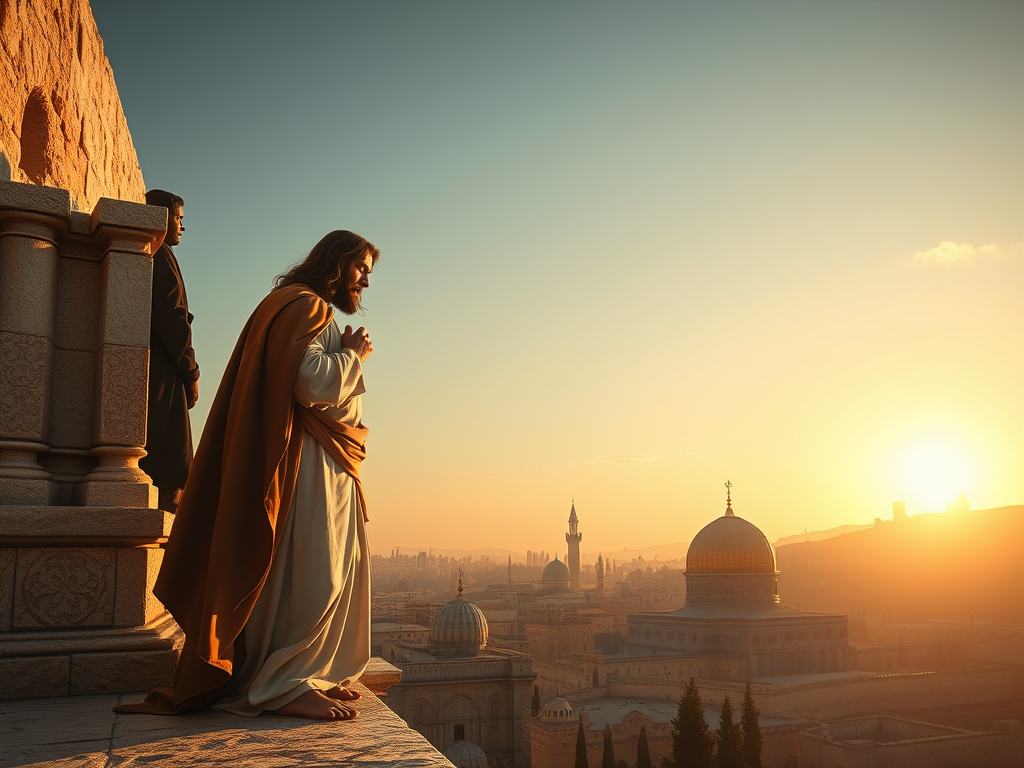
Image Generated by WordPress AI

Readings for April 13, 2025 — Palm Sunday of the Lord’s Passion:

All in one place:

https://bible.usccb.org/bible/readings/041325.cfm

In the context of each Bible book:

  1. Luke 19:28-40
  2. Isaiah 50:4-7
  3. Psalm 22:8-9, 17-18, 19-20, 23-24
  4. Philippians 2:6-11
  5. Luke 22:14—23:56

What I’m saying (about the readings and beyond) this week:

It’s daunting even considering writing a post about this week’s readings. They’re so well-known, and I’ve referred to events described this week in a general way in so many other posts. It’s hard to process the events described in them. It’s hard to take the events in on more than an intellectual level. I pray to be able to take some small part of them to heart.

What stands out to me from this week’s readings:

This week’s gospel recalls the past but signals the start of something new. To say that Christ’s Passion, the ultimate passage from the old to the new, will be painful is the epitome of an understatement. And yet it’s a passage that Christ and his disciples cannot avoid. It’s a passage filled with contrasts and contradictions, and it leads us to who Christ and his disciples are.

The following passages stand out to me:

[Peter] said to [Jesus], “Lord, I am prepared to go to prison and to die with you.” But he replied, “I tell you, Peter, before the cock crows this day, you will deny three times that you know me.”

Luke 22:33-34

[Jesus] said to the [apostles],
“When I sent you forth without a money bag or a sack or sandals,
were you in need of anything?”
“No, nothing, ” they replied.
He said to them,
“But now one who has a money bag should take it,
and likewise a sack . . . .
For I tell you that this Scripture must be fulfilled in me,
namely, He was counted among the wicked;
and indeed what is written about me is coming to fulfillment.”

Luke 22:35-37


Jesus said to him, “Judas, are you betraying the Son of Man with a kiss?”

Luke 22:48

When a maid saw him seated in the light,
she looked intently at him and said,
“This man too was with him.”
But he denied it saying,
“Woman, I do not know him.”

Luke 22:56-57

This week’s gospel also presents again and again questions related to identity.

The last quotation I included above is an exploration of both contradiction and identity. Here are some other explorations of identity that stand out to me:

“Blessed is the king who comes
in the name of the Lord.
Peace in heaven
and glory in the highest.”

Luke 19: 38

Then an argument broke out among them
about which of them should be regarded as the greatest.
[Jesus] said to them,
“The kings of the Gentiles lord it over them
and those in authority over them are addressed as ‘Benefactors’;
but among you it shall not be so.
Rather, let the greatest among you be as the youngest,
and the leader as the servant.

Luke 22:25-26

[The Sanhedrin] said, “If you are the Christ, tell us, “
but he replied to them, “If I tell you, you will not believe,
and if I question, you will not respond.
But from this time on the Son of Man will be seated
at the right hand of the power of God.”
They all asked, “Are you then the Son of God?”
He replied to them, “You say that I am.”

Luke 22:66-70

The centurion who witnessed what had happened glorified God and said,
“This man was innocent beyond doubt.”

Luke 23:47

What someone else is sharing about this week’s readings:

Anne Abrome, SSS presents the events of Holy Week as experiences that we go through with Christ and that Christ goes through with us.

This week’s prayer:

Lord, help us to remember Your presence in our joys and struggles this week. Grant us also the grace to experience Your joys and sorrows in our hearts. Help us to remember that the joys and sorrows of those around us are also Yours. Amen

Works cited:

Palm Sunday of the Lord’s Passion Lectionary: 37 and 38.” Daily Readings, Lectionary for Mass for Use in the Dioceses of the United States, Confraternity of Christian Doctrine, 2nd typical ed, United States Conference of Catholic Bishops, 2025, https://bible.usccb.org/bible/readings/033025-YearC.cfm.

Read Full Post »

April 6, 2025 Readings All in One Place:

https://bible.usccb.org/bible/readings/040625-YearC.cfm

Readings in the context of each Bible book:

  1. Isaiah 43:16-21
  2. Psalm 126:1-2, 2-3, 4-5, 6.
  3. Philippians 3:8-14
  4. John 8:1-11

What I’m saying (about the readings and beyond) this week:

I’d be a hypocrite if I wrote here as if the words of the epistle – any of them — could be my own. If there’s one thing it seems like I can never do, it’s “[forget] what lies behind [and strain] forward to what lies ahead” (Phil. 3:13).

So the approach I decided to take for this week is to focus on one passage. Meanwhile, the journaling prompts I responded to this morning me to consider my relationships. Wilderness asked me to return to the roots of what distorts my ability to reflect God. It prompted me to consider how those roots affect my relationships.

I responded that when I’m paralyzed and silenced by fear, I don’t give others the opportunity to receive grace from what I might contribute — regardless of whether my contribution is flawless. God is present in all circumstances, though two things are often true. The first is that God’s presence can be hard to recognize in the most painful circumstances. The second is that even if we recognize God in such circumstances, what we recognize may not take the form we’d like it to. We may not experience it in the way we’d like to.

When I’m paralyzed and silenced by fear, I also feel ashamed hypocritical, and frustrated by my invisible bindings, frustrated at not making myself seen and heard. I regret. Then I take my feelings out on the people around me, and the crack in the mirror through which I am meant to reflect gets God’s wider and longer.

What stands out to me from this week’s readings:

What stands out to me from this week’s readings is the gospel passage. What stands out to me within that passage is how little Jesus says to the woman who faces being stoned for being caught in adultery. I also notice how little the woman says to Jesus.

We also aren’t told whether Jesus knows that what the accusers say is true. We aren’t told that Jesus tells the woman he doesn’t condemn her because he knows she’ll heed his exhortation: “Go, and from now on do not sin any more” [sic] (John 8:11).

And yet we’re told elsewhere in Scripture Jesus knows things about people without those people revealing those things. The encounter with the woman at the well comes to mind as described in John 4:1-42. She tells everyone about him because, as she says, he “told [her] everything [she] [has] done (John 4:29). As is the case with the woman facing stoning, the text doesn’t tell us whether she ever went back to her previous life. Similarly, in the encounter in which Jesus promises to stay with the tax collector Zacchaeus, we don’t learn whether the tax collector keeps the promises he makes in public after he encounters Jesus (Luke 19:5).

But as I’ve written on this blog before, I heard somewhere that when a name is handed down through Scripture, it’s because the person was well-known to early Christians.

Fewer women are named in Scripture than men. But maybe the fact that the stories of the woman at the well and the woman caught in adultery have been handed down means that these women were well known within the Christian community.

Or maybe we have their stories, though not their names or more about what happened before or after these encounters because the primary lessons we’re meant to take from them aren’t meant to be based on what they do.

The story of the would-be stoning is as much about the men who threaten to inflict the punishment as it is about the woman who would have received it. After all, the passage tells us the authorities bring the women to Jesus because they want to “test him” (John 8:6). He takes this test as an opportunity to teach them about mercy.

The encounter takes me think of Luke 6: 41-42:

“Why do you notice the splinter in your brother’s eye, but do not perceive the wooden beam in your own? How can you say to your brother, ‘Brother, let me remove that splinter in your eye,’ when you do not even notice the wooden beam in your own eye? You hypocrite! Remove the wooden beam from your eye first; then you will see clearly to remove the splinter in your brother’s eye.”

It also calls to mind a line from the Lord’s Prayer: “Forgive us our trespasses as we forgive those who trespass against us.” The key to not being condemned is not to condemn others. Even as I repeat this familiar message, it makes me ask questions:

  • How many cries for justice reveal not only the injustice that’s being called out but also the injustices committed by the person or people whose sense of justice has been violated?
  • How can I ask God for justice without condemning the person or people who participate in injustice?
  • How can I treat myself and others with compassion and humility without making excuses for the harm my choices and the choices of others may cause?

The limited instruction and the few words this passage contains are both an answer to this question and not very much of one. Maybe passages like this invite us to wrestle with the questions, to answer them as best we can and apply the answers as best we can to the situations we encounter. When, whether in the midst of reaching those answers or later on, we decide they’re unsatisfying, maybe recognizing our limitations and our dependence on God’s grace is all we can do.

What someone else is sharing about this week’s readings:

This week’s prayer:

Lord, help me to offer to others what I’d like to receive from you — forgiveness, understanding, and empathy. Amen

Works cited:

Garrett, Sr. Josephine. Wilderness Within. Kindle version, e-book ed., Ave Maria Press, 2024, A Guided Lent Journal for Prayer and Meditation, Accessed 23 Feb. 2025.

“Fifth Sunday of Lent Year C— Lectionary: 36.” Daily Readings, Lectionary for Mass for Use in the Dioceses of the United States, Confraternity of Christian Doctrine, 2nd typical ed, United States Conference of Catholic Bishops, 2025, https://bible.https://bible.usccb.org/bible/readings/040625-YearC.cfm.

Read Full Post »

Readings for March 16 and 23, 2025

All in one place — well, two, for this post:

March 16:

https://bible.usccb.org/bible/readings/031625.cfm

March 23:

https://bible.usccb.org/bible/readings/032325-YearC.cfm

In the context of each Bible book:

March 16:

  1. Genesis 15:5-12, 17-18
  2. Psalm 27:1, 7-8, 8-9, 13-14
  3. Philippians 3:17—4:1
  4. Luke 9:28b-36

March 23:

  1. Genesis 15:5-12, 17-18
  2. Psalm 27:1, 7-8, 8-9, 13-14
  3. Philippians 3:17—4:1
  4. Luke 9:28b-36

What stands out to me from the readings for the next two weeks:

March 16th:

The Scripture passages for March 16th remind me that each of is born in a particular place and time. This was true for Abraham and Jesus as much as it’s true for each of us. Both Abraham and Jesus understood God had given them the earth’s resources to use wisely while they lived here. They also knew they belonged to God — not to God’s creation. Nothing created would offer lasting satisfaction. Only trusting in God would.

We, Abraham, Paul, and Jesus were given gifts to appreciate and work to do in the times and places we inhabit. In the course of our appreciation and our work, will get glimpses what lies beyond any time and place. As much as we might want to stay in these glimpses, we can’t hold onto them here, while we’re subject to the biological needs and psychological and spiritual pressures that tempt us.

Nevertheless, God invites us not to let these pressures dominate our lives. The March 16th readings promise that if we don’t give up on persevering in spite of these pressures, when we’re finished with life on earth, the challenges of that life won’t be able to keep us down. As the passage from Philippians says:

“[O]ur citizenship is in heaven,
and from it we also await a savior, the Lord Jesus Christ.
He will change our lowly body
to conform with his glorified body  
by the power that enables him also
to bring all things into subjection to himself

Philippians 3:20-21

March 23rd

Our understandings of God are works in progress. So is our ability to reflect God’s image without distortion. No one can be sure how or how long God will work to refine each of our reflections. Therefore, this week’s readings urge us to open our hearts to God so that God can clean and repair the mirrors of our souls now. Bringing ourselves to God for this cleansing and repair is what will allow us to become, like God, eternal presence. Each of us needs to undergo God’s cleansing and repair again and again. No one else can undergo this process for us, and the process looks somewhat different for each person. Each of us can only encourage each other to place ourselves in the hands of the One who makes and remakes our mirrors, and we can consider how to avoid what scratches, cracks, and shatters them.

What I’m saying (about the readings and beyond) this week:

My journaling this week keeps bringing me back to the idea of trust. Going back to this idea suggests to me that a fruit of trust is being grounded in the present, not needing to escape it. Trust means recognizing what I have the power to change and having the courage to work on changing it. Trust means recognizing that making change happen is a process. It requires being intentional, falling short of the intention, and then being intentional again and again. Trust means not losing hope, not losing faith that change that God wills will happen. It also means recognizing what isn’t mine to change and handing all that over to God, trusting that in the end, justice and mercy triumph.

In writing all this, I don’t mean to suggest that I’ve taken all of it to heart and have found an unshakable peace. I wish. I’m merely in a place of reminding myself of my intention to trust.

What someone else is sharing about the readings for the next two weeks:

Mayella Vasquez’s reflection on the readings for March 16th reminds me that part of trusting is listening. Her reflection also makes me consider that the Transfiguration isn’t just something that Peter, James, John and Jesus experienced. It’s something each of us can experience again and again if we look and listen for it

As I prepare to publish this post on Sitting with the Sacred, there’s no reflection for March 23rd posted on the Catholic Women Preach website.

This week’s prayer:

The Serenity Prayer, and Mark 9:24

Scripture Translations Used:

“Second Sunday of Lent — Lectionary: 27.” Daily Readings, Lectionary for Mass for Use in the Dioceses of the United States, Confraternity of Christian Doctrine, 2nd typical ed, United States Conference of Catholic Bishops, 2025, https://bible.usccb.org/bible/readings/031625.cfm.

“Second Sunday of Lent Year C— Lectionary: 30.” Daily Readings, Lectionary for Mass for Use in the Dioceses of the United States, Confraternity of Christian Doctrine, 2nd typical ed, United States Conference of Catholic Bishops, 2025, https://bible.usccb.org/bible/readings/032325-YearC.cfm.

Read Full Post »

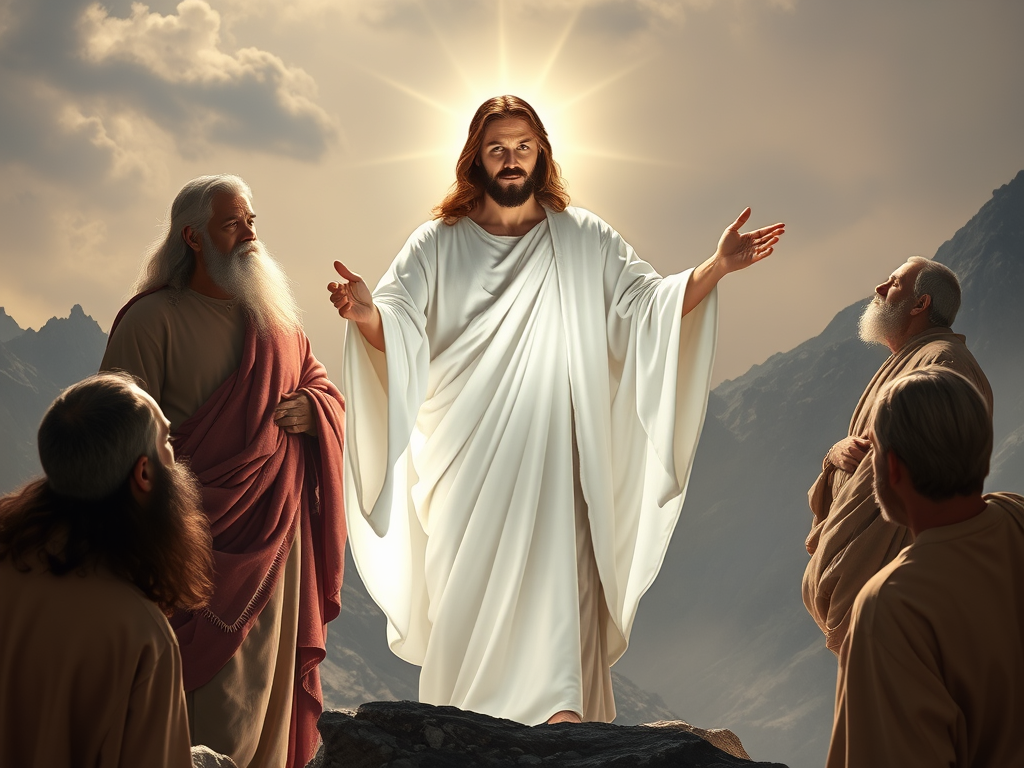
Photo Generated by WordPress AI

Readings for March 9, 2025:

All in one place:

https://bible.usccb.org/bible/readings/030925.cfm

In the context of each Bible book:

  1. Deuteronomy 26:4-10
  2. Psalm 91:1-2, 10-11, 12-13, 14-15
  3. Romans 10:8-13
  4. Luke 4:1-13

What stands out to me from this week’s readings:

  • Most of the first reading is a reminder of how God led the people of Israel into the wilderness to deliver them from enslavement in Egypt. Moses reminds the people that because God freed them, everything they have comes from God. Therefore, a portion of whetver they have should be given back to God.
  • The verses from Psalm 91 provide further poetic reminders of God’s providence.
  • The epistle continues and expands theme from last week. Faith and the life that comes from it take root and grow in the heart.
  • In the Gospel passage, Jesus’ example teaches that life comes not from Him serving himself. Demonstrating power or sacrifice just for the sake of sacrifice or power isn’t holy. An offering made out of love is. It has much more potential to heal wounds.

What I’m saying (about the readings and beyond) this week:

It surprised me that God as provider and liberator stood out to me this week. As I got ready to draft this section, thinking about what had surprised me, I went back to the Gospel passage looking for the reference to angels ministering to Jesus. I thought that reference would be another lesson in God’s providence, and it is. But it’s not in this week’s gospel passage. It’s in Matthew 4:11, and it comes after the temptations. That chapter in Matthew begins telling us that “Jesus was led by the Spirit into the desert to be tempted by the devil” (1). But the Luke passage begins with “Filled with the Holy Spirit, Jesus returned from the Jordan and was led by the Spirit into the desert for forty days, to be tempted by the devil” (Luke 4:1). This is Luke’s way of telling readers and hearers that the Son of God is not entering alone into an unfamiliar, harsh environment. He won’t face temptation without providence from God.

Thoughts on my Tuesday journaling experience:

Outside of this week’s readings, I’ve begun the journaling I wrote about in this section last week. A couple of the books, rightly, I think, invite their readers to start the process of using the book before Lent begins. Doing this has given me a deeper appreciation of what the upcoming season is really about. Prompts have gotten me thinking about what actually stands in the way of my relationship with God and with others. Hint: it isn’t chocolate, and it is in the game or a TV show. Prompts have made me want to get begin practices that I’ll (hopefully) continue through Easter and beyond.

Thoughts on my Wednesday journaling experience:

While the journaling prompts in each book is different, each one has tended to draw a similar answer out of me. That’s helpful. It clarifies what I see the need to surrender. It also highlights the areas of my life where I’m seeking renewal. Answering similar questions that are asked in different ways is also beneficial. It lets me see my answers in a different light each time I record them. Maybe recording the same ideas multiple times in different ways will help habits that are spiritually healthier stick.

I’m setting an intention this Lent to see the season or as a continual process of turning toward God rather than away from what is not God. Yes, turning toward one thing often requires turning away from another. However, my desire is to make the acts of turning toward awareness my emphasis.

Thoughts on my Thursday journaling experience:

Try to keep an open mind and heart. Leave room for adjusting your plans. Be careful about not letting your plans take over your life so that they work against their intended purpose. Be careful that your plans don’t take away from the good you are already doing before you began them.

Mindfulness is a lot harder to maintain than the avoidance of chocolate. Distractions are everywhere, all the time, and they aren’t just external. Recommitting to mindfulness is something that happens over and over again throughout the day. It’s not something a person “gets right.” Returning to mindfulness again and again makes sense for Lent. Practicing mindfulness is just that — practicing. Practicing it is like falling and getting up again and again.

Thoughts on my Friday journaling experience:

Silence isn’t always empty or quiet. It can be filled with presence and sounds I rarely notice — like a variety of bird songs.

What someone else is sharing about this week’s readings:

Ana Gonzalez, OP relates this week’s readings to the suffering that goes on in the world around us. Her reflection reminds us of the spiritual purpose behind Lenten practices. They are meant to deepen our relationships with God. By doing so, they deepen our relationships with others.

This week’s prayer:

Lord, you did not make us to die in spiritual deserts. Help us not to wither this Lent but to grow instead. Help us to grow in relationship with you and in solidarity with others. Instill in us gratitude for the ways the natural world and spiritual realms provide for us.

Scripture translation used:

“First Sunday of Lent — Lectionary: 24.” Daily Readings, Lectionary for Mass for Use in the Dioceses of the United States, Confraternity of Christian Doctrine, 2nd typical ed, United States Conference of Catholic Bishops, 2025, https://bible.usccb.org/bible/readings/030925.cfm.

Read Full Post »

Photo by Nathan Dumlao on Unsplash

This week’s readings:

  1. Jeremiah 31:31–34 
  2. Psalm 51:3–4, 12–13, 14–15
  3. Hebrews 5:7–9
  4. John 12:20–33

What this week’s readings say to me:

This week’s readings show me from different angles about how to start fresh, how to find renewal, how to be restored. The first reading echoes the message of last week’s third reading — that Christ is the source of renewal in God. This week’s first reading promises the renewal, the reunion with God that the events of Holy Thursday, Good Friday, Holy Saturday, and Easter Sunday will offer.

The psalm says to me that I might as well be its narrator. “A clean heart” and “a steadfast spirit” are precisely what I long for. As a person who experiences anxiety, has an anxious nature even, the request for “a steadfast spirit” particularly resonates with me (Psalm 51: 12-13).

The third reading urges me to persevere in making the requests I highlighted in the second reading. It also reminds me that receiving that “clean heart,” that “steadfast spirit” will mean facing my fears and in doing so, standing up to my desire to let the comforts of self-preservation and the status quo rule my life (Psalm 51: 12-13). To imitate Jesus, to cooperate with God’s will, to live, is to die to the instincts to preserve a distorted idea of myself and to maintain the status quo. The Gospel passage presents the same message in a different way.

I don’t mean to suggest that this message is telling us that rules are meant to be broken and that systems are meant to be dismantled, or that following a routine should be dispensed with entirely — only that we need to be open always to evaluating how our systems are working, who they are working for, and who they aren’t, and how they need to be reformed, adapted, or adjusted to work better. They can’t work better if they don’t support growth, which means more than being alive, it means living, which means being able to share material, spiritual, and intellectual gifts. It means being able to connect with and care for the world around us.

What someone else is sharing about this week’s readings:

Susan Nchubiri, MM draws a challenging invitation from this week’s readings to offer to others what God offers us.

Beyond this week’s readings:

God calls us to forgive and forget.

Susan Nchubiri, MM

My immediate reaction to this statement was to push back, partly because of sermons, homilies and other reflections. I’ve often heard that God’s forgiveness doesn’t excuse what’s being forgiven; forgiveness of harm doesn’t erase the harm. And wouldn’t forgetting mean erasing the harm from individual and collective memories? And how can an all-knowing God forget?

I’ve read that Jesus retained His wounds after the resurrection. For many others having, the reality of their wounds and what caused those wounds acknowledged is an important part of the healing process. And yet, too often, societies and individuals have behaved as if healing could be found by pretending harm never occurred.

Maybe we don’t have accurate words for how God sees us and our sins. An all-knowing, all-powerful, all loving God can see in each of us the special ways reflect the Divine Nature if we don’t distort this reflection with sin, or if we allow God to restore the clarity of the reflection by handing over our sin and frailty to Him God knows that, by ourselves, we can’t be completely undistorted mirrors of holiness. Perhaps God also doesn’t unknow each of our sins. But God does transform them into opportunities to receive and to share grace, opportunities to recognize that we need God and others, and that others need us in return. Showing our wounds lets others know him they can uncover theirs as well. Wounds exposed to light, air, disinfectants, and other treatments can close. Them closing doesn’t mean they won’t leave behind scars. It just means they won’t hamper our growth, our very life, as they did when they bled under bandages.

Lord, give us the courage to acknowledge our wounds before you and others, just as you have not hidden your wounds from us. Lord, clean our wounded spirits and restore them to steadfastness. Transform scars into reminders that strength can be found in the vulnerability of openness. Help us not to let whatever we’d rather forget weigh us down. Transform our memories, whether painful or joyful, into means of connection to You through everything that is. We thank You that everything is able to serve this purpose because You came to live, die, and rise among us. Amen

Confraternity of Christian Doctrine, Inc. “5th Sunday of Lent, Sunday 17 February 2024: Readings at Mass.” The New American Bible, 2001. Universalis for Windows, Version 2.186, Universalis Publishing Ltd., 8 Feb. 2024, https://universalis.com/n-app-windows.htm.

Read Full Post »

Photo by Daria Nepriakhina 🇺🇦 on Unsplash

This week’s readings:

  1. Exodus 20:1–17
  2. Psalm 19:8, 9, 10, 11
  3. 1 Corinthians 1:22–25
  4. John 2:13–25

What this week’s readings say to me:

This week’s readings give specific examples of what wisdom looks like. In general, the readings tell me that wisdom appreciates healthy boundaries and relationships. The Ten Commandments, which are listed in the first reading, help us maintain healthy boundaries and relationships. The psalm celebrates the wisdom God offers us. The third reading acknowledges that humans often don’t recognize God’s wisdom, even though the psalm praises it. The third reading points out that God’s wisdom asks us to do more than accept a set of ideas, aspire to a set of ideals, or simply beg for God to act and then wait for the action.

The Gospel shows Jesus exemplifying that having faith is more than an intellectual activity, and it isn’t a passive activity. either. This week’s fourth reading also exemplifies that living a life of faith means seeking a healthy relationship with God. And a healthy relationship with God is more than a transactional relationship. It means more than going to a specific place and/or performing. Living a life of faith requires the cooperation of the whole person — body and spirit — and the offering of everything he or she has to God.

What someone else is sharing about this week’s readings:

Vickey McBride reminds me of the importance of being sensitive to the difficulties in the lives of people I come into contact with. She reminds me to be attentive when others share their difficulties. She also acknowledges how challenging attentiveness can be in these circumstances and relates Jesus’ actions in the Gospel passage to the challenge of this part of the human experience. Click here to find out how.

Beyond this week’s readings:

It’s important that I begin this section by revisiting my response to last week’s readings. I learned from my pastor’s homily about last week’s Old Testament reading that the story of the almost-sacrifice occurs at a place in the timeline when Isaac isn’t a child. My pastor said that in the passage, Isaac is a grown man who knows what’s expected of a man in his culture. As a man in his prime, he also could overpower his much, much older father, but he doesn’t. He trusts in the promises God made to his father, so he does what the situation seems to require of him and waits to see how God will work within the situation. He chooses to trust that God is good, even if the circumstances in which he finds himself make it tempting to think otherwise. Another homily about the same reading, this homily from Fr. Mike Schmidt, goes so far as to specify that Isaac would be around the same age Jesus was when he died. (Free podcast episodes of Fr. Mike’s Sunday homilies are also available from your favorite podcast player and Ascension Media.) So there are stronger parallels between Isaac’s almost-sacrifice and Jesus’ sacrifice than I had previously realized.

Feeling called to pursue other projects has led me to focus less of my preparation for these posts on research and more of time on what the readings are saying to me and on how I feel when I read them. It turns out this approach removes some richness from reflecting on the readings because the amount of knowledge I have about the context in which a passage appears affects my response to it.

At the same time, I don’t want to make this blog another place to find commentaries from Scripture scholars. As I’ve written before, I’m not a Scripture scholar. And commentaries are insightful but accessible in many ways. You don’t need my blog to find them. In many cases, you can find them in the introductions to Bible books and in the footnotes within those books, to name just a couple study aids. Rather than seeing this blog a place to find those introductions and footnotes, I’ve always envisioned it primarily as a spiritual journal. Nevertheless, I’d like to do a better job from here on out of putting the readings into their cultural and chronological context as I pray about them by writing here.

With this intention in mind, I’ll start with my gut reactions and my experience with the Gospel passage, and once I’ve laid these out, I’ll bring in some context from someone with a lot more expertise on the topic than I have. I guess my main experience with and response to this passage is to have questions:

  • How often would Jesus have cause to act similarly as He does in the passage if He walked into churches today?
  • If someone were to walk into a place of worship today and behave similarly to how Jesus does in the passage, would we be willing to consider that the person whom many would call a vandal has a point? It’s easy when we recognize the instigator as Jesus to look for righteousness behind the actions. Could we do the same if we weren’t told the instigator was Jesus?
  • How comfortable are we, really, with the reality that Christianity is about worshiping by imitating a person? Believing that God has a body also means that our bodies and spirits are places of worship. We are the church. If the Spirit of God — love — isn’t obviously at work in our actions, the places we worship might be little more than marketplaces — or perhaps worse — they might be just buildings, idols to human achievement or aspirations, vessels that might hold a healing balm but don’t.
  • How well do we think we know God and God’s will? How will we respond if what we think we know or what we’re used to gets challenged?

Like the writer of this post, I’ve heard this week’s Gospel passage explained in terms of the money changers taking advantage of poor worshipers for profit. But according to the perspective on the passage offered by the blog, the money changers may not have been behaving unethically. Jesus’ actions may be less about who the money changers are and more about who He is and who we can become through relationship with Him.

Lord, help me recognize Your presence in my life, even when You’re present in ways I don’t expect You to be and don’t seem present in ways I do expect. Help me magnify Your presence. Help me also to recognize Your presence in those around me, especially when others don’t do what I expect or what I think is best. Amen.

Read Full Post »

Photo by Livin4wheel on Unsplash

This week’s readings:

  1. Genesis 22:1–2, 9a, 10–13, 15–18
  2. Psalm 116:10, 15, 16–17, 18–19
  3. Romans 8:31b–34 
  4. Mark 9:2–10

What this week’s readings say to me:

The message I first get from the first reading is that the one who withholds nothing from God receives blessings now and into eternity.

The message of the psalm is a challenge to trust God, especially when doing so is most difficult. Actually, the first and third readings issue this challenge as well. The third reading also asserts that God blesses and saves whomever trusts God. And the Transfiguration in the Gospel promises the same. It also reminds us who Jesus is, and who we are. When we listen to Jesus and show that we’ve been paying attention by following Him, we regain a clear perspective of who we are, the perspective that Jesus shared about himself and about us. When we live this perspective, acting as beloved sons and daughters of God, we’re family members connected by more than DNA or choice, and someday, neither time nor any other force will be able to limit the reach of our light or our love. This is a promise that runs through each of this week’s readings.

What someone else is sharing about this week’s readings:

Selena Ibrahim offers a reflection to help us apply lessons from the first reading to our lives.

Beyond this week’s readings:

I’m grateful to have access to Ms. Ibrahim’s perspective on the first reading, because I find the Old Testament passage disturbing. If someone today said God commanded the literal sacrifice of his or her child, even if the person later said God had stopped the sacrifice, people inside and outside religious communities would express certainty that God had not commanded the sacrifice. They’d say the parent was mentally ill and/or hearing the voice of Satan or a demon.

As with the actions attributed to God in last week’s Old Testament reading, it can be very tempting to smooth over the disturbing content and implications of the passage by saying that the Old Testament reading prefigures God the Father not withholding the sacrifice of his Son on the cross to save the rest of humanity.

But I can think of some differences between the two sacrifices. First, thankfully, in the first reading, God prevents the sacrifice, Second, Jesus is an adult who accepted the cross, not a child, as Isaac is in this week’s Old Testament passage. I see other differences as well, but I think I’ll save these observations for a future Palm Sunday reflection.

Both the crucifixion and the story of Abraham’s almost-sacrifice of Isaac inspire me to pray about violence. Especially on my mind is how these parts of Scripture present violence done in the name of God. I offer the following prayer:

Lord, grant us the grace to trust You to keep Your promises and the freedom to live in friendship with You. Help us to recognize the vulnerable among us. Guide us and to care for them and protect them. Guide us in discernment as we seek to do Your will. Deliver us from temptation and evil masquerading as Your will. Protect us from violence, especially violence that claims to be done in Your name, but only harms the people and other living things and resources that are most vulnerable in this world rather than protecting them. Amen.

Read Full Post »

Photo by David Brooke Martin on Unsplash

This week’s readings:

  1. Genesis 9:8–15
  2. Psalm 25:4–5, 6–7, 8–9
  3. 1 Peter 3:18–22
  4. Matthew 4:4b

What this week’s readings say to me:

This week’s readings remind me that neither suffering nor pleasure is eternal in the universe. Only God is eternal and all-powerful. Sin is rejecting that which gives life and treating something else as if it were eternal and all-powerful. The readings invite me to re-examine what the things I think, do, and say reveal about what I treat like God. The passages encourage me to step back from my routines, to start fresh, and to rearrange my priorities so that I treat only God as eternal, all-wise, and all-powerful. They propose that committing to a period of abstaining from something that, while not harmful, is also not necessary, can help me reorder my life and clarify and broaden my perspective. In other words, the readings propose spiritual decluttering for the sake of gaining that broader perspective and increased clarity.

This week’s readings also remind me that actions have consequences, but I don’t believe this reality means that God sends the consequences. Certain choices yield unpleasant results, but God can take those results and use them for good. I can also use my choices to practice self-control and to help avoid experiences that are more unpleasant than the temporary inconveniences that practicing self-control can entail.

What someone else is sharing about this week’s readings:

Diana Marin offers her perspective on what a spiritual desert feels like, means, and can provide.

Beyond this week’s readings:

The first reading communicates that a rainbow is a reminder of God’s promise never again to destroy the earth and almost everyone who lives on it with a flood. The psalm says that God is good, “shows sinners the way,” and “guides the humble to justice” (Psalm 25: 8-9). I have a hard time reconciling what the psalm says about God with the story about a massive flood that kills all but two of each species and one human family. My experience of the world around me and with what I’ve been taught tells me that people are made up of varying combinations of positive and negative traits. No one I’ve known has possessed either all positive traits or all negative ones. I’ve also been taught that everyone around me is created by God and loved by God, while also being vulnerable to temptation and sin. So wouldn’t Noah and his family have these characteristics too? I can imagine some arguing in response to this question that maybe Noah’s family asked for God’s forgiveness and others didn’t. Nobody outside of Noah’s family? Really?

I’m not actually bothered by these questions because I don’t view the first reading as a historical account. I think there was a massive flood because several cultures have passed down stories about it, but I also think it’s important not to be too literal about what the flood says about human nature and Divine nature.

The third reading offers a lens through which Christians can look at the flood and the rainbow that Genesis says followed it. I read the epistle as proposing that between His death and resurrection, Christ redeemed the victims of the flood, a comforting understanding to have after the resurrection and ages after that flood. Because of Christ’s total surrender to death and His victory over it, physical death is not final. Yet it’s important not to minimize that death is often painful for anyone touched by it in any way. Therefore, it’s important not to minimize the tragic nature of a massive flood, even as we look at such an event through the lens of Scripture passages written later, when understandings of God and how God interacts with the material world had evolved.

The third reading proposes that the flood prefigures baptism. It’s jarring to think of baptism as a flood that kills unjust people and establishes a new relationship, renewing promises to the people who come after the flood. The Good News is that the death of baptism isn’t a physical one. Neither is the other death, the death of selfish-centeredness I’m called to surrender to each day to keep my priorities from getting out of whack, to keep me from letting someone or something not God masquerade as God in my life.

Lord, every time I see a rainbow, remind me that my baptism was a death that inaugurated a new life, one stronger than weakness and physical death. Grant me the grace to keep returning to You, the Source of that life, to reignite the fire of Your eternal life within me. Amen.

Work cited

Confraternity of Christian Doctrine, Inc. “1st Sunday of Lent, Sunday 18 February 2024: Readings at Mass.” The New American Bible, 2001. Universalis for Windows, Version 2.185, Universalis Publishing Ltd., 29 Jan. 2024, https://universalis.com/n-app-windows.htm.

Read Full Post »