This week’s readings are about the Last judgment and the end times, the time when the material world ends.
The first reading tells us that this future time will be one “unsurpassed in distress” (Daniel 12:1). The passage continues:
“Many of those who sleep in the dust of the earth shall awake; some shall live forever, others shall be an everlasting horror and disgrace.
“But the wise shall shine brightly like the splendor of the firmament, and those who lead the many to justice shall be like the stars forever.”
Daniel 12:2-3
The psalm promises that God guides and protects all who turn to God in times of great distress.
The epistle reminds us that Jesus’s sacrifice on the cross is God’s ultimate act of salvation. It’s the ultimate act to defend the human race and the human spirit against whatever opposes divine love. Christ’s sacrifice was offered once, and yet we can receive the graces of that sacrifice again and again. The key is that we seek those graces.
In the Gospel passage, Jesus describes what the end times will be like. They will be characterized by the destruction of the material world and by His return. He suggests there will be signs that these events are upon us, but signs are not definite indicators. No one can say for sure when these times will come. Therefore, we aren’t called to make looking for signs of the world’s end the purpose of our lives. We’re called to live according to Christ’s words and example.
What I’m Saying (to the Readings and Beyond) This Week:
In addition to prophesying about the end times, do this week’s readings invite me to see times of “distress” as times of purification? (Daniel 12:1) These are times to get a clearer vision of what’s fleeting and what lasts. These are times to reconnect with God, with each other and our purpose and through these connections, to grow stronger.
What Someone Else Is Sharing About This Week’s Readings:
When we feel the most despair, the most fear, the most anxiety, that is when God is the closest to us. That is when we are the least alone. That is when the Promised One is right at our door.
This week’s readings are a reminder that we need a Savior and that we have one. In the first passage, the Lord unites the scattered tribes of Israel and leads them out of captivity and mourning. The psalm praises God for this liberation, this cause for joy. It expresses faith that God’s providence and never ceases. Working for the Lord, though often difficult, will bear good fruit. The epistle identifies Christ as the Savior whose liberating power, mercy, and providence are never-ending. The Gospel passage is a reminder. God wants us to be equally unrelenting. We should continuously ask for Divine liberation, mercy, and providence.
God wants us to participate in these gifts because participation, not passivity, allows for spiritual growth and relationships. So do the following:
recognizing that God is in our midst. This presence is reflected in so many ways and is recognizable to each of us in unique ways
recognizing the desire within us for God
continuing to call out to God despite fear, doubt, and other resistance from within and resistance from without.
trusting that God responds when we persevere in faith
What I’m saying (to the readings and beyond) this week:
I wish I were as persistent as the blind man in the Gospel passage. I also wish God’s responses to my prayers were as direct and as Jesus’ response is in the Gospel passage. I also wish God’s responses addressed my desires as clearly as Jesus does the blind man’s desire in the Gospel passage. Maybe part of the problem is my ability (or lack thereof) to perceive the response. Likely another factor is my inability to understand how my desires and God’s responses to them fit into God’s vision.
What someone else is sharing about this week’s readings:
In a reflection on this week’s gospel passage, Courtney Esteves explores the implications of the question, “What do you want?” She invites us to think about what it tells us about Jesus. It also reveals something about ourselves. Additionally, it informs us about others whom we ask the question. She encourages us to be open to various responses to that question. These responses offer insight we see them as significant or insignificant.
This week’s prayer:
Lord, help me to be persistent in turning to You to satisfy my desires. Help me to perceive Your responses and to recognize in them Your wisdom and love. Amen.
Yes, this post responds to more readings than my posts usually do. I won’t have much time for the blog in the next couple of weeks. That’s the reason for this change. So I’m going to handle this reality by reflecting on two weeks’ passages in one post. What will it be like to look at two weeks’ worth of passages in one week? Let’s see.
Readings for September 29 and October 6:
Numbers 11:25–29
Psalm 19:8, 10, 12–13, 14
James 5:1–6
Mark 9:38–43, 45, 47–48
Genesis 2:18–24
Psalm 128:1–2, 3, 4–5, 6
Hebrews 2:9–11
Mark 10:2–16
What this post’s readings say to me:
The action of the Spirit defies human categories and divisions. It brings us breath and clarity of vision that we don’t have without it. It makes us brothers and sisters of Christ who can speak and act as He does. It allows us to recognize one another as children of God. It allows us to recognize that we all need one another’s gifts. It allows us to recognize that we need the gifts of nature, and the grace of God’s love and mercy. The movement of the Spirit unites us to God and to one another. At the same time, it gives different gifts to each of us.
What I’m saying (to the readings and beyond) this week:
I’m saying to the readings, “I feel left out of your message. It’s not obvious how to find a way to apply your message to my life.” The readings for October 6th have a lot to say about marriage. I’ve never been married, so it doesn’t seem helpful for me to reflect on what the passages say about marriage. I encourage reading the passages for both weeks and reflecting on what they say to you and about marriage.
What someone else is sharing about this week’s readings:
Lord, help us to honor the commitments that are not harmful to us. Help us to be loyal and compassionate in the relationships that are not harmful to us and those around us. Help us to celebrate each other’s differences and to remember that unity and equality don’t mean sameness. Grant us the grace to care for the resources around us and to use them wisely. Thank you for your providence, Lord, and for making us for relationship and communion. Amen.
The first reading presents someone who trusts receives God’s guidance and doesn’t rebel against it. He goes where God’s Spirit prompts him to go, and he hasn’t “turned back” (New American Bible Isa. 50:5). He hasn’t “turned back” even though he’s treated the way Christ will be treated during his passion (New American Bible Isa. 50:5). He never wavers from the path God leads him on despite his being treated this way. Why? Because, as a newer translation of the same addition of the Bible says, “He who declares my innocence is near” (New American Bible Revised Edition, Isa. 50:8). So in this passage, God is the best defense attorney. God knows God’s own law better than the people who are wrongly accusing and abusing Isaiah. The case of the accusers has no foundation.
In the psalm, the narrator explains why he loves the Lord. He says he loves the Lord because the Lord has heard his cries for help. He was in danger of death. His spirit was threatened by other spirits that have rebelled against the Holy Spirit. God saw how vulnerable he was in the face of these forces and stopped them from causing him to stumble and from weeping in hopelessness (New American Bible Revised Edition, Psalm 116:8). As a result, [he] “shall walk before the Lord in the land of the living” (New American Bible Revised Edition, Psalm 116:9). According to a note in the New American Bible Revised Edition, “walk[ing] before the Lord in the land of the living” “probably refers to being present to God in the Temple” (Psalm 116:9; 116:9n). This explanation prompts me to ask the question: what can we do to be active in living with faith?
The first two verses of the Old Testament reading give one answer and the third reading, the epistle, develops that answer further, telling us that wanting others to have what they need doesn’t bring faith to life. It’s taking part in providing what others need that brings faith to life. Faith isn’t demonstrated by prayer alone. Prayer opens us to the guidance that helps us discern how best to respond to the needs around us. Whatever the needs are, God brought us into being to meet them, even in the face of extreme opposition, as is the case in the Old Testament passage.
None of us is alone and having been given this work to do. God has done this work first and has called prophets to take part in it. God has also taken on a human life and suffered for it.
We will struggle. and sometimes suffer when we imitate Him. Why? Because humans have a tendency to want to hold onto power by keeping it to themselves and using it for themselves. Christ’s power, on the other hand, comes from his willingness to share and to surrender it. If we trust that surrendering is the true source of power, we receive that power as well. We receive that life. Turning inward in fear and holding on tightly to what we have isn’t the source of life, the Gospel passage says. Being able to hold loosely to what we have because we trust in God is the source of life.
What I’m saying (to the readings and beyond) this week:
To the first reading I say that I wonder if it’s my experience that “God opens my ear” (New American Bible, Isa. 50-4c). Maybe God does but like a door, I close it again because when my spiritual ear is open, so many voices come in and none of them is perfect, and that includes my own, of course. So when I choose what voices to listen to when and I act accordingly, I’m not sure it’s God or everything less than God that I rebel against.
Because of this experience, I take comfort that Christ encountered both opposition and support from every corner. He didn’t encounter opposition or support from only one group or another that He seemed to belong to or not to belong to or that seemed to some of his contemporaries to have spiritual and/or temporal authority over Him.
It’s a challenge to internalize that God defends me and that “I am not disgraced” when I have trouble recognizing this (New American Bible Revised Edition, Isa. 50:7). It’s a challenge not to be controlled by fear and not to be held back by walls in my mind and the walls I want to build around me to protect myself.
As I reread the psalm excerpt, I see that it’s written from the perspective of someone who feels trapped — “helpless” even (New American Bible Revised Edition Psalm 116: 6). It’s God who saves this person when he cries out to God. This person alone can’t save his own life.
Reaching out to God in the midst of fear is the key to not letting the fear kill the soul. It’s a key that’s most difficult to take hold of in life’s most difficult times, but that’s why God became one of us and then allowed Himself to be killed. He took the worst parts of us onto Himself so that we could become our best selves, so that we could become more and more like Him. That’s why the name for Christ that resonates most deeply with me is “God with us” (New American Bible Revised Edition, Mat. 1:23).
What someone else is sharing about this week’s readings:
Zulma Tellez reflects on Christ on the cross as a profound a profound expression of God with us.
This week’s prayer:
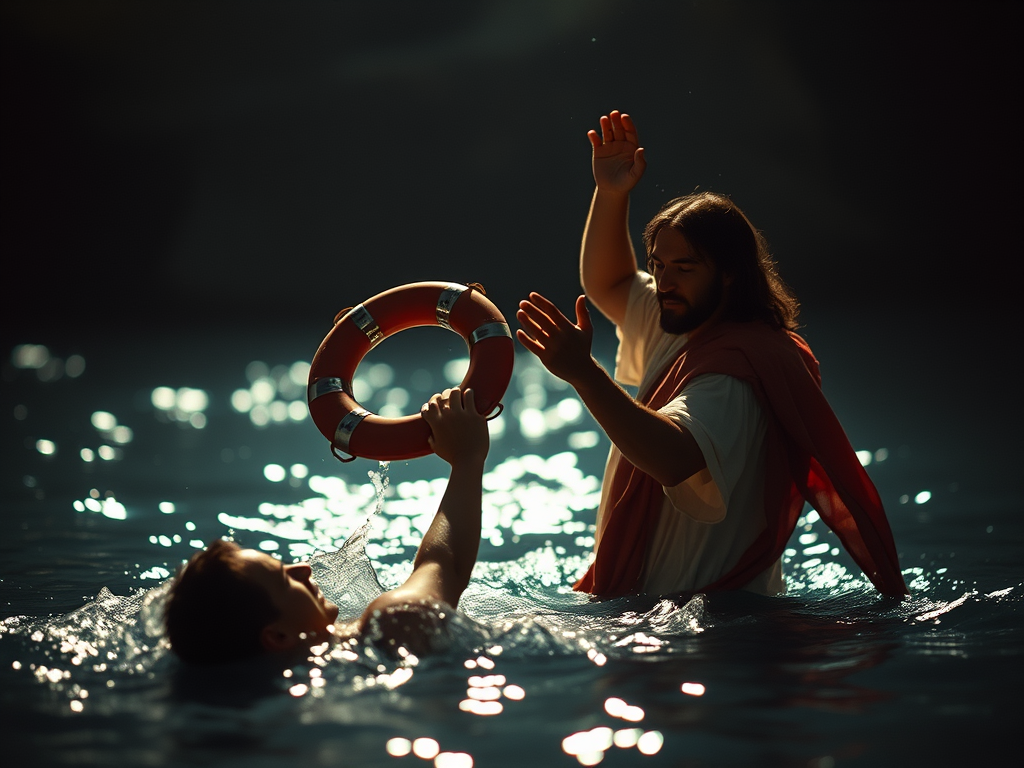
Lord, You have thrown me many spiritual life preservers, the greatest of which is Your sacrifice on the cross. Don’t let me close my spiritual ears to the sound of your voice. Instead, help me tear down any walls that fear has built in my mind and heart to keep me from reaching out to You and my neighbors. Amen.
The readings for September 8 give me more to work with in the exploration of what justice means that I began in last week’s post. The passages tell me that doing justice means making sure that everyone has what they need to thrive physically, mentally, and spiritually.
Justice serves what gives life by looking beneath the surface for signs of that life. It doesn’t serve that which is fleeting or artificial—except when what is fleeting or artificial serves what’s good and eternal.
Beyond this week’s readings:
In the previous section, I wrote that justice removes barriers rather than that justice heals, even though the readings for September 8 contain more than one reference to what are often called healings. I wrote to “removes barriers” because I’d like to propose that the references to physical healing in the readings don’t have to be as much about removing this physical impairment or that one – any physical impairment, for that matter — as we may be accustomed to thinking they are. (By the way, these perspectives on physical impairment and their relationship to well-known accounts in Scripture are far from unique to me. Ms. Iozzio, whose reflection is linked in the next section, offers a perspective that relates to my own.)
Healing is involved, but I propose that more is being healed than seems apparent. A man’s physical Deafness is removed, and his difficulties with speech are removed so that he can connect with and contribute to his community in different ways than he has before. The event inspires his faith in Jesus as God incarnate.
I find it revealing that Jesus doesn’t say to the man “hear” and “speak clearly” when he lays hands on the man. Instead, He says, “Be opened!” (Mark 7:34). Granted, I can imagine ancient peoples explaining Deafness as being caused by the ears being closed. But I can also see “Be opened!” meaning, “Be open to faith.” For this man, Jesus is also opening the door to relating to his community in a new way. I invite you to read more about that new way of relating by clicking the link in the next section.
Each of us, regardless of what our limitations are and what causes them, are our most God-like selves when we’re open to faith and community. There are multiple ways to facilitate this openness. Healing impairments is only one of them. We can remove barriers. We can also be open to alternate ways of communicating and seeing. Impairments do no mean that a person reflects God’s image any less clearly than someone who seems to be without impairments. Being a member of the Deaf community or having a disability or illness doesn’t make anyone any less complete than anyone else. This perspective affects everyone because no one on this side of heaven has an invincible body.
New Testament support passages support the perspective that, though we are called to do our best to take care of what we have, and God is present to us to us so that we can share our desire to be well, having certain abilities isn’t the ultimate goal of the spiritual life. Consider that:
Jesus tells his apostles that a man’s blindness is not reflection of his own sinfulness or the sinfulness of his parents (John 9:1-3).
Saul, who will become Paul, goes blind when Jesus speaks to him on the road to Damascus (Acts 9:7).
Jesus heals a paralyzed man, telling him to get up and walk so that [onlookers] “may know [He has] the authority to forgive sins (Mark 2:9-12).
After healing a woman who’s had a hemorrhage for years, Jesus says to her, “your faith has saved you (Luke 7:50).
The human conditions in the examples above aren’t punishments. Even in Paul’s case, I think it’s the brightness of the light that blinds him, and the blindness helps him rely on God and the people around him (Acts 9:8). Blindness means the loss of physical vision for Paul, but it also means the acquisition of clearer spiritual vision for him.
However, it’s important to note that, in the same way that having an impairment doesn’t make a person less complete, than a person without that impairment, the condition also doesn’t necessarily make a person more spiritually insightful than a person without the same impairment. It’s also important to note that God is at work in different ways in different situations and to be cautious about presuming to understand why circumstances are what they are. Every situation presents its own challenges and its own opportunities for grace.
In each of the examples above, the physical healing isn’t the only or even the primary gift Jesus offers. The miracles treat sick souls, and not just the soul of the person who experiences a physical impact, but also the souls of the people who witness the impact or learn of it more than 2,000 years later.
What someone else is sharing about this week’s readings:
Lord, help us to be open to You and to one another. Help us to respond to Your invitation to healthy relationships, which are two-way streets that can be built in many ways. Amen.
The first reading presents wisdom as a nurturing homemaker, someone who provides shelter and food. Perhaps the extended metaphor of the passage says something about how practical wisdom is necessary for meeting basic needs and how having basic needs met is necessary for a person to grow in “understanding” (Prov. 9:6).
This week’s psalm, the same as last week’s, continues to call us to recognize that God provides for our physical, emotional, and spiritual needs. God doesn’t run out all the means to provide for all of these needs. Ever.
Maybe because I focused on some of the psalm verses last week, the psalm refrain stands out to me more than the verses this week: “Taste and see the goodness of the Lord (Psalm 34:9). It invites us to use our physical senses — particularly taste and vision — to receive “the goodness of the Lord . . .” (Psalm 34:9).
Now there’s the old cliché “seeing is believing.” While it is cliché, it’s also often true for people. So it’s powerful to be able to see concrete signs of God’s goodness around us. How can the way each of us lives offer those concrete signs, not just by showing compassion, helping people see it, but by helping people experience it with their other senses.
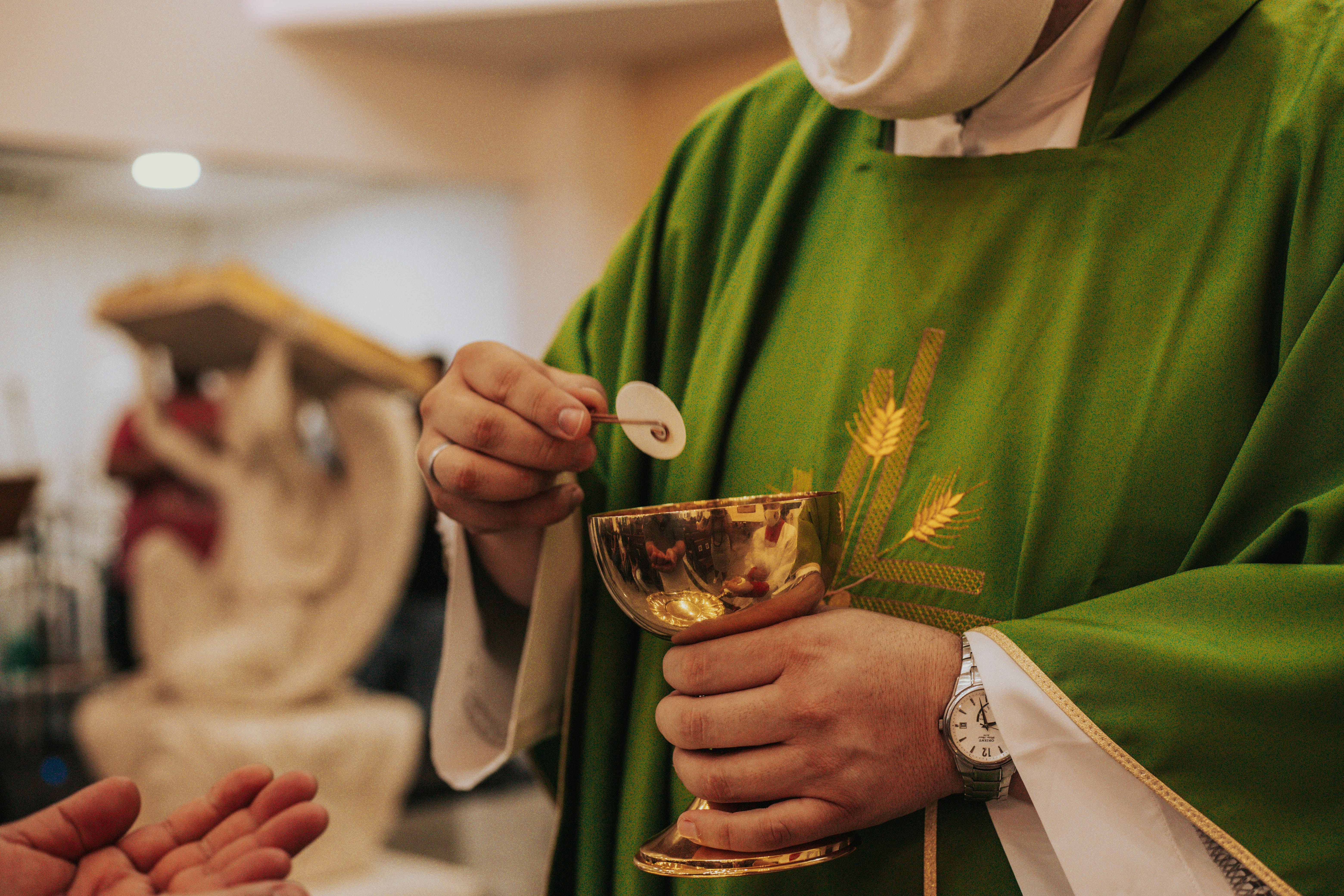
Think what a powerful sense taste is. It’s inextricably linked to smell. Think of what emotions can be invoked by the taste and smell of a meal that reminds a person of a past special occasion. Without smell, it’s very difficult, if not impossible to taste. Think of how powerful it is to smell or taste something that you smelled or taste in the past not long before becoming sick. Given the power of these associations, the psalm refrain says to me that truly engaging with God and what God gives involves all the senses. This reality is why the celebration of the Eucharist and other sacraments engages all the senses.
This week’s epistle urges readers and listeners to engage all the senses as well and to be careful to engage all of them in the movement of the spirit, and the pursuit of wisdom, rather than dulling the senses with activities that make it more difficult for the spirit to move within and among us.
The Gospel passage reminds readers that Christ’s message engages all the senses, and in doing so, challenges them. To the crowds, he says that he’s bread, and that whoever eats this bread “will live forever” (John 6:51). The crowds see a man speaking to them. They were already wondering how this could be, and he was going to challenge them even further (John 6:52). He goes on to say that “the bread that [He] will give is [His] flesh for the life of the world and that “[w]hoever eats [His] flesh and drinks [His] blood remains in me and I in him” (John 6:51 and 56).
Christ had to give all of himself — body, blood, soul, and divinity, “for the life of the world” and for every individual in the world who will receive that life (Jon 6:56). Receiving that life in its fullness will involve all the physical senses — taste, touch, sight, and hearing — of individuals open to receiving it. It will also engage the mind and the spirit. It will challenge all of these by inviting them to enter into what self-preservation instincts tell us to run away from.
What someone else is sharing about this week’s readings:
Sarah Hart’s reflection on this week’s readings looks at different ways to “remain in” Christ, as the Gospel passage asks us to do, with none of the ways of doing so being separate from each other or less essential than another (John 6:56).
Beyond this week’s readings:
Thinking about how important smell is for taste and how important engaging all the senses is to relationship with God and others reminds me of a phrase from last week’s excerpt from Ephesians about being “imitators of God,” liv[ing] in love” (Eph. 5:1-2). This way of living that Christ modeled is described as making oneself a “sacrificial offering to God for a fragrant aroma” (Eph. 5:2).
This week’s prayer:
Lord, grant me the grace of courage to remain in You as You remain in the Father. Help me not to turn away when You challenge me with what You offer and with Your vision for the Kingdom of God. Amen (John 6:56-58).
I think I’ll use a very current term to distill what the first reading says to me this time. It’s about the importance of self-care. When the passage begins, it seems like Elijah is physically and spiritually depleted. He asks God to end his life because he’s “no better” than anyone who came before him. (1Kings 19:4). I imagine him thanking that realizing this must mean he’s failed at the mission God has given him. After all, how can someone who’s no better than anyone who came before him be an effective prophet?
The situation is a reminder that God is at work even when we’re depleted. Sometimes, we’re most open to God working within and around us precisely when we feel we have nothing left to give. If we turn to God at no other time, many of us do so when we can’t see anywhere else to turn. I acknowledge this truth of human experience not to say that God wants us to be depleted. The Old Testament passage gives evidence to the contrary.
God knows that we need food, drink, rest, and to feel cared about to do our work and to be whole. God usually doesn’t force what we need upon us. Instead, God offers it, and it’s up to us to receive it. It was up to Elijah to acknowledge to God that he felt defeated and depleted, to rest, and then to take the nourishment that God offered.
The psalm reinforces that God provides for those who are open to receiving what God offers and to doing God’s work. It also reinforces the role the speaker has in finding what he needs, but it does so in a different way than the Old Testament passage does. The speaker says, “I will bless the Lord at all times” (Psalm 34: 2).
I had a gut reaction to this line, especially because it’s the first one included in this week’s psalm reading. I thought, “I don’t, and I won’t because there’s a lot that happens in the world that doesn’t seem like the will of a loving God, and I don’t understand why God, who I choose to believe is love, would allow these things to happen.
Thankfully, because I believe God is love, I also believe that a lot of things that happen grieve God. And I believe that sharing my grief and anger at what happens around me built as much of a connection to God is giving praise for God’s providence does.
My gut reaction also begins to feel different when I read later in this week’s psalm excerpt that the speaker “sought the Lord, and he answered me and delivered me from all my fears” (Psalm 34:5). Maybe having a record and so being able to remind himself of the ways the Lord “answered [him] and delivered [him] from all [his] fears is the reason [“God’s] praise shall be ever in [his] mouth” (Psalm 34: 2; 5).
It might be helpful to consider the ways each of us can keep a record of times we’ve felt we’ve had what we needed and were seen and heard. Keeping such a record in whatever way makes sense for each of us may give us strength in those times when we don’t feel we have what we need or when we don’t feel seen and heard.
Maybe keeping a record of those experiences of abundance and connection, of grace, will help us glorify the Holy Spirit rather than “griev[ing]” it (Eph. 4:30). Maybe this practice will help us avoid what the epistle is urging us to avoid and to embrace what the epistle is asking us to embrace. I find the excerpt’s message easy to hear but difficult to put into practice. Maybe keeping track of empowering memories is a way of experiencing God’s presence with us when we find ourselves in situations that feel less empowering.
In the Gospel passage, Jesus’ contemporaries are having trouble recognizing that He’s God in their midst and that learning from Him, imitating him, and taking His words to heart would feed them, giving them life, not only in that moment, but eternally. Listening to Him and receiving what He provides leads to God, and recognizing how God has guided and provided in the past makes God present among us in the current moment. It points to Christ.
What someone else is sharing about this week’s readings:
When we are called on to make sacred sacrifices in order to ‘live in love’ – it is not our very self – our created self- that we are losing. It is the assumptions and projections of who we should be, the expectations and external pressures of others laid onto us by others.
I’m used to hearing that this week’s readings are about the following:
God’s providence
God’s power over nature, demonstrated differently than in the calming of the storm
Christ feeding His spiritual family members his own Body and Blood, an ongoing act of love that comes to us from His apostles because He extended it to them on the night of his Last Supper.
And it is all of the above, but I feel prompted to highlight what else stood out to me as I read the passages this time around:
A man came from Baal-shalishah bringing to Elisha, the man of God, twenty barley loaves made from the firstfruits, . . . . Elisha said, “Give it to the people to eat.” But his servant objected, “How can I set this before a hundred people?” . . . . And when they had eaten, there was some left over, as the LORD had said.
2 Kings 4:42-44
This passage and the New Testament one tell me that questions and doubts are only obstacles to God to the extent that they keep a person from acting with faith. In both passages, people act as God inspires them to do, and God works with what they give. God keeps his promises and gives more than the people hope for.
The eyes of all look hopefully to you, and you give them their food in due season . . .
Psalm 145:15
This verse reminds me that God’s timing may be different from mine. It doesn’t say God will give me what I want right now. Instead, it says God will give me what I need indue season — when the timing is best for me and for the overall plan.
Brothers and sisters: I, a prisoner for the Lord, urge you to live in a manner worthy of the call you have received, with all humility and gentleness, with patience . . .
Ephesians 4:1-2
This excerpt relates to how God provides for us by giving Himself because we need God’s humility, gentleness, and patience to allow God to provide for us in other ways. God doesn’t force-feed us. Instead, God waits for us to be open to receiving Him.
Trusting in God, who isn’t limited by our sense of time and timing also takes patience.
Feeding others from the gifts we have received, in other words, making Christ visible in what we do, requires the virtues mentioned in this excerpt as well.
“’Gather the fragments left over, so that nothing will be wasted.'”
John 6:12
In addition to reinforcing the lessons of the Old Testament passage, the New Testament passage includes the above instruction. Not only does God give us more than we hope for in due season, but also we must be careful not to waste the abundance we receive. What we don’t waste can meet future needs.
What someone else is sharing about this week’s readings:
Dr. Alice Prince points out that the virtues highlighted in this week’s epistle don’t just make room to receive God’s abundance. God’s abundance is one of those proverbial two-way streets. Receiving God’s abundance helps us experience and practice those virtues.
Beyond this week’s readings:
It’s easy enough to quote Scripture passages as evidence that God provides. I even posted last week about the ways I’ve noticed God providing for me lately. Even so, I know there are plenty of situations in which it doesn’t seem like God provides. I listed some of those situations at the end of last week’s post. I find myself asking, “Lord, if you can use five loaves and two fish to feed more than 5,000 people, why aren’t you making sure everyone in Gaza, the U.S. or everywhere else in the world has enough to eat right now? Don’t you care about food insecure and starving people anymore?
Faith tells me the answer is “yes.” But I wonder how often humans get in the way of God’s providence. I know that too often what’s left over gets wasted and doesn’t make it to the people who need it.
This week’s prayer:
May we never interfere with God’s providence. May we participate in it instead. And may we never waste what we have to share, in the name of the Father, the Son, and the Holy Spirit. Amen.
This week’s readings tell me that the Trinitarian nature of God means that God is more intimate with everything that is than human understanding can conceive of. And even though this is the case, God’s intimacy doesn’t mean that God is too small or too close to us to have a view with more dimensions than we can imagine. God so intimate as to dwell within us and to be discoverable in everything around us while being the source of all that is. God is the ultimate mother, father, sibling, partner, and inspiration.
What concerns us can neither be too big nor too small for God, and with God’s help, what concerns God is neither too unmanageable nor too insignificant for us to be concerned with. God invites us to open ourselves fully to the Trinity and the gifts — relationships, talents, and resources — that come from a God who is both so like and unlike us, a God who is without limits, except to the extent that God limits God’s self.
The following quotations from the readings for May 26 encapsulate for me what The Most Holy Trinity means:
. . . fix in your heart, that the LORD is God in the heavens above and on earth below. . . [Italics mine]
Deuteronomy 4:39
The Spirit himself bears witness with our spirit that we are children of God, and if children, then heirs, heirs of God and joint heirs with Christ, if only we suffer with him so that we may also be glorified with him.
Romans 8:16-17
Does the second quotation mean that we should seek out suffering? No, but it acknowledges that to live as Jesus did during his time on earth, will have to allow ourselves to be inconvenienced at the very least. And we may be asked to endure more than inconvenience. If we never find ourselves inconvenienced by our efforts to follow and imitate Christ, how closely are we following and imitating him? Where are we on the path to becoming the people God can see is becoming if we follow and imitate Christ? Where are we on the journey to becoming undistorted versions of ourselves?
Then Jesus approached and said to them, “All power in heaven and on earth has been given to me. Go, therefore, and make disciples of all nations, baptizing them in the name of the Father, and of the Son, and of the Holy Spirit, teaching them to observe all that I have commanded you. And behold, I am with you always, until the end of the age.”
Matthew 28:16-20
What someone else is sharing about this week’s readings:
Julia Erdlen reflects on the mystery of the Trinity as both comforting and confounding.
Beyond this week’s readings:
When I grappled with what words of my own to use to summarize Julia Erdlen’s reflection, I used “confounding” because it started with the same letter as comforting, which would make the summary memorable and because I thought “confounding” meant “mysterious.”
However, the Oxford Languages dictionary that the Bing search engine defines confounding this way: “cause[ing] surprise or confusion in (someone), especially by acting against their expectations” Considering this definition, “confounding” and is an unintentionally fitting adjectives to use when describing a God who is three persons in one, a God who had us and all that’s good in mind before everything began, who has been with all that’s good in every way since it came into existence, and wants to bring us to be with Him if we’re willing to come and to let go of the work of our hands and let God free us from the clutches of what stands between us and Him. It takes a God who is both indwelling and who was before everything and will be after everything to accomplish all that. It takes a God that we can’t fully understand or describe an entirely accurate way. It takes a God who surprises us by “acting against our expectations” and working beyond our limitations. This Trinitarian God helps us recognize which limitations are real but only temporary and which are illusions God is waiting to help us see through once we ask for and we cooperate with the grace of the Holy Spirit.
This week’s prayer:
Lord, thank You for giving us today is a reminder of how surprising, how incomprehensible, and yet how familiar You are. Help us always to grow in familiarity with You until, when we pass from this life, we can fully embrace and understand You and all You have brought into being. We offer this prayer in the name of God who is one in three Persons — Father, Son, and Holy Spirit. Amen.
What stands out to me about the first reading Pentecost is that the Spirit first draws Jesus’ earliest followers together for prayer. Then it pours gifts on each member of the group. These gifts prepare each person receiving them to share the gifts of the Spirit with other individuals. The Spirit gathers people together to set them apart, to prepare each of them to work with others and to do work that only each one of them can do.
The psalm recognizes that every resource and everything that lives is the work of the Spirit. Nothing exists without the Holy Spirit, though the work of this Spirit can be corrupted by other spirits that tempt us to actions that the Holy Spirit must work around instead of with.
The third reading, the epistle, reminds us that what we do says a lot about which spirit has the upper hand within us. The Holy Spirit is unselfishness in all its forms. It isn’t divisive, but the spirits, attitudes, and actions that oppose it are. The passage also tells us that the Holy Spirit can’t be contained. When we become vessels for it, it fills us up and spills out of us, sharing its fruits with the next person and then the next one and with the tasks we’ve been given. Come to think of it, the first reading also teaches the same lesson.
The Gospel passage reminds us that the Holy Spirit comes from God to dwell within us and among us because Jesus Christ is one of us and lives in union with the Holy Spirit and the Father, which are the active life force and its Source. Christ shares the Spirit with us so that we can live as children of God now and forever and continue to grow in our knowledge and experience of what it means to be children of God.
What someone else is sharing about this week’s readings:
This week’s readings help Maureen O’Connell reflect on what it means to be “a people” and by being “a people,” to evangelize. She also applies the Pentecost Sequence to our present moment in a powerful way.
Beyond this week’s readings:
Almost a year ago, in celebration of Pentecost, I linked to a musical adaptation of the Pentecost Sequence. It’s called “Come Holy Spirit.” Its music is composed and performed by John Michael Talbot. I find this music in these lyrics helpful for letting the words of the sequence sink in. Taking a look at one or the other of the sources linked in this section adds its context to the adaptation of the sequence included in Maureen O’Connell’s reflection.
This week’s prayer:
May my life reflect the fruits of the Holy Spirit: “love, joy, peace, patience, kindness, generosity, faithfulness, gentleness, self-control” (Gal 5:22-23). through the Father, the Son, and the Holy Spirit. Amen.






 Sitting with the Sacred