
Feeds:
Posts
Comments

Posts Tagged ‘Incarnation’

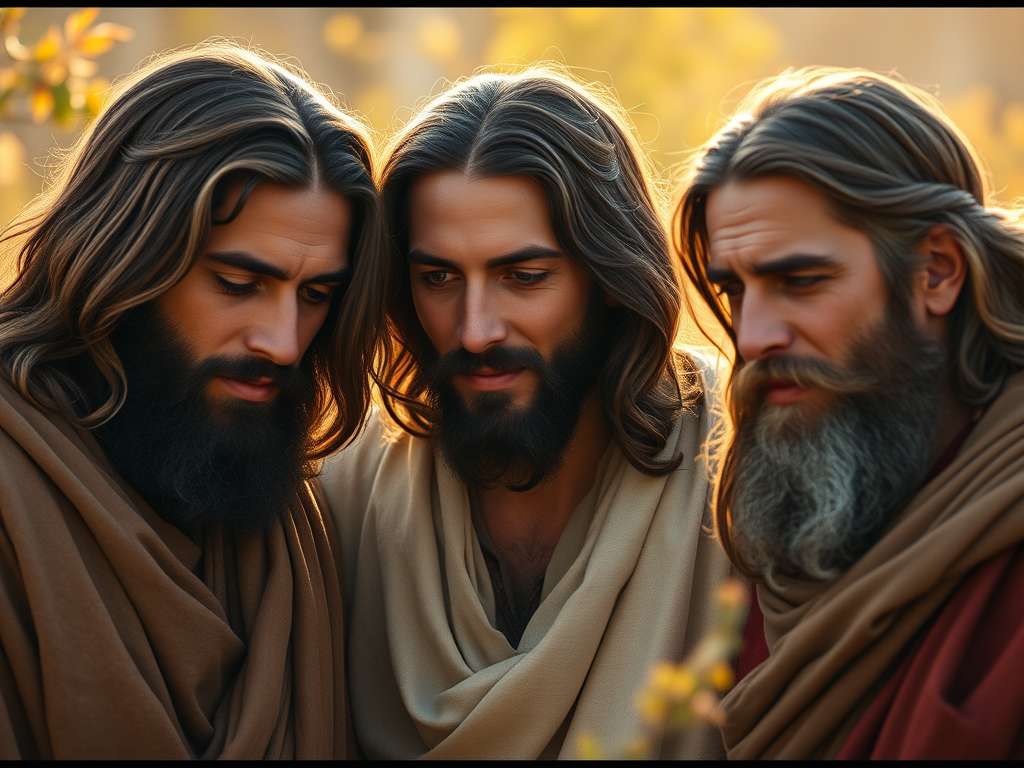
Image Generated by WordPress AI

Readings for January 5th:

  1. Isaiah 60:1–6
  2. Psalm 72:1–2, 7–8, 10–11, 12–13
  3. Ephesians 3:2–3a, 5–6
  4. Matthew 2:1–12

What stands out to me from this week’s readings:

Then you shall be radiant at what you see,
your heart shall throb and overflow . . .

Isaiah 60:5

The Old Testament passage for January 5 describes God’s light drawing the members of the tribes of Israel together and to itself. The verse above, particularly its second line, is what stands out to me from the passage and from this week’s readings.

It doesn’t surprise me that this verse is the one that jumps out at me from all the ones chosen for this week. Romantic themes and imagery are what resonate with me. I watch, read, and write stories about what it means to love.

When I think about the feast we celebrate today, I think of a brilliant light leading wise men who are not Hebrews to baby Jesus. I think of how the magi bring him gifts that don’t seem appropriate for a baby.

Nonetheless, these gifts teach Jesus’ spiritual family members about who He is and what His mission is. I think of how, while what the New Testament passage calls a star leads the wise men from afar to Jesus, the magi don’t tell Herod where to find Jesus. In other words, I engage my mind and its ears and eyes in the story.

But when I read the second line of Isaiah 60:5 this time around, the story of the Magi seeking the infant Jesus took on a new dimension for me. Or at least I received the story’s message in a new way. I imagined the Incarnation of Christ as a physical sensation within me. It

Isaiah 60:5 says the experience of Christ in the flesh cannot be contained in any way, not even within a single time period, space, or culture. And yet it is tangible everywhere.

It reminds me I’m called not just to follow the Light but to let the pain and pleasure of it in. I’m to be a vessel as much as the next person, and the next. The Light has the weight and power of water as much light. It is as much like a swollen river as it is an astronomical occurrence that makes night like day.

What someone else is sharing about this week’s readings:

The “Hark!” podcast from America Media explores the history and messages of various Christmas carols. (If you can’t access the link in this section without subscribing to America, I encourage you to search for the podcast and the “We Three Kings” episode in particular in the podcast player of your choice.) Each episode is named for the title of the carol featured in it. This episode about “We Three Kings” discusses the familiar components and interpretations of this week’s gospel passage. It also offers some insights I’d never heard before. Here’s a teaser: maybe the gifts of the magi were for Mary too.

This week’s prayer:

Lord, open the eyes of my soul so I can follow Your light. Make me “be radiant at what [I] see” (Isa. 60:5). Make my heart “throb and overflow” (Isa. 60:5). Amen.

Work cited (but Not Linked to):

Confraternity of Christian Doctrine, Inc. “The Epiphany of the Lord – Mass of the Day Sunday 5 January 2025: Readings at Mass.” The New American Bible, 2001. Universalis for Windows, Version 2.198, Universalis Publishing Ltd., 13 Dec. 2024, https://universalis.com/n-app-windows.htm.
Read Full Post »

Photo Generated by WordPress AI

This week’s readings:

  1. Isaiah 53:10–11
  2. Psalm 33:4–5, 18–19, 20, 22
  3. Hebrews 4:14–16
  4. Mark 10:35–45

What this week’s readings say to me:

The theme I’m getting from this week’s readings is that God understands us. However, we don’t understand God, at least not fully.

The first reading is a reminder to me that Christ experienced the frailty that is inherent to the human condition. In the crucifixion, He also endured suffering that comparatively few have experienced. But His suffering isn’t in vain. His entry into death defeats death by because He’s life in the flesh. Because of this, he conquers his death and ours. This defeat of our deaths occurs when we surrender to Christ whatever comes between us and life.

The passage reminds me that Christ offered his life to God and to us as a healing balm for the effects of sin. I can do the same. I can offer my life and what I value for the same purpose.

The psalm reminds me that God is “trustworthy” (Psalm 33:4). The gifts that come from God’s goodness are everywhere. It also promises that the more I’m open to God’s presence and guidance, the more I’ll experience it. As I experience it more, I’ll become more open to it. This openness will continue regardless of the circumstances I find myself in. It reminds me to seek faith and to ask God for help in recognizing God’s care.

The epistle reminds me that God understands my weaknesses and is waiting for me to turn to Him so that I don’t mistake those weaknesses for sources of freedom. He recognizes that I need his help not to confuse those weaknesses for him, in other words.

The Gospel passage reminds me that while I want to experience Christ’s presence, I tend not prepared to do what it takes to experience that presence. I’m prone to confusing being in God’s presence with bowing to the imposter god of human pride.

The gospel passage shows the sons of Zebedee having the same tendency. This tendency means they don’t understand what their wants and needs will ask of them and of God. They understand that abiding in God with Christ will satisfy those wants and needs. But they don’t understand that abiding in God with Christ requires surrender more than attainment. And surrender is often uncomfortable to the human ego. Surrender often feels impossible.

What someone else is sharing about this week’s readings:

Rebecca Malone discusses two different understandings of glory. She explores how these understandings provide insight into this week’s readings.

This week’s prayer:

Lord, thank You for meeting me where I am. Help me meet You where You are. Amen.

Work cited

The New American Bible Revised Edition, Kindle edition, Fairbrother, 2011.

Read Full Post »

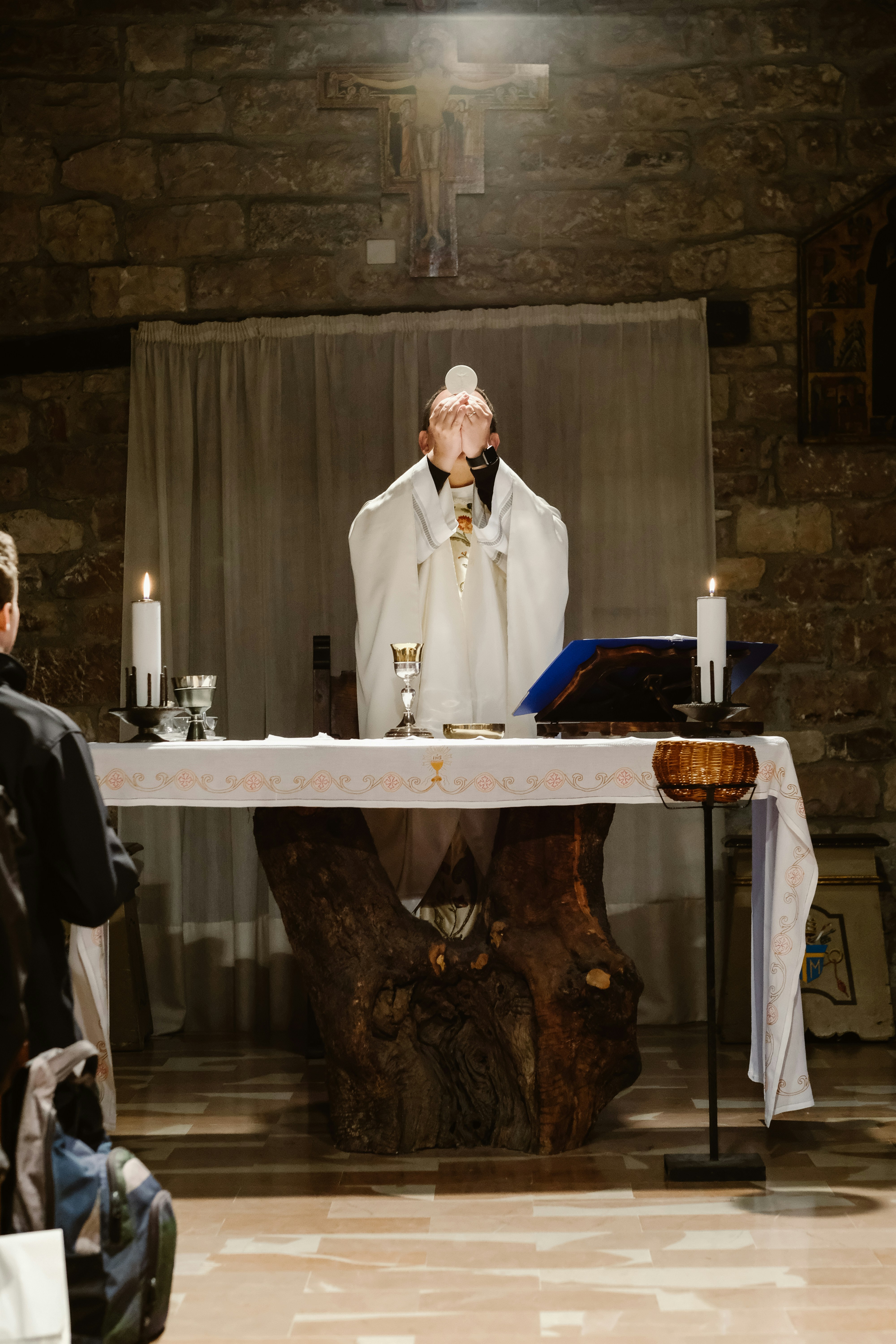
Photo by Josh Applegate on Unsplash

Readings for June 2:

  1. Exodus 24:3–8
  2. Psalm 116:12–13, 15–16, 17–18
  3. Hebrews 9:11–15 
  4. Mark 14:12–16, 22–26

What this week’s readings say to me:

The transition from spring to summer and the changes in schedules that it brings has invited me to be open to new routines. But I’ve never been naturally inclined toward this kind of openness, and this week has been no exception. It’s Saturday afternoon, and I haven’t worked on this post since I typed this week’s readings above a week ago. I’m short on time, so I’m going to write what’s been on my mind to write in honor of this week’s Solemnity of the Most Holy Body and Blood of Christ.

I’ve been thinking about this solemnity in light of last week’s solemnity, thinking that this weekend we celebrate the sacrificial love of the Trinity’s incarnation. It’s a love is willing to live for others to the point of suffering and dying for them. This death allows the sacrificial love of the Trinitarian God to take a different form, one I can see, touch, taste, and consume, even though I’m not living during Jesus’ earthly ministry.

Of course, I’m not the only one who can receive this gift. It’s been available to Jesus’ spiritual family members since the Last Supper—before Christ made His final sacrifice on the cross, and it continues to be offered and will continue to be offered until the end of time. The offerings of the Trinitarian God aren’t limited by time and space.

Yet these gifts are not merely abstract, spiritual, and mystical, though they can have all of these qualities. They’re tangible and consumable. These physical qualities allow the incarnate Trinity to become part of the physical body of anyone who takes and eats them. The physical forms of bread and wine allow us to receive the Body, Blood, Soul, and Divinity of the Trinity, and when we live lives that make our souls homes for these gifts, more and more, we become what we eat and carry it into the world around us.

What someone else is sharing about this week’s readings:

Sr. Julia Walsh. FSPA reflects on how this week’s solemnity reminds us that what’s ordinary is also sacred. She tells of times when this reality has been particularly palpable for her, times when she’s experienced it in communion with others.

This week’s prayer:

Lord, thank You for feeding me spiritually and physically. Restore in my body and soul a dwelling place for You so that You can be recognized in me, and I can do my part to heal the wounds in Your Body. I ask this in the name of the Father, and of the Son, and of the Holy Spirit. Amen.

Read Full Post »