Feeds:
Posts
Comments

Posts Tagged ‘Healing’

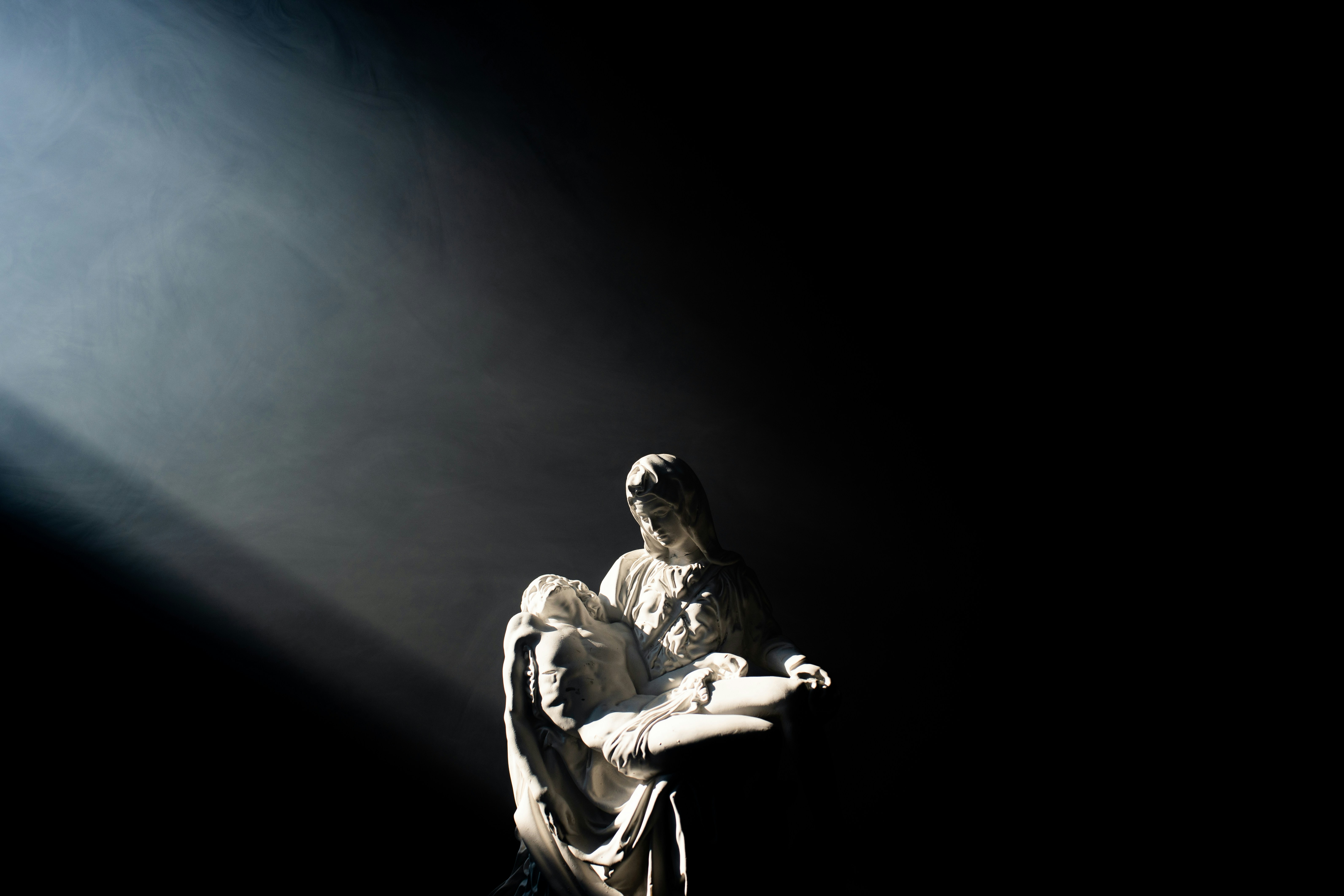
Photo by Grant Whitty on Unsplash

This week’s readings:

  1. Mark 11:1–10 John 12:12–16
  2. Isaiah 50:4–7
  3. Psalm 22:8–9, 17–18, 19–20, 23–24
  4. Philippians 2:6–11
  5. Mark 14:1—15:47

What this week’s readings say to me:

As I sit with these passages again this year, I find myself paraphrasing something my pastor said. It was in 2021, I think. He said that at various moments in our lives, we are every character in the passion story. I’ve been many of them. I’ve been open about my faith when I was in a crowd who made it easy to be open because they were being just as open. I’ve been silent about my faith when being open felt threatening — even just socially. I’ve asked God to get me out of a difficult situation, and God didn’t. I’ve said, “Thy will be done,” though I doubt I’ve ever been able to mean it without reservation as Jesus did.

Simon of Cyrene was “pressed into service” to help Jesus carry the cross (Mark 15:21). At most, I’ve been volunteered for some tasks I wouldn’t have chosen to do on my own. They were a lot less strenuous and my circumstances a lot less dangerous, yet I doubt I allow myself to be changed for the better as much as Simon must have allowed himself to be for his name to be remembered in accounts of Jesus’ passion (Matt.27:32; Mark 15:21; Luke 23:26). I’ve betrayed people in my life and been betrayed by them. I’ve thought that if God is real and cares about His children and His creation, why doesn’t He save them from harm in easily recognizable ways all the time? Why would he allow them to suffer? I’ve also been asked the same questions when I’ve undertaken something or accepted a circumstance, and someone else didn’t understand why. I’ve asked now and then why God has abandoned me.

I’ve never been accused and/or sentenced unjustly by anyone charged with enforcing laws, but too many people have been. So many others have stood by someone unjustly sentenced and/or condemned, just as the people at the foot of the cross did for Jesus.

In this week’s readings shows the power of knowing who we are and what our purpose is in pursuing a purpose, regardless of the cost of doing so. The path of learning who we are, of fulfilling that purpose, of sacrificing for it looks different for everyone.

For Jesus, this path meant giving of Himself again and again in prayer, teaching, feeding, and healing. The darkest part of his journey brought him every kind of suffering brought him death. Why did He surrender to suffering and death? Not because God required His suffering and death to save us, but because we required his suffering and death to bring us back into union with God. We walk away from that relationship. God doesn’t. In fact, He never stops pursuing a relationship with us. The cross was the ultimate example of that pursuit, of going after us as we are — in all our fears, doubts, greed, fickleness, cruelty, violence, and even in our mortality.

What someone else is sharing about this week’s readings:

Sheila Leocádia Pires reflects on Palm Sunday and the holy days that follow it.

Beyond this week’s readings:

Another reflection, “Jesus Did Not Die to Appease an Angry God,” even though it was published as a reflection on earlier Lenten readings, helps me make sense of this week’s readings in light of one core belief that’s been handed on to me — that God is love.

In the last few years, I’ve made my own the prospective on atonement and on the crucifixion that Fr. Terrance Klein expresses in the previous paragraph’s link. It’s been more than a week now since I first read his reflection, but I may have used some of his words in my reflection without realizing it. He explains so well, in my opinion, what I’ve wanted to communicate on this blog, but I never thought my way of communicating it made as much sense.

I hope you can access Fr. Klein’s reflection. I came across it on the website of America Magazine. I think viewing a certain number of articles on that website is free each month before the website invites visitors to subscribe to read more. I’ve tried to put this perspective into my own words at the end of the first section in case you are unable to read Fr. Klein’s words, but I hope you’ll be able to. If you are able to, I encourage you to do so. Fr Klein isn’t the only person I’ve encountered who offers this perspective or a similar one on atonement and the crucifixion, but his article is the one I have most recently encountered on the subject.

This perspective is important because it has the potential to recast who we say God is, what God does, and how God sees us. This perspective helps me see God as a rescuer and a healer, someone who wants to save us from what our own distorted vision, weaknesses and injustices do to us, rather than someone who punishes out of anger, jealousy, or a desire to exact revenge upon us for our lack of obedience. It’s a perspective on the relationship between God and humanity that has taken humanity time to develop. By using the word “develop,” I don’t tend to suggest that humans came up with it, but that each of us is on an ongoing journey to understand reality more fully and thus to know God better.

I also don’t mean to suggest that sins don’t matter to God. I think they matter to God precisely because God understands better than we do how sin hurts the sinner and others affected by the sin. It’s precisely because of this supreme understanding that God goes to battle with all of sin’s damage in the generations before Christ and during Christ’s conception, hidden life, ministry, and passion. God wills restorative justice.


Thank you, Lord for coming to rescue us by living a human life so You could be an example for us and could heal us through Your Divinity, Your human relationships with others, Your ministry, Your intercession, Your suffering, and Your death. Amen.

Work cited (but not linked to)

The New American Bible Revised Edition, Kindle edition, Fairbrother, 2011.

Read Full Post »

Photo by Nathan Dumlao on Unsplash

This week’s readings:

  1. Jeremiah 31:31–34 
  2. Psalm 51:3–4, 12–13, 14–15
  3. Hebrews 5:7–9
  4. John 12:20–33

What this week’s readings say to me:

This week’s readings show me from different angles about how to start fresh, how to find renewal, how to be restored. The first reading echoes the message of last week’s third reading — that Christ is the source of renewal in God. This week’s first reading promises the renewal, the reunion with God that the events of Holy Thursday, Good Friday, Holy Saturday, and Easter Sunday will offer.

The psalm says to me that I might as well be its narrator. “A clean heart” and “a steadfast spirit” are precisely what I long for. As a person who experiences anxiety, has an anxious nature even, the request for “a steadfast spirit” particularly resonates with me (Psalm 51: 12-13).

The third reading urges me to persevere in making the requests I highlighted in the second reading. It also reminds me that receiving that “clean heart,” that “steadfast spirit” will mean facing my fears and in doing so, standing up to my desire to let the comforts of self-preservation and the status quo rule my life (Psalm 51: 12-13). To imitate Jesus, to cooperate with God’s will, to live, is to die to the instincts to preserve a distorted idea of myself and to maintain the status quo. The Gospel passage presents the same message in a different way.

I don’t mean to suggest that this message is telling us that rules are meant to be broken and that systems are meant to be dismantled, or that following a routine should be dispensed with entirely — only that we need to be open always to evaluating how our systems are working, who they are working for, and who they aren’t, and how they need to be reformed, adapted, or adjusted to work better. They can’t work better if they don’t support growth, which means more than being alive, it means living, which means being able to share material, spiritual, and intellectual gifts. It means being able to connect with and care for the world around us.

What someone else is sharing about this week’s readings:

Susan Nchubiri, MM draws a challenging invitation from this week’s readings to offer to others what God offers us.

Beyond this week’s readings:

God calls us to forgive and forget.

Susan Nchubiri, MM

My immediate reaction to this statement was to push back, partly because of sermons, homilies and other reflections. I’ve often heard that God’s forgiveness doesn’t excuse what’s being forgiven; forgiveness of harm doesn’t erase the harm. And wouldn’t forgetting mean erasing the harm from individual and collective memories? And how can an all-knowing God forget?

I’ve read that Jesus retained His wounds after the resurrection. For many others having, the reality of their wounds and what caused those wounds acknowledged is an important part of the healing process. And yet, too often, societies and individuals have behaved as if healing could be found by pretending harm never occurred.

Maybe we don’t have accurate words for how God sees us and our sins. An all-knowing, all-powerful, all loving God can see in each of us the special ways reflect the Divine Nature if we don’t distort this reflection with sin, or if we allow God to restore the clarity of the reflection by handing over our sin and frailty to Him God knows that, by ourselves, we can’t be completely undistorted mirrors of holiness. Perhaps God also doesn’t unknow each of our sins. But God does transform them into opportunities to receive and to share grace, opportunities to recognize that we need God and others, and that others need us in return. Showing our wounds lets others know him they can uncover theirs as well. Wounds exposed to light, air, disinfectants, and other treatments can close. Them closing doesn’t mean they won’t leave behind scars. It just means they won’t hamper our growth, our very life, as they did when they bled under bandages.

Lord, give us the courage to acknowledge our wounds before you and others, just as you have not hidden your wounds from us. Lord, clean our wounded spirits and restore them to steadfastness. Transform scars into reminders that strength can be found in the vulnerability of openness. Help us not to let whatever we’d rather forget weigh us down. Transform our memories, whether painful or joyful, into means of connection to You through everything that is. We thank You that everything is able to serve this purpose because You came to live, die, and rise among us. Amen

Confraternity of Christian Doctrine, Inc. “5th Sunday of Lent, Sunday 17 February 2024: Readings at Mass.” The New American Bible, 2001. Universalis for Windows, Version 2.186, Universalis Publishing Ltd., 8 Feb. 2024, https://universalis.com/n-app-windows.htm.

Read Full Post »

Photo by NASA on Unsplash

This week’s readings:

  1. Job 7:1–4, 6–7
  2. Psalm 147:1–2, 3–4, 5–6
  3. 1 Corinthians 9:16–19, 22–23
  4. Mark 1:29–39

What this week’s readings say to me:

The first reading reminds me I’m not alone when life feels like a burden and everything life involves feels like nothing more than an ending and unwelcome obligation. It reminds me it’s okay to share these feelings with God in an unfiltered way. It also encourages me to consider the ways the situations I find myself in might be different than the trials Job finds himself in the midst of. It reminds me to look for blessings, however insignificant they sometimes seem.

This week’s psalm is one of praise. It characterizes God as a healer of all kinds of wounds, a healer whose wisdom has no limits.

The third reading returns to the subject of obligations, specifically the obligation to preach the gospel. When I read the parts of 1 Corinthians that come before and after this reading, I’m reminded that preaching the gospel is about so much more than talk. It’s about living like Jesus so that his message will come alive for others through me. Living like Jesus means giving of myself to others, acknowledging my feelings and desires and what I’m experiencing in a given moment, without forgetting that these realities are for from permanent.

Therefore, I have the obligation to preach the gospel with my life regardless of how I feel about having that mission. If I’m eager to fulfill that mission, the fulfilling of it is its own reward. If I’m not eager, then I’ve been asked to share the gifts that God has given to me anyway. I’m also challenged when I share these gifts not to expect to receive anything from the person with whom I’m sharing. The promise of the reading, perhaps, is that the reward whenever I offer nothing beyond my obedience will be grace received from giving without expectations. Such giving promises the grace of spiritual freedom. It seems to me that this freedom paradoxically offers the ability to reach out to people from many different walks of life because a spiritually free person isn’t preoccupied with the concerns of only one individual or group. A person can get a more expansive perspective from this situation because she hasn’t zoomed in on the picture too closely.

In the fourth reading, I see Jesus living what this paradox of spiritual freedom looks like. Peter’s mother-in-law is ill, and Peter brings this situation to Jesus, who cares for His friend by making the mother-in-law well. Yet Jesus doesn’t just help His closest companions or the people in one town. We read about Him moving on to the next town. But before He does so, He makes time for rest, quiet, prayer, and reflection, showing that these activities are essential to fulfilling His mission, which is a mission you and I have been asked to share with others and with Him.

What someone else is sharing about this week’s readings:

Mary Anne Sladich-Lantz’s reflection on this week’s reading calls attention to what Jesus does when He heals Peter’s mother-in-law. I find it inspiring that she zeros in on the very human detail that she does. Read here to find out what I mean. Her reflection also includes a quotation I’ll turn into a pull quote that makes a good summary of this week’s readings, as well as a words to bring to prayer.

Discovering wholeness, healing, and joy do not save us from the inevitability of hardship and heartbreak.  In fact, we may cry more easily, but we will laugh more easily, too. Perhaps we are just more alive.  Yet as we are healed and discover more joy, we can face suffering in a way that ennobles rather than embitters.  We have hardship without becoming hard.  We have heartbreak without being broken.

From The Book of Joy:  Lasting Happiness in a Changing World, as quoted by Mary Anne Sladich-Lantz

Beyond this week’s readings:

I’m not writing this post as a person who practices what this week’s readings preach. My natural inclination right now and at almost all other times, it seems, is to crawl in a hole in the ground with a device whose battery somehow never dies and lose myself in games, music, and movies. Forever. Because silence and reality feel too heavy to bear.

Now movies, games, aren’t necessarily bad things. In fact, I believe they can be part of rest. It’s the desire to turn only to these things that’s problematic, to say the least. My experience is that these activities don’t provide rest that’s truly restorative. Maybe an activity’s ability to restore makes the difference between its ability to provide escape and its ability to provide rest. The things that are easy for me to turn to offer escape, while prayer and reflection provide rest.

Can listening to music to be a form of prayer? Absolutely. But my experience is that even music or a movie with a spiritual message sometimes offers the illusion of a preferable change in feelings or perspective, an illusion that fades once the music or the picture fades.

I guess this experience is a reminder that so much of life is fleeting, and that the only constants are God and change and that God is the source of true rest. And yet God isn’t calling me to rest all the time — even in God. The time for eternal rest comes after this life. While I still have this life, God calls me to a varying rhythm of work and rest.

Lord, help me to resist the constant desire to withdraw and to stay withdrawn. Help me to reach out to others rather than lash out at them. Amen.

Work Consulted but Not Linked to

The New American Bible Revised Edition, Kindle edition, Fairbrother, 2011.

Read Full Post »