Do the best you can with what you have. It painted contrasting pictures of two different perspectives. One sees limitations scarcity and responds with fear and resentment. The other sees opportunity and abundance and responds with gratitude and generosity.
May I see opportunity and abundance and respond with gratitude, and generosity so that I can experience joy.
I’m back — a week later than I thought I’d be. The events of the last week or so are reminders that intentions and plans aren’t guarantees. Plans and intentions can come from God. Without them, no one would start anything. So we all make blueprints of one kind or another, but none of us is working on a complete project. Rather, we’re all working on segments of that project, and only God can see what it will look like when it’s complete.
It was a storm that kept me away week longer than I thought I’d be. But because I’d planned to be away, I wasn’t long without comforts my neighbors missed for almost a week — electricity and everything it allows us to have. I’ve also been visited by a respiratory virus, that while it hasn’t required hospitalization or unusual treatment, it also hasn’t been fun. These things usually aren’t, and I’m on day thirteen of the symptoms.
Even so, I have renewed gratitude for the following:
the ability to power up the computer and dictate this post.
the ability to use my phone and to recharge it when its battery dies without having to prioritize returning my portable battery charger first
the ability to watch TV
the ability to heat, refrigerate, and freeze food
the ability to come out of the heat and into an air-conditioned room
the ability to lie down into sleep for an entire night without waking up coughing
the ability to breathe through one’s nose, to taste, and to smell. When I fully enjoy the privileges included in this last list item, may I never take them for granted again
I wonder how many people in the world either don’t get to enjoy the comforts I just listed or have much more limited access to them than I do.
I also know that too many people are deprived of even more basic needs, and the following are only a few:
the need for food
the need for for access to clean water
the need for freedom from violence and other threats to safety
This week’s prayer:
And yet, this week’s readings promise a Shepherd who meets the needs of His flock, not the least of which, as Yolanda Chavez says, is to accept the rest the Shepherd offers as we participate in the Shepherd’s work.
Good Shepherd, thank You for the safety, food, and rest You offer. Thank you for your accompanying us as we endeavor to trust in Your providence. May we be sources of that providence. Amen.
Happy Easter! This week’s readings present me with contrasts. The contrast I find in the first reading is that Jesus came to minister, to suffer, to die and to rise so that “everyone who believes in him will receive forgiveness through his name ” (Acts 10:43). Yet relatively few people had the privilege of being witnesses to His ministry, His suffering, His death and His resurrection. Yet the small group chosen for this purpose was “commissioned to preach to the people and testify that [Jesus is] the one appointed by God as judge of the living and the dead (Acts 10:42).
The third reading says:
Brothers and sisters: If then you were raised with Christ, seek what is above, where Christ is seated at the right hand of God. Think of what is above, not of what is on earth. For you have died, and your life is hidden with Christ in God.
Colossians 3:1-3
It sets up a contrast between what’s above and what’s below.
The Easter Gospel reading and that the contrast between what Jesus’ first followers thought the disappearance of his body from the tomb meant — having Jesus taken from them — and what they later came to understand the disappearance of his body from the tomb— having Jesus restored to them in His glory. The third reading testifies to the greater understanding of the events of Easter morning that Jesus’ followers came to over time.
At the same time, I think the contrasts presented in the third reading point to how understandings of Jesus’ mission for us have developed since the third reading was committed to paper. It’s my understanding that the first recipients of the third passage assumed Christ’s return was imminent. I think I’d be a lot less inclined to worry about what’s going on around me if I thought I was about to be taken out of those circumstances.
This is not the only scripture passage that tells Christians what not to worry about. For example, Jesus tells us not to worry about what to wear and what to eat (Matt. 6:31-32). But when looked at alongside other teachings of Jesus and of Paul, I don’t think either person was advising us to be passive and wait for what we need and what others need to materialize from Heaven. 2 Thessalonians 3:10 says “… we instructed you that if anyone was unwilling to work, neither should that one eat.” (As an aside, this verse is often used as a political weapon, so I’d like first to make a distinction between someone who cannot work enough to support him or herself and someone who could but doesn’t. A person on the outside of an individual’s situation is unlikely to have enough information to assess with perfect clarity whether a person is doing all he or she can to support him or herself. Secondly, I’d like to offer that a person who supports others doesn’t necessarily get income from that work with which to feed him or herself. This reality doesn’t mean the person is lazy.) Jesus says, “If anyone wants to go to law with you over your tunic, hand him your cloak as well” (Matt 5: 40). In these examples, Paul and Jesus are concerned with the challenges of life here on earth. They aren’t focused on a future reality where these challenges don’t exist.
So I propose that the lesson of the third reading is not “Think only about God, angels and saints rather than what’s going on around you. Instead, the lesson is to look at what’s around us and what we have and don’t have through eyes of faith. Perhaps the third reading offers a different way of bringing us back to the message we received at the start of Lent. Perhaps we are being reminded that only God is eternal. We are eternal when we unite ourselves to God by trusting Jesus and doing as He does. What we celebrate today reminds us of that promise and that reality.
Some aspects of life are gifts from God — and we can recognize them as such – but aren’t eternal. Other aspects of life aren’t welcome, and the promise that they aren’t eternal is good news. For both cases, perhaps this week’s passage from Colossians is a reminder to discern what’s eternal — the qualities of God — and not to treat what’s not eternal as if it were.
What someone else is sharing about this week’s readings:
Dr. C. Vanessa White invites us on this Easter Sunday to be to the world around us what Mary Magdalene was for the apostles on the first Easter Sunday.
Beyond this week’s readings:
Here it is, Easter Sunday. Do I feel or think I’ve moved any closer to God than I was at the beginning of Lent? I wish I could say I do, but I don’t. But what I decided to offer to God this Lent did teach me. It taught me how important my favorite free-time activities are in my life and how much they feel like additional ways to express myself. They make me grateful for the many forms beauty takes in this world.
I’m also grateful that taking time away from these activities made me appreciate them more and helped me be more present to what’s happening around me and not to rush to these activities rather than expressing myself through writing first. Still, letting myself be bored and/or uncomfortable, and struggle with practicing the discipline of focus has been a strain.
I think that during these weeks of Lent, I’ve gotten used to making time for ways of expressing myself that have greater potential to serve others than my favorite hobbies do so that now I can continue benefiting from these flexible practices every day while reintroducing other hobbies.
Learning from and living with Jesus changed the lives of those who walked with him on Earth. But experiencing life with Jesus didn’t erase the pasts of His spiritual brothers and sisters, their personalities, or all their concerns. Instead, sharing life with Jesus changed how his disciples saw the other components of their lives. Experiences with Jesus planted the seeds of being open again and again to changes in circumstance and perspective.
The understanding Jesus’ followers had of the significance of the empty tomb and how it related to their mission evolved over time. Similarly, I hope that as time goes by, I’ll recognize that greater spiritual growth and significance came out of this Lent then I can recognize today.
Open my heart to the significance of the empty tomb, Lord. You have left the tomb. Come and fill my heart to overflowing so that I can’t help but share Your love. Amen.
. . . [Y]ou shall eat the fruit of your handiwork . . .
Psalm 128: 2
This week’s readings say to me that the above fragment of a verse from the psalm could be a statement of theme for this week.
In today’s Gospel Acclamation, the Lord tells us:
Remain in me as I remain in you, says the Lord. Whoever remains in me bears much fruit.
John 15:4a, 5b
Most of this week’s readings concern themselves with giving examples of the fruits that come from remaining under God’s metaphorical wing. The first reading says to me that someone who remains in God perseveres in the tasks that God calls her to every hour and every day. In my mind, going about one’s business well in this way is often appreciated only when someone else doesn’t go about the same duties with quite as much diligence and skill. Such work done behind the scenes makes the projects that are more widely visible come together more smoothly than they otherwise would. And as someone who remains in God, the woman in the first reading is indispensable to both her family and her community. Her life reflects God both privately and publicly.
The psalm offers a reminder that God offers life — in both human and plant forms — as a blessing. (Animals are blessings to, but they aren’t mentioned in this psalm.) It’s up to me to look for ways to see my life and the lives of others as blessings and by living with compassion and clarity to help others to experience their own lives as blessings.
The third reading, I’d say, reinforces that those who journey with God receive clarity and keep resetting their sights on their ultimate purpose — union with God and others who have sought and entered God’s embrace. Those who trust in the Divine embrace can go about the work and play that God invites them to despite life’s uncertainties. What matters isn’t certainty but remembering to look for, to invite, and to thank God as often as I remember to do so.
The parable in this week’s Gospel reading teaches that a person who trusts in God’s embrace and settles into it has a mindset of growth and possibility. Rather than comparing what he has to what someone else has, he makes the best of his gifts. He knows that the way he sees himself and his surroundings, circumstances, and limitations isn’t set in stone. Perhaps because he has a growth mindset, he’s not afraid of the master but rejoices in his connection to the master and the trust he has placed in his servant. Or perhaps he’s able to have the perspective on life that he does because he rejoices in her connection to the master and his trust.
The third servant doesn’t seem to have the same view of the master. He certainly doesn’t have the same response to what the master gives him the as the others do, and when I read the master’s reaction to the servant this time, it surprised me. The master doesn’t contradict what the servant says about his leadership style. He doesn’t respond by reminding the servant of the work he’s done to give his workers the opportunities they have.
Instead, the master’s response says to me that the servant isn’t acting as if he believes what he says about the master. If he did believe his own words, why did he behave as if the master wouldn’t ask for an accounting of his original coin? Maybe, like Adam in the garden, the third servant wants someone to blame for his being unhappy with the situation in which he finds himself. Maybe he wants someone to blame because fear, selfishness, and greed feel more powerful than trust and gratitude. Maybe this perception of life keeps him stuck on comparing what he has to what others have. Maybe it keeps him from doing what he can, from sharing whatever abilities and material goods he has to grow toward the best version of himself and to help others do the same. He’s “eat[ing] the [rotten] fruit of [his envy, resentment, and entitlement-fueled] handiwork.” He’s remaining in himself rather than in God. He is and does the opposite of the wife from the first reading.
What someone else is sharing about this week’s readings:
It’s human nature to be some combination of the “worthy wife” and the “lazy servant,” to refer to this week’s contrasting characters the way the readings do. (Prov. 31: 10; Matt 25:26) I feel like there’s far more of the first character in me then the second.
Lord, help me to understand how to grow and to help others grow with what you give me. Help me to put this understanding into practice. Also help me to appreciate my opportunities and gifts and to recognize that they come from the ultimate generosity, which is Your nature. Amen
P.S.: This week’s readings are not those assigned to Thanksgiving in the U.S. Nonetheless, I’ve noticed that their message is fitting for the holiday. Part of that message might be that gratitude makes a person experience what they have as more and to grow what he or she has by putting it to work, investing it, and sharing it. Perhaps, on the other hand, ingratitude makes what a person has seem like less. Perhaps it also makes a person disposed to increased fear of losing what here she has and as a result, to hide and to hoard what she has.
I suppose living the Thanksgiving spirit means looking at life and living it with gratitude. So how do I do that? I’ll start with the prayers I’ve just offered. Next, a lot of people would recommend making a gratitude list or keeping a gratitude journal. I’ll move in that direction by simply calling to mind what I have to be thankful for.
Then I might try the mental version of an activity you might not expect me to pursue if I want to grow my gratitude. It’s an activity I heard about on a podcast yesterday — creating it ingratitude list or journal. The point of this activity isn’t to dwell on the things I can’t change that frustrate me or that I think are unfair or aren’t going right. The point is to name these things, with the idea being that getting them out can start the process of letting them go. This is a process I definitely want to work through.
When I think of this process, I think of all the psalms that bring anger, frustration, and sorrow to God. Some psalms express praise and thanksgiving, but not all do. If the psalmists can express all facets of their experience to God, so can I, and so can you.
I was going to wind this post down by wishing you a happy Thanksgiving. I do wish that for you, but I also wish you an honest and authentically peaceful Thanksgiving. I have faith as I write this that honesty founded on God’s wisdom will light the way to gratitude.
I share these Thanksgiving desires for myself and for you in this post because while, in an ideal world, I would at least post the readings for next weekend and for the holiday, I’m not sure I will manage to do either. After all, my plans for next week and the weekend after won’t fit into my usual routine. So in case I don’t get in touch with you again until the week after next, I wanted to wish you well now. Every blessing to you and yours until we meet again here again.
Work cited
Confraternity of Christian Doctrine, Inc. “Sunday 19 November 2023 33rd Sunday in Ordinary time: Readings at Mass.” The New American Bible, 2001. Universalis for Windows, Version 2.183, Universalis Publishing Ltd., 31 October 2023, https://universalis.com/n-app-windows.htm.
The general answers that Luke 24: 13-35 is giving me are, “not where you expect” and “where you least expect.”
I relate to the pair of Jesus’ followers who come upon a stranger as they’re walking from Jerusalem to Emmaus, though when I first revisited the passage, I didn’t find their experience that relatable. Why wouldn’t I recognize Jesus if I’d spent every waking moment traveling with him for months or even years? Clearly, being unrecognizable and later returning to recognizability in an instant is something Jesus’ resurrected body can do that mine can’t do yet. So this story recounts a one-time event, a specific miraculous occasion that’s been handed down to me to teach me something. And in one sense, I suppose this initial interpretation is valid.
But I think another one is valid at the same time — because, in other ways, as I wrote before, I do relate to these deflated, despairing travelers. They’re lost, even though someone watching them would say they know exactly where they’re going—Emmaus, right? Yet they can’t really get what and where they want unless they are moving forward inside as well outside.
They’d come to believe that Jesus, as the Messiah, would lead them, their families, and the united tribes of Israel (what I might think of as their “country”) to external liberation.
But Jesus has been killed, and they feel no freer than they were before they heard him teach. In fact, their situation feels more precarious. Jesus has inflamed their hope only to fail them. Sometimes I think having hopes sparked and then having the sparks extinguished feels worse than never having had them ignited.
Before they end Jesus encountered each other, God had promised the Messiah to them, but God had not yet seemed to deliver on that promise. Hope founded on words is powerful but not as powerful as hope founded on experience. In the case of this pair, the experience on which their hope had been founded was the experience of journeying with Jesus. What experience would fuel more radiant hope than that one?
But now their bonfire of hope has been deluged. Only ashes are left of it. These are the ashes of grief, confusion, and despair. Heaped upon these ashes are boulders of fear because now, not only do they seem not to have a Messiah in their midst, but also, they’re in danger if they’re recognized as two of the people who followed Jesus, who has been executed as a traitor.
Now, I’ve never felt that I could be accused and executed for treason at any moment. However, I have plenty of experience with what heavy weights emotions can be. Too many times, my expectations and emotions prevent me from seeing the blessings that are right in front of me.
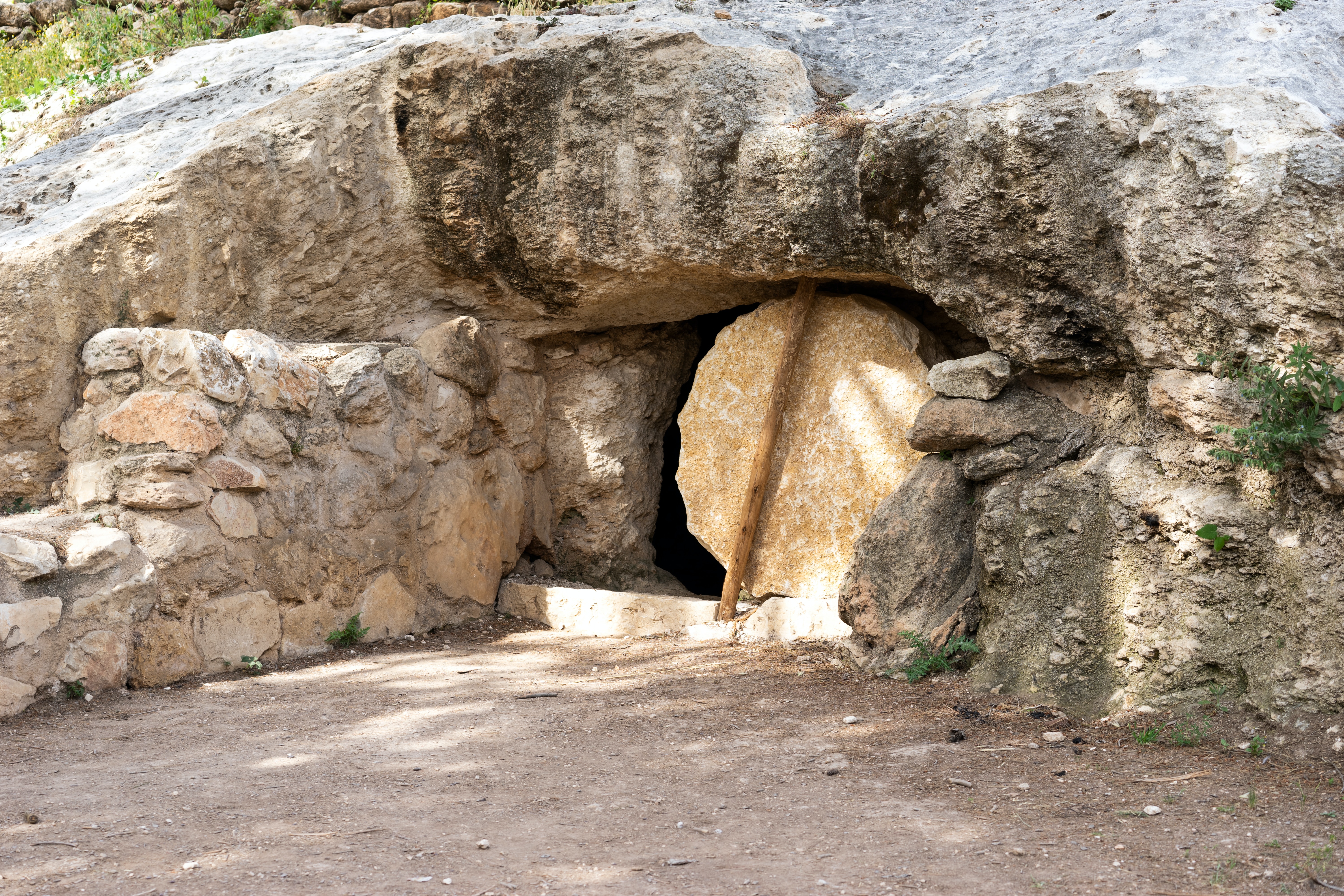
I think that’s part of what’s going on with the two people who walk with Jesus in this passage. Their expectations and emotions have led them only to be weighed down by the emptiness of the tomb rather than to recognize the confirmation and hope this particular emptiness offers them.
And their reaction is no wonder. When I think of an empty tomb, I think of having absolutely nothing left of someone I love. No one else’s report of an encounter with that person can fill the hole that the loss of that person leaves in my life. Talking or hearing about what and who you long for is not the same as what and whom you desire occupying physical space in your presence. It’s not the same as being able to touch who or what I long for, or more intimately, having it offered to me and receiving it into the empty space inside me.
Hearsay is not the same as an encounter. Neither is knowledge. I think that’s why, even after Jesus “interprets everything that refers to him in the Scriptures,” the traveling pair is still no nearer to understanding what recent events mean for them, and they still don’t recognize Jesus (Luke 24: 27).
Jesus knows what the pair needs to be able to recognize that he has been restored to life and can fill their emptiness. But he won’t impose what they long for upon them against their will. He “[gives] the impression that he [is] going farther” (Luke 24:28). He stays with them, breaks bread with them only after they invite an apparent stranger to join them. Then, it’s in the concrete action of breaking bread, blessing it, and giving it to them, even as they share what they have with him, that they recognize him and are in touch with how their hearts were set on fire “while he spoke to [them] and opened the Scriptures to [them]” (24:30-31).
God is working to fill their emptiness before they realize what’s going on. They realize how God is working in them through Jesus only after that work is shared among the group of three in a tangible way. They realize it only after they enter into a concrete offering of thanksgiving to God. They realize it only when they receive the Eucharist. In fact, “The term “Eucharist” originates from the Greek word eucharistia, meaning thanksgiving.”
This is a story to remind us that Jesus offers himself — God — tangibly to me and to you through creation, especially under the appearances of bread and wine as we gather with our needs and our gratitude. This story also reminds us that unless we have space within and around us for God, and we have gratitude for the ways God is already filling our emptiness, emptiness will only feel like lack and loss instead of the vessel for gifts that it can be.
Creator, Sanctifier, and Redeemer, help me to keep an open mind about Your plans. Help me to trust that I can see You at work everywhere so that I will see You at work everywhere. Help me to have and to express gratitude for Your work within and around me.. Amen
The Bible.The New American Bible Revised Edition, Kindle edition, Fairbrother, 2011.
Confraternity of Christian Doctrine, Inc. “Sunday July, 2 2023: Readings at Mass.” The New American Bible, 2001. Universalis for Windows, Version 2.179, Universalis Publishing Ltd., 26 Feb. 2023, https://universalis.com/n-app-windows.htm
This post is a continuation of my Lenten reflections on the Scriptural Stations of the Cross. The station titles and scripture and verse citations, except where otherwise noted, are published on USCCB.org.
Thirteenth Station: Jesus Dies on the Cross
(Luke 23: 44-46)
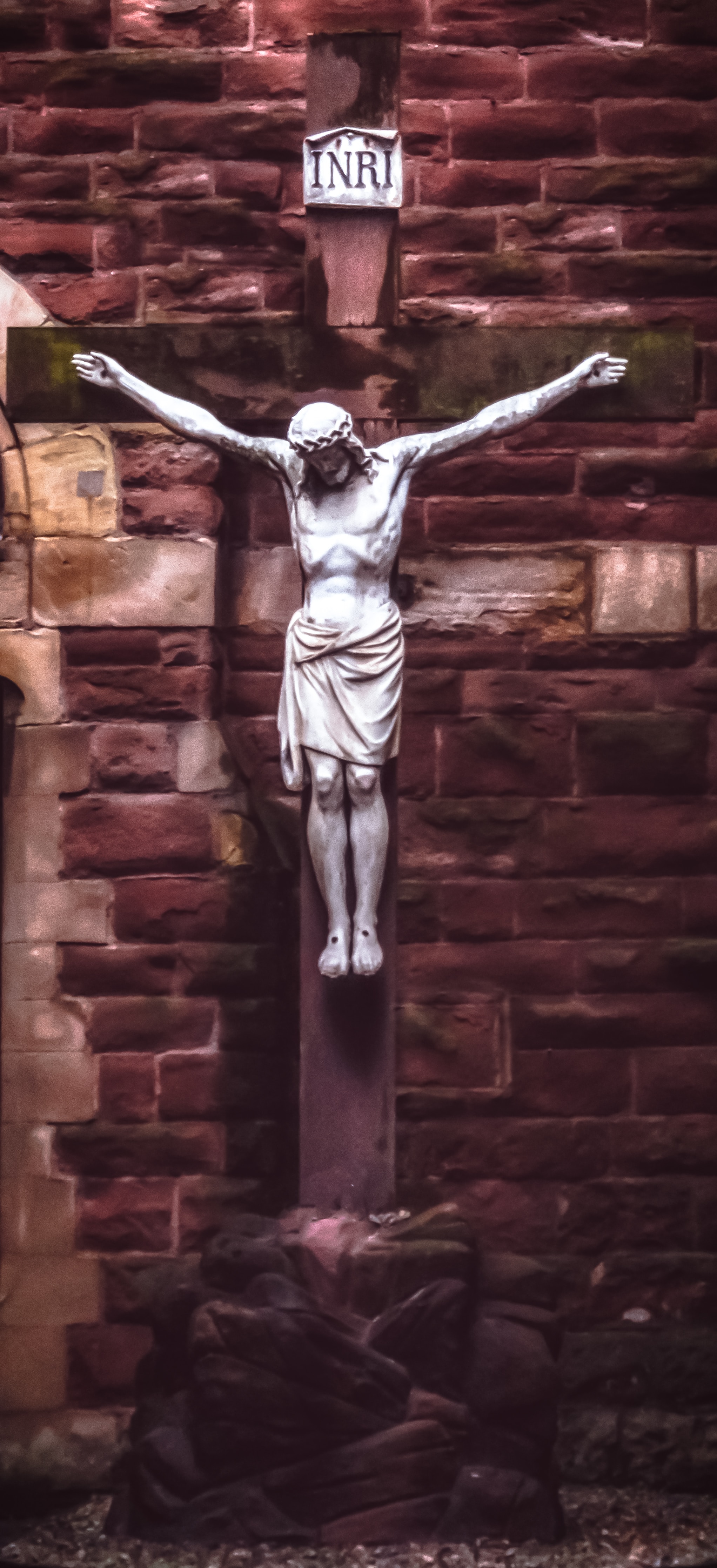
Photo by K. Mitch Hodge on Unsplash —Crucifix in the alleyway next to St. Patrick’s Church in Belfast (Jan., 2020)
Jesus, You began Your journey to the cross, in one sense, in the desert at the start of Your public ministry, and in another sense, in the Garden of Gethsemane. In both places, You let the Spirit lead you away from other people and from material comforts so that You could nurture Your relationship with the One who created You and sent You on Your mission. Times of retreat such as these allowed You to seek and to find the strength You needed to offer Yourself to Your brothers and sisters in the human family despite their spiritual blindness, weakness, greed, lust, fear, and impatience. You were able to surrender Yourself to others because You trusted Your Father would use their sins and frailties to accomplish the work of redemption. You knew that, ultimately, You were surrendering not to evil but to the Good of Your Father. For that purpose, You gave back to Your Father everything You received — Your desires, Your will, Your body, Your blood — every drop of it — and, in the moment to which I now turn my attention, Your spirit. You knew that only by dying, only by commending everything You had received to the Father, would You be free from the grip death had on You.
I, too, must embark on a lifelong journey of surrendering everything I have to Divine Love in order to receive Divine Life. I couldn’t travel this path if You hadn’t done so before me and didn’t continue to do so beside me and within me. I forget the sight and the feel of Your Way again and again, and You are with me to guide me back to it. Thank You for doing for me, with me, and in me what I cannot do by myself. Thank you for creating me for relationship in all its forms. Amen.
Jesus, in honor of the care Joseph of Arimathea showed You when You could not express Your gratitude, I offer prayers of thanksgiving.
for those who share what they have
for those who give of themselves and their possessions without expecting compensation or a reward
for those who cannot express their gratitude for the care they receive
for those who look after the dignity of the dignity of members of the human family who have died.
I’m grateful that You call to Yourself people from all walks of life.
I pray for those who have died, for those who mourn, for those who wait, and for all of us who grapple with anxiety amid the uncertainty of life. I bring to You Your beloved ones who face situations that seem hopeless.
And I pray for the virtues of patience and charity. Help me to recognize and to accept opportunities to practice these virtues. Teach me to rest in You. Amen.
Last week, I wrestled with what Jesus in Luke said faith was and wasn’t. Picking up where I left off in Luke, this week I see what faith — even faith the size of a mustard seed — looks like in action. I also get glimpses of what having even more faith can do.
In Luke 17:11, I read that Jesus is journeying through Samaria and Galilee on his way to Jerusalem. This man Jesus is totally open to the will of his Father. That’s one way I would define faith — openness to the will of God that, when unobstructed, means union with God. This faith leads Jesus into the less-than-friendly territory of Samaria. Later, it will lead him to suffer and die and return to life, never to die again.
In verse twelve, faith allows him to hear pleas for help — pleas from people his culture has teaches him he needs to stay away from so that they don’t make him unclean and ostracize him, too. Faith leads Jesus to cross geopolitical, cultural, and spiritual borders. Faith leads Jesus to put the needs of others ahead of his own security and convenience.
Faith — perhaps closer to the size of a mustard seed — leads ten ill people to call out to Jesus for help — even if only from a distance, in deference to the human laws they’ve been compelled to obey.
Jesus responds differently than he does in other stories of healing. He doesn’t heal by touch. The passage suggests the people he heals aren’t even healed in his presence. They’re “cleansed” on their way to “show themselves to the priests” (Luke 17:14). This part of the story offers a number of lessons:
God isn’t limited by laws and rules such as the ones first-century people were subject to regarding what we would today call Hansen’s Disease. Yet in this story, God works in the midst of those codes. God still usually works within certain scientific laws, and Divine Goodness can be recognized within any prudent and just regulations we establish today.
Cleansing and healing often don’t happen suddenly but as we are continuing about our business.
After we read about Jesus’ instructions to the group of ten, we learned that one of them “realiz[ed” he had been healed [and] returned, glorifying God in a loud voice, [falling] at the feet of Jesus and [thanking] him” (Luke 17:15-16). When I first heard these verses this week, I interpreted them the way I usually hear other people interpret them. I understood them to say that the whole group realized they were healed, but only one person came back to praise God and thank Jesus.
But now I’m wondering if only one of them even realized he was healed. It would be strange if someone didn’t realize he or she was healed of Hansen’s Disease. However, I find it relatable that someone can experience another kind of healing or another gift and not realize she’s received it for a long time or ever. And I know what it’s like to wait and wait for solution to a problem, only to go on about my business without appreciation or gratitude until I encounter another difficulty that I want smoothed over. So maybe the one who came back was both the only one to realize what he had received and the only one who offered thanks for it in Jesus’ presence.
In response to the man’s gratitude, Jesus wonders out loud where the other nine are (Luke 17:17). That’s a relatable response, too. Who, after helping ten people and being thanked by only one of them wouldn’t wonder where the other nine are? As Jesus wonders this, he points out that the man who returned is a “foreigner” (Luke 17:18). He then tells the man, “Stand up and go; your faith has saved you” (19).
Here’s what this story tells me about what the faith that saves the man isn’t:
It isn’t a particular posture.
It isn’t identifying with a particular group.
It isn’t words.
Faith is a response .of the heart, the mind, and the will that may be expressed by one or more of the above and by what a person does with that faith as she continues on her way. Faith, in the story explored for this post, is expressed with humility, awareness, and gratitude. To encounter these qualities, it’s often necessary to pause in the midst of our busy lives. We are meant to pause, but not to stop traveling permanently. Instead, the pause helps us to be mindful of God as we journey on.
Work cited
The Bible. The New American Bible Revised Edition, Kindle edition, Fairbrother, 2011.






 Sitting with the Sacred