Feeds:
Posts
Comments

Posts Tagged ‘Generosity’

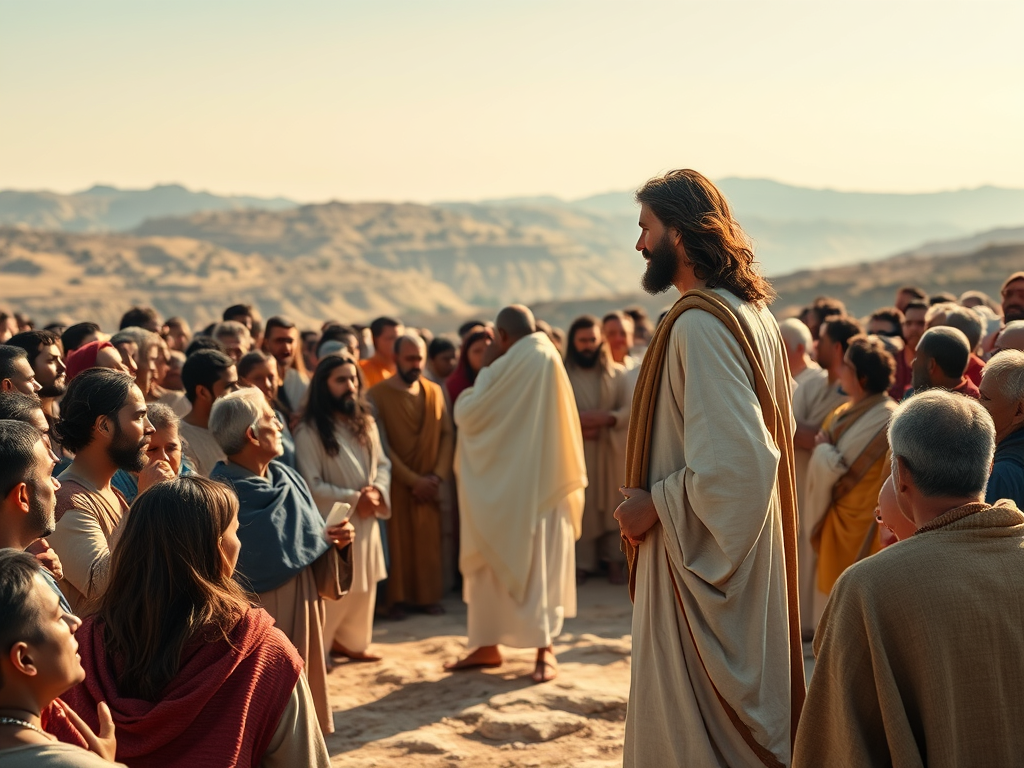
Image Generated by WordPress AI

Readings for February 16, 2025:

  1. Jeremiah 17:5-8
  2. Psalm 1:1-2, 3, 4 & 6
  3. 1 Corinthians 15:12, 16-20
  4. Luke 6:17, 20-26

What stands out to me from this week’s readings:

Contrasts stand out. I see contrasts between fertility and barrenness, between emptiness and fullness, and between sorrow and joy. The readings tell me that making room for God makes room for life and growth. In contrast, putting all one’s trust in the ways of human beings, especially in individual humans, is misleading. It prevents a person from being part of a circle that expands easily   so he she can grow and embrace life. It leads to dissatisfaction instead of openness and depth because no human is all-knowing or all-powerful.

What Someone Else Is Sharing about This Week’s Readings:

The readings for February 16 inspired Julia Murphy to reflect on the effect privilege can have on a person’s relationship with God. She reflects on this topic through the memory of a service immersion trip experience. She also points out that, regardless of how a person is or isn’t privileged, the Beatitudes aren’t telling the people who receive them to be passive. She reminds us that God calls us to wake up so we can tell the difference between wants and needs. Once we’ve discerned what’s needed, God calls us to cooperate with each other and with the prompting of the Holy Spirit to address our needs and the needs of others.

What I’m Saying:

Before I read Julia Murphy’s words, I didn’t know what to write in this section other than to repeat the themes of the text in different ways. The passages seem pretty self-explanatory, and especially in the case of the Beatitudes in the gospel passage, so familiar. What could I say about the Beatitudes that’s more than a list of “shoulds?” How does my gut react to the Beatitudes?

When I went back to this week’s gospel passage seeking answers to these questions, the passage reminded me of something that stood out when I first revisited it. The reading makes a point of telling us that when Jesus preached about the Beatitudes, he didn’t stand on a mountain or in a boat. He’s not depicted as looking down on the great crowd of his disciples. He’s not separated from them by the framework of a boat. Rather, we are told “he stood on a stretch of level ground” (Luke 6:17). I get the idea He was scanning the crowd as he spoke, meeting the eyes of this individual, then that one. I imagine Him seeming to each person as if he spoke only to him or her.

To anyone who sees him or herself in the blessed group, he offers encouragement. To anyone who recognizes him or herself in the opposite group, His warnings might imply questions:

If you’re rich, how did you get that way? Who helped you get there? Have they reaped the benefits as well? How can you show your appreciation? How can you share your more-than-enough with those who don’t have enough?

  • If you’re filled, what are you filled with? Does it take care of and treat kindly the body and mind God has given you? Where do you make room for God? For recognizing the injustice in your midst?
  • If you’re laughing now, what are you laughing at? Are you laughing at someone else’s expense? Someone else’s misfortune? Or can you laugh at your own frailty, imperfections, weaknesses? Can you left so that you don’t take them so seriously that you think God can’t work with you through them and despite them.

Many of us who can read these words might be rich by the standards of the much of the world. And yet lack of privilege can take different forms in different people’s lives at different times. Why? Because different factors contribute to each person’s sense of agency and independence. The truth is, a sense of independence isn’t permanent for anyone. We’re born needing others, and we die needing others. So many events in between lead us to ask God and one another for help. And that’s okay. That’s honest.

This Week’s Prayer:

Lord, grant us the grace to make room for You in our lives so we can see and hear as You do. Amen.

Scripture Translation Used:

Sixth Sunday in Ordinary Time — Lectionary: 78.” Daily Readings, Lectionary for Mass for Use in the Dioceses of the United States, Confraternity of Christian Doctrine, 2nd typical ed, United States Conference of Catholic Bishops, 2025, https://bible.usccb.org/bible/readings/021625.cfm.
Read Full Post »

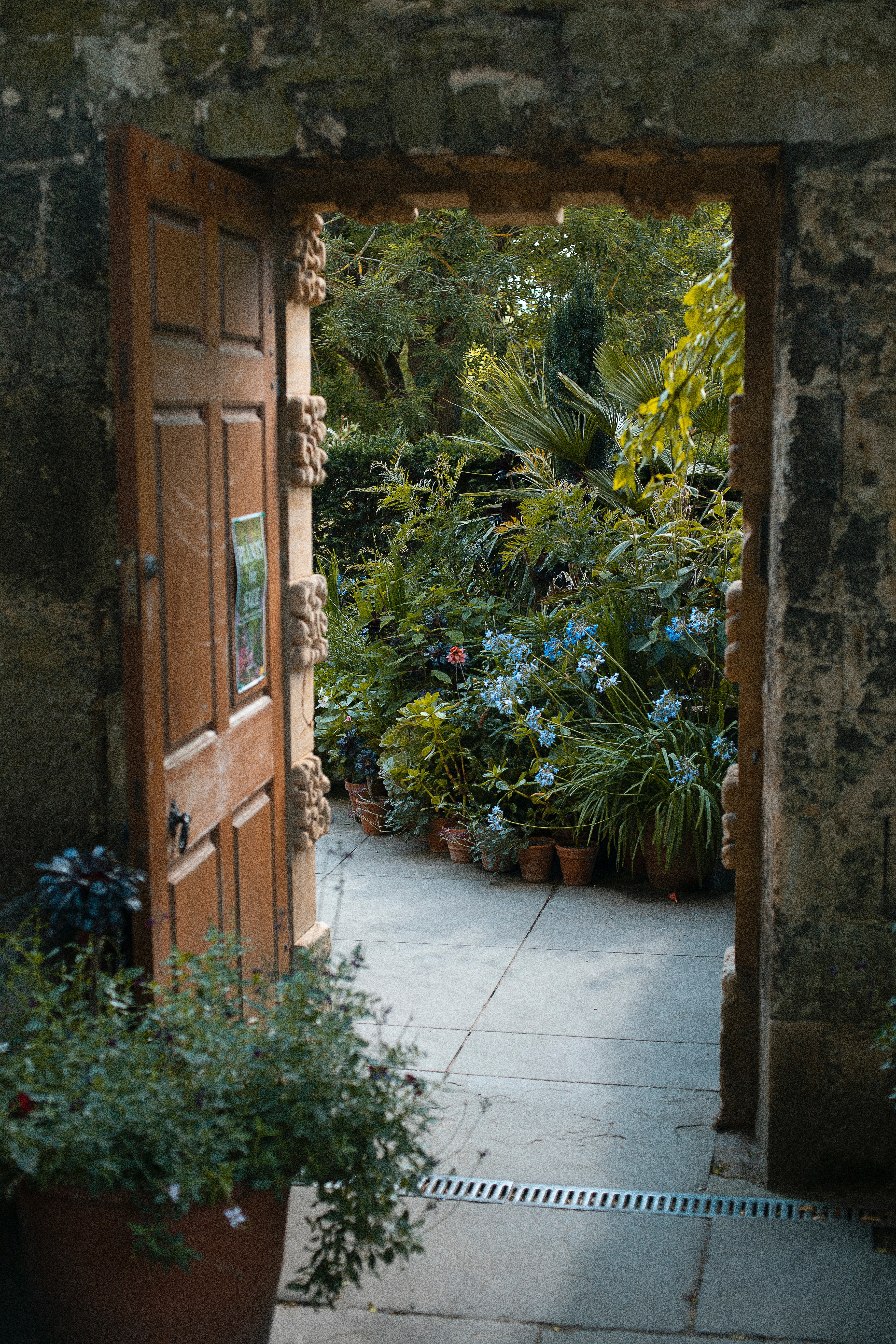
Photo by Pedro Ramos on Unsplash

This week’s readings:

  1. Isaiah 55:6–9
  2. Psalm 145:2–3, 8–9, 17–18
  3. Philippians 1:20c–24, 27a
  4. Matthew 20:1–16a

What this week’s readings say to me:

This week’s readings prompt me to imagine a high wall with a door in it. I’m on one side of that door, and God is on the other. God is knocking, asking me to open that door, to come in and work in the parts of God’s vineyard that occupy the space outside my body and soul. Opening this door will also allow God to work in the parts of the vineyard that God placed within my body and soul. God planted the vineyard, and the human tendency to sin created the weeds in the vineyard and the wall around it. This tendency also created walls within it. These are the walls of pride, anger, and envy.

I couldn’t enter the vineyard, and God couldn’t enter the vineyard of my body and soul if God hadn’t created doors into both. Why? Because “[God’s] thoughts are not [my] thoughts, nor are [my] ways [God’s] ways” (Isa. 55:8). The psalm goes so far as to describe God’s “grandeur” as “unsearchable” (Psalm 145:3). Yet God has created doors so that if I let God move freely in in the vineyards within and around me, whether I live or die, I won’t do so alone, but with God. And if I live or die with God, I do so for God and in God, as the end of Philippians 1:20 says.

The same door stands that stands between me and God stands between God and everyone else. It’s up to each of us how wide we open that door. What can be found through that opening is the same for everyone, regardless of when each person opens the door while he or she lives on this earth. Once we no longer live on this earth, we live on, we are eternal, in God to the extent that we have allowed God, the Eternal, to live in us.

What someone else is sharing about this week’s readings:

In Darlene Jasso’s reflection on this week’s readings, she asks how our world would be different if we treated each other the way God treats us. As last week’s readings told us, God doesn’t treat us the way we sometimes treat God and each other. God doesn’t draw close to us only when He asks something of us or only in difficult times. God doesn’t give us back only what we give to God. God withholds no part of Himself that we are open to receiving.

Beyond this week’s readings:

Ms. Jasso makes important and thought-provoking points about God and us. She says God shows everyone the same generosity. This truth can be difficult to keep in mind. I don’t know about you, but when I don’t make a conscious effort to alter my mindset, I tend to think that God loves and answers the prayers of the people who do the things that God wants when He wants and doesn’t do the same for the people who don’t do what He wants.

And it’s a worthy ideal for me to show everyone the same generosity. I suppose the true ideal would be to withhold nothing good from anyone. It’s easiest to want to do this with nonmaterial goods, such as justice and mercy. But my mind can’t quite ignore that what the landowner in the parable offers is monetary payment.

I realize that parables are highly metaphorical, that what the landowner, who represents God, gives represents more than money. Yet parables also don’t shy away from teaching us about what we should do with our material goods — material goods that none of us have an unlimited supply. Most of us have far less than an unlimited supply of material goods, and some of our brothers and sisters don’t have even what they need to survive, let alone be healthy.

Imagine if all of us found ourselves in this situation of need. Imagine if we all received the same level of generosity that too many societies show those who like the most basic necessities — which is not enough. On the other hand, what if we showed everyone unlimited material generosity? My human mind says resources would run out, that God has unlimited resources, but the physical world doesn’t. Another preachy voice in my head says that this reality is the reason we need to trust God to supply what we lack. And yet God doesn’t always supply what people lack, materially. Otherwise, food insecurity and famine wouldn’t exist. Yet they do, so God wants us to provide for each other and to share what we have.

God also knows having everything we want wouldn’t be good for us because excess lets us believe that we don’t need God and each other, that what we have is a substitute for interdependency on each other and dependence on God. God also knows that once humans have more than we need, we tend to want even more than that, and the more we have, the more we want, and we tend to confuse what we want what we need and to fear losing what we have wanted and received.

I suppose the realization I’ve come to as I write this post is that generosity means discerning what we truly need versus what we want and sharing what we have but don’t need. That which gives some of us what we want can supply what others need.

God doesn’t need us or any other part of creation, but God wants us, and so He distributes what He doesn’t need — all of creation — among various members of His family.

Lord, help me to discern the difference between what I want and what I need and to share my surpluses. This is the generosity you ask of me. Help me to practice it. Amen.

Work cited

The New American Bible Revised Edition, Kindle edition, Fairbrother, 2011.

Read Full Post »