
Hi! I won’t have much time to devote to this blog for the next couple weeks. In the meantime, I’ll be sharing the reflections of others. I hope you find this reflection about the Parable of the Prodigal Son to be insightful.
Posted in Reflections on Scripture, tagged Doubts, Encouragement, Non-Dualism, Reflections on Scripture on September 14, 2022| Leave a Comment »
Hi! I won’t have much time to devote to this blog for the next couple weeks. In the meantime, I’ll be sharing the reflections of others. I hope you find this reflection about the Parable of the Prodigal Son to be insightful.
Posted in Prayer, Reflections on Scripture, tagged Encouragement, Humility, Prayer, Reflections on Scripture, Social Justice on August 28, 2022| Leave a Comment »

In preparation for this week’s post, I’ve been pondering what Luke 14: 1 and Luke 14: 7-14 have to say to me. Luke 14:1 says that Jesus was invited to dinner at the home of a well-known religious leader, and while he was there, everyone else invited was “observing him carefully.”
Luke 14:1 reminds me to strive to focus on what God is asking me to do and to look to others in relation to what situations are calling me to do. It reminds me of that warning against “notic[ing] the splinter in [my] brother’s eye but . . .not perceiv[ing] the plank in [my] own” (Matt. 7:3). Second, it a reminder to be careful about drawing conclusions about people based on their appearance and what they do. My conclusions may not be accurate. Third, it reminds me that I need to ask for God’s help to make my heart and soul match the positive image I would like to project. Fourth, it reminds me to ask God for the grace not to be concerned about appearances for reasons that don’t demonstrate a love for myself, for others, and for God that reflects God’s love for us..
Luke 14:7-14 gives me, you, and the other guests invited to the dinner a parable about not presenting ourselves as if we deserve the highest honors. If we present ourselves this way, the parable tells us, we are likely to be perceived as arrogant and presumptuous. On the other hand, if we honor others, we’ll be perceived as humble and will be honored by others.
Pride makes a social circle small. In its most extreme form, pride would make room for only one person—the one consumed with pride—while humility widens a social circle, making room for those who may be different than we are and those whom we would have otherwise ignored or forgotten.
If I’m humble, I recognize that I need God and the gifts God has given me in creation and in other people, and I don’t take those gifts for granted. I recognize that I can do nothing on my own, without God, God’s other children, and God’s creation. This is not to say that I am nothing. I am — and you are — made in the image of God. I am — and you are — God’s coworkers and partners in the world. This makes each of us immeasurably important.
But if I’m humble, I don’t invite God in only once it seems I’ve exhausted all other sources of help. I make room for God, even when life seems to be running smoothly. I recognize my own flaws in the flaws I see in others and ask God to help me grow in grace while I pray for others to grow in grace as well and to receive the help they need. I ask God to help me see how I can help and to give me the courage to take action to help.
How often do I live up to the images of humility I’ve just offered? Not nearly often enough. I want to change that. God, give me the grace to get out of my own way and to open more and more to Your way — the way that would expand my embrace and would fill me with hope and courage. Amen.
Work cited
The Bible. The New American Bible Revised Edition, Kindle edition, Fairbrother, 2011.
Posted in Reflections on Scripture, tagged Doubts, Encouragement, Faith, Reflections on Scripture, Richard Rohr on August 25, 2022| Leave a Comment »

Someone asked him, “Lord, will only a few people be saved?” He answered them, “Strive to enter through the narrow gate, for many, I tell you, will attempt to enter but will not be strong enough. After the master of the house has arisen and locked the door, then will you stand outside knocking and saying, ‘Lord, open the door for us.’ He will say to you in reply, ‘I do not know where you are from.’ And you will say, ‘We ate and drank in your company and you taught in our streets.’ Then he will say to you, ‘I do not know where you are from. Depart from me, all you evildoers!’
Luke 13:23-27
“All I can think about are the ways I don’t feel strong enough to enter.”
“I know,” Jesus replied in my mind. “That’s why you needed me to be born, to bear the weight of human existence, weakness and sin. That’s why you needed me not only to bear the burdens of being human for 30 years or so, but also to bear the consequences of all sin in a way no other person could. I had to bear it all, so none of it would have the final say in your life if you let me bear it with you. My bearing it all and letting it kill me briefly made it so that weakness and sin will only kill you if you hold onto it instead of giving it to me. Don’t hold onto burdens I have already lifted, and if it’s our Father’s will that you carry a weight for a while, don’t believe the lie that you have to carry it alone. Don’t give up when you fall under the heaviness. Not giving up is what it means to strive. That’s why I said to ‘strive to enter the narrow gate’ (Luke 13: 24). The keyword is ‘strive.'”
“But you said ‘many will not be strong enough’ to enter (Luke 13:24).
“It takes a lot of strength to maintain hope — assurance that Good has had the final victory over Evil — in the midst of suffering. It takes a lot of strength not to try to save face, to practice the humility of sharing your burdens, and/or to make the sacrifice of admitting you’ve been wrong and done wrong. And the more you fall into the traps of pride, the easier it is to believe the lie that you always will. It takes a lot of strength to let go of the illusion that it’s best for you to control everything in your life. It takes a lot of strength to keep hoping and striving in the face of life’s uncertainty and its obstacles. You know all this as well as I do.”
“Yes, I do know. I also know I don’t have the strength for any of that.”
“Come to me, and you will,” he said. “Trust that I’ve given you the strength, and when your trust wavers, keep daring to trust again. Keep seeking me, and you’ll find me” (Matt. 11-28-30; 7:7).
“If that’s true,” I asked, “Why does the Master lock the door in the parable? Weren’t the people he locked the door against seeking him?”
“Had they striven to do as the master does?” he asked. “Did they act on what he taught in their streets, or did they only hear the sound of him teaching? Did they ever have a one-on-one conversation with him, or did they hide in the crowd, like a movie extra? Did hiding feel safer than greeting the host, or were they simply content to linger in sight of the house rather than crossing its threshold while the door was open? Did they greet the host when they accepted the food he offered? Did they receive his offerings? Did they have gratitude? Did they open themselves up to him, and did they allow him to open himself up to them?”
He continued, “Who doesn’t want to protect the peace of his or her household from disturbance and from strangers who might harm the household? Who wants to let in someone he or she doesn’t recognize, especially when it’s dark and hard to see who or what the stranger has with them? Who wants to let in a stranger who seems to want the master’s help, but might want to use gaining entry to harm the master and his loved ones?”
This master knows the intentions of all who knock on his door,” he reminded me. “This master knows who and what they’ve brought with them, and he knows whether they are prepared to leave outside anything he doesn’t want to in his house. He knows whether they are ready to make peace with him and work with him for the good of his household. If they aren’t, they aren’t ready to enter it, which is not to say they can get ready by themselves. As I said before, it takes strength to surrender to purification, the purification that’s necessary to embrace and to be fully embraced by Presence and Loving Relationship (“The Pain of Disconnection”; “Images of the Trinity”). I look out for for myself and for the good of my family and all that belongs to me. I think even someone with more limited knowledge and resources will usually do the same.”
“I think so too.”
Works consulted
The Bible. The New American Bible Revised Edition, Kindle edition, Fairbrother, 2011.
Rohr, Richard. “Images of the Trinity,” Center for Action and Contemplation, 12 Jan. 2022, https://cac.org/daily-meditations/images-of-the-trinity-2022-01-12/. Accessed 25 Aug. 2022.
—. Rohr, Rohr. “The Pain of Disconnection,” Center for Action and Contemplation, 11 Jan. 2022, https://cac.org/daily-meditations/the-pain-of-disconnection-2022-01-11/, Accessed 25 Aug. 2022
Posted in Reflections on Scripture, tagged Encouragement, Non-Dualism, Reflections on Scripture, Social Justice on July 29, 2022| 1 Comment »

As I begin drafting this week, it’s Thursday, July 28, and thanks to some opportunities I’ve seized outside of this blog, I’m out of time to put together the type of post I have before. Right now, God seems to be using life to teach me not to cling too tightly to my plans.
Now I’m far from opposed to making plans. I want to encourage everyone to make them. Outcomes aside, the planning process itself is a great teacher, not just about what we’re planning, but about ourselves. So even when plans don’t work out the way we hoped, they aren’t wasted. Sometimes, they do work out the way we hope they will, but the path we take to get to the intended destination isn’t the one we thought we’d follow. Along these lines, I’m not going to skip posting this week, but I am going to try out yet another new approach in what I post. I don’t think this will be the usual approach from here on out, but it may be an option I consider from time to time.
My new approach is to share the reflections that others publish on the readings from the previous weekend. First, I want to start with Dr. Susan McGurgan’s reflection about the gospel reading that inspired my post last week. The passage was Lk 10:38-42. Dr. McGurgan’s bio under Preacher includes a wealth of credentials. You can watch a video of her preaching on this passage as well as read the text of her reflection by following this link.
Second, I want to share with you a reflection from Boston College School Associate Professor of Old Testament Jamie L Waters. Here, she reflects on the Old Testament reading from July 24, Gn. 18: 20-32. I hope you can access this reflection. As a digital subscriber, I’m not limited in the number of times I’m able to follow the link. It’s my recollection that America Media allows a certain number of free views before it asks readers to sign up for a digital subscription. However, if any of you lets me know you can’t access this article, I won’t link to this source again.
Third, I want to share with you again the prayer I wrote for my June 2 post. I’m linking to it here because this past week’s gospel reading, Lk. 11:1-13, included the Lord’s Prayer. I thought about just copying and pasting the prayer here, but then I thought referring you to the original context for it would be helpful.
And finally, I’d like to share with you Brenna Davis’s reflection on the Lord’s Prayer because who needs just my take on it — especially for the second time around? Not me. I wanted to hear someone else’s perspective. As with Dr. McGurgan’s reflection, you can watch a video of Ms. Davis presenting hers under the Video link, and you can read the text of it under the Text link. Her bio is under the Preacher link on the same page as her text and video.
Works cited
Davis, Brenna. “July 24, 2022: Seventeenth Sunday in Ordinary Time,” Catholic Women Preach, FutureChurch, https://www.catholicwomenpreach.org/preaching/07242022, 24 July 2022, Accessed 28 July 2022.
McGurgan, Dr. Susan Fleming. “July 17, 2022: Sixteenth Sunday in Ordinary Time,” Catholic Women Preach, FutureChurch, https://www.catholicwomenpreach.org/preaching/07172022, 17 July 2022, Accessed 28 July 2022.
Rutledge Lisa, “Our Ascension,” Sitting with the Sacred, Oleander Isle Editing & Publishing, https://sittingwiththesacred.com/2022/06/02/our-ascension/ 2 June 2022, Accessed 28 July 2022.
Waters, Dr. Jamie L. “God, Our Father, Calls For Justice and Hospitality,” America: The Jesuit Review, America Media, https://www.americamagazine.org/faith/2022/07/20/justice-hospitality-god-father-243388?utm_source=piano&utm_medium=email&utm_campaign=22942&pnespid=pLtrES0WN7EY3fDMu27sCpOT4A6nVYYtfPizzeZ4thJmHv4SYX4HgDlY5gP0d4E4o34lMxHT, 20 July 2022, Accessed 28 July 2022.
Posted in Disability, Prayer, Scripture Stories, Social Justice, tagged Disability, Doubts, Encouragement, Faith, Scripture Stories, Social Justice, Spirituality on July 13, 2022| Leave a Comment »

I’ve often read and heard that Jesus’ parables include twists, that an element of surprise is often included, and this element increases the impact of the story all the more. The parable of The Good Samaritan (Luke 10: 25-37) is no exception to this observation. If we were hearing the story in Jesus’s’ time on earth, we might have been surprised that the Samaritan is the one who stops to help the victim. It’s my understanding that Samaritans and Jews were far from close allies around the 1st century A.D.
I wonder how Jewish hearers of this story would have felt about the fact that the priest and the Levite don’t seem to notice the man lying bloody by the side of the road. Angry at the priest and the Levite? Angry at Jesus for presenting these two characters in that way. Cynically unsurprised as in “That’s just like a priest to act that way”? Or would they be unsurprised in another way because they had heard Jesus before and were used to the ways he turned their expectations upside down? As with any story, how an audience member responds to it depends not only on the culture from which he or she comes or the status he or she has in that culture, but in the unique combination of experiences that an individual brings to the hearing.
I listened to this parable on an app that invited me to put myself into the story. Before I did that, I saw a reflection on the parable whose title asked me whether I was a victim or perpetrator in the story. I was a little surprised that when I closed my eyes and played the events in my mind, I was neither one.
I was a beggar lying on the opposite side of the road from where the victim would fall. I saw myself in this position because I can’t walk or stand. My arms don’t allow for much extension or have much strength either. If I had lived in the first century and had miraculously survived to be born and then survived to my current thirty-eight years, I’d probably stay home and be cared for by my extended family, so long as I had living relatives, as I do now. But if I were the only one of my people left, I wouldn’t have much choice but to have someone place me by the side of the road to beg for food and coins, so that’s the position I felt prompted to imagine myself in as I prayed with this parable. The position allowed me to witness the scene.
I witnessed the man being beaten and then robbed, but I didn’t make a sound because I didn’t want the perpetrators to attack me. Then, as they hurried away, and the victim and I lay turned away from each other, I thought to myself, “God’s law requires that I help this man, but he can probably still move more than I can. So what can I do?”
Beg passersby to help the injured man. That’s all. To imagine myself doing it, I’ll have to imagine I’m braver, more hopeful, and more altruistic than I am. Because if the priest and the Levite ignored the injured man, why would they give any indication they heard me calling? Perhaps because I’m persistently making noise, while the injured man isn’t. Perhaps because they’ve seen me there before, and giving me a few coins time would make them feel good without costing as much as helping the injured man would. Maybe they would answer me but would say they could do nothing because they had somewhere to be and they were already late. Besides, they didn’t have any more money on them. Maybe next they would command me to hush, and I’d clutch at their robes until they shook me off until I lost my grip. I would be silent then until they were out and of earshot.
I would feel that all was lost. What was the point in nagging people? It wouldn’t change anyone’s mind or help the injured man, and it would make things worse for me.
But so what if it gave me new rips in my scraps of clothing and some new scrapes and bruises? A man’s life was at stake, and more of that life pulsed out of him with every second that went by.
But so what if it gave me new rips in my scraps of clothing and some new scrapes and bruises? A man’s life was at stake, and more of that life pulsed out of him with every second that went by. Maybe the events of this day were one of the reasons I was here. Maybe my persistence would do some good, even if it wasn’t for me or the man, and and even if I didn’t see it.
So when I saw another man approaching at a distance, I spoke for the victim again, first in a whisper and then in a shout as the stranger passed me.
He didn’t acknowledge me but stopped to wash the other man’s wounds, lifting the victim onto his own stooped shoulders and making his way back to his horse to drape the man over the animal.
Only then, caked in dust, flushed and sweating out of every pore did he trudge over to me and hold out a coin.
“No, save it for him.” I nodded toward the man lying across the horse.
He dropped the coin into the dirt and strode toward his animal.
As he rode out of sight, that was the last I saw of either man.
Would the helper have done what he did without my pleas?
Probably.
But the price of silence had been too high to find out.
What might have been didn’t matter. What mattered was the good that had been and would continue to be.
Posted in Reflections on Scripture, tagged Doubts, Encouragement, Reflections on Scripture, Relationship with God on June 24, 2022| Leave a Comment »
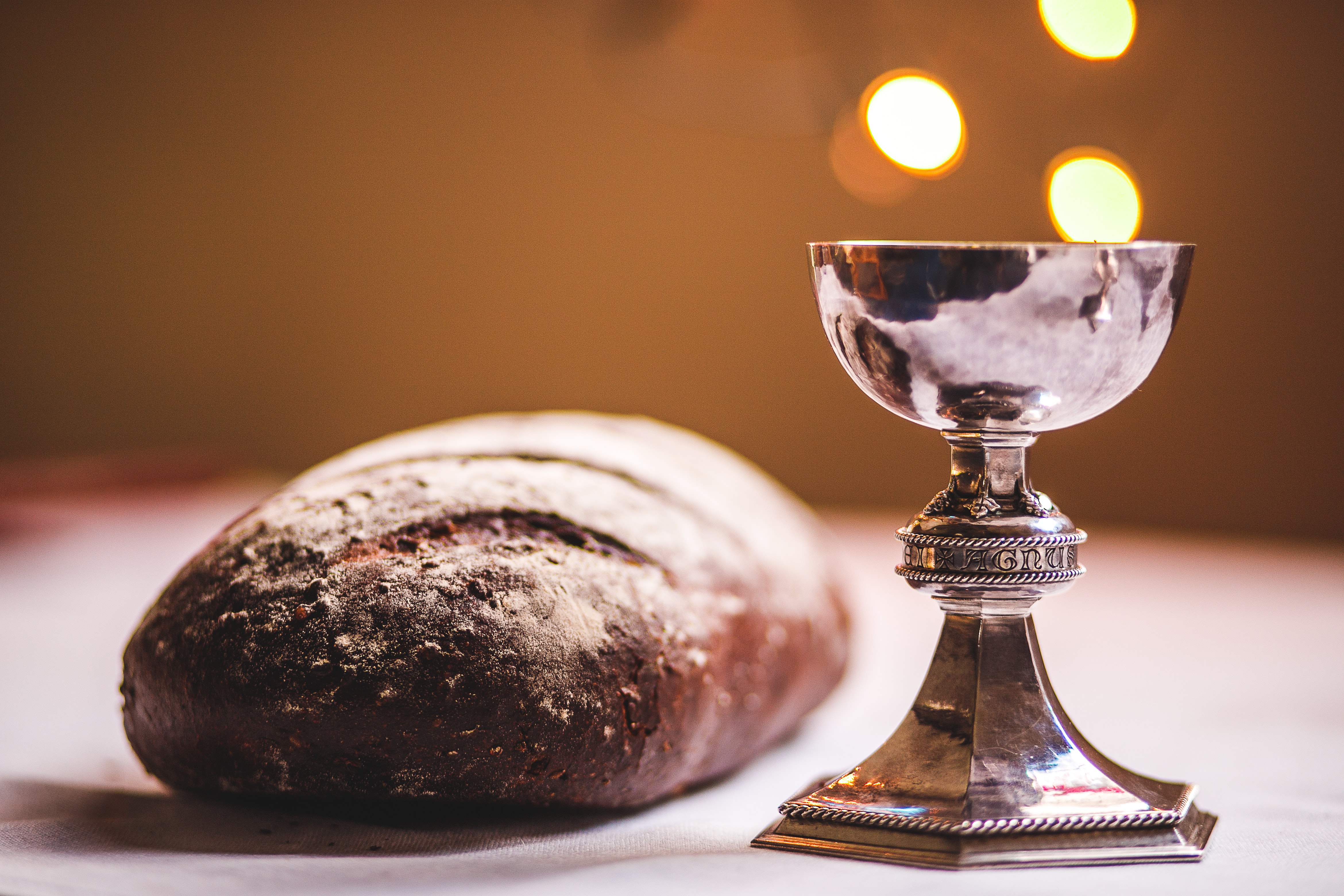
For me, last week’s theme was the wonder of a world that reflects a God who is relationship, the wonder of a world in which the grandest features reflect God, and yet God” delight[s] [in] human beings]” (Prov. 8:31).
For me, there is an element of distance involved in wonder. Wonder is amazing, like a view of a mountain range or a canyon When I picture a God of wonder, I picture a God who “delight[s] in human beings” but doesn’t feel accessible. I picture a God who watches from above and smiles but is, nonetheless, watching from above.
But this week’s readings don’t speak to me about a God who is content to watch me from above. He doesn’t even stop at sharing my human nature and walking beside me. He feeds me, and not just by inviting me over to dinner like another friend might. He becomes one with me by feeding me with himself — and not just with his spirit — but with everything that made him a living, touchable human being — his body and blood, in addition to his Divine Life. Everything. He holds nothing back from me. In fact, he wants me not only to share in his Holy Spirit and his humanity, but in other gifts of nature — offered in what the senses perceive as bread and wine. He provides for me in so many ways in the hope that the blessings of these gifts will spread from me outward.
Paul reminds the Christian community of Corinth:
“[O]n the night [Jesus] was handed over [he] took bread, and, after he had given thanks, broke it and said. ‘This is my body that is for you… In the same way also [he took] the cup… saying, ‘This cup is the new covenant in my blood [Italics mine]
1 Corinthians 11:23-26.
The New Oxford American Dictionary on my Kindle defines a covenant, in the theological sense, as, “an agreement that brings about a relationship of commitment between God and his people.” (Loc. 188613-188614).
“A relationship of commitment” — like a marriage — one in which the groom offers all of himself — even to the point of offering his body and shedding his blood.
This groom is the Trinitarian God, one of our pastors reminded us this weekend. This is the God of relationship that I wrote about last week. And yes, this God is the God of wonder. But this same God is also the God of the utmost intimacy.
Works cited
The Bible. The New American Bible Revised Edition, Kindle edition, Fairbrother, 2011.
The New Oxford American Dictionary, Kindle edition, Oxford UP, 2008.
Posted in Reflections on Scripture, tagged Encouragement, Nature, Proverbs, Psalms, Richard Rohr, Trinity on June 17, 2022| 3 Comments »

We often hear about the Trinity, but what does the Trinity mean? In “The Mystery of the Trinity,” Father Richard Rohr explains it like this:
“Christians believe that God is formlessness (the Father), God is form (the Son), and God is the very living and loving energy between those two (the Holy Spirit). The three do not cancel one another out. Instead, they do exactly the opposite.”
In “Images of the Trinity,” he adds,
“[T]he three Persons of the Trinity empty themselves and pour themselves out into each other. Each knows they can empty themselves because they will forever be refilled To understand this mystery of love fully, we need to “stand under” the flow and participate in it. It’s infinite outpouring and infinite infilling without end. It can only be experienced as a flow, as a community, as a relationship, as an inherent connection.”
All of creation reveals this relationship—”from atoms, to ecosystems, to galaxies,” The shape of God, Father Richard writes in “The Mystery of the Trinity,” is the shape of everything in the universe! Everything is in relationship and nothing stands alone.”
“Everything is in relationship and nothing stands alone.”
Father RICHARD ROHR
I’d say the first reading (Proverbs 8:22-31) and the psalm (Psalm 8:4-9) from this past weekend reflect this understanding, especially Proverbs 8:27-31 and Psalm 8:4-9. The psalm excerpt begins with:
When I behold your heavens, the work of your fingers,
Psalm 8:4-5
the moon and the stars which you set in place—
What is man that you should be mindful of him,
or the son of man that you should care for him?
The psalmist marvels at all the wonder his senses can take in, and he’s in awe of his experience that despite being reflected in all that grandeur, God also cares about the smallest components of the natural world and every single human being, too.
I love the way Proverbs assures us that God does, indeed, care about aspects of our lives that may seem to us to be insignificant. In that book, wisdom speaks about itself, saying:
I was his delight day by day,
Proverbs 8:30-31
playing before him all the while,
Playing over the whole of his earth,
having my delight with human beings.
Works cited
The Bible. The New American Bible Revised Edition, Kindle edition, Fairbrother, 2011.
Rohr, Richard. “Images of the Trinity.” Center for Action and Contemplation, 12 Jan. 2022, https://cac.org/daily-meditations/images-of-the-trinity-2022-01-12/. Accessed 17 June 2022.
—. “The Mystery of the Trinity.” Center for Action and Contemplation, 9 Jan. 2022, https://cac.org/daily-meditations/the-mystery-of-the-trinity-2022-01-09/. Accessed 17 June 2022.
Posted in Reflections on a Verse, Reflections on Scripture, Verses to Meditate On, tagged Encouragement, Reflections on a Verse, Reflections on Scripture on May 11, 2022| Leave a Comment »

“My sheep hear my voice . . “
John 10:27
When I heard the above statement this weekend, it stood out to me what the sentence doesn’t say. It doesn’t say, “My sheep hear my words.” It doesn’t say “My sheep hear my teachings,” and it doesn’t say, “My sheep hear my instructions.” It says, “My sheep hear my voice. [Italics mine]”
A voice isn’t an idea. It isn’t a string of ideas forming a message. Like the many human inventions that it surpasses, it’s a carrier for the message. It can be small and brittle like a glass bottle. It can be warm and gentle as a May breeze, as harsh and loud as the ship’s whistle or as gravelly as the air in a worn parking lot on a gusty March day.
Words can say one thing while the voice that delivers them says the opposite. One voice can be similar to another, but no voice is exactly the same. (At least I think this last statement is true. I’m far from a voice scientist. I’m only writing from my experience.) To communicate with another living creature using one’s voice can be a powerful and intimate experience — intimate, I think, because the process that voices use to communicate is only partly a conscious one. A familiar quality of a certain voice can touch us in ways we can’t quite put into words.
. . . I know them, and they follow me.
John 10:27
That’s why I find it so fitting that John 10:27 says “My sheep hear my voice. I know them, and they follow me” God reaches us in ways that go beyond any means — words being one — that we use to create order around us. God speaks with the voice of the Spirit and gives us the ears of the Spirit to hear that voice. That’s what I thought when I found the picture I’m including with this post. To me, the picture looks like a flame in the shape of an ear. This image reminds me that the ears of the spirit are sensitive to the vibrations of Divine Love and that the heart of the Spirit responds to this Love by sharing it.
Work cited
The Bible. The New American Bible Revised Edition, Kindle edition, Fairbrother, 2011.
Posted in Reflections on Scripture, tagged Encouragement, Inspiration, Richard Rohr, Spirituality on January 9, 2022| Leave a Comment »

When setting up this blog, I chose one of the templates available in WordPress, and I kept the default cover photo associated with the theme called MistyLook. It’s a name that fits character of my spiritual experiences, most of our spiritual experiences this side of death, actually. Most of the time, we get only misty looks at God and at the path that lies before us, hence the misty photo with the winding path flanked by numerous trees that remind me of all those times I couldn’t see the proverbial forest through them.
But the readings for The Baptism of the Lord are not about those misty looks at God that we usually get. They’re about God working in human experience in bodily form and announcing that that’s what’s going on. Jesus comes to the Jordan to be baptized, just as all the other people waiting on the banks had been, and when he comes up from the water, the Holy Spirit came down “in bodily form, like a dove” and everyone present hears a voice that says, you are my beloved Son in whom I am well pleased” (Luke 3:21-22). Many people on the banks and early readers of this account would recognize that “with whom I am pleased” is a phrase used in Isaiah to describe the Messiah, but it stands out to me that the voice says, “You are my beloved son in whom I am well pleased”[emphasis mine] (Isa. 42:1). This verse stands out because it doesn’t say what the voice says in the Transfiguration scene later in the Scriptures. It doesn’t say, “This is my chosen Son; Listen to him” (Luke 9: 35). The onlookers are privy to a declaration of love and approval from a parent to a child. There is intimacy in being present for such an affirmation, made concrete, not only through a voice, but through touch, the touch of a dove. Yes, the dove is a symbol of peace. The people of Jesus’ time and place would have known this too. But God could have just sent a rainbow to signal the same thing. Except Jesus wouldn’t feel it the way He would feel a dove landing on Him.

It’s a dove that prepares Jesus for what lies ahead and definitely points him out to the crowds on the banks, but is the affirmation meant only for him? More than one person more knowledgeable about theology and Scripture than I am says no, that this voice speaks to other children of God as well. Here’s an example of this understanding of the scene. The reflection I just linked to parallels the baptism of Jesus and the baptism of a follower of Jesus. Meanwhile, Pope Francis goes so far is to remind us that the love between the Father and the Son is “imprinted” on us the moment we come into existence. This meditation from Professor Heidi Russell includes a quotation from the pope about this subject. What I take away from these sources is that we don’t have to be baptized to be loved by God. We get baptized to receive the grace to love ourselves, other people, and indeed, all of creation the way God does.
With these insights in mind, it stands out to me that, unlike in the Transfiguration scene, even though everyone present seems meant to hear what the voice has to say, no direct instruction, no “Listen to Him” is included. This moment of baptism is all about affirming who Jesus is and who the onlookers — we— are.
What does Jesus do with the affirmation, and the “Holy Spirit and power” He receives from His baptism (Acts 10:38)? Acts tells us that “he went about doing good and healing all those oppressed by the devil” (10: 38). “Doing good and healing.” These are active words that convey having a positive impact on the lives of people as they are at a given time, not just in a future context that the people can’t describe. These words also tell me that no one is his or her wounds or the ways he or she distorts the unique combination of positive qualities that he or she has the potential to reflect. These are the qualities of God, who, to paraphrase the Rev. Father Richard Rohr, is love as a verb, love as in “pour[ing]” into someone or something else.

No matter who we are or what we struggle with, we are created in the image of God (Gen. 1-26). I find it helpful to think of my struggles and of the ways I’ve fallen short of reflecting God as injuries and grime that may make it harder for me and for others to recognize the ways I reflect God. These grimy wounds need to be brought to God for washing and healing. Who knows how long the washing and healing will take? It is a process that I believe began when I was conceived and won’t be complete when my soul separates from my body. Over and over again, I will “forget” who I am, as the Rev. Father Terrence Klein writes, and I won’t— at least not as clearly as I would like—reflect the qualities of God that I have. This distortion of my true image, while beloved, will shape how people see me as will the imperfections they carry when they look at me, and over and over again, I’ll have to acknowledge how my frailty and choices have contributed to the distortion of my true image, and this acknowledgment will help me heal and grow more into the person I’m meant to be.
While I go through growing pains, I take comfort in having faith in a God who helped people carry wounds by living a human life, a life that included, we are told in the Gospels, taking part in a baptism of repentance that He didn’t need. That means that everything the people baptized before Him carried—sins and everything else—was in that water when he went into it. Everything the people would like to dispense with touched him, as it did throughout his life and would most violently on the cross. I know I’m not the first person to see this in his baptism, but I don’t remember where I encountered this insight first.
His humanness also meant that he didn’t heal everyone with his physical presence. That happening depended on a lot of factors — a person having the courage to approach him, to name just one factor. Some people had the opportunity to approach him; others didn’t. There were times when people wanted him to stay and help, but he moved on to the next town. (See Mark 1:35-39 for an example.) Because I’m a human being, who wants concrete solutions and would prefer to receive them now, I won’t pretend to fully understand and accept this response — even though I’m getting the message that His mission was to spread the spiritual wealth. Still, faith tells me that He always cared about the people he left “looking for” Him during his ministry (Mark 1:37). He always cares about whatever mars the beautiful images of his brothers and sisters, whatever makes it more difficult for them to feel connected to and by Love — so much so that he took upon himself —to the point of torture and death —everything that isn’t light, peace, community, and dignity. I believe that when he did so, he experienced in ways I cannot comprehend every form of human suffering, whether physical, mental, or spiritual.
But none of it could defeat him. And because it couldn’t, He is no longer limited by the confines of his human life and is able to accompany anyone of us who reach out to him, as generation after generation, new hands, and feet, and hearts heal and do good in heaven and on earth. I recognize and have gratitude for daily glimpses of beauty and love. Yet as I write this, more than one mass shooting, genocide, famine, and natural disaster comes to mind. I long for the world he saved from these, and I don’t know when salvation from these sufferings will come or precisely what it will look like. However, not knowing is better than not believing this kind of salvation will ever come. And while I journey down this misty and tree-obscured path of life, not knowing so much, I relish the “ordinary” gifts, and I trust that God, wounded by living all of our sufferings, is beside me, here and now.
Works cited (but not linked)
The Bible. The New American Bible Revised Edition, Kindle edition, Fairbrother, 2011.
 Sitting with the Sacred