Feeds:
Posts
Comments

Posts Tagged ‘Consolation’

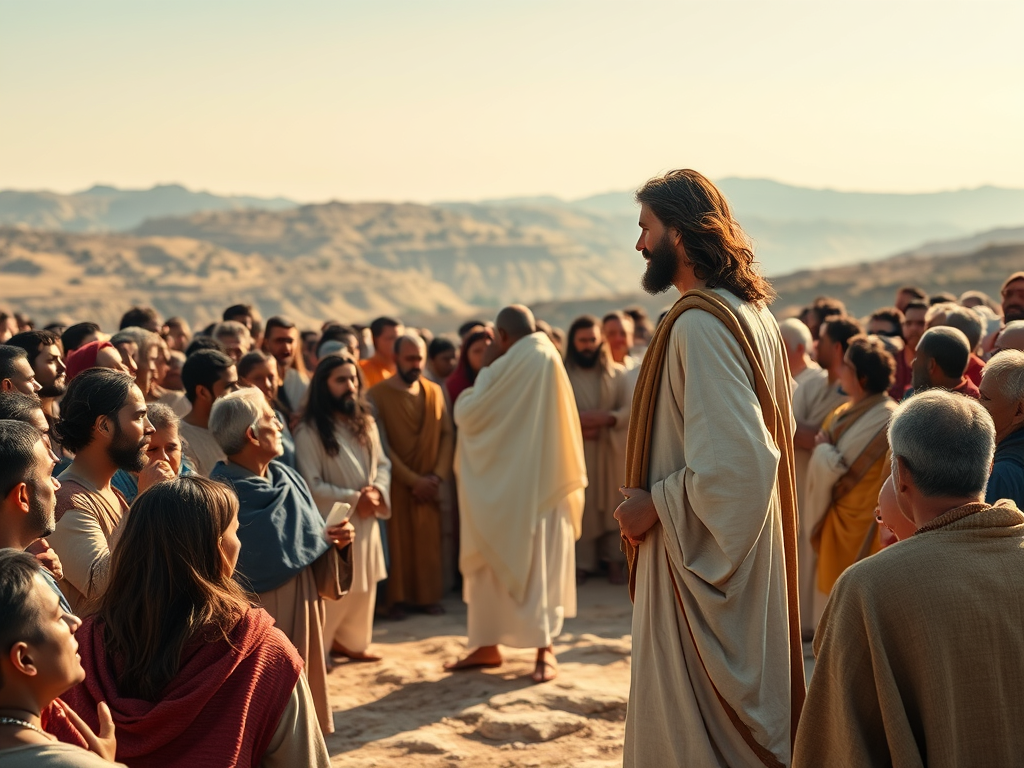
Image Generated by WordPress AI

Readings for February 16, 2025:

  1. Jeremiah 17:5-8
  2. Psalm 1:1-2, 3, 4 & 6
  3. 1 Corinthians 15:12, 16-20
  4. Luke 6:17, 20-26

What stands out to me from this week’s readings:

Contrasts stand out. I see contrasts between fertility and barrenness, between emptiness and fullness, and between sorrow and joy. The readings tell me that making room for God makes room for life and growth. In contrast, putting all one’s trust in the ways of human beings, especially in individual humans, is misleading. It prevents a person from being part of a circle that expands easily   so he she can grow and embrace life. It leads to dissatisfaction instead of openness and depth because no human is all-knowing or all-powerful.

What Someone Else Is Sharing about This Week’s Readings:

The readings for February 16 inspired Julia Murphy to reflect on the effect privilege can have on a person’s relationship with God. She reflects on this topic through the memory of a service immersion trip experience. She also points out that, regardless of how a person is or isn’t privileged, the Beatitudes aren’t telling the people who receive them to be passive. She reminds us that God calls us to wake up so we can tell the difference between wants and needs. Once we’ve discerned what’s needed, God calls us to cooperate with each other and with the prompting of the Holy Spirit to address our needs and the needs of others.

What I’m Saying:

Before I read Julia Murphy’s words, I didn’t know what to write in this section other than to repeat the themes of the text in different ways. The passages seem pretty self-explanatory, and especially in the case of the Beatitudes in the gospel passage, so familiar. What could I say about the Beatitudes that’s more than a list of “shoulds?” How does my gut react to the Beatitudes?

When I went back to this week’s gospel passage seeking answers to these questions, the passage reminded me of something that stood out when I first revisited it. The reading makes a point of telling us that when Jesus preached about the Beatitudes, he didn’t stand on a mountain or in a boat. He’s not depicted as looking down on the great crowd of his disciples. He’s not separated from them by the framework of a boat. Rather, we are told “he stood on a stretch of level ground” (Luke 6:17). I get the idea He was scanning the crowd as he spoke, meeting the eyes of this individual, then that one. I imagine Him seeming to each person as if he spoke only to him or her.

To anyone who sees him or herself in the blessed group, he offers encouragement. To anyone who recognizes him or herself in the opposite group, His warnings might imply questions:

If you’re rich, how did you get that way? Who helped you get there? Have they reaped the benefits as well? How can you show your appreciation? How can you share your more-than-enough with those who don’t have enough?

  • If you’re filled, what are you filled with? Does it take care of and treat kindly the body and mind God has given you? Where do you make room for God? For recognizing the injustice in your midst?
  • If you’re laughing now, what are you laughing at? Are you laughing at someone else’s expense? Someone else’s misfortune? Or can you laugh at your own frailty, imperfections, weaknesses? Can you left so that you don’t take them so seriously that you think God can’t work with you through them and despite them.

Many of us who can read these words might be rich by the standards of the much of the world. And yet lack of privilege can take different forms in different people’s lives at different times. Why? Because different factors contribute to each person’s sense of agency and independence. The truth is, a sense of independence isn’t permanent for anyone. We’re born needing others, and we die needing others. So many events in between lead us to ask God and one another for help. And that’s okay. That’s honest.

This Week’s Prayer:

Lord, grant us the grace to make room for You in our lives so we can see and hear as You do. Amen.

Scripture Translation Used:

Sixth Sunday in Ordinary Time — Lectionary: 78.” Daily Readings, Lectionary for Mass for Use in the Dioceses of the United States, Confraternity of Christian Doctrine, 2nd typical ed, United States Conference of Catholic Bishops, 2025, https://bible.usccb.org/bible/readings/021625.cfm.
Read Full Post »

Confession (or a peek behind the curtain): as I’m writing these words, it’s May 9. Since my Lenten Stations of the Cross series wrapped up, I’ve been writing the posts ahead. I hoped that by doing this, I’d have more time to reflect on the readings, and I’d be able to publish reflections that refer to the Mass readings for the day

Well, I got the first benefit with this post, but not the second. This post isn’t going to refer to this week’s readings because I just realized I looked at the wrong day’s readings when I started working on this post. The result is that this post makes a connection to last week’s readings — the readings for May 7 — not the readings for May 14.

Still, I enjoyed the connection I encountered between a verse in the May 7 Gospel reading and Psalm 23. So, with the exception of this introduction, I’m going to publish this post in what I previously thought would be its final form. The next post may relate to the readings for May 21, but then again, knowing me, it may not. Thanks for coming along with me on the adventure that is this blog.

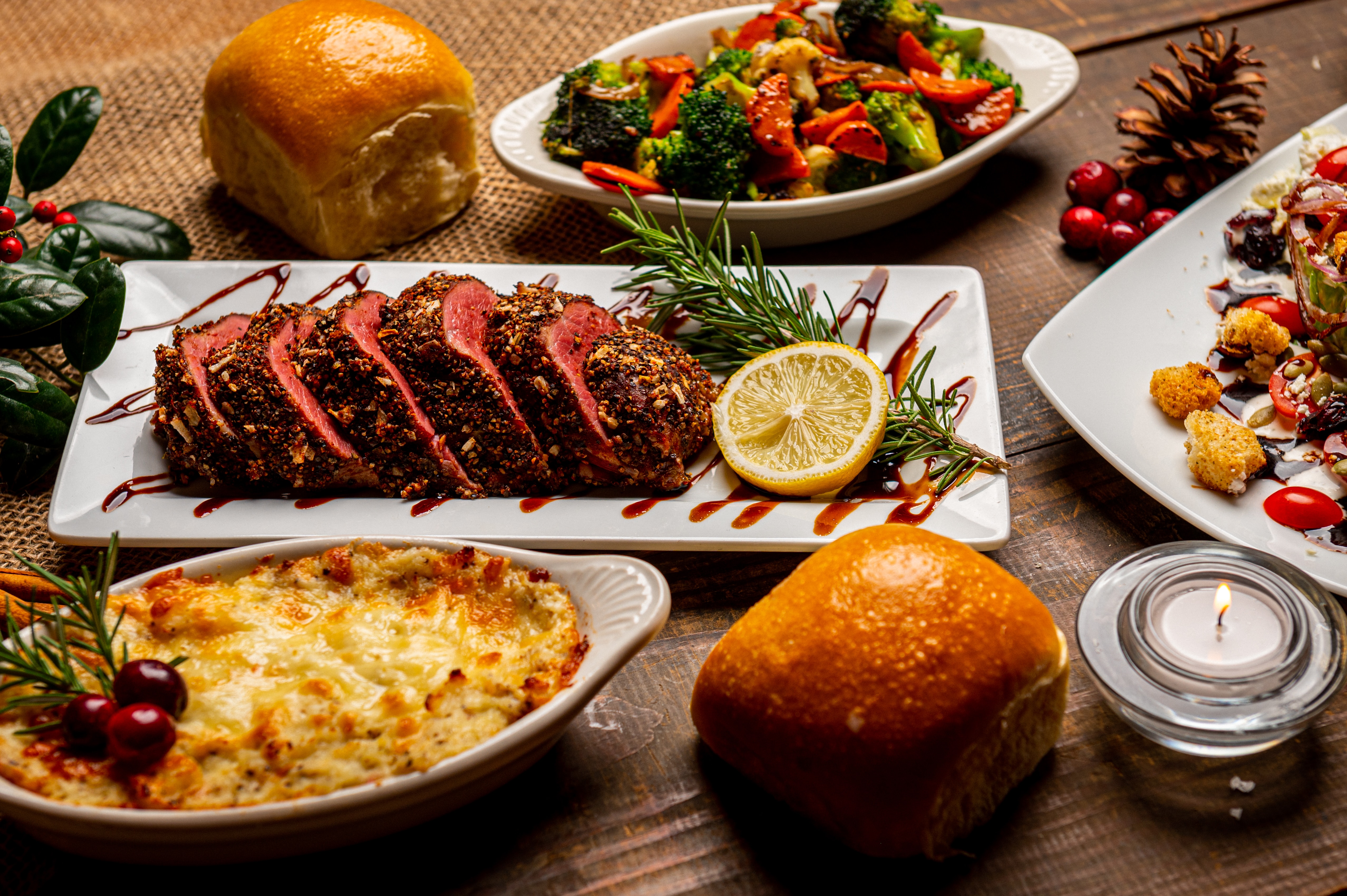
Photo by Jed Owen on Unsplash

“Believe me that I am in the Father and the Father is in me, or else, believe because of the works themselves”

John 14:11

You spread the table before me
in the sight of my foes;
you anoint my head with oil;
my cup overflows.
Indeed, goodness and mercy* will pursue me
all the days of my life;
I will dwell in the house of the LORD
for endless days.

Psalm 23:5-6, The New American Bible Revised Edition

The readings for this Sunday don’t include Psalm 23, but I’ve found a point of intersection between the next two verses of the psalm and John 14:11, a verse from today’s Gospel reading. To me, verses 5 and 6 of Psalm 23 have something to say about how the Shepherd’s service shows even those who are not members of His fold just how powerful authority employed for care is. This care holds a power that everyone recognizes and wants to benefit from, even though not everyone recognizes the Foremost and Ultimate Shepherd and Host for who He is. Few people wouldn’t marvel at a host setting a banquet before a guest. According to the New American Bible Revised Edition, the banquet would signal to the psalmist’s enemies that he’s a “friend and guest” of God (Psalm 23: 5n).

But this host doesn’t just prepare a feast that would be enticing to anyone. He prepares his guests for this feast the likes of which they’ve never seen and can’t imagine or prepare themselves for. He helps them present the best version of ourselves to the world by anoint[ing] [their] head[s] with oil” (Psalm 23:5). The New American Bible Revised Edition says “a perfumed ointment made from olive [was] used especially at banquets” (23:5n). The third line of verse 5 and the note that accompanies it remind me of how someone is anointed with oil at baptism. According to information about the liturgy of baptism from the Diocese of Savannah, Georgia, “The celebrant anoints the person to be baptized with the Oil of Catechumens (an oil that has been blessed by the bishop for the candidates for Baptism) or imposes hands on the person. In this way, the person is being called to renounce sin and to leave behind the domination of the power of evil.” Artza adds that “Biblically, to be anointed was something of great significance, as it symbolized the Lord’s favor.” This Divine call and favor prepares the person for the heavenly feast, a gathering (communion) of the Host and His guests that satisfies their every desire and fills them with joy they can’t contain. I imagine it overflowing so that it can be shared among the guests and the host.

Many guests haven’t yet arrived at this feast, yet they aren’t totally cut off from its delights. They encounter “green pastures” and “still waters” that restore their souls after they’ve walked through “dark valley[s],” “the valley of the shadow of death” even (Psalm 23:2 and 4, The New American Bible Revised Edition; New American Bible, 2001 edition). These gifts help them endure the next valley they must pass through on the way to the feast as well. He doesn’t just lead them to these delights, either. These delights are both behind and ahead — for looking forward to and back upon for reassurance. They are ahead and behind because the Shepherd is always ahead, beside, and behind the members of His flock (Psalm 23: 4, The New American Bible Revised Edition). He is with them, and He “pursue[s]” them (Psalm 23:6, The New American Bible Revised Edition). [They are] “in the father, and the father is in [then]” (John 14:11).

Lord, remind me to look for You behind me, beside me, and ahead of me so that I may abide in You and so that You and Your works may be glorified because of my life. Amen.

Works cited

Bassett, Alice. “What Does ‘To Be Anointed’ Mean in the Bible.” Artza, 29 Nov. 2021, https://www.artzabox.com/a/blog/what-does-to-be-anointed-mean-in-the-bible.

Confraternity of Christian Doctrine, Inc. “Sunday 30 April 2023: Readings at Mass.” The New American Bible, 2001. Universalis for Windows, Version 2.179, Universalis Publishing Ltd., 26 Feb. 2023, https://universalis.com/n-app-windows.htm.

Diocese of Savannah. “The Liturgy of Baptism.”2023, https://diosav.org/resources/sacraments-of-initiation/baptism/the-liturgy-of-baptism#:~:text=The%20celebrant%20anoints%20the%20person,of%20the%20power%20of%20evil.

 The New American Bible Revised Edition, Kindle edition, Fairbrother, 2011.

Read Full Post »