Psalm 28(29):1-4,9-10 or Psalm 104:1b–2, 3–4, 24–25, 27–28, 29–30
Acts 10:34–38 or Titus 2:11–14; 3:4–7
Luke 3:15–16, 21–22
What stands out to me from this week’s readings:
The feast we celebrate today commemorates a turning point. Today is the last day of the liturgical Christmas season. It’s the end of the beginning.
In today’s gospel passage, we see that Jesus has grown into a man. And yet the message of today’s readings is still the message of Christmas. That message is that God is with us. One of the ways God is with us is by being one of us.
In all the gospel passages associated with Christmas, including today’s, most people don’t understand who Jesus is until God reveals the identity of the only begotten Son in unusual ways. These unusual ways include an announcement from an angel, the radiance of a star, and, in the case of today’s story, a disembodied voice.
But the heavens don’t open, and that voice doesn’t speak until Jesus places himself among sinners — this time in a more conscious and open way than ever before. He’s no longer the infant visited by shepherds and astrologers. His ministry is no longer that of a carpenter in a single village. He’s a man now, free to go where He will without making his mother worry that she’s let God down.
Where He goes is to John. He goes to John to model repentance. He models of the death of the old self and the birth of a new one. His coming to John for baptism foreshadows His death and Resurrection that made ours possible. As part of His baptism, He allows Himself to be submerged in the Jordan River. He then lets the Holy Spirit, in the form of a dove, come to rest on Him. He offers himself to unite the natural world with God. He teaches that all of this world points to God. It points to God for those who are willing and able to follow where it leads.
All the options for this week’s readings do the same. They point to God being in our midst everywhere, at all times if we know how to look.
This week’s prayer:
Lord, help us. You call all people your beloved children. Guide us to treat ourselves and others the way You call us to. Amen.
Then you shall be radiant at what you see, your heart shall throb and overflow . . .
Isaiah 60:5
The Old Testament passage for January 5 describes God’s light drawing the members of the tribes of Israel together and to itself. The verse above, particularly its second line, is what stands out to me from the passage and from this week’s readings.
It doesn’t surprise me that this verse is the one that jumps out at me from all the ones chosen for this week. Romantic themes and imagery are what resonate with me. I watch, read, and write stories about what it means to love.
When I think about the feast we celebrate today, I think of a brilliant light leading wise men who are not Hebrews to baby Jesus. I think of how the magi bring him gifts that don’t seem appropriate for a baby.
Nonetheless, these gifts teach Jesus’ spiritual family members about who He is and what His mission is. I think of how, while what the New Testament passage calls a star leads the wise men from afar to Jesus, the magi don’t tell Herod where to find Jesus. In other words, I engage my mind and its ears and eyes in the story.
But when I read the second line of Isaiah 60:5 this time around, the story of the Magi seeking the infant Jesus took on a new dimension for me. Or at least I received the story’s message in a new way. I imagined the Incarnation of Christ as a physical sensation within me. It
Isaiah 60:5 says the experience of Christ in the flesh cannot be contained in any way, not even within a single time period, space, or culture. And yet it is tangible everywhere.
It reminds me I’m called not just to follow the Light but to let the pain and pleasure of it in. I’m to be a vessel as much as the next person, and the next. The Light has the weight and power of water as much light. It is as much like a swollen river as it is an astronomical occurrence that makes night like day.
What someone else is sharing about this week’s readings:
The “Hark!” podcast from America Media explores the history and messages of various Christmas carols. (If you can’t access the link in this section without subscribing to America, I encourage you to search for the podcast and the “We Three Kings” episode in particular in the podcast player of your choice.) Each episode is named for the title of the carol featured in it. This episode about “We Three Kings” discusses the familiar components and interpretations of this week’s gospel passage. It also offers some insights I’d never heard before. Here’s a teaser: maybe the gifts of the magi were for Mary too.
This week’s prayer:
Lord, open the eyes of my soul so I can follow Your light. Make me “be radiant at what [I] see” (Isa. 60:5). Make my heart “throb and overflow” (Isa. 60:5). Amen.
Reflection on the Gospel Passage for December 29th: Luke 2:41–52
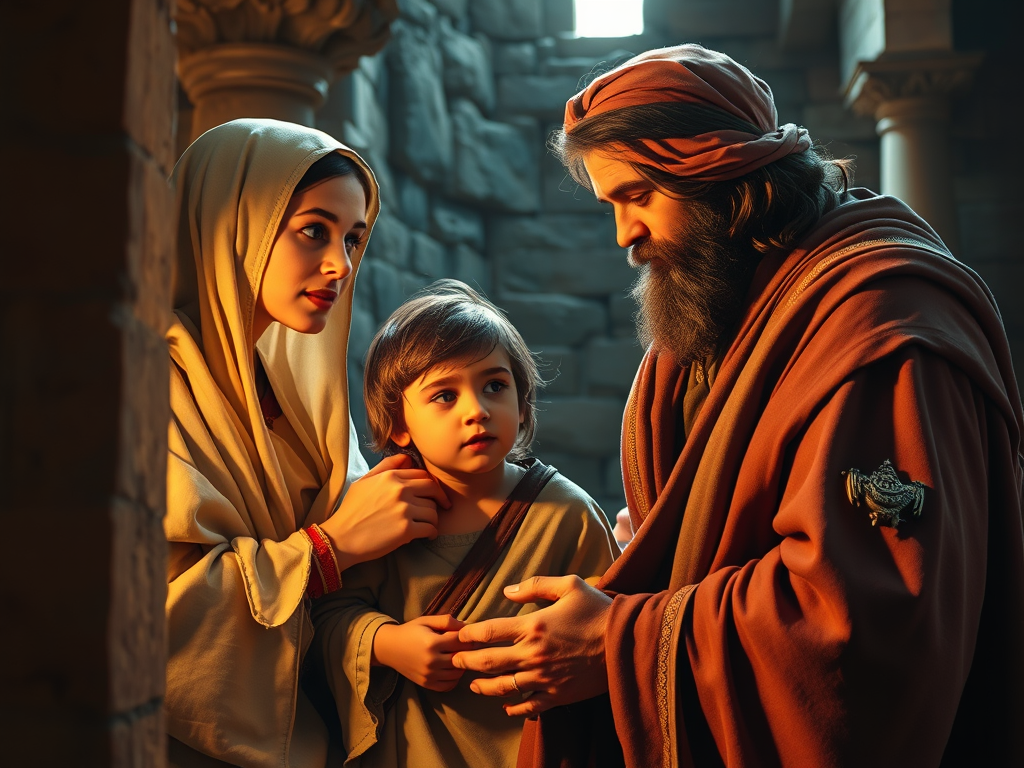
Like many of us, the family in this week’s gospel passage has been traveling as a part of its observance and celebration of a religious festival. Like many of us, this nuclear family has been sharing in traditions and customs with family and friends. The passage describes this nuclear family as having “completed [the] days” of the festival (Luke 2:46).
Perhaps this wording is simply a reflection of the culture in which the passage was written. Perhaps such observances represented obligations that needed to be fulfilled, tasks that needed to be completed. And yet, it was undoubtedly not just God that these rituals served. They also served the family members, providing welcome variance in their day-to-day routines and helping them to think not only in terms of days but in terms of centuries, maybe even millennia. They strengthened the connections between generations. And not just because people of different ages might share in these customs, not just because of what might be enjoyable about the customs either.
Holiday travel can be a pain these days, but I feel like any conception that I might come up with for how difficult it must’ve been in Jesus’ childhood would be woefully inadequate. Yet, this week’s gospel passage tells me, Jesus’ family and friends have traveled to Jerusalem and continued Passover traditions in what must have been a crowded city.
Then the time comes to head home, and, lo and behold, Joseph and Mary can’t find their boy. For a while, they assume he’s with their friends and extended family. It’s no wonder. They’ve been traveling with a large group.
And part of me imagines they just weren’t ready to grapple with the reality that their boy wasn’t with that group. This possibility would be beyond difficult for any parents to face. Add to that what the possibility would mean for Mary and Joseph — that they have lost God’s son, the Messiah Israel that has been promised and has been waiting for for so long.
I imagine them wondering why God would let this happen. Would God let their failures get in the way of God’s promises to his people being kept. How could it be God’s will that any son disobey his parents, let alone this Son?
We’re told that it takes Mary and Joseph three days to find Jesus. Yes, groups of three have symbolic importance in Scripture. I’m not sure what the official interpretation of the symbolism of three in the Bible is, and to be quite frank, I’m probably not going to look it up before I publish this post. I’m writing these particular words for days before Christmas and probably won’t get them published much before the twenty-ninth. I want to spend most of the time in between being present with my family and friends.
At some point in school, I learned that the triangle is the strongest shape, so the number three makes me think of strength. Its association with the Trinity makes me think of strong bonds. Its association with the time between Jesus’ Last Supper and his resurrection makes me think of perseverance in the face of suffering. It makes me think of how waiting itself can be a form of suffering. Time passing more quickly than I would like can bring suffering with it too.
I imagine Mary and Joseph experiencing many forms of suffering when they have to accept, after having traveled a day’s distance, that Jesus isn’t with them or any of their traveling companions. Maybe they didn’t even feel like they ought to take time to eat or sleep while they searched for Jesus. Maybe they didn’t have appetites anyway and couldn’t relax enough to rest even if they thought God wanted them to. These possibilities mean more suffering.
In the midst of their suffering, Mary and Joseph find Jesus in the temple. He’s listening to the teachers there, “and asking them questions” (Luke 2:46). The phrase in quotation marks stands out to me. It reminds me of how important listening and asking questions is to forming and growing relationships, even my relationship with myself. It reminds me that these are no less important components of my relationship with God.
After I read that Jesus is “sitting in the midst of the teachers, listening to them and asking them questions,” I read that “all who heard him were astonished at his understanding and his answers” (Luke 2:46-47). It seems like the listening and understanding are going in multiple directions. There’s a message about what it means to grow and to grow in all kinds of relationships in that detail as well. The same detail also says that God listens to and understands me. And by me, I mean you, too.
Maybe, at the age Jesus was when he found his way to the temple, didn’t understand human nature quite as well as he would come to as he “advanced in wisdom and age and favor before God and man” (Luke 2:52). After all, in the passage, he doesn’t seem to understand his parents’ anxiety and confusion. He seems to think they should have known why he left the group and where he went. Nevertheless, despite his young age, he seems to have a clearer grasp of who He is and what that means then they do.
Maybe Mary and Joseph have become comfortable in their day-to-day and annual duties and with their own ideas of what the future will hold for them and for Jesus. Maybe they’ve consoled each other by saying that the suffering they were warned about when he was eight days old hasn’t come yet. And then he disappears, and when they find him, he reminds them who he is. He invites them, once again, to trust God in the face of uncertainty — just when they’ve begun to believe they understood the parts they’d been given in that plan.
How many times have we acted and felt like Mary and Joseph, even though we haven’t been tasked with bringing up God’s son, and some of us haven’t been given children to bring up all? On the other hand, what about times we’ve wandered from the path of others thought we would follow on our quest to become the person God calls us to be and to do what God calls us to do? Do we have the courage to listen to the questions of others, as well as to their answers. Do we have the courage to learn from each other? Do we have the courage to ask the questions and listen to the answers? Do we have the courage to trust that God listens to us even when it’s hard for us to see the evidence of that listening. Lord, give us the courage. Holy family, pray for us. Amen.
What stands out to me from this week’s readings is a theme of gathering together.
The first reading describes the Messiah coming from
Bethlehem-Ephrathah,
too small to be among the clans of Judah . . . .

and yet the passage says of "one who is to be ruler in Israel":

". . . the rest of his kindred shall return
    to the children of Israel.
He shall stand firm and shepherd his flock . . .

and they shall remain, for now his greatness
    shall reach to the ends of the earth;
    he shall be peace. (Micah 5:1-4)
The passage strikes me as a movement from the individual to the society, from the seemingly insignificant to the infinite. We read about the Messiah first and the flock second, but the movement of the passage is really in the other direction. The passage predicts the Messiah drawing all people to himself.
While the Old Testament reading strikes me as being about how the people will move toward God, the psalm strikes me as asking God to move toward the people. It asks God to protect and to save the people.
The epistle says that Christ is the fulfillment of what the Old Testament reading and the psalm foretell and ask for.
In the gospel passage, we read about Mary and Elizabeth being gathered together. God draws Mary to visit Elizabeth, and Elizabeth is drawn to the sound of Mary’s voice, as is John. Why? Because Mary brings Christ to Elizabeth and John.
What someone else is sharing about this week’s readings:
What I’m saying (to the readings and beyond) this week:
For we are a people of the incarnation, we believe that Christ is within all of us, including you. How do you long to express it?
Sarah Simmons, CSJ
This question is delightfully attention grabbing for me. I would have expected a similar question to ask what I should do, what the Holy Spirit is prompting me to do? But how do I long to express Christ within me? That feels like a different question with a different answer. Longing to express something is a different experience than being expected to express something. Both experiences feel familiar. And how authentic is the expression of something that I’m saying because I’m expected to. Am I expressing what I am only because I think I’m expected to? What is my answer to the question that was actually the end of the reflection?
I long to express the incarnation of Christ within me by helping to create spaces where people feel safe. In these spaces, they can be honest with themselves and each other. This honesty happens because they recognize the many ways their experiences and desires overlap.
I believe the way a space is arranged and decorated can allow experiences of safety and connection. This belief is why many forms of design and decorating interest me. I also believe that how stories —both fictional and nonfictional ones — are told is crucial. They are key vehicles for creating spaces that allow room for growth and connection.
I’m always longing to share my own story more fully and more effectively, and to help others share theirs. It’s my experience that the storytelling journey is never a linear one, and it requires cooperation and vulnerability. It requires wrestling with what to hold on to and what to let go of. It invites a person to ponder when to take advice and when to follow God’s voice within. It involves gathering people together. It also celebrates the uniqueness of every person. Participating in stories is an intimate activity. It takes members of crowds who may start as strangers and builds relationships between them.
This week’s prayer:
Lord, work through us so that we draw each other to You. Help us recognize Your presence within us and in each other. May we recognize the people around us bringing You to us. Thank You, Lord, for our fellow Christ-carriers. Gather us together. Lead us on the path to peace both within and around us. Amen
Plenty of events and experiences can make God’s light harder to see and to follow. Yet the power of that light doesn’t weaken, only my ability to perceive and to experience it does. This power isn’t limited by cultural or political differences or geographical borders. It’s a power that seeks to not to dominate but to offer all of itself, to guide, to reveal, and to invite everyone to find union with it by embracing its qualities.
What someone else is sharing about this week’s readings:
Nontando Hadebe characterizes the heavenly body whose light the magi followed having an impact similar to the one I imagined two weeks ago that Gabriel had on Mary when the angel announced she was called to be the mother of God. And why shouldn’t the astronomical event share a purpose and an impact with Gabriel’s message? Both announce that the union between the human nature and the Divine Nature has been and will be restored. The difference between the two events is that the first one seeks the participation of an individual in that union while the second seeks the participation of a group that represents everyone else. The magi, like the shepherds, are among the first people to accept the invitation to participate in the same union that Mary and Joseph have already given their “yeses” to.
Beyond this week’s readings:
Lord, help me to see through the eyes of the Spirit that your guiding light is as bright for me as it was for the magi. Open me to the graces of keeping my eyes on that light and of following wherever it leads — regardless of my expectations about what the destination should look like. Amen.
Though that trust is powerful, its power doesn’t come without pain.
This trust involves practicing lifelong patience and perseverance.
When the practices of trust, patience, and perseverance are not given up on, when they are instead authentically lived, they reach from generation to generation.
Mary, Joseph, and Jesus had faith that all of the above statements were true. They also had proof of these truths in their own lives too, but they didn’t know at the time of the events in this week’s Gospel just how much pain they’d bear because of their trust in God’s promises or what forms that pain would take.
What someone else is sharing about this week’s readings:
On this day that honors the Holy Family, Jesus, Mary, and Joseph, Lisa Fullam, D.V.M., Th.D. reflects on the spiritual meaning of family. Spoiler alert: this meaning may be found among people who don’t share genes.
Beyond this week’s readings:
There are more choices for today’s readings than there are on many days. Dr. Fullam responds to different passages than the ones I read. I invite you refer to those passages as well as to the ones I listed at the top of this post. Dr. Fullam addresses what I often struggle with in the alternate passages and in the messages I often receive on this day each year. You can find the chapter and verse numbers for the alternate readings here.
Lord, thank You for giving us Jesus, Mary, and Joseph as models of trust in God. Thank You also for inspiring Professor Emerita Lisa Fullam to encourage us, who are neither Jesus, nor Mary, nor Joseph, and yet, are still members of families. Amen.
This week’s readings say to me that God has always accompanied humanity in all its joys and sorrows. As part of that accompaniment, God gave the tribes of Israel the special mission of bringing awareness of God’s accompaniment to the rest of humanity by being chosen to receive and to live God’s commandments. Eventually, a king from one of the tribes would be the ancestor of the Savior. This Savior would be for humanity the ultimate model of how to live God’s commandments and would offer humanity the Spirit for help living those commandments.
We can become God’s children and inherit God’s life because one of God’s daughters was given the grace and cooperated with that grace of being the dwelling place for God’s perfect son. Because she cooperates with that grace, God and humanity become one again, and I share in that oneness if I offer myself as a dwelling place for the Holy Spirit — just like she did. The challenge of this opportunity is that being the Spirit’s dwelling place is a gift that is neither easy to give nor to receive,
That gift most wasn’t an easy one for Mary to receive. She’s described as “greatly troubled” by the Gabbriel’s greeting alone, and for me it’s no wonder that her mental and emotional state is described this way when she hears the angel’s salutation (Luke 1: 29). Having a messenger of heaven suddenly appear before her and speak wouldn’t be anything like choosing a tree-topper from a store. A visit from an angel is an experience that few have, and she would’ve been no exception. Angels in Scripture aren’t quaint decorations. They’re overwhelming and disruptive attention-grabbers. Furthermore, Mary’s culture has taught her that finding favor with God carries with it indispensable work — not a comfortable life. I imagine her having thought all this before Gabriel got past “the Lord is with you” (Luke 1:28).
That announcement would bring plenty more difficulties along with the wonder that we perhaps associate with it today. Then again, I wonder how often awe accompanies it these days. It’s another one of those passages people tend to know by heart, even if they aren’t very familiar with others Scripture passages. I find that the more familiar something is, the more complete my numbness to its specialness becomes, and I know I’m not alone in this experience. That’s why I wanted to reflect in a way that removes the sugarcoating, and perhaps a little of the over-familiarity from this week’s Gospel passage.
Having this goal in mind doesn’t mean I don’t see these passages as bringing Good News. Rather, this goal is an exercise in remembering that not all that is good is sweet. Sometimes this is a challenging reminder to receive. At other times it’s comforting. It might be the latter at this time of year because expectations for this season can get so high. Given this reality, looking at the Gospel passages associated with this season, beginning with this week’s, without the lenses of what we think they should feel like can provide some very helpful perspective, a perspective that makes us feel less alone if we feel sad, alone, overwhelmed, afraid, or uncertain this time of year.
With this encouragement in mind, let’s go back to sitting with Mary as she receives the angel’s message. Sure, she’s being offered a role in history more important and unlike any other, and yes that’s an honor and a gift, but it’s a gift that comes at a higher price than she could’ve guessed from the angel’s greeting. For one, nowhere are we told that Gabriel included in his message that Mary’s parents were told of her role in God’s plan before she was. I imagine her being awestruck by the announcement but also but also dreading how people would treat her when her pregnancy became apparent. Remember that in this culture, the law evidently said she could be stoned to death for adultery for being unmarried and yet found to be with child — and not by her betrothed. Remember also that she would likely have been a young teenager, given her culture and that she hadn’t lived with her betrothed yet. I imagine she must have participated in the basics of managing a household and caring for a family for as long as she could remember, under the guidance of older female relatives. Still, being the wife and the mother in a household had to be different than being the daughter, the niece, or the cousin. And that’s just in terms of responsibility. Then there are the massive physical and emotional changes that motherhood entails. On top of all that, her calling was to be the mother of God. I imagine her feeling so small upon learning that this was her call. I imagine her finding comfort in a few thoughts as she received it:
If this news wasn’t just a hallucination (maybe she’d been out in the sun too long, she might have thought), what an amazing call it was. She could bring hope and righteousness to her people, to the world. And the role was hers to accept or to refuse.
The angel hadn’t left her without a way to test the truth of the announcement. She could visit her cousin Elizabeth, and see if the older woman was, in fact, pregnant.
If Elizabeth was, she would know the message was from God, and she already trusted that whatever the Divine Plan was, it would be brought to fruition, regardless of whatever obstacles were placed in its path, whatever hardships she’d have to weather as a result of being so central to it. I imagine that, in any circumstance, and especially given these consolations, she discerned the best and right course of action was to cooperate with the Divine Plan. I imagine her thinking she could never go wrong by declaring her intention to do that. God would use her proclamation of faith to do whatever God willed.
What someone else is sharing about this week’s readings:
Tonight is Christmas Eve, so I’m considering this post to be my reflection for both the fourth week of Advent and Christmas Eve/Christmas Day. If you’re juggling a lot this Christmas, you’re not alone. So did Mary, Joseph, and the innkeeper.
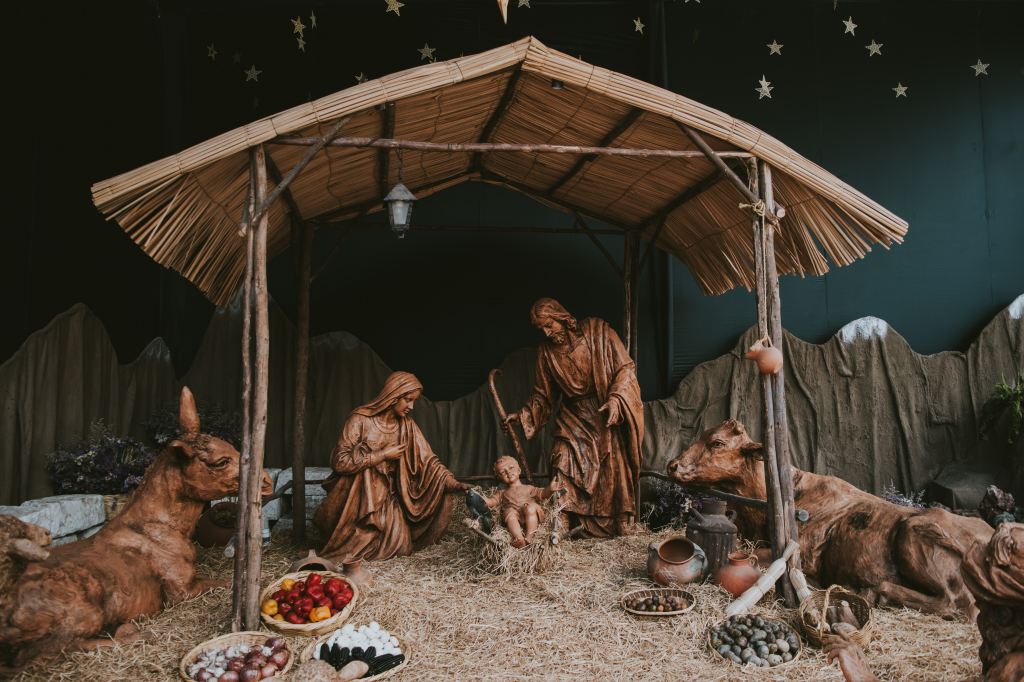
I see innkeepers getting bad raps in interpretations of biblical accounts of the Nativity. In so many stage adaptations, several innkeepers turn Mary and Joseph away before one offers a stable to the couple. The innkeepers who turn the Holy Family away are characterized as unyielding, heartless. If Mary and Joseph did inquire at more than one inn, maybe the proprietors wouldn’t have thought they were being heartless. Maybe they thought they had no accommodations to offer the couple that wouldn’t offend them, especially given Mary’s condition and that many animals were considered unclean. Maybe the last innkeeper was better at staying calm under the pressure of the influx of travelers. Maybe he saw the wisdom, under the circumstances, of dispensing with expectations, tradition, and rules, and offering the best he had left, humble though that offering is said to have been. (And for the record, Luke’s account mentions the inn whose stable the couple was provided with as if there were only one inn in town. We aren’t told that anyone turned Mary and Joseph away.)
May I be more like that innkeeper, wisely discerning what actions are best based on what situations require from moment to moment. May I see the value in what I have and what I have to offer.
May I remember that whatever my circumstances are this Christmas, God is with me. The accounts of Jesus’s earliest years remind me that:
If traveling, especially at peak travel times stresses you out, Mary, Joseph, and countless others understand.
If you are “greatly troubled” by unexpected events that are disrupting what you hoped to give the people in your life, Mary, Joseph, and the innkeeper understand (Luke 1:28).
If you are headed home after a long time away or are away from home this Christmas, Mary and Joseph can relate.
If you are grieving this Christmas or someone you love is, Mary and the weeping mothers of the Gospel can relate.
If you’re setting off on a journey with an uncertain destination, the Wise Men can relate. The Holy Family can too.
If you are a parent-to-be or a new parent, Mary and Joseph can relate to whatever you’re feeling.
If you are living amid or fleeing violence or are a refugee for another reason, the Holy Family can relate.
God is with us in each aspect of and participant in the Nativity story and in the stories unfolding around us this Christmas — the ones involving strife and struggle and the ones that are sappy and sugar-coated.
Lord, help us recognize your presence among us, especially when doing so feels most difficult. Amen.
Work cited
Confraternity of Christian Doctrine, Inc. “4th Sunday of Advent, Sunday 24 December 2023: Readings at Mass.” The New American Bible, 2001. Universalis for Windows, Version 2.183, Universalis Publishing Ltd., 31 Oct. 2023, https://universalis.com/n-app-windows.htm.
The LORD bless you and keep you! The LORD let his face shine upon you, and be gracious to you! The LORD look upon you kindly and give you peace!
Numbers 23-25, New American Bible
I’m beginning this post with the verses from Numbers because I can’t think of a better New Year’s blessing.
The psalm expands the message of the Old Testament blessing. It might be helpful to make a note of these verses for those times when you need a pick-me-up throughout the year. If you look up the psalm verses listed above, it might also be helpful to remember that when we read or hear that we should fear God, it’s a reminder to guard against arrogance, to maintain openness to God’s desires and to recognize our dependence on God. God’s nature isn’t to harm us. For evidence of this statement, Jeremiah 29:11.
The epistle (the third reading) refers to the New Testament events we’ve been and will be revisiting. It also brings to mind the words of the Lord’s Prayer and the events of Pentecost.
The New Testament reading offers the blessing from Numbers using more than words. The shepherds find exactly what the angel promised they would. God’s glory has shined on them not only through the presence of the angels but through the little face of the baby Jesus.
Looking at the Old Testament reading and the New Testament reading together made me wonder why it seems so much easier for the shepherds to see the fulfillment of God’s promises than it does for me? Then I remembered some things:
The shepherds play important supporting roles in a unique event. It’s understandable that they might need more clarity to play the parts God was inviting them to play. On the other hand, for me to grow spiritually it might be necessary to look for God’s presence without the help of the clear signage the angel gives the shepherds. I say the signage was clear, but as I write this, it strikes me that the angel doesn’t say where in Bethlehem the manger cradling Jesus; therefore,
The shepherds probably had to take more time and effort to get from the fields to the manger than I realize.
The shepherds had been waiting for the Messiah their whole lives, however long that had been, and their ancestors had been waiting their whole lives, as had the people who came before that generation. This was true going back thousands of years.
In short, I find it helpful to remember that the characters in the Bible didn’t get to fast-forward to the parts of their stories that I know. There was undoubtedly a lot of waiting, and struggling, and struggling to wait in those segments of their lives that haven’t been handed down to us.
The New Testament passage gives some hints about what I can do while I wait to better understand what’s unfolding in my life. Luke 2:19 says “Mary kept all these things, [the unique events she’s playing a central role in] reflecting on them in her heart (New American Bible Revised Edition). Perhaps “reflecting on [these events] in her heart” describes a process of taking note of what she’s experienced, considering what the experiences have taught her, and of reminding herself of those lessons frequently over time (Luke 2:19). Perhaps this process results in the lessons becoming part of her so that she can then reflect them, and in doing so, him can bless the lives that intersect with her own. She and the shepherds can live their lives “glorifying and praising God for all they [have] seen and heard, just as it [has] been told to them” (Luke 2:20).
Will their praise always look and sound glorious to those around them? Will their praise look and sound as extraordinary as God coming into the world as a baby boy? Not necessarily. Right after Luke tells us how the shepherds responded to finding Jesus, the book tells us that Mary and Joseph did what other Jewish parents of a newborn son did. They circumcised Jesus and announced his name, the name Gabriel had given him (Luke 2:21). These ordinary acts of faith and of honoring those who came before are as much fulfillment of what had been foretold as our the angelic appearances and the miraculous conception.
Maybe these readings invite me to take note of and to reflect in my own heart on God’s promises and presence so that I can reflect both. Lord, help me to accept this invitation and challenge. Help me to trust in Your promises and to discern and to surrender to Your will more often. Amen.
Confraternity of Christian Doctrine, Inc. “Sunday July, 2 2023: Readings at Mass.” The New American Bible, 2001. Universalis for Windows, Version 2.179, Universalis Publishing Ltd., 26 Feb. 2023, https://universalis.com/n-app-windows.htm
The Bible.The New American Bible Revised Edition, Kindle edition, Fairbrother, 2011.
Confraternity of Christian Doctrine, Inc. “Sunday July, 2 2023: Readings at Mass.” The New American Bible, 2001. Universalis for Windows, Version 2.179, Universalis Publishing Ltd., 26 Feb. 2023, https://universalis.com/n-app-windows.htm
I first heard the reflection that inspired today’s post as part of the Hallow App’s Advent #Pray25 Challenge. Though I’ll be writing about the reflection from Day 24 of the prayer challenge, which was released on December 21, I decided I’d go back to it for this week’s post because it invites me to imagine I’m one of the shepherds from the Christmas story.
The reflection reminded me that the Old Testament “is full of” shepherds — David for one— who were also leaders of their people. However, by the time of Jesus’s birth the life of a shepherd was not an esteemed one. Shepherds spent much of their time not within communities but outside of them and in the company not of other people but of smelly, dirty animals. One of the narrators of the reflection, Jonathan Roumie, the actor who plays Jesus in the series The Chosen, says that because of the isolation and company (or lack thereof) associated with their occupations, shepherds were often thought of as “coarse” and assumed to be criminals.
Now that I’ve shared this context, I’m going to listen to the reflection again. As I do, I’ll share what comes to me. You can listen to the reflection here. (If the link doesn’t give you access to the reflection, please let me know.)
My first thought is that, given the historical, it’s no wonder the translation of Luke 2:9 included in the reflection says they were terrified. Not only are they confronted with sights and sounds they’ve never seen before and don’t have the words to describe, but also they’re being given news that it seems they’re meant to share with “everyone.”
In response to this message, I can imagine a first-century shepherd thinking, “Of all people, why has God chosen me to receive this news now, and why would anyone listen to me if I repeat it? Why would anyone believe me if they listen?
God understands where these questions are coming from. At the same time, God strengthens their faith by telling them, through an angel, what the Divine Presence looks like and where He could be found in the most complete and tangible way on that night.
The shepherds being chosen as the first people outside Jesus’ family to receive the news of his birth is a reminder that God doesn’t use the criteria that humans sometimes use when making choices. God doesn’t rely on sight or any other biological sense when God chooses someone, nor is God’s ability to choose wisely negatively affected by past experiences with other people or even with the person God chooses. It’s often said there is no linear time for God the way there is for us. I take this to mean that there is no past or future in God’s perception. In some way that I can’t understand as I experience linear time, past, present, and future are all unfolding at once for God. And yet, Luke tells us, God entered time by being born of Mary in a stable.
At the invitation of reflection, I imagine myself a shepherd who approaches that stable and the holy family in it. I imagine Mary turning toward the sound of my approach and trying to rise from lying in the straw. I tell her not to trouble herself, that I’ve heard something of what she’s been through. I recount what the angel said.
Mary says nothing, but despite my protests, she sits up and gestures for me to come to her. I do as she asks, and she lifts her baby from the manger. Before I have a chance to step back, she’s placing the baby into my arms.
Dear God, help me hold him gently but firmly. Don’t let me hurt him. What would become of me? Of him? Of this sorrowful world if I dropped him?
He begins to cry.
The sound brings me back into the present of that stable. I focus on making him feel secure. In doing so, I relish his soft solidness and the warmth of him as he wriggles out of the cloths in which his mother has wrapped him. I see to it that he is swaddled snugly once again.
He already smells like the donkey who’s been watching over him. The smell is not unlike that of the sheep whose odor I carry.
Jesus, thank you for trusting me to come to you, to hold you. You were so vulnerable at your birth and at your death so that I could approach you when I am at my most vulnerable. Thank you for the gift of vulnerability — mine and yours. Amen.
Joseph her husband, since he was a righteous man, yet unwilling to expose her to shame, decided to divorce her quietly. Such was his intention when, behold, the angel of the Lord appeared to him in a dream and said, “Joseph, son of David, do not be afraid to take Mary your wife into your home.
Matthew 1:19-20
This isn’t the post I was working on last week before I realized it needed more time. I’ll come back to that one when the readings lend themselves to the ideas and experiences I was wrestling with. This week, I’d like to sit with Joseph, as the Gospel reading, Matthew 1-18-24 invites me to.
Joseph is caught in the middle of what must have seemed like a huge no-win situation. The woman he intends to take into his home as his wife is carrying a child, and he isn’t the father of that child. I imagine Joseph thinking he should divorce Mary because all the evidence—except for I imagine what she’s told him about the visit from the angel — says she’s been unfaithful to the covenant made between him and her father. If the usual explanation for Mary’s condition is the truth and not the explanation she has given, the Law says Joseph has a right — and is probably expected — to divorce her.
But we’re told Joseph is a righteous man. Given this information, I like to think that his internal comes not only from not wanting to expose Mary to a public disgrace that might result in her being stoned. I’d like to think that deep down, he’d rather not divorce her quietly. Really, he’d rather not divorce her at all. I imagine him having had such high hopes for the future of his marriage and family. I imagine he cherished Mary’s deep love for God, her family, her friends, and her village. I imagine him having trouble believing Mary would betray that love and fearing that Mary’s pregnancy has come about as a result of violence on the part of an occupying soldier. (I don’t think I’m the first writer to put these thoughts in Joseph’s head. I think the movie The Nativity Story depicts him asking Mary if a Roman soldier is the father of her child, but I could be thinking of a different adaptation.) I imagine him thinking that if Mary is a survivor of such violence, who knows how the trauma has changed her. No wonder she’s not making sense. Maybe her mind is telling her this story about a visit from an angel because she blocked out what really happened. If this is the case, he wants to offer her and her child the shelter of his good name and his home even more than he did before he found out she was pregnant.
This train of thought leads Joseph back to the reality that people will talk. No matter how he handles the situation, people will talk. The life of a workman striving to nurture and to support a godly family was always going to be challenging. No matter what choice he makes, he now knows that his life will be exponentially more challenging than he thought it would. This situation is an invitation to be more concerned with living righteously than with worrying about offending the sensibilities of influential people.
These are all thoughts I imagine cycling through Joseph’s mind before the angel enters his dream. And then what does the angel have to say to him? “Do not be afraid to take Mary your wife into your home” (Matt. 1: 20). I’ll continue by paraphrasing Mathew 1:20-24: “Mary hasn’t broken any covenant. The child she carries was conceived by the Spirit of God and is the Son of God, God with Creation.”
The angel’s message lays to rest Joseph’s doubts and calms his fears about what has happened to Mary. In other words, he has received consolation regarding troubling developments in his own life. He has also been chosen as one of the first to witnesses to the fulfillment God’s promise to send a Messiah.
Nonetheless, the angel’s message doesn’t promise that Joseph’s life will be any easier, thanks to his role in salvation history. He had to have wondered how he could teach the Son of God how to be a righteous man. He had to have wondered who would be the student and who would be the teacher, and I wonder if, on some level, he knew the answer was that he and Jesus would be both to each other. He had to wonder how people would accept a Messiah who had been brought up by a humble workman. I’m imagining Joseph wondering whether God would expect him to change how he supported his family so that the Messiah would be better prepared to lead his people.
The answer to this question seems to have been “No.” God is going to work through and to grow up with the help on the man who Joseph is. This process isn’t going to be smooth. The world that Jesus comes into — our world — is very broken by sin. And yet, God loves each of us as much as Mary, Joseph, and Jesus.
In reflecting on this reading, I’m reminded that in becoming human, God didn’t end suffering. He entered into it and took it upon Himself so that it wouldn’t have the last word. Perfect love will. It’s a Love that doesn’t forget anyone. It holds close those who are afraid, ostracized, overlooked, ashamed, lonely, and vulnerable.
Confraternity of Christian Doctrine, Inc. “Sunday July, 2 2023: Readings at Mass.” The New American Bible, 2001. Universalis for Windows, Version 2.179, Universalis Publishing Ltd., 26 Feb. 2023, https://universalis.com/n-app-windows.htm











 Sitting with the Sacred