Help me to know when to build onto the what I’ve started, when to start fresh, and when my part of the construction process is finished. Amen.

Posted in Ordinary Time, Reflections on Scripture, tagged bible, christianity, Lectio Divina, Ordinary Time, Prayer on September 5, 2025| Leave a Comment »
Help me to know when to build onto the what I’ve started, when to start fresh, and when my part of the construction process is finished. Amen.
Posted in Ordinary Time, Reflections on Scripture, tagged bible, christianity, Lectio Divina, Reflections on Scripture on September 1, 2025| Leave a Comment »

Lord, grant me clearer vision, along with a more open mind and heart.
Posted in Ordinary Time, Reflections on Scripture, tagged Abundance, bible, christianity, Genorisity, Gratitude, jesus, Joy, Lectio Divina, Ordinary Time, Prayer, Reflection on the Gospel on August 30, 2025| Leave a Comment »

Do the best you can with what you have. It painted contrasting pictures of two different perspectives. One sees limitations scarcity and responds with fear and resentment. The other sees opportunity and abundance and responds with gratitude and generosity.
May I see opportunity and abundance and respond with gratitude, and generosity so that I can experience joy.
Posted in Easter, Reflections from Other Writers and Speakers, Reflections on Scripture, tagged bible, Bible encouragement, christianity, Discouragement, Easter, Faith, god, jesus, Jesus Christ, Reflections on Scripture, Scripture Reflections from Others on May 3, 2025| Leave a Comment »
https://bible.usccb.org/bible/readings/050425.cfm
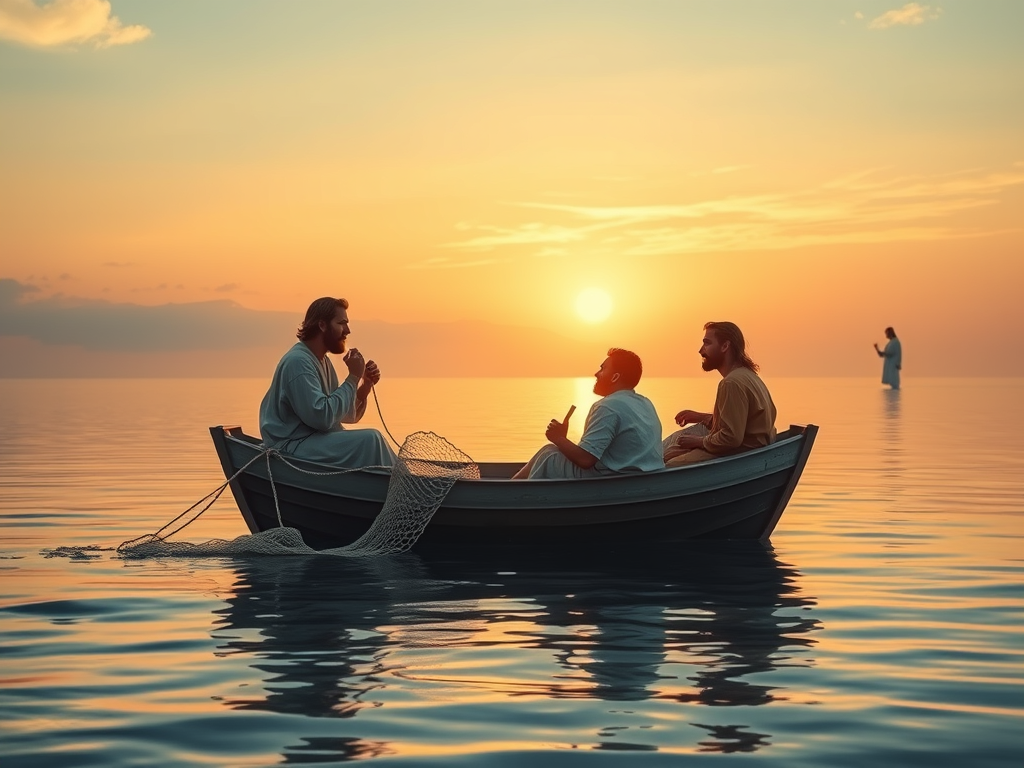
In the gospel for May 4, Jesus calls the apostles, including Peter, “children” (John 21:5) as if they are elementary school students, and he’s the teacher. In the previous chapter, he called them “brothers” (John 20:17). What’s the reason for the difference? Well, maybe this video reflection with Jeff Cavins and Jonathan Roumie provides an answer. In going fishing, the apostles try to go back to where they started, as if they haven’t seen the empty tomb, as if they haven’t seen Jesus alive at least twice.
So if you still struggle to have faith and hope, if you’re tempted to give up, if it’s ever taken you a lot of study and a lot of mistakes before you learned or accepted something, you’re in the company of the apostles in the Gospel passage for May 4. And you haven’t seen Jesus the way they do in the passages that come before this one.
Jenny Jackson poses to us the question Jesus poses to Peter in the Gospel for May 4. I need time to reflect on the answer to this question. I trust that taking this time will allow the Holy Spirit to give to me what Jenny Jackson wanted during the time she describes in her reflection. Okay, so I don’t entirely trust, but I trust enough to declare my intention of trusting, of being open.
As I’ve written so often here, I may not post next week. In fact, unless something surprising happens, I won’t. I feel like I’m just going through the motions on this blog lately. I do want to acknowledge that going through the motions when one doesn’t feel like it often has value. It builds perseverance. And I believe in a God who works behind the scenes and under the surfaces of life.
But I also read on another blog recently about prioritizing quality over quantity. That’s what I want to do. I’m seeing that the post on this blog that gets the most views is one that when I wrote it, I felt I had an insight to share that I wasn’t seeing in a lot of other places. Most weeks, I don’t feel that way. Most of my posts get one or two views.
Writing this blog has helped me appreciate in a new way the work that preachers and spiritual writers do. It’s quite a challenge to keep stories and messages that are so familiar feeling fresh and resonant. The challenge feels like an even greater one to face every week, as so many spiritual leaders do.
Now I’ve never published this blog to get followers or to go viral. I’ve always said that if what I write here resonates with one other person, it’s worth doing. And sometimes it has helped me feel like I’m getting my perspective out there in a world where it feels like homilies mainly have non-disabled married people with kids and without mental health struggles as their target audience. Other times, I’ve felt sure that despite my original vision for this blog, I’m not reaching spiritual seekers who may feel invisible in many spiritual communities. I’ve felt like I’m not really engaging with the texts, not bringing myself as I am to them.
So what now? I’ll tell you what I’m not doing. I’m not deleting this blog. Therefore, if there are posts that resonate with you, I want to let you know they aren’t going anywhere. I’m just going to come back to this blog when I have something I really need to share. As I was bothered by something yesterday and praying this morning, I got a couple ideas for spiritual essays. I may develop these ideas at my own pace and share them here if and when I’m ready.
I plan to journal whenever I feel prompted to and not put any pressure on myself to share what I write in my journal. Maybe this low-pressure practice will also generate writing I want to share here.
Come, Holy Spirit! Bring my heart to life with Your love. Help me recognize it everywhere. Show me how to use the gifts You gave me to share it. Amen.
Cavins, Jeff, and Johnathan Roumie. “Holy Land: Easter Sunday.” Hallow, 20 Apr. 2025, hallow.com/prayers/1077275/.
Jackson, Jenny. “Third Sunday of Easter: May 04, 2025.” Catholic Women Preach, FutureChurch, 2025, www.catholicwomenpreach.org/preaching/05042025.
“Third Sunday of Easter — Lectionary: 48.” Daily Readings, Lectionary for Mass for Use in the Dioceses of the United States, Confraternity of Christian Doctrine, 2nd typical ed, United States Conference of Catholic Bishops, 2025, https://bible.usccb.org/bible/readings/050425.cfm.
Posted in Easter, Reflections from Other Writers and Speakers, Reflections on Scripture, tagged bible, christianity, Doubts, Easter, Encouragement, Faith, jesus, Prayer, Questions, Reflections on Scripture, resurrection, Scripture Reflections from Others, suffering on April 24, 2025| Leave a Comment »
https://bible.usccb.org/bible/readings/042725.cfm
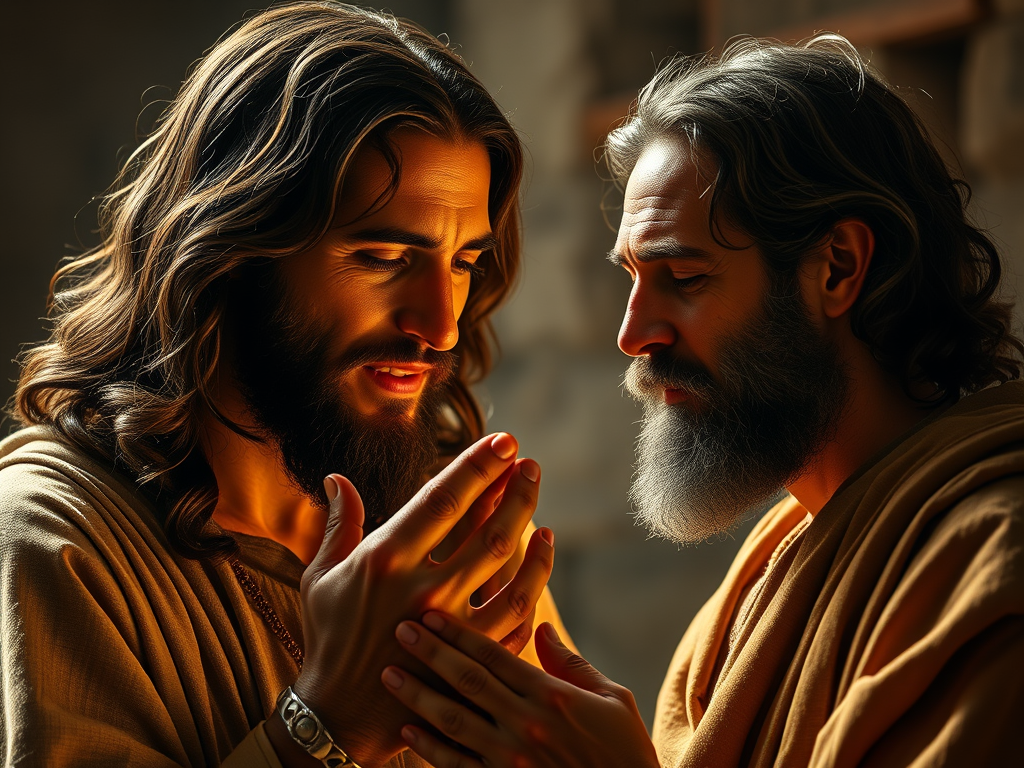
We read more than once in this week’s Gospel that the disciples find Jesus in their midst, even though they’re behind locked doors. It also stands out that Jesus greets the disciples by saying “Peace be with you” and by showing them his wounds.
It’s as if Jesus is saying,” Don’t be afraid. It’s me. I’m here with you, and nothing can stop me from being with you now. I’ve gone to battle with everything that pushes you away from me. I won. See these wounds? They’re an everlasting reminder of my victory over suffering and death. This victory gives new meaning to your suffering and death. United to mine, your suffering will transform you. Like me, you’ll be someone new. And you’ll be that someone because of what you went through — what we went through — before.”
We’ve lost, in Pope Francis, someone I would call the world’s pastor. From what I’ve seen, this is true, to some extent among people of various beliefs.
And here we are in the Easter season. Face tells me that the Easter he is experiencing now is different from the one that I’m experiencing. And my Easter share similarities and differences with the Easter you’re experiencing. You may not be experiencing the emotions you think of when you think of Easter. I’m not. I’m sad and uncomfortable with the unknowns the Church and the world faces. I grieve because of the many forms of violence (greed and selfishness, for example) and loss in the world.
Last Sunday’s readings and this Sunday’s readings tell me the experiences of Jesus’ followers on the first Easter were no different. They tell me the cross and the resurrection are two sides of the same coin. And neither experience is something only Christ goes through. Rather, we all share in both experiences again and we can’t have one without the other. When we have both, nothing can separate us from each other and from God — no suffering — not even death.
Still, sometimes a living sense of communion is hard to perceive on the earthly side of life. Jesus and his first spiritual family members understand that as well as anyone.
In Marissa Papula’s reflection for Divine Mercy Sunday, she explores how trauma and healing can coexist. She unpacks how the gospel passage for this week illustrates this coexistence.
Jesus, help us to see You and to touch You in our midst despite any obstacles to being enlivened by Your presence. Renew us to do Your work in the world, and bring us to rest together with You and all Your beloved departed in eternity. Amen.
“Second Sunday of Easter, Sunday of Divine Mercy — Lectionary: 45.” Daily Readings, Lectionary for Mass for Use in the Dioceses of the United States, Confraternity of Christian Doctrine, 2nd typical ed, United States Conference of Catholic Bishops, 2025, https://bible.usccb.org/bible/readings/042725.cfm.
Posted in Easter, Reflections from Other Writers and Speakers, Reflections on Scripture, tagged bible, christianity, Doubts, Easter, Encouragement, Faith, jesus, Prayer, Reflections on Scripture, Scripture Reflections from Others on April 20, 2025| Leave a Comment »

https://bible.usccb.org/bible/readings/042025.cfm
Peter refers to himself as one of the few people chosen in advance to be witnesses to all Jesus did in his earthly life and after His resurrection. These few witnesses have been given the responsibility and the grace to “bear witness that everyone who believes in [Christ] will receive forgiveness through his name” (Acts 10:43).
“‘[The Lord’s] mercy endures forever'” (Psalm 118:2-4).
There are two choices of epistle readings. The second option tells us to “clear out the old yeast… of malice and wickedness” and “celebrate the feast” … with the unleavened bread sincerity and truth (1 Cor. 5:7-8).
In the gospel passage we’re given for Easter Sunday, Mary of Magdala doesn’t yet understand that Jesus is risen. She tells the disciples, “They have taken the Lord from the tomb, and we (the women who went to pay their respects at the tomb) or they put him” (John 20:2).
In response, Peter and another disciple run to the tomb, and the disciple who is not Peter gets there first, yet Peter goes into the tomb first. He sees the burial cloths but not the body of Jesus. We aren’t told much about what he makes of this discovery. We are told that the other disciple sees the burial cloths, which are apparently neatly set aside separately from each other, and believes. What the disciple believes we aren’t told. I find the question of what he believes even more perplexing because of the last sentence: “For they did not yet understand the Scripture that he had to rise from the dead” (John 20:9).
So if you’re wrestling with doubt and/or confusion this Easter, you’re in the company of more than one disciple.
If you’ve arrived at this Easter and are still clear[ing] out the old yeast of sins, habits and wounds, the second option for the epistle is a reminder that the journey to union with Christ and the members of his body is a lifelong one. It doesn’t end this Easter. Otherwise, we wouldn’t need the exhortation to “[c]lear out the old yeast” (1 Cor. 5:7).
If you’re bothered because the first reading refers to “witnesses chosen by God,” but the disciples in the Gospel passage for Easter Mass during the day don’t see the risen Lord, you’re not alone. I’m with you (Acts 10:41).
Now right after the Gospel excerpt for that Mass ends, Mary of Magdala does see and speak with Jesus, who is risen. The passage that describes this encounter is my favorite in the Bible. It’s more detailed than many passages. It’s easier with this passage than with many others to use my imagination to engage all five senses in the scene it describes. For me, it conveys confusion, grief, tenderness, and intimacy in a way that few other Gospel passages do. In the Gospel of John, it’s because of, or at least after, this encounter between Jesus and Mary Magdalene that other disciples become chosen witnesses of Christ’s resurrection. That’s why, although this encounter isn’t included in the lectionary until the Tuesday after Easter, I’ve linked to it at the top of this post. Several years ago, I also wrote this short story based on the passage.
Dr. Cynthia Bailey Manns offers her own celebration of Mary Magdalene’s love for Jesus. She powerfully conveys the importance of this love in salvation history. I was particularly inspired by her reflections on the ways Mary expresses this love in the days leading up to the resurrection.
Lord, help us to live in ways that reflect that You live and are with us in every circumstance of our lives. May our lives bring this truth to all of creation. Amen.
“Tuesday in the Octave of Easter” — Lectionary: 42.” Daily Readings, Lectionary for Mass for Use in the Dioceses of the United States, Confraternity of Christian Doctrine, 2nd typical ed, United States Conference of Catholic Bishops, 2025, https://bible.usccb.org/bible/readings/042025.cfm.
“The Resurrection of the Lord: The Mass of Easter Day”— Lectionary: 262.” Daily Readings, Lectionary for Mass for Use in the Dioceses of the United States, Confraternity of Christian Doctrine, 2nd typical ed, United States Conference of Catholic Bishops, 2025, https://bible.usccb.org/bible/readings/042225.cfm.
Posted in Lent, Palm Sunday, Reflections from Other Writers and Speakers, Reflections on Scripture, tagged bible, christianity, Faith, god, jesus, Jesus Christ, Lent, Palm Sunday, Reflections on Scripture, Scripture Reflections from Others, Who Am I in God, Who is God on April 12, 2025| Leave a Comment »
https://bible.usccb.org/bible/readings/041325.cfm
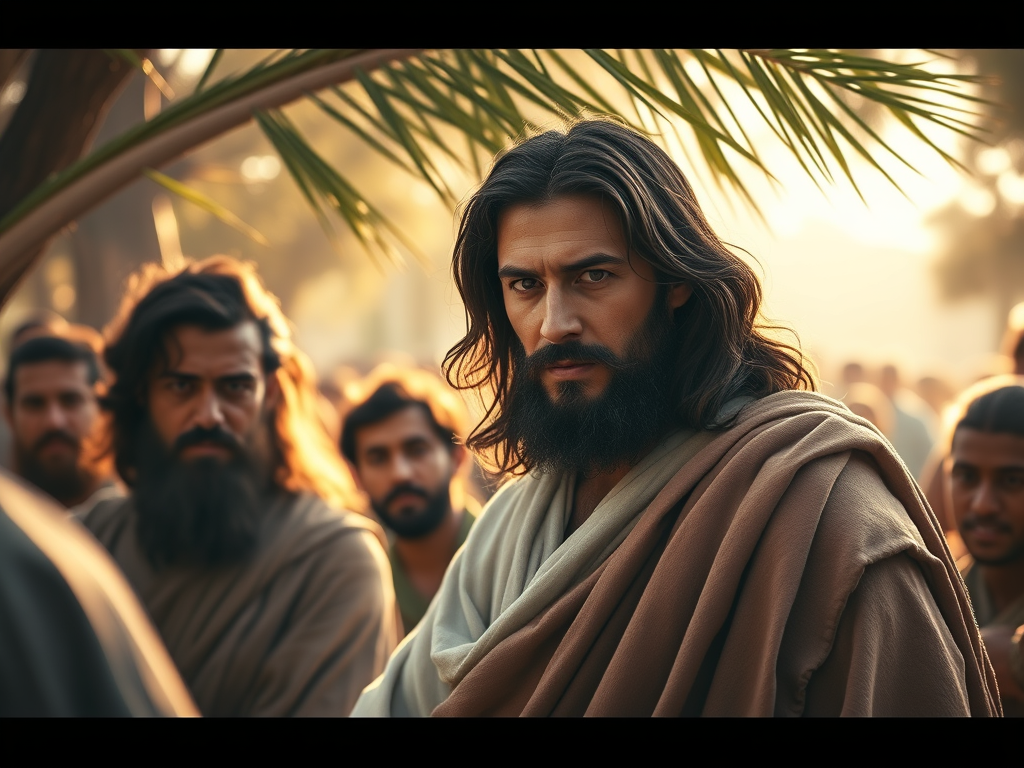
It’s daunting even considering writing a post about this week’s readings. They’re so well-known, and I’ve referred to events described this week in a general way in so many other posts. It’s hard to process the events described in them. It’s hard to take the events in on more than an intellectual level. I pray to be able to take some small part of them to heart.
This week’s gospel recalls the past but signals the start of something new. To say that Christ’s Passion, the ultimate passage from the old to the new, will be painful is the epitome of an understatement. And yet it’s a passage that Christ and his disciples cannot avoid. It’s a passage filled with contrasts and contradictions, and it leads us to who Christ and his disciples are.
The following passages stand out to me:
[Peter] said to [Jesus], “Lord, I am prepared to go to prison and to die with you.” But he replied, “I tell you, Peter, before the cock crows this day, you will deny three times that you know me.”
Luke 22:33-34[Jesus] said to the [apostles],
Luke 22:35-37
“When I sent you forth without a money bag or a sack or sandals,
were you in need of anything?”
“No, nothing, ” they replied.
He said to them,
“But now one who has a money bag should take it,
and likewise a sack . . . .
For I tell you that this Scripture must be fulfilled in me,
namely, He was counted among the wicked;
and indeed what is written about me is coming to fulfillment.”Luke 22:48
Jesus said to him, “Judas, are you betraying the Son of Man with a kiss?”When a maid saw him seated in the light,
Luke 22:56-57
she looked intently at him and said,
“This man too was with him.”
But he denied it saying,
“Woman, I do not know him.”
This week’s gospel also presents again and again questions related to identity.
The last quotation I included above is an exploration of both contradiction and identity. Here are some other explorations of identity that stand out to me:
“Blessed is the king who comes
Luke 19: 38
in the name of the Lord.
Peace in heaven
and glory in the highest.”
Luke 22:66-70Then an argument broke out among them
about which of them should be regarded as the greatest.
[Jesus] said to them,
“The kings of the Gentiles lord it over them
and those in authority over them are addressed as ‘Benefactors’;
but among you it shall not be so.
Rather, let the greatest among you be as the youngest,
and the leader as the servant.Luke 22:25-26
[The Sanhedrin] said, “If you are the Christ, tell us, “
but he replied to them, “If I tell you, you will not believe,
and if I question, you will not respond.
But from this time on the Son of Man will be seated
at the right hand of the power of God.”
They all asked, “Are you then the Son of God?”
He replied to them, “You say that I am.”
The centurion who witnessed what had happened glorified God and said,
Luke 23:47
“This man was innocent beyond doubt.”
Anne Abrome, SSS presents the events of Holy Week as experiences that we go through with Christ and that Christ goes through with us.
Lord, help us to remember Your presence in our joys and struggles this week. Grant us also the grace to experience Your joys and sorrows in our hearts. Help us to remember that the joys and sorrows of those around us are also Yours. Amen
Palm Sunday of the Lord’s Passion Lectionary: 37 and 38.” Daily Readings, Lectionary for Mass for Use in the Dioceses of the United States, Confraternity of Christian Doctrine, 2nd typical ed, United States Conference of Catholic Bishops, 2025, https://bible.usccb.org/bible/readings/033025-YearC.cfm.
Posted in Lent, Reflections from Other Writers and Speakers, Reflections on Scripture, tagged bible, christianity, Faith, Forgiveness, god, Humility, jesus, Jesus Christ, Lent, Reflections on Scripture, Scripture Reflections from Others, Woman caught in adultery on March 30, 2025| Leave a Comment »

https://bible.usccb.org/bible/readings/040625-YearC.cfm
I’d be a hypocrite if I wrote here as if the words of the epistle – any of them — could be my own. If there’s one thing it seems like I can never do, it’s “[forget] what lies behind [and strain] forward to what lies ahead” (Phil. 3:13).
So the approach I decided to take for this week is to focus on one passage. Meanwhile, the journaling prompts I responded to this morning me to consider my relationships. Wilderness asked me to return to the roots of what distorts my ability to reflect God. It prompted me to consider how those roots affect my relationships.
I responded that when I’m paralyzed and silenced by fear, I don’t give others the opportunity to receive grace from what I might contribute — regardless of whether my contribution is flawless. God is present in all circumstances, though two things are often true. The first is that God’s presence can be hard to recognize in the most painful circumstances. The second is that even if we recognize God in such circumstances, what we recognize may not take the form we’d like it to. We may not experience it in the way we’d like to.
When I’m paralyzed and silenced by fear, I also feel ashamed hypocritical, and frustrated by my invisible bindings, frustrated at not making myself seen and heard. I regret. Then I take my feelings out on the people around me, and the crack in the mirror through which I am meant to reflect gets God’s wider and longer.
What stands out to me from this week’s readings is the gospel passage. What stands out to me within that passage is how little Jesus says to the woman who faces being stoned for being caught in adultery. I also notice how little the woman says to Jesus.
We also aren’t told whether Jesus knows that what the accusers say is true. We aren’t told that Jesus tells the woman he doesn’t condemn her because he knows she’ll heed his exhortation: “Go, and from now on do not sin any more” [sic] (John 8:11).
And yet we’re told elsewhere in Scripture Jesus knows things about people without those people revealing those things. The encounter with the woman at the well comes to mind as described in John 4:1-42. She tells everyone about him because, as she says, he “told [her] everything [she] [has] done (John 4:29). As is the case with the woman facing stoning, the text doesn’t tell us whether she ever went back to her previous life. Similarly, in the encounter in which Jesus promises to stay with the tax collector Zacchaeus, we don’t learn whether the tax collector keeps the promises he makes in public after he encounters Jesus (Luke 19:5).
But as I’ve written on this blog before, I heard somewhere that when a name is handed down through Scripture, it’s because the person was well-known to early Christians.
Fewer women are named in Scripture than men. But maybe the fact that the stories of the woman at the well and the woman caught in adultery have been handed down means that these women were well known within the Christian community.
Or maybe we have their stories, though not their names or more about what happened before or after these encounters because the primary lessons we’re meant to take from them aren’t meant to be based on what they do.
The story of the would-be stoning is as much about the men who threaten to inflict the punishment as it is about the woman who would have received it. After all, the passage tells us the authorities bring the women to Jesus because they want to “test him” (John 8:6). He takes this test as an opportunity to teach them about mercy.
The encounter takes me think of Luke 6: 41-42:
“Why do you notice the splinter in your brother’s eye, but do not perceive the wooden beam in your own? How can you say to your brother, ‘Brother, let me remove that splinter in your eye,’ when you do not even notice the wooden beam in your own eye? You hypocrite! Remove the wooden beam from your eye first; then you will see clearly to remove the splinter in your brother’s eye.”
It also calls to mind a line from the Lord’s Prayer: “Forgive us our trespasses as we forgive those who trespass against us.” The key to not being condemned is not to condemn others. Even as I repeat this familiar message, it makes me ask questions:
The limited instruction and the few words this passage contains are both an answer to this question and not very much of one. Maybe passages like this invite us to wrestle with the questions, to answer them as best we can and apply the answers as best we can to the situations we encounter. When, whether in the midst of reaching those answers or later on, we decide they’re unsatisfying, maybe recognizing our limitations and our dependence on God’s grace is all we can do.
Lord, help me to offer to others what I’d like to receive from you — forgiveness, understanding, and empathy. Amen
Garrett, Sr. Josephine. Wilderness Within. Kindle version, e-book ed., Ave Maria Press, 2024, A Guided Lent Journal for Prayer and Meditation, Accessed 23 Feb. 2025.
“Fifth Sunday of Lent Year C— Lectionary: 36.” Daily Readings, Lectionary for Mass for Use in the Dioceses of the United States, Confraternity of Christian Doctrine, 2nd typical ed, United States Conference of Catholic Bishops, 2025, https://bible.https://bible.usccb.org/bible/readings/040625-YearC.cfm.
Posted in Lent, Reflections from Other Writers and Speakers, Reflections on Scripture, tagged bible, christianity, Faith, Forgiveness, found, god, jesus, journaling, lost, Prayer, Prodigal, Reflections on Scripture, Scripture Reflections from Others on March 29, 2025| Leave a Comment »

https://bible.usccb.org/bible/readings/033025-YearC.cfm
At the end of the Old Testament reading, when manna is lost, “the yield of the land of Canaan” is gained (Josh. 5-12).
In the epistle, I read that:
“[W]hoever is in Christ is a new creation:
2 Corinthians 5:17
the old things have passed away;
behold, new things have come.In the gospel passage, the younger son begins by finding what he thinks he wants and losing the satisfaction he gets from it. He responds by recognizing what he has lost — the experience of belonging to a family and being provided for by his father — and seeking to find these experiences again.
The father begins the passage by losing the portion of his possessions that he gives to his younger son as well as losing the presence of the younger son himself. But he never stops longing for that presence or loving his son. He rejoices in the son’s presence again when the son heads back to the father’s house.
Ironically, once the younger son comes back to the father, the return reveals distance between the father and the older son. By reasoning with the older son, the father does his part to find what has been lost between him and his first son.
I was away from the blog and from my journaling practice last week. My first impulse was to try to catch up this week so that I would finish all the journaling books by Easter. But I quickly realized I was getting further and further behind and that catching up catching this week was not a realistic goal. I also realized that if I managed to catch up this week, I might not reap the benefits of the prompts. I’d be focused on checking them off my list rather than on reflecting on what they invite me to reflect on.
So now my goal is to journal in the morning before anyone else gets up, for however long that amount of time is each day. Using this approach, I’m setting the intention of writing through my journaling books to their end, no matter how long it takes me to get there. I hate even to write “get there” because I don’t want to think of journaling as something I need to get done. I want it to help me grow in my relationship with myself, with God, and in my relationships with others. This isn’t a desire for one season. It’s the quest of a lifetime. I’ve let go of one idea and taken hold of another — lost one idea and found another.
This week, Wilderness Within invited readers to consider what sins they find themselves confessing over and over. What are the roots of these sins? Sister Josephine Garrett encourages readers not to respond with what they think is the correct theological answer. Describe the roots in your own words (91).
Here’s how I’d describe the primary root of choices I regret making: fear of discomfort, fear of rejection, fear of being alone. Fear.
Garrett also asks readers to consider how they feel before and after they sin. My answers are helpless and trapped and hypocritical. These are the opposite of liberated, open, and honest.
As I write these words, I’ve been tempted to end this section with my paraphrase of the prompt, but that feels like letting the roots grow deeper so that you don’t worry about me, attack me, or reject me. And letting the roots grow deeper isn’t what I sense is best for any of my relationships.
Also as I write these words, I feel nudged to allow a more relaxed publication scheduled for posts on this blog. Taking into consideration other writing-related activities I feel called to, I will publish this post and future posts whenever I finish them. This will probably make the posts less timely. Maybe I can figure out ways to make them less time-sensitive. Now I’ve written similar things in these posts before, so we’ll see what approach I ease into as I let go of another one.
Lord, help me to discern what’s life-giving and lasting and to let go of what isn’t. Help me to seek and to find strength in you. Give me patience and perseverance amid the challenges of the moment. Help me to trust and to experience that You are the ultimate source of fulfillment. Help me to lay down fear and pick up faith. Amen.
Garrett, Sr. Josephine. Wilderness Within. Kindle version, e-book ed., Ave Maria Press, 2024, A Guided Lent Journal for Prayer and Meditation, Accessed 23 Feb. 2025.
“Fourth Sunday of Lent Year C— Lectionary: 33.” Daily Readings, Lectionary for Mass for Use in the Dioceses of the United States, Confraternity of Christian Doctrine, 2nd typical ed, United States Conference of Catholic Bishops, 2025, https://bible.usccb.org/bible/readings/033025-YearC.cfm.
Posted in Lent, Reflections from Other Writers and Speakers, Reflections on Scripture, tagged bible, christianity, Faith, god, jesus, Lent, Reflections on Scripture, Scripture Reflections from Others, Transfiguration on March 14, 2025| Leave a Comment »
https://bible.usccb.org/bible/readings/031625.cfm
https://bible.usccb.org/bible/readings/032325-YearC.cfm
The Scripture passages for March 16th remind me that each of is born in a particular place and time. This was true for Abraham and Jesus as much as it’s true for each of us. Both Abraham and Jesus understood God had given them the earth’s resources to use wisely while they lived here. They also knew they belonged to God — not to God’s creation. Nothing created would offer lasting satisfaction. Only trusting in God would.
We, Abraham, Paul, and Jesus were given gifts to appreciate and work to do in the times and places we inhabit. In the course of our appreciation and our work, will get glimpses what lies beyond any time and place. As much as we might want to stay in these glimpses, we can’t hold onto them here, while we’re subject to the biological needs and psychological and spiritual pressures that tempt us.
Nevertheless, God invites us not to let these pressures dominate our lives. The March 16th readings promise that if we don’t give up on persevering in spite of these pressures, when we’re finished with life on earth, the challenges of that life won’t be able to keep us down. As the passage from Philippians says:
“[O]ur citizenship is in heaven,
Philippians 3:20-21
and from it we also await a savior, the Lord Jesus Christ.
He will change our lowly body
to conform with his glorified body
by the power that enables him also
to bring all things into subjection to himself
Our understandings of God are works in progress. So is our ability to reflect God’s image without distortion. No one can be sure how or how long God will work to refine each of our reflections. Therefore, this week’s readings urge us to open our hearts to God so that God can clean and repair the mirrors of our souls now. Bringing ourselves to God for this cleansing and repair is what will allow us to become, like God, eternal presence. Each of us needs to undergo God’s cleansing and repair again and again. No one else can undergo this process for us, and the process looks somewhat different for each person. Each of us can only encourage each other to place ourselves in the hands of the One who makes and remakes our mirrors, and we can consider how to avoid what scratches, cracks, and shatters them.
My journaling this week keeps bringing me back to the idea of trust. Going back to this idea suggests to me that a fruit of trust is being grounded in the present, not needing to escape it. Trust means recognizing what I have the power to change and having the courage to work on changing it. Trust means recognizing that making change happen is a process. It requires being intentional, falling short of the intention, and then being intentional again and again. Trust means not losing hope, not losing faith that change that God wills will happen. It also means recognizing what isn’t mine to change and handing all that over to God, trusting that in the end, justice and mercy triumph.
In writing all this, I don’t mean to suggest that I’ve taken all of it to heart and have found an unshakable peace. I wish. I’m merely in a place of reminding myself of my intention to trust.
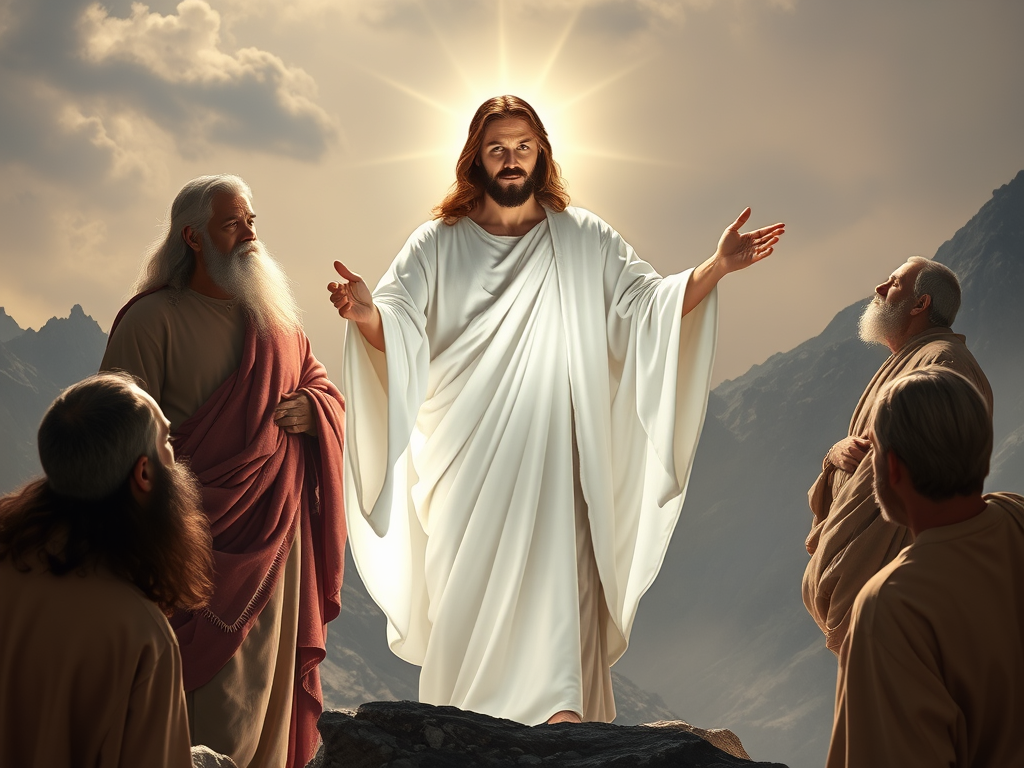
Mayella Vasquez’s reflection on the readings for March 16th reminds me that part of trusting is listening. Her reflection also makes me consider that the Transfiguration isn’t just something that Peter, James, John and Jesus experienced. It’s something each of us can experience again and again if we look and listen for it
As I prepare to publish this post on Sitting with the Sacred, there’s no reflection for March 23rd posted on the Catholic Women Preach website.
The Serenity Prayer, and Mark 9:24
“Second Sunday of Lent — Lectionary: 27.” Daily Readings, Lectionary for Mass for Use in the Dioceses of the United States, Confraternity of Christian Doctrine, 2nd typical ed, United States Conference of Catholic Bishops, 2025, https://bible.usccb.org/bible/readings/031625.cfm.
“Second Sunday of Lent Year C— Lectionary: 30.” Daily Readings, Lectionary for Mass for Use in the Dioceses of the United States, Confraternity of Christian Doctrine, 2nd typical ed, United States Conference of Catholic Bishops, 2025, https://bible.usccb.org/bible/readings/032325-YearC.cfm.
 Sitting with the Sacred