Feeds:
Posts
Comments

Acts 5:27–32, 40b–41

Revelation 5:11–14

John 21:1–19n

Photo by Leon Seibert on Unsplash

When I heard the first reading this week feelings of dread, guilt, anger, and anxiety came over me. I heard the story from Acts as a conflict between completely holy good guys — the apostles — and the totally blind and fearful bad guys — the men at the top of the Jewish religious hierarchy in Jerusalem at the time. The writer in me is bothered by stories involving flat, purely good or purely bad people.

I’m bothered by stories that are simplistic in this way because I have a hard time imagining myself and people I know on either side of the line that seems so clearly drawn between good and evil. I know I’m far from perfect. Actually, the apostles mentioned in the gospel reading were imperfect, too. Too bad the passage from Acts doesn’t record them acknowledging their weaknesses and outs to the people and how Jesus responded to these. I like to think that even though the passage doesn’t include such confessions, they were included in the apostles’ preaching. I like to think the Holy Spirit used their openness and humility as some of the qualities that allowed the message they were sent to convey to spread. After all, we read about the weaknesses, imperfections, and frailties that I just mentioned elsewhere in the New Testament. I think we know about them because the apostles knew the frailties of their humanity and the humanity of their followers were an important part of their mission.

This realization helped me consider the first reading in a different light. It also got me thinking about what other qualities and approaches help the Good News sound more like good news to me than it often does. I thought it might be a good idea to present these approaches as a series of positive suggestions, so here they are:

Do speak from your own experience.

That’s what the apostles were doing. Unfortunately, sometimes their experiences can feel distant from our own. Creeds and verses by themselves can feel so empty to someone who’s at a different point on the spiritual journey. Acknowledge all this. Consider sharing experiences of God that you’ve had. These may not feel so distant to you or to the person you’re conversing with. If you have trouble thinking of your own experiences to share, or if you’re not comfortable sharing, maybe now isn’t yet the time for sharing. Maybe it’s a time for prayer and reflection. Maybe you’re in the garden or behind the locked doors, and that’s okay. These places are stops on the spiritual journey.

Do meet the other person where they are.

Notice I’ve referred to “the person” and “conversing.” Whenever possible, talk to a person, not to a group. Sometimes even when you need to talk to a group, it can be helpful to think of the exchange in terms of talking to a group of individual people rather than to a group whose members are indistinguishable from each other. Talk to people, not at people, and take steps to learn about the needs and experiences of your audience. Get to know your audience. This involves learning and listening, sometimes for a long time, before speaking. Tip #1 can help create an environment where people feel safe sharing their experiences, questions, struggles, and doubts, and creating this environment is how we listen and learn. Once we learn about the questions and needs of our audience or of the person we are conversing with, we need to acknowledge those questions and needs and try to respond to them as concretely as possible. I think concrete responses are what gives the Gospel the most credibility. In the Gospel reading from John listed above, Jesus uses concrete verbs in response to Peter’s declarations of love, and I’ve never seen the verbs in this exchange translated as “teach.” They’re caretaking verbs.

Furthermore, we’re told that prior to taking Peter aside, Jesus reveals who he is by sharing a meal with his friends. Keep that in mind.

When we don’t know how to respond to a particular question or struggle, I think it’s important that we don’t respond with theology or a verse. There are times for sharing these inheritances, but I don’t think these are helpful when a person is hurting or has questions — unless the person is in a similar place spiritually to the one you’re in. Respond in ways that resonate with the person. Remember that the reading from Revelation says all of creation praises the Lord, so look for ways to respond with what already appeals to the person and what he or she can already take in with his or her senses and experience. And keep the conversation going in two directions, if the other person stays willing to continue it. What seems helpful in the beginning of a conversation may not turn out to be. Stay open to listening and changing directions throughout the conversation.

Do acknowledge what the other person offers.

Look for qualities and contributions you admire. Share what you appreciate about the person and what he or she has taught you. Acknowledge what you didn’t know before you met him or her, and thank the person for giving you additional perspective. To me, doing this is the foundation of good communication and a healthy relationship.

I don’t recommend rushing to tell the person that his or her admirable qualities or achievements come from God. Pushing for this acknowledgment can make it seem like you think the person doesn’t have value on his or her own or that you don’t think they have free will. Someone who has, at best, a complicated relationship with faith may shut down if he or she feels you are implying this. Gratitude to God may arise naturally in the person at a different point in the spiritual journey.

Do wait for an invitation and offer one.

Various Scriptures tell us to knock, to seek and to ask. We’re told to ask God for what we want and need, even though we’re also told that God already knows what we need. Why should we not give others the same space to ask us about our spirituality. Remember that God respects the other person’s free will and doesn’t force a relationship with the Divine on the other person. Why should God’s children be any less courteous?

Pushiness and anger get attention, but they risk making the Good News not sound or feel like Good News. Is expressing anger sometimes necessary to convey the need for change? Perhaps. Jesus did turn over tables in the temple court. But that isn’t how we see him interacting with people most of the time. Often, instead of allowing its message to affect change, pushiness can garble a message. Anger that is expressed unproductively can do even more to get in the way of a message. It can be a catalyst, but it’s not a solution. I find it hard to believe that militancy can achieve long-term, positive goals.

Are there places we are invited to go by virtue of living under a representative government? Absolutely. We can be clear about what what’s important to us. But we still need to respond to these invitations with respect, humility, and courtesy.

And we need to connect with others in invitational ways. Receiving an invitation is so much less anxiety- and anger-inducing them being scolded, threatened, punished, pushed, or forced. I don’t think anxiety and anger are likely to generate the responses we want long-term.

Do open yourself to challenging conversations within your spiritual community.

In the first reading, the apostles are brought before religious authorities because of the message they have been sharing. Jesus was brought before both religious and civil authorities because of what he said and did. Nobody is perfect, and chances are, nobody involved is pure evil.

Do assume that opposition isn’t personal and is well-intentioned.

Is there opposition that is personal and isn’t well-intentioned? Sure there is. But chances are, the person has his or her perspective because of a lifetime’s worth of experiences, experiences which may be different from yours. (Remember the forgiveness we are told Jesus gave from the cross to people who caused his agony, people weren’t even asking for it. I’ll be the first to say that that’s a hard forgiveness to give. I’m not good at it God, please keep trying to help me.) Experiences alter how we see and what we see. As a result, we sometimes go about our goals in imperfect ways, totally wrong ways, in destructive ways, or in counterproductive ways. It can happen to you, and it can happen to people you disagree with. That’s why we need to work on answers that respond to individual questions and meet individual needs.

Do remember that change comes from God and from within.

It’s not our job to change someone. However, we might be able to help someone see the need to change. Often this happens not through words but actions. And I don’t mean adopting a particular prayer posture or displaying a particular image publicly. I mean doing the other things on this list.

Am I saying that only home and church are the places for expressions of faith? Absolutely not. But I don’t think the presence of a posture, or an image, or a Bible has as much of an impact without the other approaches on this list. Also, I think that even if you aren’t adopting a certain posture publicly just to be seen, to someone alienated from organized religion, it can seem like you’re doing what you’re doing only to be seen.

And maybe, in the best sense, you are praying or displaying that image in hopes of starting a conversation. But I have a question? Would you pray the same way if you knew no one could see? If the answer is yes, fine. Just don’t forget the other tips on this list, and be courteous. Pray like the sinner, not like the self-righteous man.

If we want to offer the world and everyone in it God’s love, we need to behave like everyone is created in the image of God and thus has something to offer us.

The Bible. The New American Bible Revised Edition, Kindle edition, Fairbrother, 2011.

Locked Doors

Photo by Jaël Vallée on Unsplash

What follows is a new continuation of the story I posted last week. Like last week’s story, it uses fiction writing techniques to engage with Scripture. It is based mostly on John 20:17-28 with a few verses from elsewhere in the Gospels mixed in as indicated.


In a way I couldn’t explain, Jesus wasn’t just alive again. He looked and felt more alive than ever before. More alive than I was. And yet I felt as if seeing him like this, touching him like this had transferred some of that life, that energy, to me. It filled me and overflowed, compelling me to run back to where the eleven disciples still living hid behind locked doors.

I came up against the locked doors sooner than I expected to. I could neither recall all the turns I’d taken, nor did I remember climbing the stairs that led to them. It was as if the doors had come to me.

I glanced around, peering into every shadow and raised my hand to knock the signal that only the followers knew. I hesitated, surprising myself. Though I was thrilled to have received a new purpose directly from the Teacher and eager to fulfill it, it was precisely because of this mission that I didn’t want the doors to swallow me again. The encounter had dissolved my fear. The Lord’s power was stronger even than death. What else could I fear? Why should only the followers huddling behind the locked doors get the message? Nevertheless, I trusted there was a reason the Teacher had instructed me to him tell only the brothers.

So I told them “I have seen the Lord. I’ve embraced his feet, and he told me to tell you this: ‘I am going to my Father and your Father, to my God and your God’ (John 20:17-18).

I received looks of confusion and suspicion in reply with, perhaps, astonishment mixed in.

“Why would he appear and speak to you?” John asked.

“He spoke to the Samaritan woman at the well, to the woman with a hemorrhage, and to the woman about to be stoned for adultery. And don’t forget Mary and Martha in Bethany.”

“Yes, but that was before he was crucified,” Peter said.

How could he speak as if I didn’t know this?

I was soothed a little when he continued. “No doubt things we don’t understand are happening. Grave robbers would never take the time to separate the burial cloths and fold them neatly, but even if what you say is true, what does it mean for us? What are we to do?”

I opened my mouth, No words came out for far too long before I was able to admit, “He didn’t tell me that.” Had I run away too quickly? Surely he would have called after me if I had. “But he’s told us this, so he’ll tell us more when the time is right.”

“You’re suggesting we should wait here,” Thomas said. We’ve already been doing that for two days. Your news changes nothing. We’ll be discovered eventually and suffer the same fate as the teacher. Surely we cannot return the way he has. Why delay the end that’s God’s will? In the meantime, I can pray out there just as well, and I will.” He strode toward the doors before turning to face us. “May the Lord be with you, brothers and sisters. He didn’t slam the doors behind him, but part of me wished he would and hoped, somehow, the sound would result in a visit from the Teacher and instructions about what to do next. If he did, perhaps he would tell us that Thomas acted rightly despite his unbelief. Jesus hadn’t told me to tell the brothers to stay behind the locked doors.


The Teacher did visit us, but not until hours later, when I was helping to prepare the evening meal. I didn’t hear the secret knock and, apparently, neither did anyone else because what I did hear was a collective gasp.

When I looked up to see what happened, I saw the Lord. The ten remaining brothers saw him too. They lay facedown on the floor.

“Peace be with you,” Jesus said.

Gazes lifted one by one.

Touching his wounds told them he was as substantial as he had been before Passover, that he wasn’t a spirit or only a vision.

The men began to talk over each other as they praised God and asked what to do next and what was to become of them.

Jesus replied by repeating, “Peace be with you,” and he added, “As the father sent me, so I send you . . “. (21). Then he breathed like he was blowing out a dozen candles at once and said that in doing this, he was giving them the power to share the Abba’s forgiveness with whomever confessed their sins and seemed sincere in their desire to let go of what was not of God.

For a moment after Jesus spoke these words and gave the disciples this gift, we were all silent. In the midst of our silence Jesus vanished, even though the doors were still locked.

The men began to murmur amongst themselves. Who would believe that after everything that happened the previous week, they had the authority to speak for God, to call people to repentance and to tell those who repented that God had forgiven them?

“Supper is ready.” I called to them over the cacophony of their spoken unanswered questions.

Peter said that hearing me made him aware, once again, of the weakness of his faith.

“Please forgive me for doubting what you told us. I confess it’s so easy to forget so much of what the rabbi has taught us, but now I remember that he said that in the kingdom of God, the last would be first and the first would be last” (Matt. 20:16).

For a moment, my pride resented the implication that I was one of “the last.” I never felt that way when Jesus’ eyes met mine or when he spoke to me. But I Jesus had chosen me as a disciple by name the way the original twelve had. I had begun following Jesus after he freed me from invisible torments that had plagued me since I began to turn from a girl to a woman.

Furthermore, women were not disciples. And now Jesus had asked his disciples to take on a new kind of priesthood, to assure repentant people that God forgave them. Priests were not women.

Yet Peter was asking me for forgiveness. The Holy Spirit was indeed mighty. I dared not presume too much, but I didn’t think it would be doing so to remind the others of something else Jesus had said. “I remember too his words about what the kingdom would be like. And I remember that when he taught us how to pray, he said the Father would forgive us if we forgave those who wronged us (Luke 11:4). I don’t blame you now for your suspicion, given that I saw him die myself and given my troubled past. However, I confess that at first my pride enjoyed that Jesus said come to me at the tomb, and my pride was hurt by your questions. I was wrong. I see that now, and I will do my best to serve my brothers and sisters as Jesus did.”

“In the name of Jesus, my sister, I forgive you of all your sins, and I ask my brothers to forgive me of mine.”

John spoke for the brothers and for the Father in offering Peter forgiveness, and then he confessed his own sins, among which was doubting the truth of my proclamation, and Peter and I forgave him. All of us followed John’s example in seeking forgiveness and offering it.

Then we all sat down to discuss what else we remembered from Jesus’s teachings. We also wondered if Thomas and Judas needed to be replaced. It seemed there needed to be twelve leaders, one representing each tribe. We knew Judas had taken his own life, but what would become of Thomas? And how would the remaining disciples know who should be appointed to replace the ones who were no longer with the group?

It was in the midst of these questions that the familiar knock sounded on the other side of the doors. It might be Thomas, it might be someone else who had discovered our location and method of entering it, or it might be Thomas having betrayed us for his own gain. After all, Judas had done no different just a few days before.

“I’m going to open them,” Peter announced without hesitation. “We’ve seen that no betrayal, no darkness has the last word unless we believe it does and give ourselves totally to that belief. God is distant only if we push Him away.”

The moan of the doors seemed unusually loud as Peter unlocked them and pulled them apart.

“May I come in? Thomas asked. He didn’t look up, and his shoulders slumped.

“What can I do except sit here among friends and wait? I can’t teach the people after everything that’s happened. What he taught us seems like empty promises now. And I can’t go back to the life I had before he called my name. I’m a different man now. I’m not sure I’m a better one, but I know I’m a different one.”

Peter put a hand on Thomas’s shoulder. “Straighten your back, and look up, Brother.” And Peter told Thomas about everything that had happened while he was away.

“Unless I see the mark of the nails in his hands and put my finger into the nailmarks and put my hand into his side, I will not believe” (25).

A chorus of protests went up in response to Thomas’s declaration. When these left Thomas unmoved, the protests turned to prayers. Prayers continued over the breaking of the bread for several days. Whenever we broke bread we also sang Psalms, and each of us did our best to recall a different lesson learned from Jesus.

Seven days passed. Then suddenly, though, as before, no one had unlocked the doors, Jesus stood before us, saying, “Peace be with you. Then he said to Thomas, ‘Put your finger here and see my hands, and bring your hand and put it into my side, and do not be unbelieving, but believe'” (26-28).

Thomas did what Jesus had invited him to do, and he said, “my Lord and my God.”

I was grateful for these words. They reminded us who Jesus was and that he would still show us the way to Abba. Our challenge was to follow him there by living as he had shown us by example. And what a challenge it was.

When Thomas had expressed his refusal to believe without proof that he could touch, I’d had two reactions. First was anger. That was before I realized that we all might have said the same. We’d had the same disbelief. We had simply expressed it in different ways. Second, I’d feared the wrath of God for him and for all of us — more, I realized, than I had feared any Roman soldier or high priest.

But destruction had not rained down upon us. Instead, Jesus had given Thomas what he had needed.

Still, since the teacher had begun returning to us, he had never seemed to be able to stay for very long. I wondered if our sphere couldn’t contain him now the death couldn’t defeat him. I wondered if there would come a time soon when we couldn’t touch him or see him the way we’d been doing for the past week. If so, would we have to rely on what he’d already given us to keep the doors of our hearts open to the faith that he was still alive and still with us?

Suffering and the fear of it had made it so easy to forget all that Jesus had given us. But Jesus understood this. After all, he had called out to God from the cross asking why he had been abandoned (Matt. 27:46). Yet he had still had the faith to ask why.

Maybe that kind of faith — one that keeps asking while the senses and the mind don’t believe or understand — the faith that keeps asking even when it seems pointless — maybe that’s the one that keeps the doors of the heart from locking Abba and His children out.

Work cited

The Bible. The New American Bible Revised Edition, Kindle edition, Fairbrother, 2011.

What Next?

John 20: 11-18

Photo by Kat J on Unsplash

The verses listed above aren’t the ones that were read on Easter Sunday morning this year. However, they are the verses that tell my favorite part of the Easter story. Actually, these verses might contain my favorite Bible story.

I first drafted what follows this introduction for another blog in 2012. My idea for that blog was to use narrative and fiction writing techniques to reflect on Scripture passages. I never wrote a third post for that blog. I think that project stopped almost as soon as it got started because I realized that some Scripture passages paint a picture in the mind and engage the emotions better than others do, and different passages lend themselves best two different forms of prayer. I’ll keep these lessons in mind as I continue with this blog, which I want to be open to taking in lots of different directions. My having an open mind and heart about what I write here will keep this experience fresh — for me and you.


I sit crumpled against the outer wall of the tomb, knees curled up to my chin, soaking my robe with tears. I can’t pull myself together enough to see or hear, let alone move enough to re-join the others behind the locked doors. What would be the point of going back anyway? We can’t stay there forever. And then when we come out, it’s not a matter of will we be killed but how, and by whom? Both the Jewish and Roman leaders have reasons they tell themselves to justify why they should eradicate us.

“. . . Mary, called Magdalene, from whom seven demons had gone out . . .

luke 8:2

And what if, for some reason, I do survive this trial and am sent back to Magdela? If I thought before I met Jesus that no one spoke to me, the childless young widow with fits of temper and body–what would my life be like now? I’ve been using the resources of my late father and of my husband to support someone who, at best, the townspeople will consider to have been out of his head. At worst, they will call Him a criminal. They will whisper that it doesn’t surprise them that I’ve been following Jesus – since I’ve never been right in the head myself. It’s true.

I never had been until he healed me. He healed me – no, he didn’t just bandage the brokenness inside me. He gave me hope that made me a new person, not only because of what he did for me, but because of how he lived and what he taught. Because of Him, I have friends – family. I can’t, I won’t go back to my old life of isolation.

So what do I do now? If only I could ask the Lord, if only I could touch his garments like the hemorrhaging woman who received what she needed from even that slight brush with His Power.

The memory of this woman leads to another recollection. Peter said the burial cloths were rolled up inside the tomb.

I will touch the cloths, if only for the consolation of touching something that has come into contact with Jesus.

I turn toward the entrance of the tomb, expecting to encounter the darkness revealed by the removal of the stone.

Instead, all I see at first is light. When my vision adjusts, I see two men in white “one at the head and one at the feet where the body of Jesus had been” (New American Bible, John 20. 12).

“Woman, why are you weeping” the men say in unison (13).

I forget about my plan to take hold of what I still have from Jesus and remember only my loss.

“They have taken my Lord, and I don’t know where they have laid him” (13). My words are almost incomprehensible with my voice quivering as it is.

I realize two strange men have seen me weeping. So this is where my end begins. What will I suffer and for how long? My whole body begins to shake, consumed in fear and grief. I turn away from the men and close my eyes, praying to be taken away from this situation.

I sense someone else standing behind me. I feel compelled to see who it is, though at the same time, I wonder why it matters. When I turn away from the entrance to the tomb, I come face-to-face with the outline of a man. I can’t make out his features because my eyes are still acclimating again to the predawn darkness. I hope it’s only the gardener and that he’s had his fill of the violence that comes from seeking the kind of power too many people worship.

“Woman, why are you weeping? Whom are you looking for?” the man asks (15).

“Sir, if you carried him away, tell me where you laid him, and I will take him” (15).

“Mary!” This pronouncement of my name is sharp but somehow conveys pity, too (16). And the voice that carries it is unmistakable.

I can’t believe my ears, but I choose to anyway. As I make this choice, I see as if he has cleared away a fog.

It is Jesus.

“Teacher!” (16).

“Stop holding on to me, for I have not yet ascended to the Father. But go to my brothers and tell them, ‘I am going to my Father and your Father, to my God and your God” (17).

Now I know exactly what to do next. I sprint toward the locked doors.

Questions for Reflection

  • When have I felt like Mary does in this interpretation of John 20?
  • Have I ever looked upon someone else that way Mary suggests the people of Magdela see her?
  • Where do I see God in the people with whom I have crossed paths today (or yesterday if it’s early morning when I’m reading this meditation)?
  • What other questions or thoughts come to mind when I read this meditation?
  • When has God surprised me?
  • Is there something I’m holding onto that is keeping me from growing spiritually?

Work Cited

The Bible. The New American Bible Revised Edition, Kindle edition, Fairbrother, 2011.
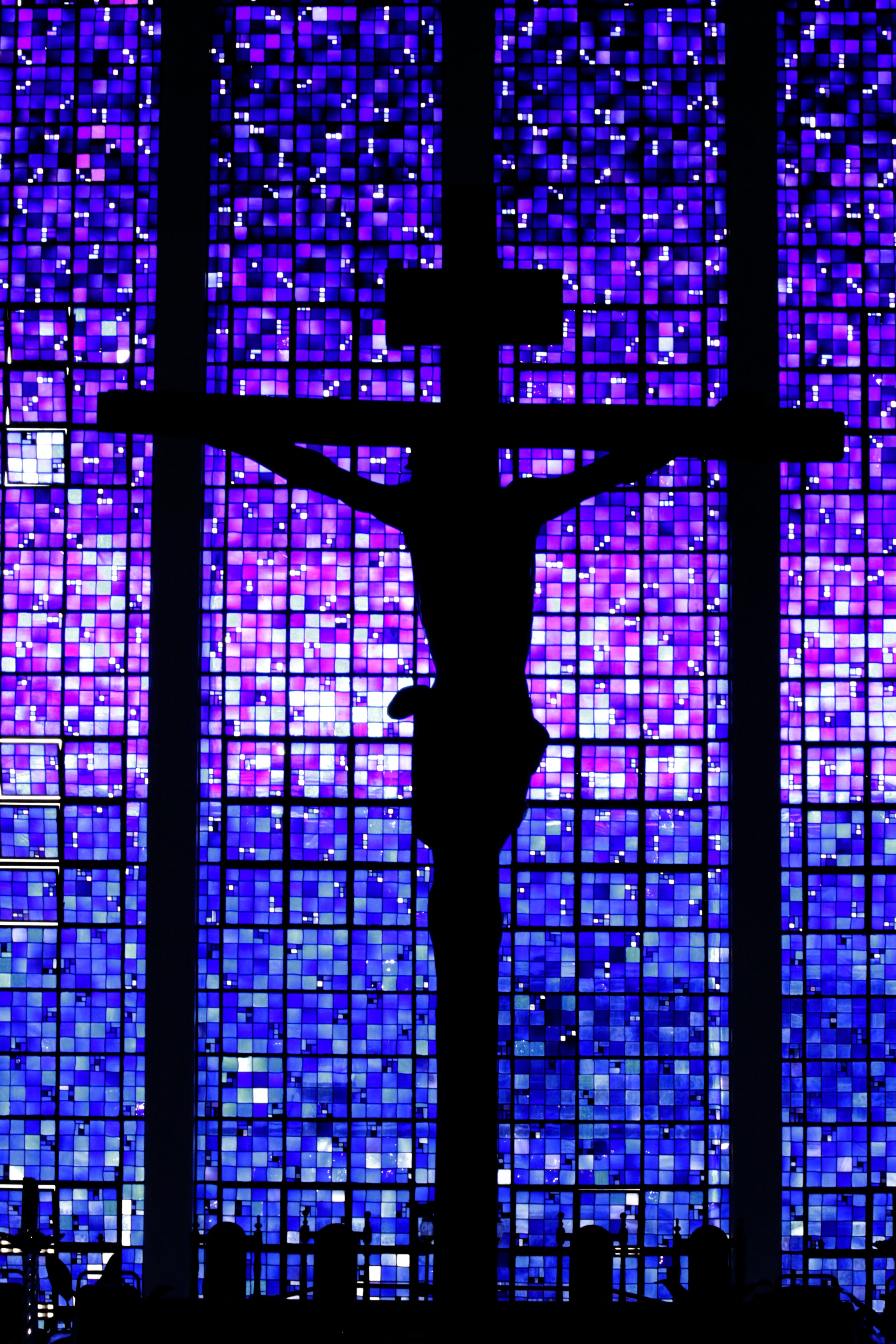
Photo by Vladimir Soares on Unsplash

Two days from today, once again, the Gospel reading will be an account of Christ’s Passion. I decided that reflections on the Stations of the Cross would be fitting accompaniments to this narrative. This year, I’m sharing with readers of Sitting with the Sacred the Reflections on the Way of the Cross for Life with a Disability that I first wrote for The Mighty, an online forum, network, and information source for people affected by disabilities and chronic illnesses. The reflections I’m linking to here were originally published on The Mighty March 28, 2021.

Blessings to you and yours this Holy Week.

What Helps?


Photo by Ivan Torres on Unsplash

“See, I am doing something new!”

— Isaiah 43:19

For me, the readings from this past weekend are a reminder to acknowledge the past. Acknowledge the lessons it teaches about where hope has been found in bleak circumstances. Acknowledge the lessons it teaches about how — today and beyond — to avoid obscuring who each of us really is: an image of God in a way nobody and nothing else can be. Each of us is a different facet of that all-encompassing, yet incomprehensibly intimate image.

This Week’s Readings:

Isaiah 43:16–21

Psalm 126:1–2, 2–3, 4–5, 6

Philippians 3:8–14

John 8:1–11

In the Old Testament reading listed above, God advises Isaiah to “Remember not the events of the past” (Isa. 43:18). The full passage reminds me, the reader and hearer, of how God led the Israelites out of slavery in Egypt (See Isa. 43:16). Even this story is recounted in present tense. The use of this tense reminds me that God is always present and that I believe that, for God, everything is always present. Maybe, in some way I can’t understand, everything is unfolding at the same time for the Creator. After all, the passage doesn’t say that God will do “something new” but that God is “doing something new” (Isa. 43: 19). God is active and on the move right now. Will I allow this to be true in me and through me?

The use of present progressive tense rather than future tense also reminds me to practice not worrying as much about the future as I’m instinctively inclined to do. And if I’m tempted to daydream about the future rather than worrying about it, I pray that I can bring my mind back to the unfolding present. Because I get the idea that the following items are what’s most helpful to focus on:

  1. how the past has affected me and others
  2. what I can do about it right now
  3. what I am doing right now
  4. what I’m aware is going on around me right now
  5. how I can respond to what’s going on.

Nothing else. I need the grace to remember this, not just for myself but for others as well. That’s one message to take away from the Gospel reading for this past week.

I make the above list as a reminder to acknowledge the past, yes, but not to get stuck in it. Why? Because God is “doing something new” (Isa. 43:19)! The exclamation point underscores this declaration.

Work cited

The Bible. The New American Bible Revised Edition, Kindle edition, Fairbrother, 2011.

A Different Focus

Photo by adrianna geo on Unsplash

No post full this time. Everything’s fine. I’ll be in touch again next week sometime.

For now, I’ll just share a mini reflection on this Sunday’s gospel, the parable of the prodigal son. I feel like in a lot of reflections on this passage, the focus is primarily on how the sons respond to the father’s generosity at different points in the story.

I find it more helpful to focus first on what the father is like throughout the story. The father fulfills the prodigal son’s desires even though those desires don’t mesh with the father’s original plan for the inheritance. After the son leaves, I picture the father gazing at the road every day, longing to have his child come to him. And when the son does return, he doesn’t have to make it all the way back to his father’s estate. The father comes out to meet him, embraces him, and pulls out all the stops to celebrate his son’s return. The father also acknowledges the patience and loyalty of the other son.

It’s this father that we’re invited to imitate and this father that shows us how God relates to us. This image of God sure has been comforting in times when I’ve acted like each of the sons in the story. I always hope it’s an image that will help me be less like those sons in their more selfish moments. It’s the father’s image that I definitely want to imitate so I can help other people feel the way the prodigal son must have felt after being embraced by his father.

A Tough Topic


Exodus 3:1–8a, 13–15 ·

1 Corinthians 10:1–6, 10–12

Luke 13:1–9

with supplemental reading of

1 Corinthians 13:12

John 15:5

Romans 6:8


After looking ahead to this week’s readings and then sitting with them for a while, I decided they address a couple very difficult, very human and very common questions:
1) Why does suffering happen?
2) How can I prevent it from happening to me?

Each reading seems to provide a slightly different response to the first question. I’m not bothered by these differences because I think different experiences create different images of God and that each person’s image of God changes throughout his or her life. I think the Scriptures reflect these differences and experiences. I’ve had friends get upset when I express this opinion because they think I’m saying God changes. I’m not. I hope I’m not being repetitive in trying to make this clear: we change and so our perception and understanding of God changes.

The Scriptures reflect these changes because they show God inspiring and working through different writers at different times. That’s why I find prayer, discernment, and reflection so important when looking for what Scripture has to say to me each time I read it.

I used this approach to Scripture as I prepared to write this post, and some thoughts came to me in response to this week’s readings.

1) Sometimes we cause ourselves and each other to suffer. God doesn’t will us to suffer, though God clearly allows suffering as an extension of free will.

2)Greater suffering is not a sign of greater guilt, nor is less suffering a sign of greater holiness (Luke 13:1- 3) .

3) God is present with everyone in their suffering, and because of God, who is life-giving presence, we may often be able to find good in the midst of suffering and after it (See Exod. 3:9, 14; 1 Cor. 1:10 1-4). Furthermore, we can be the good in the midst of suffering if we respond by acting to reduce suffering or to direct it toward a life-giving purpose (See Luke 13: 7-9). All this is good news because:
4) No one can steer completely clear of suffering, especially not if the person wants to grow and to put down roots that connect him or her to God and to others. Not to suffer for the sake of growing these connections is to suffer, to wither, for the lack of having them. (See John 15:5; Romans 6:8). It’s the human condition to experience both suffering that withers and suffering that allows for growth.

“At present we see indistinctly, as in a mirror, but then face to face. At present I know partially; then I shall know fully, as I am fully known.”

1 CORINTHIANS 13: 12

I won’t call the preceding four points totally satisfying answers to the questions I began this post with. I feel like doing that would imply a certainty and a completeness of knowledge that goes against one of the messages of this week’s main readings. Rather than implying that, I want to thank God, ever-present and ever-sustaining, for any partial knowledge and vision I may have. (See Luke 13: 8-9); 1 Cor. 13:12). I also pray for the grace to let the Holy Spirit turn and return me to the image and to the work of who I am in God. This transformation is my understanding of what it means to repent.

Work cited

The Bible. The New American Bible Revised Edition, Kindle edition, Fairbrother, 2011.
Tabor Monastery of the Transfiguration, Tbilisi City, Georgia
Tabor Monastery of the Transfiguration, Tbilisi City, Georgia — Photo by mostafa meraji on Unsplash

Luke 9:28b-36

“Listen to him,” I hear in this week’s gospel (Luke 9:35). And sometimes I think it would be easier to follow that instruction if I could clearly see him or if I could see that everything was going to turn out all that right in the end. Trusting without seeing is so hard a lot of the time.

But this gospel passage reminds me that Peter, James, and John received the sort of vision I sometimes wish I had. The way I imagine their experience suggests to me that seeing Jesus as he is now — glorified — wouldn’t necessarily transform me for the better in an instant.

In fact, the sight might add to any feelings of being overwhelmed, fearful, and confused that I might have had beforehand. Why? Because I’d be seeing something powerful and indescribable, something I’d never seen before, something familiar and yet, quite literally, out-of-this-world.

The most relatable conception I can come up with for what this experience might be like is an eerily realistic dream. It transcends the experience of waking life, yet it feels somehow just as real, if not more real than everyday experiences do. Maybe that’s because this kind of dream would tap into a deeper part of ourselves that we can’t — or don’t — access when we think we’re in full control of our senses and our consciousness.

I don’t see being witnesses to the Transfiguration as a circumstance in which the three apostles needed to “Do whatever he tells you” (See John 2:5). Instead, I see the circumstance as a situation in which their defenses were lowered so they could go to sleep and be awakened, refreshed and ready to listen. (See Luke 9:32). The spiritual life includes times for talking and doing, but that period on the mountain wasn’t one of those times (See Luke 9:36).

An experience like witnessing the Transfiguration needs time to sink in and to be understood better. An experience like that one doesn’t provide immediate answers, so it’s not entirely comforting. Yet wouldn’t an experience like that get the people witnessing it out of their own way for a moment and allow God to work in them?

Could witnessing the Transfiguration be said to share additional characteristics with other life-changing experiences? I mean other experiences that jar us out of our comfortable routines, that leave us speechless, or cause us to see the people around us in a different light. Such experiences may provide us insight into our previous experiences or give us a glimpse of possibilities we hadn’t imagined before. They may make our lives flash before our eyes. They may involve a mix of intense emotions, and they take time to process, but we may also see God in them.

Work cited

The Bible. The New American Bible Revised Edition, Kindle edition, Fairbrother, 2011.

Photo by Juli Kosolapova on Unsplash

Deuteronomy 8:3
Romans 10:13, quoting Psalm 145:18
1 Corinthians 13:4-5
2 Corinthians 6:2
Luke 4:1–13

I’m breaking away — just a little bit— from a couple of patterns I usually follow on this blog.

1) From last weekend’s Scripture readings, I’m going to focus only on the gospel reading.
2) I’m going to bring in Scripture that wasn’t included in the weekend readings.
I guess the second choice isn’t entirely foreign to this space. I brought in Scripture not included in the weekly readings in my second post, but it seems like I haven’t taken that approach in a while.

It occurs to me that breaking away from unhelpful patterns and returning to helpful approaches that I’ve gotten away from are what Lent is about. Since “now is a very acceptable time,” here I go on this week’s exploration of breaking away and returning (2 Cor. 6:2).


Verses 4 and 5 of 1 Corinthians Chapter 13 remind us that among its other qualities, “[love] is not pompous, it does not seek its own interests. This famous passage in the first letter to the Corinthians provides a challenging, yet rather abstract description of the nature of Divine love. Luke’s account of Christ’s temptation in the desert, in contrast, provides a concrete picture. It shows me Divine love lived.

Luke tells us that when he was tempted, Jesus didn’t stop trusting that his father was caring and would care for him — even when it wasn’t clear how —and he didn’t use the gifts he received from his father to serve himself. In the temptation scene, he doesn’t turn the stones into bread as the devil urges him to (Luke 4:3). Instead, he leans on his father in his weakness, saying, “‘One does not live by bread alone'” (Luke 4:4). Here, Jesus quotes the Torah, where the rest of the verse is “but by all that comes forth from the mouth of God” (Deut. 8:3). The pastor reminded us this weekend that this verse acknowledges Jesus’ and our need for bread. It reminds us that bread comes from God’s creation, as does everything good.

“‘One does not live by bread alone.'”

— Luke 4:4, quoting Deuteronomy 8:3

Photo by Wesual Click on Unsplash

I would add that Jesus doesn’t say “One does not live on bread. He says, “One does not live on bread alone. The word “alone” is the key to what Jesus’ response means. The response says our needs are emotional, intellectual, and spiritual as well as physical. We’re not totally self-sufficient. Instead, deep down, we long to extend beyond ourselves to God and to others. We need bread, but our nourishment goes beyond the physical when we share bread. When we share it, we open ourselves to leaning on God and each other and to learning from God and each other. And sometimes it takes not having these forms of nourishment to appreciate having them. That’s why alone time and forms of fasting sometimes allow for the growth and increased clarity we need to draw closer to God and each other so that we can work with God.

As we look at more of Luke’s temptation scene, we read how the devil works against this spirit of communion and cooperation. The devil promises Jesus

all the kingdoms of the world,” saying “I shall give you all this power and their glory in a single instant, for it has been handed over to, and I may give it to whomever I wish. All this will be yours if you worship me (Luke 4:5-7) [italics mine].

Those are a lot of words of ownership — and ownership right now, mind you. Those are not words about being family, about sharing, or about being patient. And Jesus knows his father is about being family, about sharing, and about being patient. He knows the devil is feeding him a lie. He knows that power rightly used is used to serve, not to dominate, and he knows the devil can’t give him this power to serve because his adversary is not its source. The devil doesn’t own the kingdoms of the world either, so he can’t give them all to anyone — not that Jesus would take them if they were the devil’s to offer. Jesus came among the people to draw them to God, to help them to see and to choose God, not to drag them to God. I’d venture to say that no one can be forced to find God. No one truly finds God except freely.

My belief is that God doesn’t want to control us and our world because if God did, we couldn’t be in a loving relationship with God. And because God doesn’t want to control us, we encounter the consequences of our own actions and the actions of others. I think that’s why Jesus doesn’t jump off the parapet of the temple as the devil tempts him to do (Luke 4:9). I believe God shares in our suffering, and that somehow, in some way, God saves all who “call upon him in truth” — though I can’t always see how (and I’d like to be able to see how a lot more often) (Psalm 145:18).

Photo by Jannic Böhme on Unsplash

But I also believe that because my actions have consequences, I shouldn’t invite trouble — especially not to prove something about myself or about God. We all face enough troubles and challenges in life without inviting it for reasons other than love. Inviting trouble for reasons other than love is my understanding of what it means to “put the Lord… to the test” (Luke 4:12). To do so would be to throw away the love, safety and security God has given me. I don’t want to do that.

Sometimes the path love leads me along is comfortable. Other times, it’s not comfortable, but it’s familiar. Still other times, it’s neither. Regardless, I want to follow where love leads. Thank goodness, Jesus knows how hard that can be.

Work cited

The Bible. The New American Bible Revised Edition, Kindle edition, Fairbrother, 2011.

Photo by Nong V. on Unsplash.com

Sirach 27:4–7
Psalm 92:2–3, 13–14, 15–16
1 Corinthians 15:54–58
Luke 6:39–45

“Remove the wooden beam from your eye first; then you will see clearly to remove the splinter in your brother’s eye” (Luke 6:42). This sentence makes the process of seeing clearly or helping someone else see clearly sound so simple and linear. All I have to do is hoist a “beam” out of my eye, and then I will see clearly and be able to help others see clearly. It sounds like a single step, a one-time action – at least when I look at the sentence as a whole.

My perspective shifts when I focus on the translation “beam” (Luke 6:42). A beam sounds like something that would trap my whole body under it, not just block my vision. The negative behaviors and thought patterns I get caught in definitely feel like burdens that imprison my mind and weigh down my body more than something I could rub out of my eye would.

A beam is something I need someone’s help to free myself from. Yet everyone else is being stabbed in the eye by splinters or trapped by beams as well. Even when a person doesn’t struggle with a particular thought pattern or behavior, everyone gets wounded. Everyone faces uncertainty. Only God who knows all and has the power to break me out of confinement and to lift what weighs me down. Because I live in a world where the beauty of creation is visible alongside the suffering that pride, fear, and the human condition carry with them, this process of freeing and unburdening is one that will last a lifetime — and beyond. Again and again, I’ll have to entrust my burdens and limitations to God, asking God to lift them, and if not to lift them, to help me bear their weight.

Knowing this doesn’t let me feel like I’m losing spiritual weight or like I have more room to breathe and the Spirit. In fact, I feel more like I’m sitting in a room with the door open only a crack. The window blinds are closed. It’s daylight, so the room isn’t black, but it’s gray. Light barely slips in around the door and between the slats of the blinds. The door is too heavy for me to pass through on my own, so on my own, I can’t lead someone else out of the same room, and certainly not out of a room different than the one I’m in. This “dim room” metaphor is a visualization of what Luke 6:42 says to me this week.

I have no way to know how the amount of light in my rooms will change throughout my life. I know that neither will they reach full brightness, nor will the doors be fully open while I journey on this earth. My prayer as I write this is that I’ll relate to others with an awareness that I’m as unable to see clearly as they are. There are more obstacles blocking my path to the sources of natural light than I realize, so others can see things I can’t, even as we’re all looking for light and making our way through dim rooms. Therefore, I suspect that If I want to help others, the first step forward is to acknowledge the limitations on my vision of and movement through life’s rooms. The second step might be to acknowledge any ways I benefit from walking with them.

As we journey together, I hope my fellow travelers will find more to trust in my accompaniment than I recognize. After all, I’m “corruptible” but “clothe[d]” with the “incorruptibility” of God. I’m “mortal” but “clothe[d] in immortality (1 Cor.15:53). It’s hard to see that clothing through the “beam[s] in my eye[s] (Luke 6 42). The result is that I don’t see myself or others as clearly as God does. The good news is that I’m wrapped in God anyway. What I need to do is remember I’m wrapped in God’s reflective clothing and not shrug off those clothes. They will keep me from getting lost and going in circles in low light. They’re why “It is good to give thanks to the Lord” (Psalm 92:2).

Work cited

The Bible. The New American Bible Revised Edition, Kindle edition, Fairbrother, 2011.