Feeds:
Posts
Comments
Photo by Kat J on Unsplash

Today, the Gospel reading is John 20:11-18. I’ve written here before that John 20:11-18 tells my favorite of all the Easter stories. The story of what happened when Mary of Magdala wept outside the tomb is my favorite not just among the Easter stories but in all of the Bible for several reasons:

It’s a story readers and listeners can see, hear, and feel with the eyes of their and hearts. It’s a story readers and listeners can see, hear, and feel with the eyes of their and hearts. Not all Bible stories provide such concrete sensory details, so this one that does has a special place in the storyteller’s heart that is mine.

It’s a story that paints a picture of profound love and loss, of grief and reunion. It’s emotionally intimate, from Mary’s weeping to her relatable experience of recognition when Jesus calls her by her first name (John 20:11:16 and 17). I like to imagine he’d addressed her in that same gentle yet that somehow still attention-grabbing way many times before. This time, when he calls her, she clings to him, and he has to tell her to let go (John 20:18). To me, it’s no wonder she responds this way. He healed of a lot of suffering. (See Luke 8:2 and Mark 16:9 for more about this.) And then she was among the women who offered him what care they could while he was being tortured and later, after his death, when he could no longer comfort them in return.

Now, I think if I lost someone after going through with him what Mary had with Jesus, and then I got that person back, I don’t think I’d want to let go either. I think someone would have to pry my arms away from him.

But Jesus doesn’t want Mary to live in the past, and he knows neither of them can stay in the present–not while they are both on this earth, where a new present constantly replaces old ones–so he gives her a mission that will carry her and the rest of the family he has gathered around himself into the future, and indeed, into eternity:

Go and announce that I’m “going to my Father and your Father, to my God and your God” (John 20:17). Another part of her message will be “‘I have seen the Lord'” (20:18).

Sharing my personal encounters with the sacred is one of the missions of this blog. That’s why Mary of Magdala is a fitting patron saint for this endeavor. That’s also why I’m linking here today to a Scripture Story I wrote inspired by John 20:11-18.

By the way, I decided the other patron saints of this blog are Mary the Mother of God (Jesus), and Mary and Martha of Bethany, the sisters of Lazarus. It’s the mission of this blog to be open to the will of God, to sit at the feet of Jesus and listen to him, and to serve others. I plan to show love to the other models for this blog when they are mentioned in the readings for the day.

Lord, help me be like these women. Help me help them in their ministries to You and to Your beloved ones – everyone. Amen.

The Bible. The New American Bible Revised Edition, Kindle edition, Fairbrother, 2011.

Confraternity of Christian Doctrine, Inc. “Sunday July, 2 2023: Readings at Mass.” The New American Bible, 2001. Universalis for Windows, Version 2.179, Universalis Publishing Ltd., 26 Feb. 2023, https://universalis.com/n-app-windows.htm

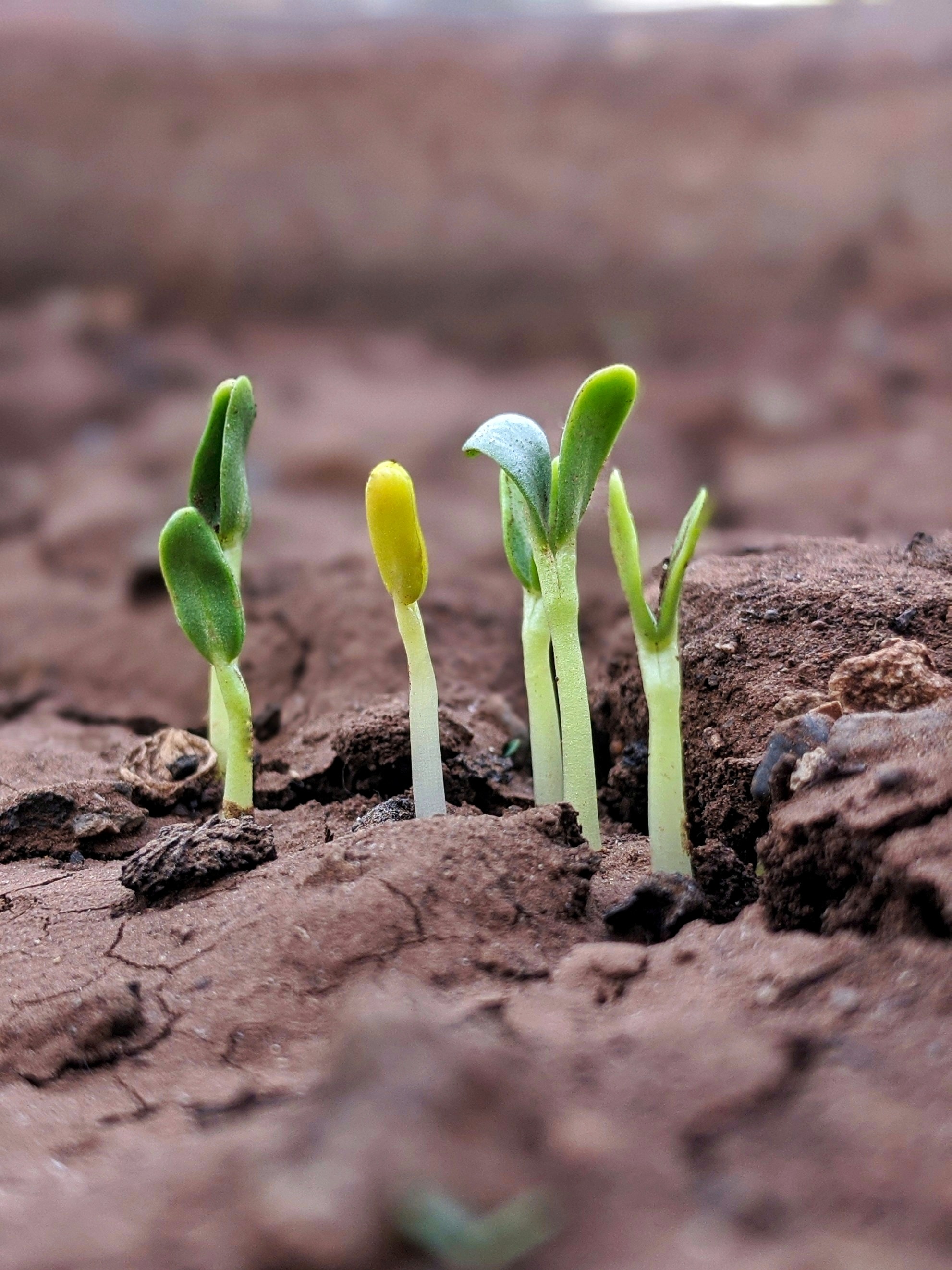
Photo by Pisit Heng on Unsplash

As I wrapped up this year’s reflections on the Way of the Cross, I started to think about Easter and the sights and sounds the word “Easter” brings to mind.

I imagined a stone rolled aside and and a cave-like tomb lit from an unknown source. The light is so bright it’s painful to the eyes — or maybe it ought to be painful but isn’t somehow. I can’t describe the light or explain it. I can’t describe how I can make out the outlines of a figure within its brightness. The figure is discernible, but I can’t see most of its features amid all the radiance.

The voice that comes from it is clear, however. It asks, “Why do you search for the living among the dead?” He is not here, for he has been raised.” It turns out that by including this quotation, my imagination is quoting Luke 24:5 almost verbatim but not quite. Matthew and Mark start their final chapters with similar scenes and related quotations. These accounts are dramatic, so it’s no wonder that movie scenes depicting that Sunday morning look and sound like the one I just imagined.

But what the Gospel reading for this Easter morning, John 20: 1-9, prompts me to see, hear, and think about is different from the other accounts of the ways Jesus’s first followers initially experienced the resurrection.

John 20:1-9 doesn’t present me with a story that is as obviously miraculous.

Mary sees the stone that had guarded the entrance to the tomb moved aside, and she runs to get Peter and “the other disciple whom Jesus loved,” announcing that Jesus’ body has been stolen (John 20:2-3). I learned somewhere that “the disciple whom Jesus loved” was John, so I’m going to refer to that person by this name to make this post easier to read, even though I don’t remember where I learned to identify the disciple this way.

In response to this news, Peter and John run back to the tomb. John gets there first but doesn’t go inside (20:5). Apparently, he just bends down and sees the burial cloths. I wonder why he acts this way. I wonder if some part of him was telling himself that if he doesn’t look any closer, he doesn’t have to see anything he doesn’t want to see. He could tell himself Jesus’ body hadn’t been stolen, that it was still hidden by the darkness. If he can’t yet face the memories and the reality of Jesus’ death (a reality that would’ve been difficult enough to grapple with had he not stood at the foot of the cross), he can go through the motions of looking without really seeing. Maybe he wants to show deference to Peter, or to let Peter be the one to confirm the worst. Peter seems ready to do that. He goes in and sees the cloth that had covered Jesus’ head rolled up in “a separate place” from the other burial wrappings (20:7). I always thought the details about the separate and apparently careful placement of the wrappings were meant to point to the resurrection. And maybe these details were included in hindsight to do just that, but on this reading of the text, I realized that in this scene, Jesus’ followers don’t yet believe he is risen. John 20:9 says “they [don’t] yet understand the scripture that he had to rise from the dead.”

This realization reminded me in a new way that the resurrection doesn’t erase all confusion or pain from the present or the past. The burial cloths haven’t disappeared. They’re still bloody, too, because in verse 19, Jesus shows his disciples the wounds in his hands and his side.

But that moment is for revisiting in future weeks. In this week’s reading, I’m not shown the words themselves, but I’m given reminders of them in the wrappings that no longer bind Jesus. If I take John 20:1-9 without the stories that follow it, I’m not reminded that pain doesn’t have the final word. Yet the Good News is that pain doesn’t have the final say, even if some of life’s experiences tempt me to think it will. Because Jesus is risen, I’m offered future resurrection. I’m neither promised resurrection now (though there are signs of it everywhere in nature’s spring awakening), nor am I to let the past behind me as the burial wrappings bound Jesus.

Photo by Chetan Kolte on Unsplash

The experience of reading John 20:1-9 without the stories that follow these verses remind me of what it’s like to celebrate Easter present. It will take time to understand a lot of things in this life. I won’t fully understand or experience what resurrection means while I’m here. My time-bound experience of Easter won’t feel as extraordinary as the one I imagined at the beginning of this post. It won’t mean forgetting things I don’t want to remember. It won’t banish disappointment or grief. And now I remember I’m not alone in this reality. The experience Jesus’ earliest followers had before sunrise that first Easter morning was not one of perfect clarity and joy.

You were risen, but neither You nor Your loved ones were in Heaven yet that first Easter. Neither am I on this Easter. Thank You, Lord, for the reminder from John 20:1-9 about what it means to practice patience and to hope. Amen

The Bible. The New American Bible Revised Edition, Kindle edition, Fairbrother, 2011.

Confraternity of Christian Doctrine, Inc. “Sunday July, 2 2023: Readings at Mass.” The New American Bible, 2001. Universalis for Windows, Version 2.179, Universalis Publishing Ltd., 26 Feb. 2023, https://universalis.com/n-app-windows.htm
This post is a continuation of my Lenten reflections on the Scriptural Stations of the Cross. The station titles and scripture and verse citations, except where otherwise noted, are published on USCCB.org.

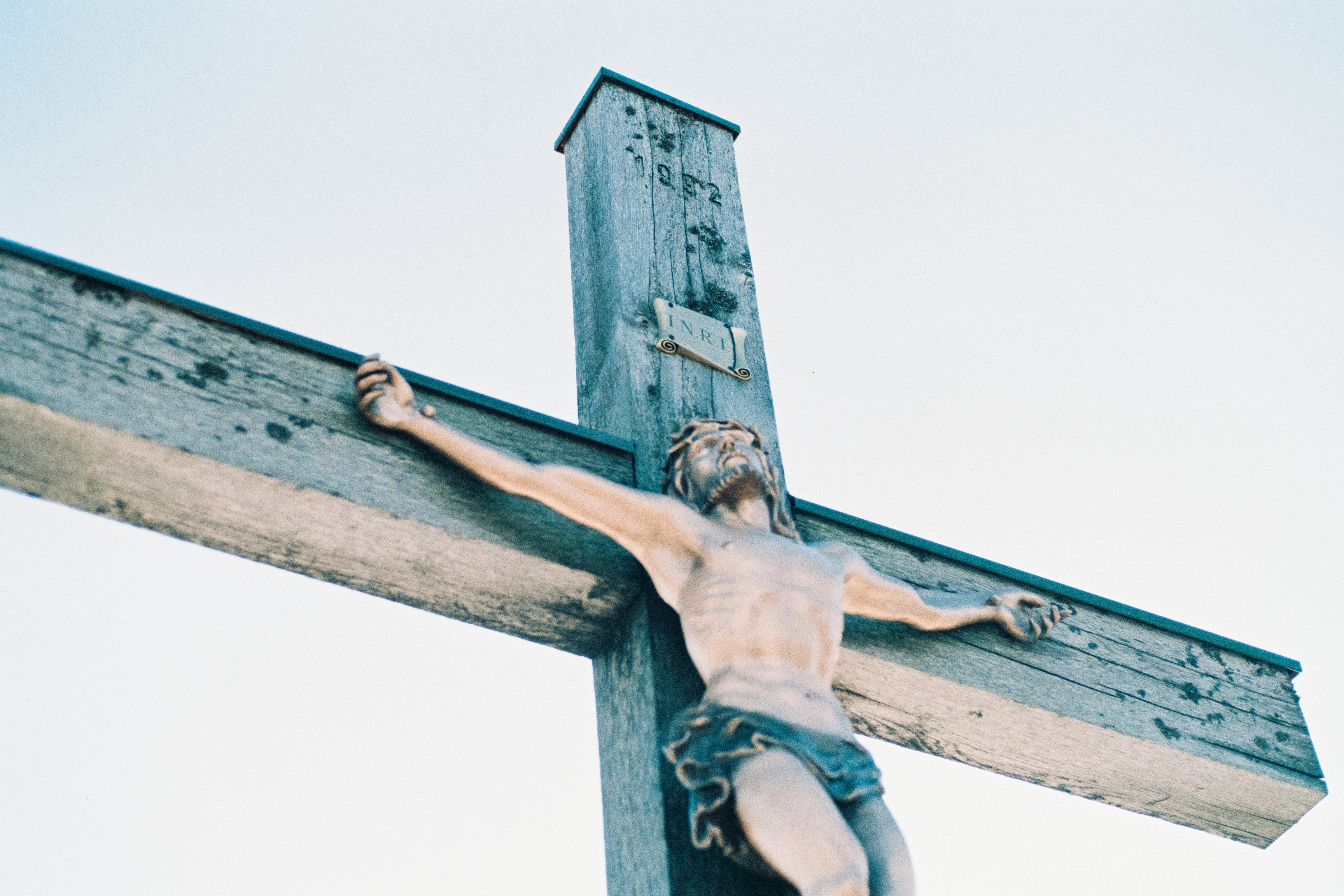
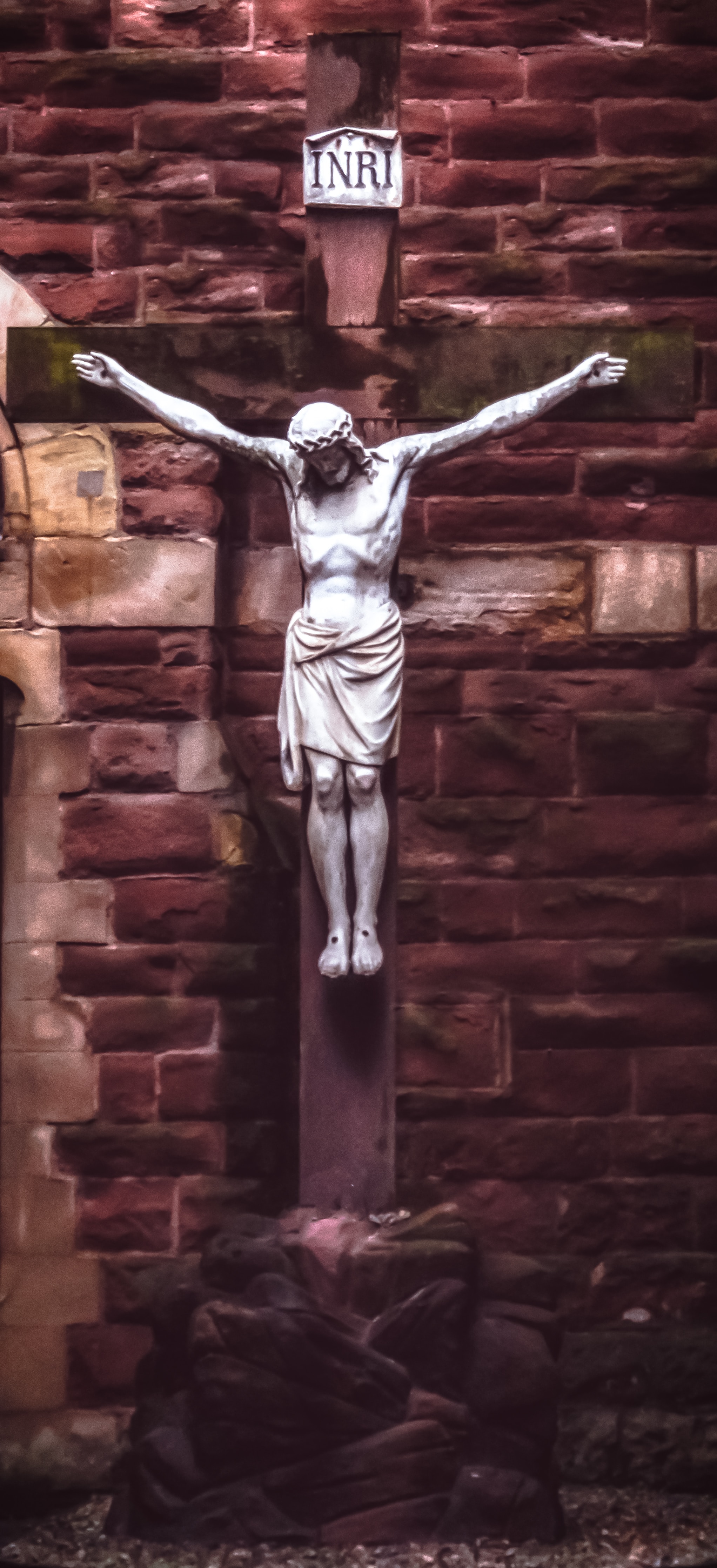
Thirteenth Station: Jesus Dies on the Cross

(Luke 23: 44-46)

Photo by K. Mitch Hodge on Unsplash —Crucifix in the alleyway next to St. Patrick’s Church in Belfast (Jan., 2020)

Jesus, You began Your journey to the cross, in one sense, in the desert at the start of Your public ministry, and in another sense, in the Garden of Gethsemane. In both places, You let the Spirit lead you away from other people and from material comforts so that You could nurture Your relationship with the One who created You and sent You on Your mission. Times of retreat such as these allowed You to seek and to find the strength You needed to offer Yourself to Your brothers and sisters in the human family despite their spiritual blindness, weakness, greed, lust, fear, and impatience. You were able to surrender Yourself to others because You trusted Your Father would use their sins and frailties to accomplish the work of redemption. You knew that, ultimately, You were surrendering not to evil but to the Good of Your Father. For that purpose, You gave back to Your Father everything You received — Your desires, Your will, Your body, Your blood — every drop of it — and, in the moment to which I now turn my attention, Your spirit. You knew that only by dying, only by commending everything You had received to the Father, would You be free from the grip death had on You.

I, too, must embark on a lifelong journey of surrendering everything I have to Divine Love in order to receive Divine Life. I couldn’t travel this path if You hadn’t done so before me and didn’t continue to do so beside me and within me. I forget the sight and the feel of Your Way again and again, and You are with me to guide me back to it. Thank You for doing for me, with me, and in me what I cannot do by myself. Thank you for creating me for relationship in all its forms. Amen.

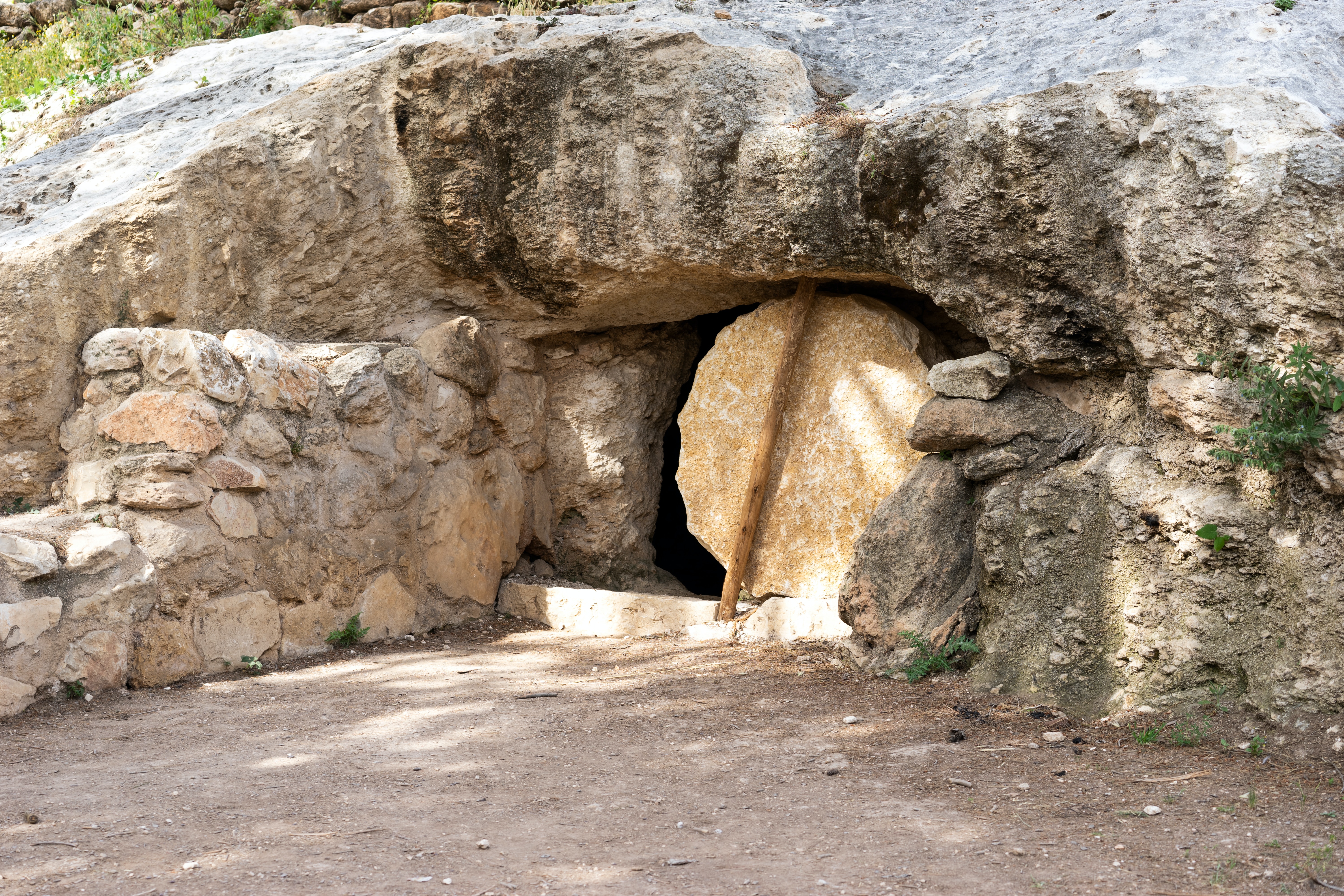
Fourteenth Station: Jesus is Placed in the Tomb

(Matthew 27: 57-60)

Photo by Jeremy Mura on Unsplash

Jesus, in honor of the care Joseph of Arimathea showed You when You could not express Your gratitude, I offer prayers of thanksgiving.

  • for those who share what they have
  • for those who give of themselves and their possessions without expecting compensation or a reward
  • for those who cannot express their gratitude for the care they receive
  • for those who look after the dignity of the dignity of members of the human family who have died.

I’m grateful that You call to Yourself people from all walks of life.

I pray for those who have died, for those who mourn, for those who wait, and for all of us who grapple with anxiety amid the uncertainty of life. I bring to You Your beloved ones who face situations that seem hopeless.

And I pray for the virtues of patience and charity. Help me to recognize and to accept opportunities to practice these virtues. Teach me to rest in You. Amen.

This post is a continuation of my Lenten reflections on the Scriptural Stations of the Cross. The station titles and scripture and verse citations, except where otherwise noted, are published on USCCB.org.

Eleventh Station: Jesus Promises His Kingdom to the Good Thief

(Luke 23: 33-34 [and Philippians 2:6-7 – my insertion)

Photo by Dylan McLeod on Unsplash

Jesus, thank You for not regarding “equality with God something to be grasped, but instead “empty[ing] [Yourself], taking the form of a slave,” of a working man’s son, who experienced unpleasant emotions, temptations, poverty, and sickness (Phil. 2: 6-7). Thank you for surrendering to one of the worst punishments a criminal could receive — crucifixion — a punishment involving multiple forms of torture — even though You were innocent. In accepting Your sentence, You showed Your brothers and sisters accused of crimes and those convicted of them — whether justly or wrongly — that no choice they make forfeits God’s love for them or the ability of their lives to have purpose and meaning in Your eyes.

Nothing I or anyone else can do forfeits God’s love. Help me remember this truth and to put it into action by living in solidarity with those who are rejected and/or who struggle to forgive themselves and to have hope.

Help me also to remember the following lessons offered by the exchange between You and the people crucified beside You:

  • Suffering brings You sorrow, and yet, avoiding sorrow is not more important than surrendering to God’s plan for me so that I can become my best self and participate in God’s healing work.
  • Part of being truthful is taking responsibility for my actions and their consequences.
  • When I do take responsibility for my actions and come to you in my woundedness and with sincerity, You will remind me that I’m so much more than any destructive choices. Those choices will not be the end of me if I surrender them to You. You work not only around weaknesses and harmful choices but through them, even if I don’t ask You to. You want me to ask so that I can hear You reassure me that You are near. I am in Your heart, and You are in mine if I invite You in.

Thank You for Your nearness, especially when I feel furthest away from You and when I forget You or don’t understand the Divine plan. Amen

Twelfth Station: Jesus Speaks to His Mother and the Disciple

(John 19: 25-27)

Photo by Hennie Stander on Unsplash

Jesus, Your friends John and Mary, as well as Your aunt and Your mother were embodiments of God’s faithfulness at the foot of Your cross. These beloved ones did not him hide or abandon You when being seen as one of Your group might have been very dangerous for their earthly lives.

Meanwhile, You let these bravest members of Your circle know that you were thinking of them and their future needs.

You make those you draw to Yourself not just friends for each other but family. Thank you for inviting me into the embrace of that family. Help me to experience the Love of that embrace and to share that Love, to participate in the growth of Your family.

Jesus, grant me the grace to support my family and friends in ways that help them experience Your love. Help me to support them, especially at their most difficult times and mine.

The Bible. The New American Bible Revised Edition, Kindle edition, Fairbrother, 2011.

Confraternity of Christian Doctrine, Inc. “Sunday July, 2 2023: Readings at Mass.” The New American Bible, 2001. Universalis for Windows, Version 2.179, Universalis Publishing Ltd., 26 Feb. 2023, https://universalis.com/n-app-windows.htm
This post is a continuation of my Lenten reflections on the Scriptural Stations of the Cross. The station titles and scripture and verse citations, except where otherwise noted, are published on USCCB.org.

But Men Must Work and Women Must Weep, 1883 by Walter Langley —Photo by Birmingham Museums Trust on Unsplash

Ninth Station: Jesus Meets the Women of Jerusalem

(Luke 23: 27-31)

Jesus, in this scene, You show me how to care for others, even in my most difficult moments. Thank You, Lord. You remind me also of the power of empathy — another kind of sharing, another kind of cross. You remind me that support can be offered using more than muscle. Help me to follow Your example.

Thank you, Lord, for everyone who has supported and will support me, especially my mother and all the women in my life.

Help me to recognize and do acknowledge Your love and sacredness in Your creation, including in my body and the bodies of others, with all their gifts and limitations. Strengthen my hope, please, Lord. Amen.

Photo by Christoph Schmid on Unsplash

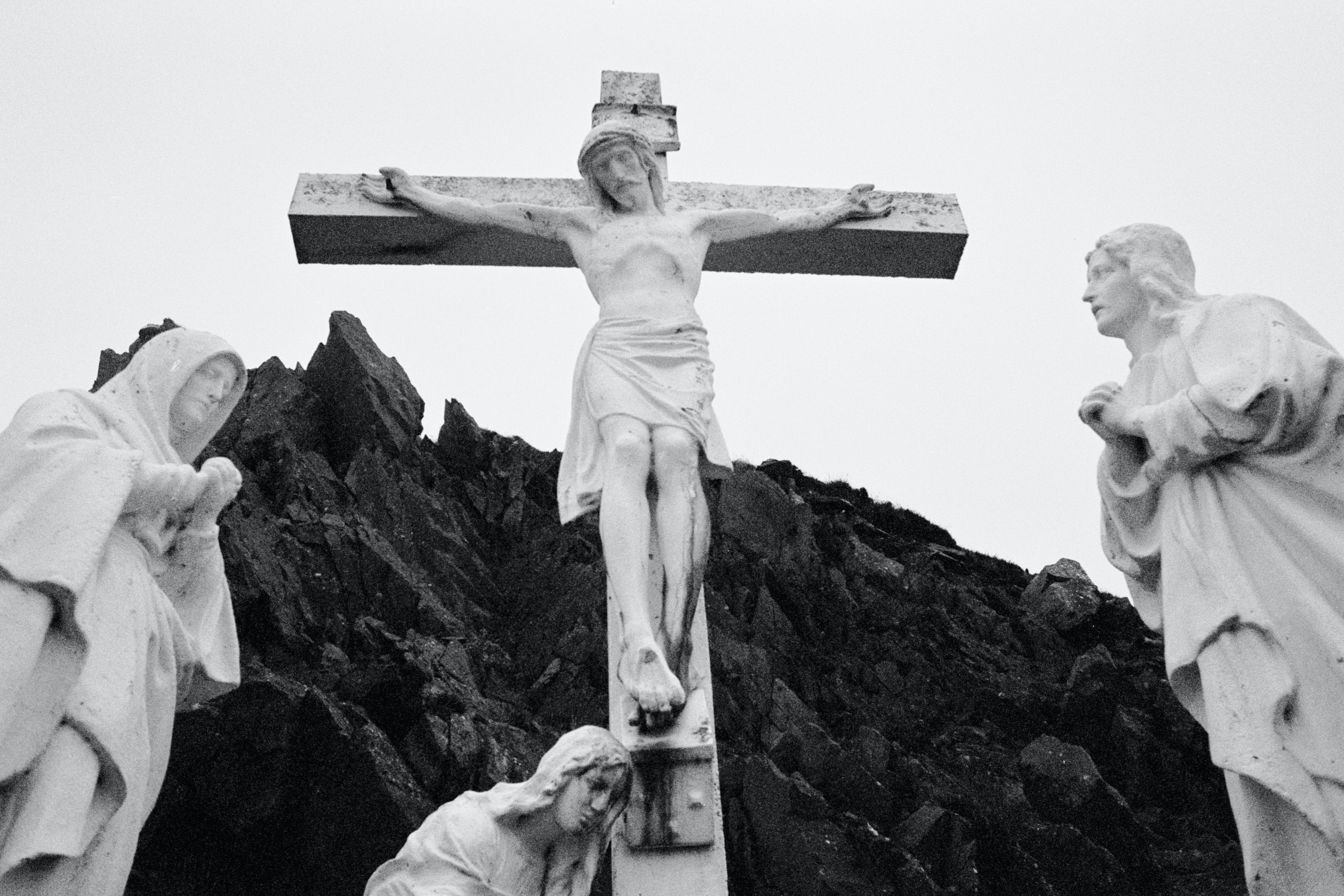
Tenth Station: Jesus is Crucified

(Luke 23: 33-34 [with additions from Hebrews 4:15-16 — my insertions])

Jesus, thank You for allowing yourself to be tied and nailed to a cross for me. Thank you for surrendering Your freedom in such an agonizing way so that You could open my door to freedom. Thank You for extending Your arms in love as far as they would go. Thank You for offering Your body to and for me.

Jesus, when I read that You said to the people who crucified and mocked You “Father, forgive them, they know not what they do,” I’m reminded that I “do not have a high priest who is unable to sympathize with [my] weaknesses, but one who has similarly been tested in every way, yet without sin (Luke 23:34; Heb. 4:15). Unlike You, I fail again and again when I’m tested. Help me “confidently approach the throne of grace to receive mercy and find grace for timely help” (Heb. 4:16). Grant me the grace also to forgive others as You were and are so ready to forgive them and me. Help me to seek and to accept forgiveness from You and from others and to remember that acknowledging what I need—to myself, to You, and to others—is the first step in receiving it. This is as true of forgiveness as of anything else I need. Amen.

The Bible. The New American Bible Revised Edition, Kindle edition, Fairbrother, 2011.

Confraternity of Christian Doctrine, Inc. “Sunday July, 2 2023: Readings at Mass.” The New American Bible, 2001. Universalis for Windows, Version 2.179, Universalis Publishing Ltd., 26 Feb. 2023, https://universalis.com/n-app-windows.htm

This post is a continuation of my Lenten reflections on the Scriptural Stations of the Cross. The station titles and scripture and verse citations, except where otherwise noted, are published on USCCB.org.

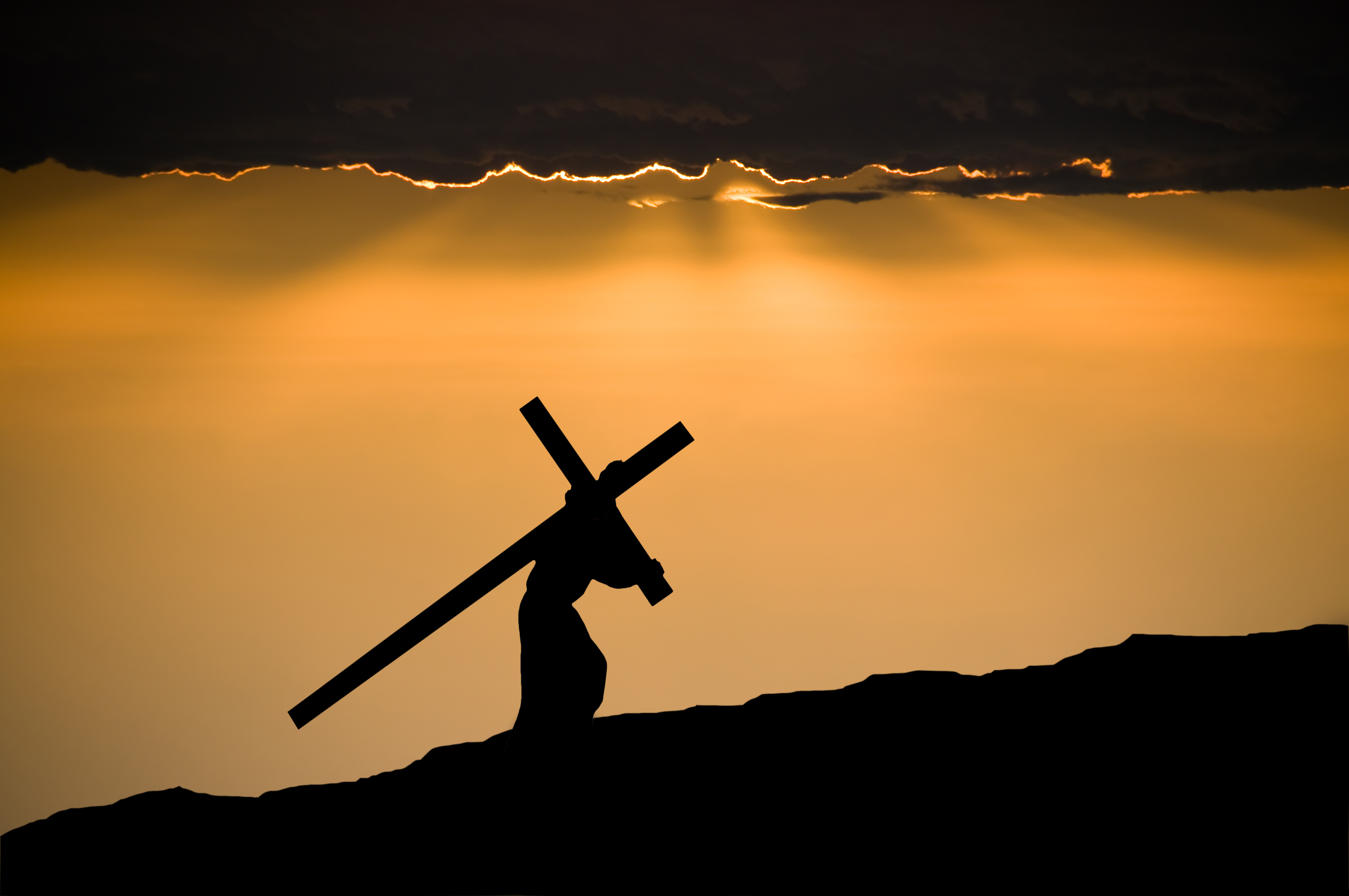
The figure of Jesus Christ carrying the cross up Calvary on Good Friday. The sky is dark and ominus.
Photo by https://www.istockphoto.com/portfolio/wwing?mediatype=photography

Seventh Station: Jesus Bears the Cross

(John 19: 6, 15-17)

Words are powerful. Help me, Lord, to remember this, and help me to use their power to do good. Help me to use them to build faith, hope, charity, justice, and mercy. May my words never stand in the way of anyone receiving and sharing Your gifts.

Help me to make the best of every situation by seeking and recognizing Your presence in each one, especially when I’m confronted with and affected by words and actions that don’t seem to foster faith, hope, charity, justice, and mercy.

Help me to do Your will and to feel Your presence, especially when I feel afraid, confused, weak, and alone. Strengthen me when I feel powerless. Increase my faith that you have given and will give me what I need to do what you ask. Amen.

Eighth Station: Jesus is Helped by Simon the Cyrenian to Carry the Cross

(Mark 15: 21)

Photo by Samuel Rios on Unsplash

Lord, help me to remember that when I join my crosses — the annoyances, the struggles, and the pain in my life — to yours, when I don’t allow my crosses to hold me down but instead trust that You will help me move forward while carrying them, I take part in my own redemption and the redemption of Your creation. Thank You for showing me through Simon and others how to do this, and thank You for giving my carrying of my crosses and the crosses of others redemptive power through Your passion and resurrection. Thank You also for teaching me through the role of Simon on the way of Your cross that I take part in Your redemptive work even when I don’t receive crosses willingly. Grant me the grace to accept and to share crosses willingly, nonetheless. Grant me the patience and discernment I need to share the crosses of the brothers and sisters closest to me and the closest those who are suffering throughout the world. Amen.

This post is a continuation of my Lenten reflections on the Scriptural Stations of the Cross. The station titles and scripture and verse citations, except where otherwise noted, are published on USCCB.org.

Photo by Francesco Alberti on Unsplash

Fifth Station: Jesus is Judged by Pilate

(Mark 15: 1-5, 15 [John 18:38 and Romans 8:31 — my insertions])

Jesus, as I read this passage, I imagine Pilate being focused on whether You seek power in the way that Pilate understands it. The power that Pilate is concerned about is a power that would come from an ambition to rule in Your place.

When You “You say so” to Pilate’s question about whether You are “the king of the Jews,” I imagine Pilate being reassured that You were no threat to his own power (Mark 15:2-3). He doesn’t see how You being “born . . . to testify to the truth” is a threat to his own power (John 18:38). He hasn’t been challenged by Your teachings as the Jewish authorities have. I imagine he hasn’t sought the true peace that comes from pursuing truth. He seeks only the appearance of peace that consists of making and keeping allies that suit different purposes at different times. This pseudo-peace concerns itself only with self-preservation. I imagine Pilate has this very limited perspective, and that’s why he reminds You of “how many things” the Sanhedrin accuse You of (Mark 15:4) I him.

But Jesus, You didn’t come to save yourself. You came to save creation. You are not concerned with others’ perception of you, except when that perception aligns with how God sees you. For You, the only approval that matters is approval given based on truth.

Jesus, help me to recognize the power of truth and to seek and find lasting peace that comes from its power. Help me to trust that You are embodied Truth and that because You are for me no one and nothing can be against me when I rest in You. Amen. (See Rom. 8:31)

Photo by Samuel Lopes on Unsplash

Sixth Station: Jesus is Scourged and Crowned with Thorns

(John 19: 1-3)

Jesus, open my mind and heart to the areas of my life in which I need to put up sturdier guardrails for myself. May I base my guardrails on the ones You have established for me — Your teachings and the Commandments by which you lived. Help me to remember that good can come from discipline, even though, when I first subject myself to it, it is uncomfortable. Sometimes, when I’m uncomfortable, I find strength not to flee from discomfort in remember that you endured not just discomfort but agonizing pain and that you gave the same Spirit to me that you possessed when you endured being scourged and crowned with thorns. The same Spirit that made you able to bear such pain and more enables me to face trials without being defeated in the long run — that is, if I trust in the Spirit and follow where it leads.

Holy Spirit, help me see the present moment clearly instead of letting regrets whip me. Show me how to use those regrets to make better choices.

Creator, Redeemer, and Sanctifier, help me not to make daydreams and entertainments into idols. Daydreams and entertainments are gifts of creativity. They can point me to You and to Your will for my life, but I need help to remember that pointing to You is not the same as being You. Help me to find rest and inspiration in creativity without being blinded or numbed by it. Help me to remember that You are the source of all creativity and beauty and to thank you for these gifts. Remind me that with You, I can embrace challenges and hardships. I can rest in daydreams and entertainments without hiding in them. I don’t have to use daydreams and entertainments to avoid hardships out of fear they are stronger than we are together. They are not stronger than we are together, and I can’t avoid hardships anyway. I can only delay facing them. Sometimes I can’t even delay facing them despite all the idols I try to put between me and them.

May I praise what You praise, and may my praise be sincere and thoughtful. Teach me to trust in the power that comes from You rather than in prestige and possessions. Amen.

The Bible. The New American Bible Revised Edition, Kindle edition, Fairbrother, 2011.

Confraternity of Christian Doctrine, Inc. “Sunday July, 2 2023: Readings at Mass.” The New American Bible, 2001. Universalis for Windows, Version 2.179, Universalis Publishing Ltd., 26 Feb. 2023, https://universalis.com/n-app-windows.htm
This post is a continuation of my Lenten reflections on the Scriptural Stations of the Cross. The station titles and scripture and verse citations, except where otherwise noted, are published on USCCB.org.

Photo by Luis Villasmil on Unsplash —Photo taken in a Musem in Santiago de Chile

Third Station: Jesus is Condemned by the Sanhedrin

(Luke 22: 66-71)

This passage reminds me that the prospect of getting to know God is scary because this knowledge beckons me into a relationship with God, one that once I enter into it, changes my perspective and asks me to change how I live. It also asks me to ask questions, the answers of some of which, I won’t like because they invite me to further change, and change can be very uncomfortable. It involves laying down things I carry as security blankets, things I’m more comfortable trusting in than God, things that offer immediate and temporary comfort. Change may also require me to pick up what I don’t want to carry — things that are painful now and that will offer comfort only later.

Jesus, help me not only to hear but also to trust that I’m hearing Your voice. Help me to follow Your voice or to stay where You know I’m needed. Help me not to fear the changes that serving and surrendering to perfect love allow but instead to hope in their positive potential. Don’t let my fear get in the way of Your perfect love. I know that, in the end, nothing I do can weaken the power of that love. Nevertheless, I want to magnify its power rather than make it harder to see. I can be Your magnifying glass by first receiving Your Love, and the extent to which I do that is up to me. Jesus, help me to be open to it. Amen.

Fourth Station: Jesus is Denied by Peter

(Matthew 26: 69-75)

Photo by Saif71.com on Unsplash

It strikes me as I read this passage that while denying Jesus, Peter denies his own true identity and distances himself from a community that he needs and that needs him..

Jesus, when people ask me who You are in my life, and I deny how essential it is that You lived a human life and died a horrifically violent human death so that anyone who imitates Your human life can come to share in Divine life, I not only miss opportunities to participate in the sharing, I present myself as someone other than who I am. I lead a double life. I can’t be divided this way and live close to you or to other people because when I behave this way, I don’t let other people truly know me. I don’t let them know who I am in You. I can’t help build authentic community, community in which love and truth are inseparable from each other if I withhold my authentic self from others. However, not withholding this true self is always a struggle for me because rejection and embarrassment are always a possibility and a fear.

I’m employing the ” Litany of Trust” as armor to take into this struggle. I listened to it again this morning on the Hallow app. If you’re not able to access the audio through the previous link, here’s the text of “Litany of Trust.”

Thank you, Jesus for giving me examples of how to stand firm in who I am and for giving me an example, through Peter, of the consequences of losing sight of who I am, of doubting who I am, and of denying who I am in relation to You. Thank you for giving me an example, also through Peter, of the truth that my confusion, denials, and doubts don’t have to mean the end of my journey toward union with You. If I turn back to You when I realize I’ve turned away, I’m already moving toward you again. Thank you for forgiving me for denying you and my true self. Amen.

Photo by Stacey Franco on Unsplash

This Lent, I’ve decided to pause reflecting on the weekly readings. Instead, I’m going to reflect on the Scriptural Stations of the Cross in a different way than I have before. (The readings and traditional prayers that go with these stations are here.) Beginning this Friday and continuing through Good Friday, I’ll follow Jesus along the way to the cross as it’s presented in the Gospels. If life and God didn’t have other plans, and if I’ve done the math the calendar right (and these are big ifs), I’ve calculated that I can share two reflections each week and arrive at the tomb with Jesus’s body during Holy Week. Still, may God’s will be done and not mine. Thank you for joining me on this journey.

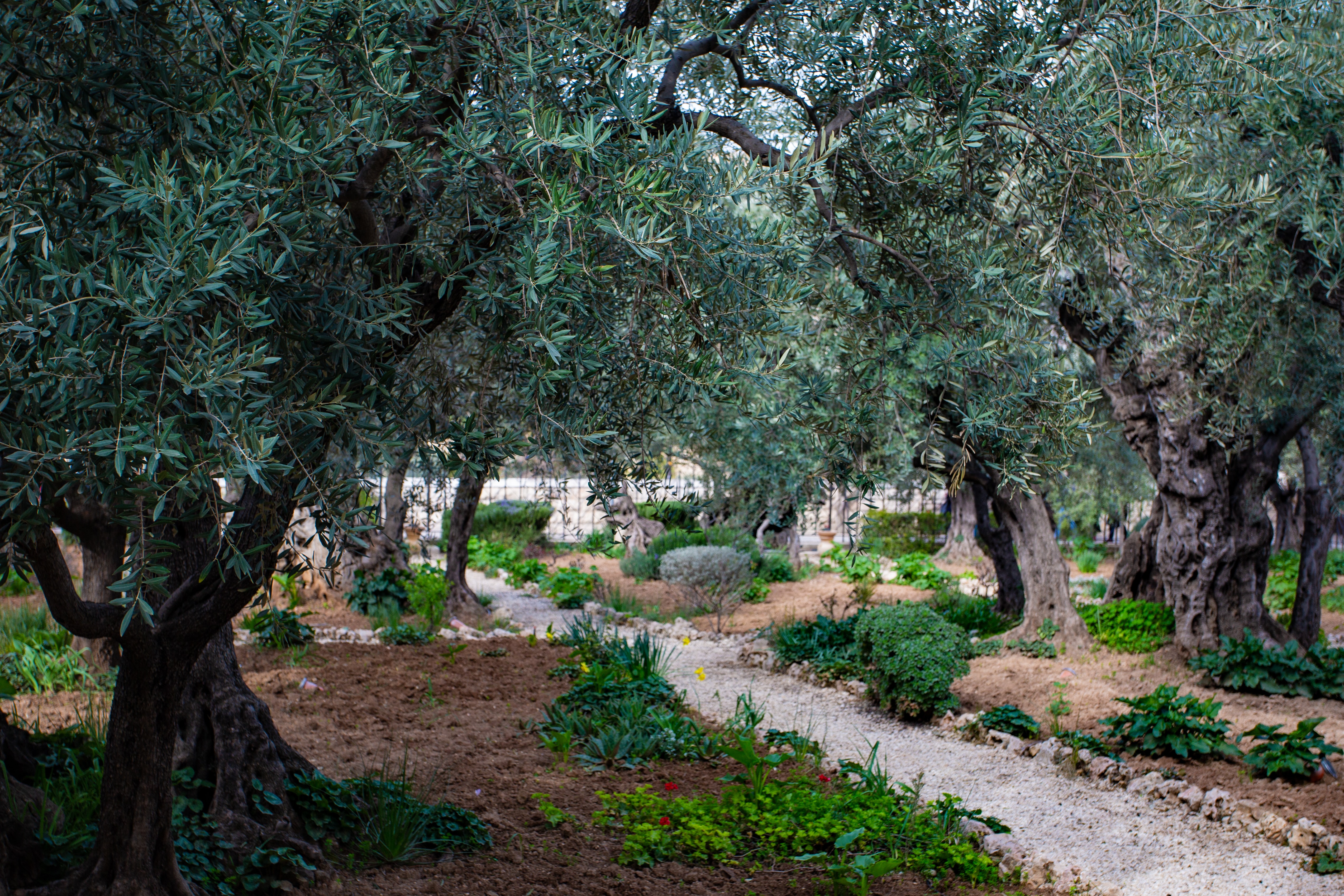
First Station: Jesus in the Garden of Gethsemane

(Matthew 26:36-41)

You reveal your heart to me, Lord, and yet I can’t comprehend the depth and weight of that heart. My soul wants to learn from you, to be Your companion and Your coworker, but my clouded mind and frail body aren’t equipped to satisfy holy desires. Thank you for the times that, despite my weaknesses You have made me and will make me able to cooperate with You anyway.

Thank You for surrendering to the will of our Father at this stage of Your journey. Place Your surrender in my soul, and help me to remember that when I dread a challenge or hardship, when I’d like to avoid something, You have felt what I’m feeling more than I’ve ever felt it because You’ve had to prepare to bear the weight of all the world. Thank you for understanding that neither I, nor any other disciple alone could bear that weight. Thank you for giving me an example of the power of preparing with prayer, of the power of waiting, and of making room for both silence and conversation. Thank you for showing that prayer means not only surrendering to the Divine Will but sharing Your deepest desires and most vulnerable moments with that Love and the people that Love has placed in my life. Thank you for placing Your creation in our care, and for placing us in the care of Your creation.

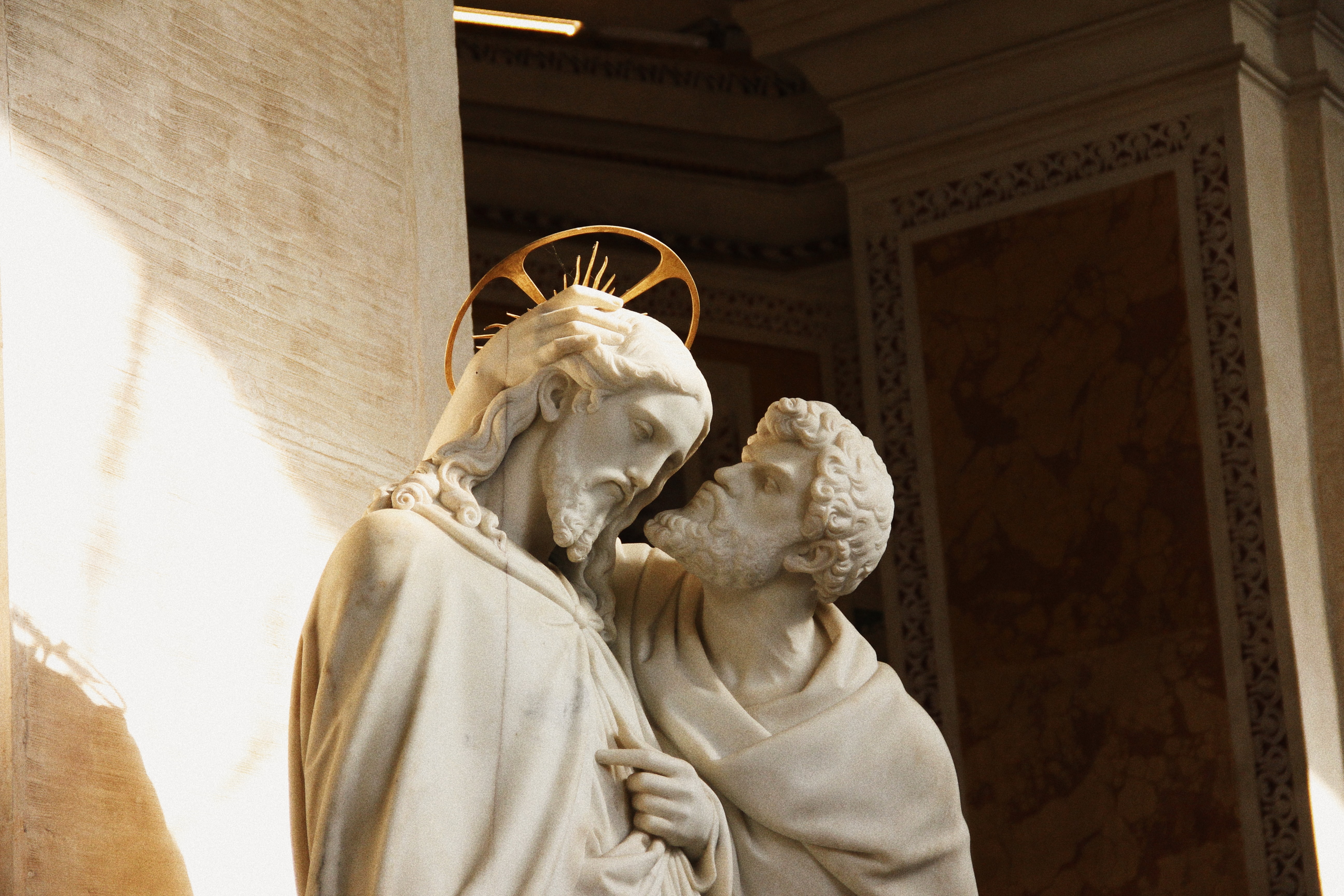
Second Station: Jesus, Betrayed by Judas, is Arrested

Photo by Francesco Alberti on Unsplash

(Mark 14: 43-46)

This experience reminds me to let my words and actions reflect the One whose image I am and You are. It reminds me to [l]et [my} ‘yes’ mean ‘yes’ and [my] ‘no’ mean ‘no’ — nothing more and nothing less (Mat. 5:37). Help me to love unselfishly and without possessiveness or covetousness. Help me to love in ways that respect spiritual freedom — my freedom and the freedom of others. Amen.

The Bible. The New American Bible Revised Edition, Kindle edition, Fairbrother, 2011.

Confraternity of Christian Doctrine, Inc. “Sunday July, 2 2023: Readings at Mass.” The New American Bible, 2001. Universalis for Windows, Version 2.179, Universalis Publishing Ltd., 26 Feb. 2023, https://universalis.com/n-app-windows.htm

“. . .whoever is angry with his brother will be liable to judgment . . .”

Jesus— Matthew 5:22
Photo by Rohan Makhecha on Unsplash

The verse above and the reading from which it comes, Matthew 5:17-37, is one of those that I have visceral reactions to and not pleasant ones. Until I make myself focus on inhaling and exhaling a few times, I feel suffocated by darkness. I can’t see a sliver of light, and I feel nothing I can grab onto to move forward. I experience temporary despair when I revisit verses like the one I’ve highlighted, they awaken my anxiety and depression like the slightest unusual sound that can startle me out of a sound sleep at night.

I suppose such passages are meant to jar anyone who receives them out of complacency, and they do that. But I find it difficult to see what to do long-term after the jarring. I confess my anger, resentments, and wounds, and mentally, I surrender them to God again and again. Yet anger, resentment, envy, and self-service are such a part of my heart. They cut through every layer of my being. These emotions feel like thorny weeds embedded in a soul that’s filled with concrete. As time passes, uprooting them feels more and more impossible. I feel disappointed in myself for letting poison spread in my own heart and from there the world around me over and over despite repeated and sincere intentions to spread healing and light.

When I heard Matthew 5:17-37 again this weekend, I thought maybe this was one of the weeks I’d link to someone else’s reflection. I didn’t want to spread despair. After all, even though truths can be difficult to share and to receive, I have faith that despair is not truth. I asked God where I could find hope and the truth in the midst of the weeds in my heart and on the hamster wheel of my mind.

Two answers came to me:

  1. Imagine your emotions as electricity, and rather than thinking you need to make them go away, ask God to help you channel them toward creativity and the service of love, rather than simply unleashing them with the result being that they electrocute everyone and everything around you (by “you,” I mean me).
  2. Don’t give up on inviting the gardener of your heart to tend it. Maybe to be alive means not to give up.

It’s easier to imagine #1 coming to fruition for someone else, thanks to an individual being personally affected by a societal wound. Mothers Against Drunk Driving came to my mind. The Wikipedia article about the organization says MADD: “was founded on September 5, 1980, in California by Candace Lightner after her 13-year-old daughter, Cari, was killed by a drunk driver. There is at least one MADD office in every state of the United States and at least one in each province of Canada. These offices offer victim services and many resources involving alcohol safety. MADD has claimed that drunk driving has been reduced by half since its founding.”

The article goes on to say that “[a]ccording to MADD’s website, ‘The mission of Mothers Against Drunk Driving is to end drunk driving, help fight drugged driving, support the victims of these violent crimes and prevent underage drinking'” (qtd. in “Mothers Against Drunk Driving”).

But then there are the experiences that make people angry, that hurt them, that aren’t obviously catastrophic. There are the deep-seated wounds in ourselves, and by extension, in our relationships. I wonder if it’s true that the longer we’ve known someone, the more power they have to hurt us, and the more power we have to hurt the other person. The injuries from these connections may be older and deeper. They may have festered almost as long as we can remember. Elements of them are probably relatable to most people, and yet other aspects of them are unique to the people and situations involved. (Actually, even high-profile traumatic events probably share this quality of being a mixture of painful universality and uniqueness)

As I’ve wrestled with Matthew 5:22 the last few days, I’ve been reminded of the importance of naming emotions and then sitting with them, of saying to myself and to God, “Okay, I’ve just had an experience or an encounter that’s stirred some intense feelings. What are they? Anger, resentment, disappointment, sadness. In the past, I’ve tried to label them and then go on.

But earlier today, I found myself repeating, “I’m angry and hurt. I really wish things were different. I felt a lot more peace and relief when I vented to myself and to God about the feelings rather than hoping that I could simply name them and expect them to go away. Once I had allowed myself this time of confrontation and release, I felt for a good while that Jesus was with me in this pain and that I was a tiny bit grateful to share Jesus’ pain. I prayed that my accepting this pain would do some spiritual good I can’t understand yet. I really did feel like God had helped me harness at least some of the electricity, though the harnessing took a different form than the one that firs occurred to me when I asked for help.

I know that all too soon, I’ll forget to invite God into my struggles. Maybe the key as soon as I realize I’ve forgotten, is to extend the invitation again, to reopen the gate to the garden of my heart repeatedly. Thank You, Lord, for whispering gentleness to my mind when I forget You are there and for knocking on the gate of my heart. Amen.

Works cited

The Bible. The New American Bible Revised Edition, Kindle edition, Fairbrother, 2011.

“Mothers Against Drunk Driving.” Wikipedia: The Free Encyclopedia, Wikimedia Foundation Inc. 28 Nov. 2022, https://en.wikipedia.org/wiki/Mothers_Against_Drunk_Driving.