Feeds:
Posts
Comments

Archive for the ‘Uncategorized’ Category

Reminders from God

Isaiah 6:1-2a, 3-8
Psalm 138: 1-5, 7-8
1 Corinthians 15:1-11
Luke 5:1-11


Forget-Me-Not Photo by George Pach on Unsplash

“The Lord is with me to the end.

Lord, your mercy endures forever.

Never forsake the work of your hands!

— Psalm 138:8

As I start drafting this post, it’s Thursday afternoon. There will be new readings this weekend, and I haven’t posted about last week’s. This is the first chance I’ve had to write. Because I’m short on time, I’m going to try a different format.

As I struggled with what to write about last week’s readings, I got into an internal conversation with God. Both sides of the dialogue below come from my own head, but my words are just as much the work of God as the rest of creation is. These Scripture readings above remind me that no weakness, sin, failure, or doubt can permanently stand in the way of God’s work. God doesn’t just work in spite of those weaknesses, failures, sins, and doubts. God works through them. So here’s to God working through my thoughts and my time crunch, and here’s how the conversation unfolded, roughly.


Me: I can’t imagine trusting you the way Peter, and Paul, and Isaiah did — to the point of death. I don’t even want to pretend to want to, though I do like the idea of staying eternally connected to you and to everything and everyone else that’s interconnected through you.

God: Do you think those guys wanted to suffer or to die? Do you think I wanted them to. No, but no one can live in fear and self-preservation mode and at the same time give and receive freely, which is what it means to love. Do you think Isaiah, Peter, and Paul trusted or suffered on their own?

Me: No, I don’t think that. You suffered with them.

God: I did. Because love is who I am. It’s the reason you exist, too. It’s what holds you and all of creation together, as the Rev. Fr. Richard Rohr says. And remember that when I touched Isaiah’s lips with the burning coal, I didn’t unveil all of his journey at that time, nor had Paul reached the end of his earthly journey when he wrote his letters. You’re reading about only parts of their journeys in the Scriptures, especially when you look only at certain passages.

Don’t forget that in the Gospel passage you’re wrestling with, I wasn’t asking Peter to do anything risky or dangerous yet. I wasn’t even asking him to do something that he hadn’t done over and over before. I was just asking him to do it one more time. You aren’t even aware of all the times you do the ordinary for me, one more time. You aren’t aware because it’s what’s uncomfortable AND out of the ordinary that you remember most. Finding with me the strength to persist in ordinary service despite fatigue is different than being called to do something outside of your comfort zone, let alone something life-threatening.

Me: I guess that’s true.

God: And don’t forget about the time Peter got so excited to see me when he and the rest of the guys were sailing during a storm.

Me: Was it stormy that time, God, or am I thinking of another time when the guys were sailing?

God: Doesn’t matter. That’s not the point of this conversation. Anyway, do you remember when Peter was so excited to see Jesus that he insisted on walking on water to come to him?

Me: Yeah.

God: Did Peter make it over to Jesus?

Me: Nope. He freaked out and sank.

God: And did Peter always admit to being friends with Jesus?

Me: Um . . . No.

God: There you go.

Me: Thanks for the reminders.

God. I’ve got plenty where those came from. Want another one?

Me: Sure.

God: Remember, every relationship is different. It’s helpful only to a point to compare your relationship with me to Peter’s or Paul’s relationship with me. And there are parts of every intimate relationship that only the two involved know about.


In case any of the words I’ve used in this exchange are unique to the translation of the Bible I commonly use, here’s a citation for my translation:

The Bible. The New American Bible Revised Edition, Kindle edition, Fairbrother, 2011.
Read Full Post »


Photo by Jon Tyson on Unsplash

“The Spirit of the Lord is upon me,

because he has anointed me

to bring glad tidings to the poor.

He has sent me to proclaim liberty to captives

and recovery of sight to the blind,

to let the oppressed go free . . . .

— Luke 4:18, quoting Isaiah

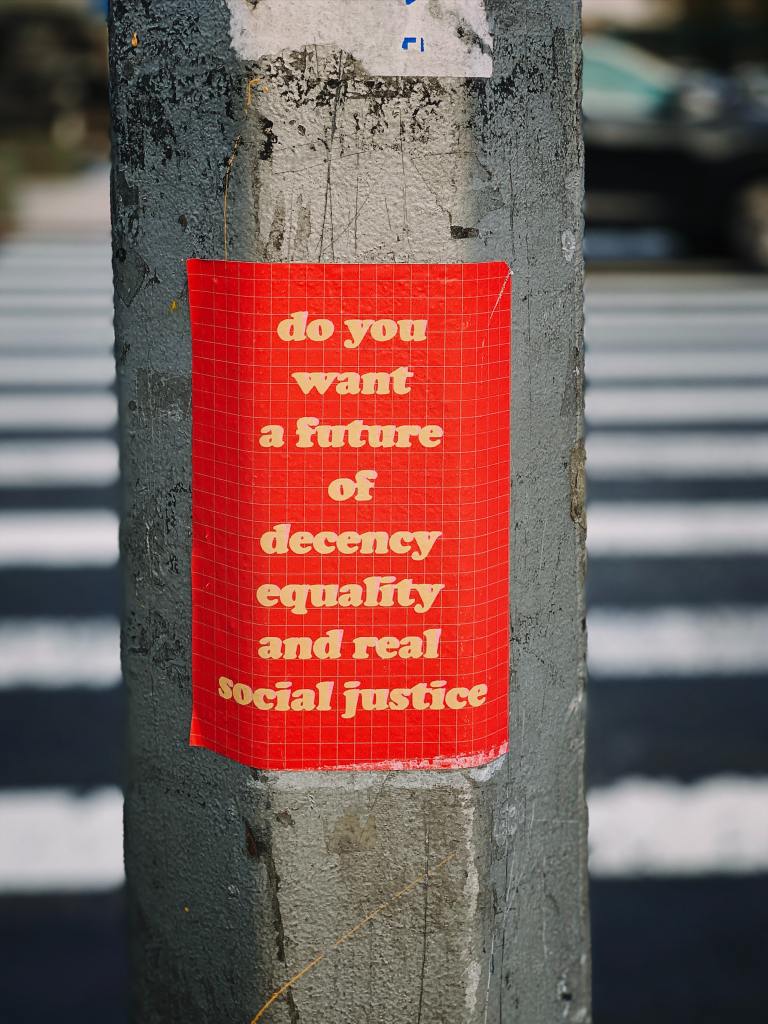
I don’t know about you, but I want the world described in the picture and the world described in the Scripture passage from the Gospel reading for January 23.

Or do I?

The homily at a parish I visited this weekend. led me to ask myself this question. The pastor gave me the unexpected perspective on Scripture that I use to approach this blog. He pointed out to the congregation that, like me, the people who, listened to Jesus read these words from Isaiah liked what they heard from Jesus. To quote Luke directly, “. . .”all spoke highly of him . . .” (4:22). But, the pastor warned, the people are going to turn on Jesus very quickly, as quickly as that same day — within moments of praising him, perhaps.

Sure enough, when I opened to Luke 4 and read past verse 22 two days later, I was reminded that the people responded to His reading by asking “Isn’t this the son of Joseph”(Luke 4:22). He is recorded as responding “Surely you will quote me this proverb, ‘physician, cure yourself'” (Luke 4:23). As I reread this response, I’m think that it’s as if he’s saying to them, “All of you think I’m crazy for making this proclamation and that I’m the one who needs recovery. You want me to do here what I’ve done in other places, but I can’t because you don’t see that I can, so you won’t follow me and do your part to make the vision from Isaiah a reality. You can’t yet envision a kingdom of equality, of sharing, and of freedom that offers more than what seems possible for your neighbor, the carpenter’s son whose beginnings are whispered about among you.” The people are so angry Jesus won’t do what they’ve heard He’s done in other places that they “[lead] him to the brow of the hill on which their town [has] been built, to hurl him down headlong” (Luke 4:29).

Planning to throw Jesus off a cliff seems like an overreaction, but if I’m being honest, (and my goal is to be real on this blog), I understand their anger upon learning that he isn’t going to work miracles for the people He’s grew up with. Doesn’t His refusal to do so contradict the passage He just read and his announcement that “Today this scripture passage is fulfilled in your hearing.” (Luke 4:21)?

In response to my honest question, I imagine Jesus asking me, “Can you look at what you lack through My eyes so that I can bring you “glad tidings”? What if you don’t need what you think you need? Have you thought about what you do have that you don’t need but others do?”

This weekend, the pastor wondered what “bring[ing] glad tidings to the poor” might mean for those who were already comfortable (Luke 4:18)?

If I imagine myself a “captive” wanting “liberty” to be “proclaim[ed]” to me, am I able to ease my grip on whatever dominates my life? Can I let persistent thoughts drift by without getting trapped in them? Is there a certain comfort in clinging to the behavior and thoughts that take hold of me? Is the idea of finding greater freedom more than a little anxiety-inducing? I answer “yes” to these questions.

What would having greater freedom ask of me? Could I measure up to what it asks of me?

I want to. Beyond that, I remind myself that God knows my weaknesses and my needs and I ask God to help me trust in Infinite’s Love’s ability to work with, in, through, and despite them.

Can I recognize that everyone else desires freedom, too, and allowing others freedom may not always feel or look like freedom to me? Can I deal with the unpredictability of freedom?

I want to deal with it, but I’m not the type of person who usually enjoys surprises.

Photo by Emma on Unsplash

If people asked for clarity and received receive “recovery of sight,” would I like what they see (Luke 4:18)? Would I like what they see in me? Not entirely.

Do I wear blinders? No doubt, I do, but I don’t know at the moment what they are keeping me from seeing because — well — they’re blinders. Would I feel uneasy if they were removed? To say I would feel uneasy is probably putting it far too lightly. Do I avoid looking at what I don’t want to see. Sometimes, definitely.

What would society look like if the oppressed were freed? What would lifting oppression look and feel like for those who had been in power? the pastor asked this weekend.

The changes would be uncomfortable, certainly, for those accustomed different levels of power, but not only for them — for those who had been oppressed as well. The scars of oppression won’t disappear, but I ask to recognize what has led to such brutality and for the knowledge, ability, and courage necessary to oppose it.

Transformation is challenging. Freedom is challenging.

But if the promises of Luke 4:18 are true — and I believe they are—transformation and freedom are God’s plan for creation, and because they are part of the plan, they will come to pass — though I can’t make out all the details of how right now. And if I’m honest, I’m often anxious about what the coming to pass will look like.

But that’s okay. God can work with my anxiety. God will take my hand, even though it trembles.

Work cited

The Bible. The New American Bible Revised Edition, Kindle edition, Fairbrother, 2011.

Read Full Post »

Surprising Words

Readings for January 16:

Isaiah 62:1-5
Psalm 96:1-3, 7-10
1 Corinthians 12:4-11
John 2:1-11

When I think of a prophet, I think of someone who foretells punishment and doom unless a person doesn’t change his or her ways. I think of someone who tells people what they should do.

But that’s not what the above verses from Isaiah do. Instead, they focus on what God does. Isaiah begins the passage by saying he won’t be quiet until God “vindicates” Zion (62:1). The Bing.com dictionary defines vindication as “clearing someone from blame or suspicion” The prophet will not “keep still until her vindication shines forth like the dawn” (Isa. 62: 1) Later Isaiah addresses God’s people directly, saying No more shall you be called ‘Forsaken'” (62 4). Instead, he says “you shall be called . . . ‘Espoused.’ . . . “your Builder shall marry you” (Isa. 62:4). The intimate partners of God won’t be known by the times they didn’t have the same goals as God. They’ll be praised for the ways they reflect God’s nature. They will be God’s”[d]elight” (Isa. 62:4).

How reassuring.


“There are kinds of different spiritual gifts but the same Spirit; there are different workings but the same God produces all of them in everyone.”

— 1 Corinthians 4-6

It’s not just the words from Isaiah that surprise me. A word in the passage from the first letter to the Corinthians does, too. The reminder that “[t]here are kinds of different spiritual gifts but the same Spirit; there are different workings but the same God produces all of them in everyone” is familiar, as is the list of gifts that follows it: “to one is given the expression of wisdom . . . to another . . . healing,” but there’s a gift in this list that I hadn’t remembered being there—”faith” (1 Cor. 12: 4-9). The construction of this passage indicates that some people are given faith, while others are not. Faith is a gift from God. It’s not something I achieve on my own, something I make happen, nor is it something that can be forced on someone else. Like any gift, it isn’t earned; it’s given freely, and is most beneficial if received with gratitude and then shared. A gift — faith included — isn’t something to be lorded over someone who doesn’t have it. Why should a gift be used as a mark of superiority over someone else when everyone—the passage actually says everyone — receives gifts from the Spirit whether he or she has faith or not? Each individual is given “the manifestation of the Spirit,” whether that manifestation is faith or not “. . . for some benefit” (1 Cor. 7). I can manifest the Spirit even in times of struggle and doubt.

How reassuring.

The story of the wedding in Cana also says to me that the Spirit manifests and often unexpected ways. In this story, even Jesus doesn’t seem to be expecting to do the work of God in that place, at that time. After all, when his mother tells him, “They have no wine,” he responds with, “Woman, how does your concern affect me? My hour has not yet come” (John 2: 4). This response unsettles me whenever I come across it. However, understanding Jesus as human—albeit a human who cooperates fully with the Spirit — gives me some perspective on the exchange. Just because He is one with the Spirit doesn’t mean that while he was in a human body He always knew when and how the Spirit was going to work through Him and others.

I imagine Him having been told by His mother what she’d been told about Him before and after He was born — that He was the “Messiah” and that “[H]e would save His people from their sins” (Luke 2: 11; Matt. 1:21). Is finding some more wine a messianic action? Could this action be part of saving people from their sins? This wine problem seems like one the host could have avoided and could solve himself, Besides, Jesus had been looking forward to relaxing and having fun with family and old friends and new friends on this day. The Spirit reminds Him what he really has never forgotten. He just wasn’t thinking about it earlier that day— that Abba works in all circumstances through everyone, including His mother and the servers at the wedding. He thinks to Himself that wine, like everything else is a gift from the Father, so the Father works through it. Yes, there are many problems people can avoid, not the least of which are sins. He has come to help them bear the consequences of sin with and for them so they can share in the His oneness with the Father. He tells the servers what the Spirit tells Him to tell them. The result of the miracle that follows, I learned from the end of the passage is that “[H]is disciples began to believe in [H]im” (John 2:11). This bit of information implies that not everyone at the wedding began to believe in Him. In fact, earlier in the passage, I’m told that only “the servers who had drawn the water knew” where the new supply of wine had come from (John 2:9). Most people at the wedding don’t seem to know what Jesus has done. Most of the guests are simply appreciative of the wine they are drinking (John 2:10).

From the passage, I don’t get any sense of blame for what most of the wedding guests don’t know yet or don’t believe yet. On the contrary, this reading of the passage tells me what the psalm and the epistle tell me – that God is patient beyond my understanding, that God “vindicates,” and God uses all of us, with our unique roles and combinations of gifts to share the gift of vindication to anyone open to receiving it Isa. (61.1).

How reassuring.

Work cited

The Bible. The New American Bible Revised Edition, Kindle edition, Fairbrother, 2011.

Read Full Post »

Varying Visitations

What stands out to me in the different components of the Christmas story is that God touches different lives in different ways at different times. The Magi find God by being observant and by investigating further into an unusual astronomical occurrence. The shepherds encounter God through a group of God’s messengers, and the shepherds themselves are in a group when messengers of heaven greet them. Mary, however, is alone when she is greeted by a single angel, and Elizabeth finds God in the curiosity and concern of a relative, and Joseph encounters God as an unexpected challenge before he gets his own reassurance in a dream.

My first reaction as I read each of these stories is that as much as I’d like to think I’d go as far to work with God as these people did, I can’t imagine myself doing what they did. Would I risk being ostracized? If my past choices are any indication, no. Would I choose to make a long journey on a donkey, or a camel, or on foot? Nope. God didn’t make me capable of using any of the previous modes of transportation.

 Then I remember a couple of things.

The events I just mentioned aren’t presented the way I’d present them.

  1. If the characters’ emotions are described at all, they are mentioned using, at most, one adjective, and one adverb, such as “greatly troubled” (New American Bible Revised Edition, Lk. 29).  In other words, Scripture translations use a phrase that doesn’t make me feel what the characters in the scene might have felt.
  2. The scenes recount very little of any conflict or obstacles the protagonists likely encountered after God entered their lives in unique ways. Some later New Testament narratives aren’t as selective in their focus, but the infancy narratives are. I suppose the point of Scripture is to focus on what God does and how we should respond. That’s all well and good. I’m glad that God makes a series of announcements in the infancy narratives and that the receivers, though initially freaked out by what they experience, do what God tells them to do and they find what they’re promised they will.

But I’d like to know: What gossip got repeated about Mary when the news spread that she was pregnant but couldn’t have lawfully consummated her marriage to Joseph? Mary and Joseph had to have been whispered about. Surely the couple uttered a few sighs and shed a few tears before and during the journey to Bethlehem. I’d like to hear about these. If I did, I think I could more easily trust that I could follow their examples.

And the shepherds — did they feel gross after standing in the pasture for hours? To what would they have compared the throbbing of their feet before they ever even went in search of the stable? Did they question whether they were all sharing an exhaustion-fueled hallucination before they set off on their journey? How long did their trek take? And what about the quest of the Magi? If the Scriptures gave me more details about the hardships involved in these journeys, I’d feel a teensy bit better about my own journey to closer union with God taking as many twists and turns as it does.

Despite what the accounts don’t tell me, I’m comforted by the thought these human characters in God’s story encountered God in sights and sounds that must be impossible to describe adequately. The incomparable beauty of these sights and sounds must have helped these seekers along their often-harrowing journeys.  The fact that they eventually found what Heaven’s messengers had promised had to helped, too. So did the fact that they encountered God, not only later in some indescribable afterlife, but also into their present lives, in ways that they could see, and hear, and touch, in huge, indescribable ways —messages from angels or from the solar system — and in the small, ordinary ones —a visit from a loved one and a visit to a baby boy whose parents who had little.

Photo by Matt Howard on Unsplash

I don’t know what it’s like to meet God face-to-face at the end of a difficult journey, but I do know — come to think of it — that I’m on a journey. My journey isn’t exactly the same as anyone else’s because I’m not exactly the same as anyone else. To make this journey is the reason I exist, regardless of how much I resist parts of it. It’s a journey to the gifts of hope, peace, love, and the gift of relationships that share in these gifts, gifts I’ll find as long as I seek them. And I do seek them. And I’m not alone as I do. For even though I sometimes forget — God is already with me — in the big moments and the small ones. I just need to invite the Spirit to help me remember this.

                                                 Work cited

The Bible. The New American Bible Revised Edition, Kindle edition, Fairbrother, 2011.

Read Full Post »

« Newer Posts