Feeds:
Posts
Comments

Archive for the ‘Who Am I in God’ Category

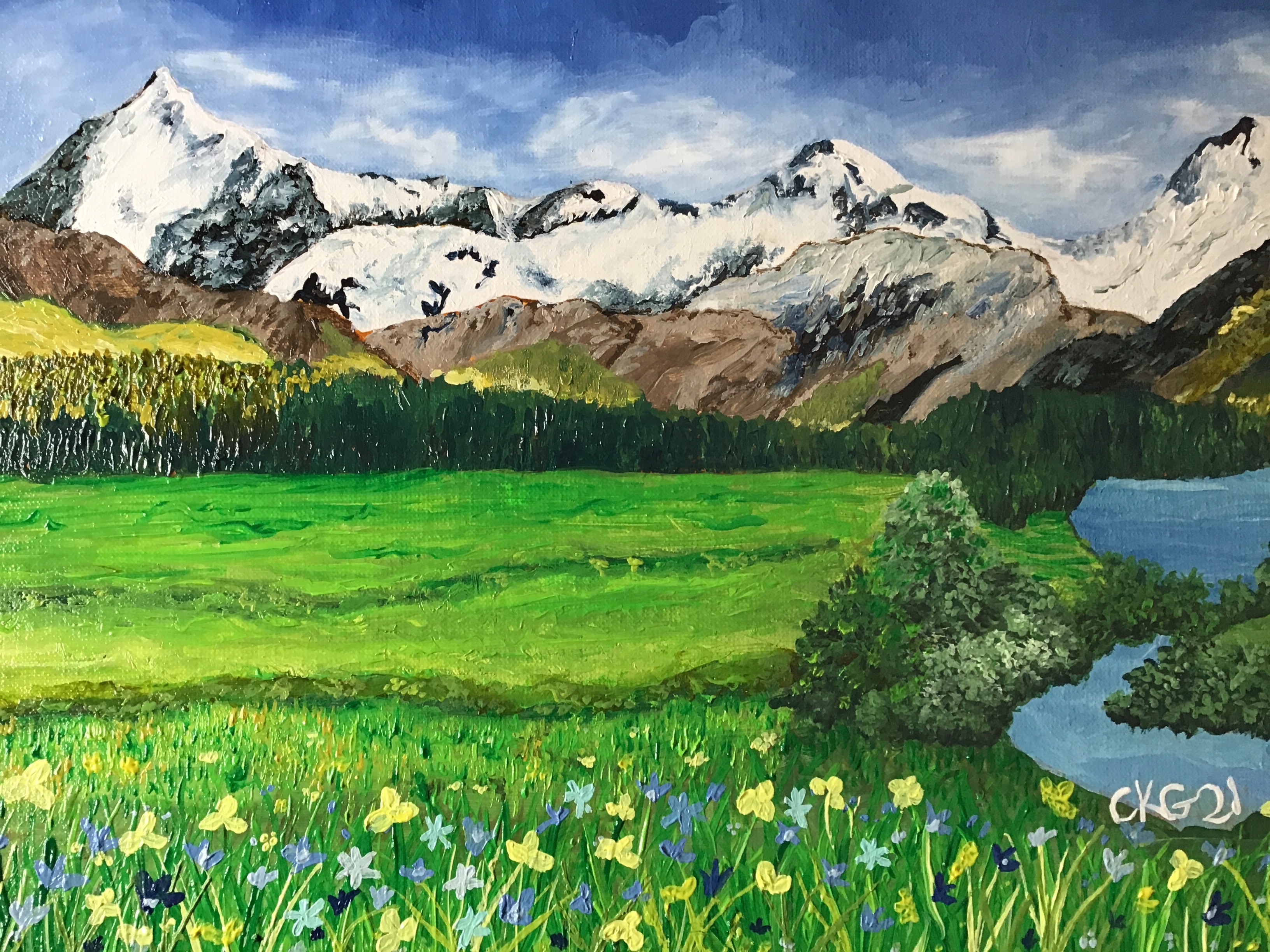
Photo by Catherine Kay Greenup on Unsplash

The LORD is my shepherd; I shall not want.
In verdant pastures he gives me repose;
beside restful waters he leads me;
he refreshes my soul.

Psalm 23: 1-3b, New American Bible, 2001 Edition

Last year, in the fourth week of Easter, I reflected on a verse from the Gospel of John, 10: 27. This verse comes not long after this week’s Gospel reading, and the theme remains the same. The theme is, “Who is the Good Shepherd, and how do the sheep respond to Him?” Because I’ve already taken a look at John’s answers to these questions, I’m going to sit with Psalm 23 for this post.

For most of my life, my experience with the psalm has been like watching a movie that deserves to win Oscars for set and costume design. It projected beautiful scenes in my mind. But I’ve learned in the last two years that these verses offer beauty that’s even more appreciated when I engage my curiosity with them in addition to my mind’s eye.

Admittedly, the first verse doesn’t provide as much visual inspiration as the next two do. I think this is why it’s been the verse that I sometimes felt like I had to pretend I believed. “The Lord is my shepherd; I shall not want” says the translation used in Mass today. At times, I’ve gotten into my head that if I believed the Lord was my shepherd, I had to hide that I wished some things were different. Having to do this is problematic whenever living with one’s mind, body, or external circumstances is painful. Nonetheless, I thought I had to wear a contented mask because if I believed the Lord was my shepherd, I’d be satisfied. I wouldn’t feel like I lacked anything.

Maybe the New American Bible Revised Edition translation I usually use contributed to this thinking. It says, “The Lord is my shepherd; there is nothing I lack.” Not including the word “shall” in the translation suggests that I lack nothing now. The trouble with this sentiment is that it’s in conflict with my experience. I’m tempted to try to avoid the discomfort of this conflict by saying that I do lack nothing even if I feel like I lack something, that I lack nothing as long as I open myself more and more to God and move toward union with God. Any lack only seems like lack because my relationship with God is isn’t yet unobstructed.

Still, even this understanding puts lacking nothing in the context of having greater clarity in the future. The lack of clarity itself, the limitations themselves, are a lack To some extent that lack isn’t my fault, isn’t the fault of any individual alone. I’m wounded not only by my choices but by the wounds others carry, by the frailty of the human condition, and by the fact that I’m limited by time and space, and God isn’t.

So including or not including the word “shall” has a major impact on what the verse means to me. Now, it occurs to me that I might not have always understood the “shall” to promise the ideal future. It can signify a command, as in, “You shall not kill.” It’s difficult to think of God commanding me not to want anything. It doesn’t even seem possible not to want anything. And doesn’t wanting something sometimes lead me to seek God and all the justice, peace, and love that can be found in the seeking? Yes, in my experience, and I think I’m far from alone in this experience.

Therefore, I see this verse in the psalm as a whole as a prophecy and a promise that if I trust the Lord as my shepherd, the Lord will lead me to a life that lacks nothing. Sometimes this life without lack is easier to perceive than at others. It’s an experience that doesn’t always feel out of reach.

The verses that follow are reminders of these moments when God’s grace and providence fill the senses. “In verdant pastures he gives me repose” says the 2001 edition of the New American Bible that the Mass and the Universalis software use. “In green pastures he makes me lie down” says the New American Bible Revised Edition. For a long time I thought this verse was just a verse about the Ultimate Shepherd, God, leading me to find rest in beautiful surroundings.

Then a few years ago, my spiritual director gave me the perspective that it’s not normal sheep behavior to lie down in a field of green grass. Sheep would normally graze in such a field. They’d have to be so full they couldn’t eat anymore to lie down in that green pasture. So the shepherd satisfies the sheep so completely that they can’t do anything but rest.

He doesn’t just lead them “beside restful waters” either (New American Bible, 2001 Edition). The shepherd and the flock aren’t taking this path just to admire and be calmed by the view that a walk along a shore provides. Why does a shepherd lead a flock “”to still waters” (New American Bible Revised Edition)? I think so its members can drink, so they can take those “restful waters” into their bodies. No living thing can survive more than a few days without fluids, and water is the best kind for us. But the Good Shepherd doesn’t just satisfy the thirst of the body. This Ultimate Shepherd satisfies the thirst of the soul. This satisfaction gives peace a home within us. It gives us a peace that is less displaced by external circumstances. It’s so much more than the serenity we might get from the most mirror-like lake view we can imagine.

My experience is that the feeling of having a “restore[d]” soul is fleeting in this life (New American Bible Revised Edition). But less peaceful experiences aren’t permanent either. Recording for myself the moments when I’ve been a sheep made to lie down in green pastures and have been taken to drink water that restores my soul helps me hope for brighter days when I’m in the midst of darker ones.

I think Psalm 23 uses vivid imagery of nature to give himself something to lean on in difficult times. Later versus explore those difficult times more directly, but I’ve decided that is a discussion for next week’s post. Without planning on it, I’ve begun a two- or probably three-part series on Psalm 23.

For now Lord, thank you for being my Shepherd and the Shepherd of all Your creation. Help me to see unexpected developments as opportunities to see how beautifully you will provide for me if I listen to Your voice in my heart and follow where You lead. Amen.

Works cited

The Bible. The New American Bible Revised Edition, Kindle edition, Fairbrother, 2011.

Confraternity of Christian Doctrine, Inc. “Sunday July, 2 2023: Readings at Mass.” The New American Bible, 2001. Universalis for Windows, Version 2.179, Universalis Publishing Ltd., 26 Feb. 2023, https://universalis.com/n-app-windows.htm


Read Full Post »

This post is a continuation of my Lenten reflections on the Scriptural Stations of the Cross. The station titles and scripture and verse citations, except where otherwise noted, are published on USCCB.org.

Photo by Luis Villasmil on Unsplash —Photo taken in a Musem in Santiago de Chile

Third Station: Jesus is Condemned by the Sanhedrin

(Luke 22: 66-71)

This passage reminds me that the prospect of getting to know God is scary because this knowledge beckons me into a relationship with God, one that once I enter into it, changes my perspective and asks me to change how I live. It also asks me to ask questions, the answers of some of which, I won’t like because they invite me to further change, and change can be very uncomfortable. It involves laying down things I carry as security blankets, things I’m more comfortable trusting in than God, things that offer immediate and temporary comfort. Change may also require me to pick up what I don’t want to carry — things that are painful now and that will offer comfort only later.

Jesus, help me not only to hear but also to trust that I’m hearing Your voice. Help me to follow Your voice or to stay where You know I’m needed. Help me not to fear the changes that serving and surrendering to perfect love allow but instead to hope in their positive potential. Don’t let my fear get in the way of Your perfect love. I know that, in the end, nothing I do can weaken the power of that love. Nevertheless, I want to magnify its power rather than make it harder to see. I can be Your magnifying glass by first receiving Your Love, and the extent to which I do that is up to me. Jesus, help me to be open to it. Amen.

Fourth Station: Jesus is Denied by Peter

(Matthew 26: 69-75)

Photo by Saif71.com on Unsplash

It strikes me as I read this passage that while denying Jesus, Peter denies his own true identity and distances himself from a community that he needs and that needs him..

Jesus, when people ask me who You are in my life, and I deny how essential it is that You lived a human life and died a horrifically violent human death so that anyone who imitates Your human life can come to share in Divine life, I not only miss opportunities to participate in the sharing, I present myself as someone other than who I am. I lead a double life. I can’t be divided this way and live close to you or to other people because when I behave this way, I don’t let other people truly know me. I don’t let them know who I am in You. I can’t help build authentic community, community in which love and truth are inseparable from each other if I withhold my authentic self from others. However, not withholding this true self is always a struggle for me because rejection and embarrassment are always a possibility and a fear.

I’m employing the ” Litany of Trust” as armor to take into this struggle. I listened to it again this morning on the Hallow app. If you’re not able to access the audio through the previous link, here’s the text of “Litany of Trust.”

Thank you, Jesus for giving me examples of how to stand firm in who I am and for giving me an example, through Peter, of the consequences of losing sight of who I am, of doubting who I am, and of denying who I am in relation to You. Thank you for giving me an example, also through Peter, of the truth that my confusion, denials, and doubts don’t have to mean the end of my journey toward union with You. If I turn back to You when I realize I’ve turned away, I’m already moving toward you again. Thank you for forgiving me for denying you and my true self. Amen.

Read Full Post »

Photo by Florian Klauer on Unsplash

This Week’s Readings:

  • Isaiah 2:1–5
  • Psalm 122:1–2, 3–4, 4–5, 6–7, 8–9
  • Romans 13:11–14
  • Matthew 24:37–44

Also Cited

  • Isaiah 55: 8-9
  • Colossians 3:2

As a whole, the readings above offer a lot of hope. They tell me that people from every nation, regardless of their circumstances, are invited to enter God’s kingdom. They remind me that “[my] salvation is nearer now than when [I] first believed” (Rom 13:11, The New American Bible Revised Edition).

Yet even as these readings inspire me, I find them daunting. The first reading tells me that its promises won’t be fulfilled without me first fighting a battle that won’t just be an uphill one. It will be an “upmountain” one. Isaiah envisions the place where God dwells as being on the summit of a mountain because the Jewish people had a long history of meeting God on peaks. These settings seem fitting because Scripture reminds me that God’s ways are not my ways. They are high above [my] own (Isa. 55:8-9). In Paul’s letter to the Colossians, he reminds me to “think about what is above” (3:2).

However, if I take the concept of “climb[ing] the Lord’s mountain” out of the context of the rest of the passage, the words carry connotations of a meeting with God being the result of an achievement on my part (Isa. 2:3, The New American Bible, 2001) It isn’t. Isaiah calls me to make the trip “that [God] may instruct [me] in his ways and [I] may walk in his paths (Isa. 2:3). I have a lot left to learn and to do. The learning and doing will mean letting go in order to transcend “what is on earth” (Col. 3:2). It will mean letting go of the weights of selfishness and self-centeredness. It will mean recognizing that whatever is not God or does not share God’s character is temporary and may act like a weight that holds down the balloon of my soul and keep it from ascending to God. The heavier the weight, the harder it is to get out from under. I can’t just shrug it off. Only Someone above me can lift it, and that Someone is God. But God often doesn’t pry out of my hands what I have a white-knuckle grip on. Instead God waits for me to release to Him the burdens of selfishness that I clutch to myself, though His cross would lift them from me if I let it.

Still, it feels like another kind of burden to lay the burden of selfishness on the cross because it can be hard to recognize selfishness for what it is. It can feel like a weighted blanket I hide under. To come out from under this blanket is to be at my most vulnerable, to be naked, to stand out rather than be camouflaged by the temporary trappings of day-to-day life.

I won’t have forever to act as the Divine reflection on earth that I was born to be — that each of us is born to be. My time on earth may well end when I least expect it to end, on a day that previously seemed as uneventful as the one before it. May I recognize opportunities to act selflessly, to build community, and to make peace while I have these opportunities. This is the prayer that the New Testament reading I cite at the beginning of this post inspires me to offer. Amen.

The Bible. The New American Bible Revised Edition, Kindle edition, Fairbrother, 2011.

Confraternity of Christian Doctrine, Inc. “Sunday July, 2 2023: Readings at Mass.” The New American Bible, 2001. Universalis for Windows, Version 2.179, Universalis Publishing Ltd., 26 Feb. 2023, https://universalis.com/n-app-windows.htm

Read Full Post »

« Newer Posts