
Feeds:
Posts
Comments

Archive for the ‘Prayer’ Category

Photo by Artem Beliaikin on Unsplash

This week’s readings:

  • Acts 2:1–11
  • Psalm 104:1, 24, 29–30, 31, 34
  • 1 Corinthians 12:3b–7, 12–13
  • Pentecost Sequence
  • John 20:19–23

For this post, I’m going back to listing all the readings at the beginning in case you want to revisit them and pray with them. I’m not going to dive deeply into any one of them. My memory, limited though it is, says I’ve already sat with the first, third, and fifth readings and written about them here You can read posts related to these readings by going back to “Earth,Wind, and Fire,” and “Locked Doors.”

Nothing jumped out at me about those passages when I returned to them this time around. This experience seems ironic, given that today is Pentecost this year, and Pentecost celebrates the opposite of the spiritual blahs, a.k.a “spiritual dryness.” Pentecost celebrates the Holy Spirit giving the apostles what they need to witness to what they’ve experienced and learned so they can care for those who follow Jesus and help their spiritual family grow in numbers.

The psalm is a wonderful prayer of invocation and praise for this celebration. I need to pray with it, and I will, but when I read it this week, I just felt prompted to pray with its words, not to explore it more deeply.

I think what’s going on with me ties to what I posted about last week. Thanks to the first, third, and fifth readings, I can read about how the Holy Spirit moved within the early church. These passages are great reminders and great stories, but receiving the same reminder, reading the same story over and over, isn’t the same as experiencing for myself what the early church experiences in this week’s readings.

So I’m going to invite the Holy Spirit to enlighten my senses — my eyes, ears, mind, heart, and lips. I’m going to extend this invitation using the Pentecost Sequence. I consider it a beautiful example of sacred poetry, and more specifically, liturgical poetry. (These are the names I’m giving it. I don’t know if these are some names the professionals apply to it.) As far as I’m concerned, it cries out with all the longings of the human soul in ways that paint pictures on the canvas of the mind. The comprehensive quality and the vividness of the sequence as well as its musicality are the reasons it resonates with me this week. For me, these qualities are enhanced by John Michael Talbot’s musical version,, “Come Holy Spirit.” You may want to have headphones on when you click the previous link, as it leads to the original version posted on the song on the musician and composer’s YouTube channel.

When you have headphones, and you’re able to set time aside to enjoy beautiful prayers, music, and poetry, I hope you’ll join me in following the links in this post. These links lead to expanded forms of the prayer I’ll close this week’s post with: Come, Holy Spirit. Amen.
Read Full Post »

This post is a continuation of my Lenten reflections on the Scriptural Stations of the Cross. The station titles and scripture and verse citations, except where otherwise noted, are published on USCCB.org.

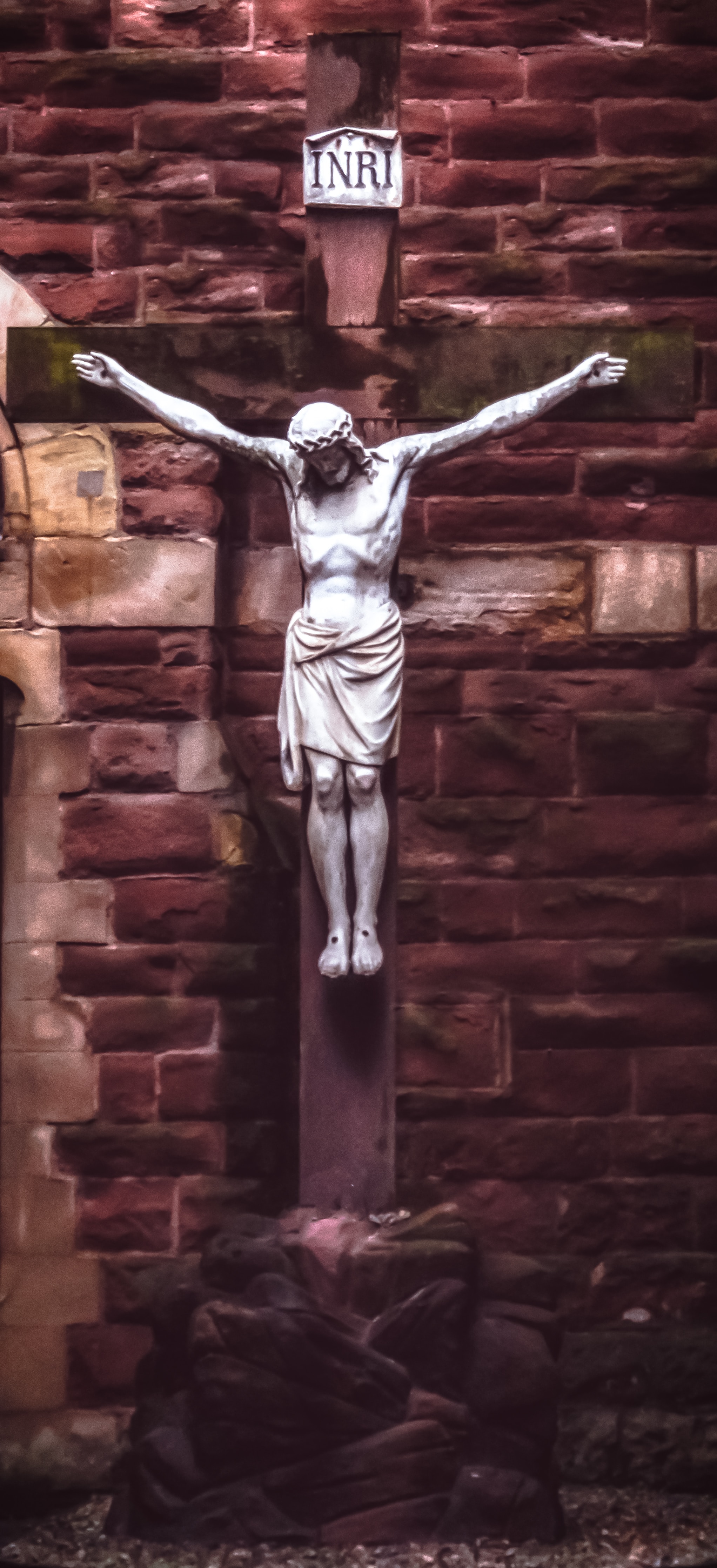
Thirteenth Station: Jesus Dies on the Cross

(Luke 23: 44-46)

Photo by K. Mitch Hodge on Unsplash —Crucifix in the alleyway next to St. Patrick’s Church in Belfast (Jan., 2020)

Jesus, You began Your journey to the cross, in one sense, in the desert at the start of Your public ministry, and in another sense, in the Garden of Gethsemane. In both places, You let the Spirit lead you away from other people and from material comforts so that You could nurture Your relationship with the One who created You and sent You on Your mission. Times of retreat such as these allowed You to seek and to find the strength You needed to offer Yourself to Your brothers and sisters in the human family despite their spiritual blindness, weakness, greed, lust, fear, and impatience. You were able to surrender Yourself to others because You trusted Your Father would use their sins and frailties to accomplish the work of redemption. You knew that, ultimately, You were surrendering not to evil but to the Good of Your Father. For that purpose, You gave back to Your Father everything You received — Your desires, Your will, Your body, Your blood — every drop of it — and, in the moment to which I now turn my attention, Your spirit. You knew that only by dying, only by commending everything You had received to the Father, would You be free from the grip death had on You.

I, too, must embark on a lifelong journey of surrendering everything I have to Divine Love in order to receive Divine Life. I couldn’t travel this path if You hadn’t done so before me and didn’t continue to do so beside me and within me. I forget the sight and the feel of Your Way again and again, and You are with me to guide me back to it. Thank You for doing for me, with me, and in me what I cannot do by myself. Thank you for creating me for relationship in all its forms. Amen.

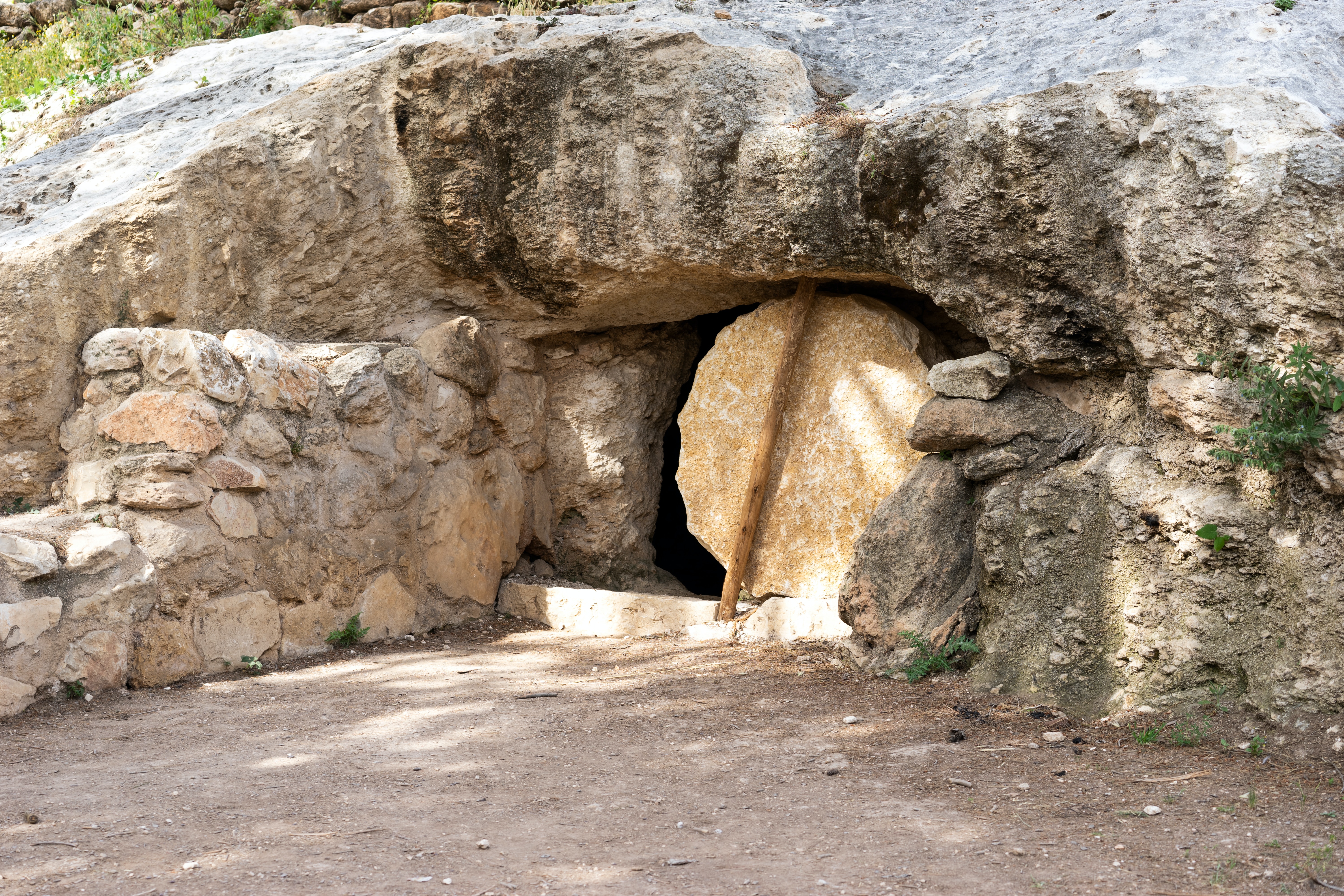
Fourteenth Station: Jesus is Placed in the Tomb

(Matthew 27: 57-60)

Photo by Jeremy Mura on Unsplash

Jesus, in honor of the care Joseph of Arimathea showed You when You could not express Your gratitude, I offer prayers of thanksgiving.

  • for those who share what they have
  • for those who give of themselves and their possessions without expecting compensation or a reward
  • for those who cannot express their gratitude for the care they receive
  • for those who look after the dignity of the dignity of members of the human family who have died.

I’m grateful that You call to Yourself people from all walks of life.

I pray for those who have died, for those who mourn, for those who wait, and for all of us who grapple with anxiety amid the uncertainty of life. I bring to You Your beloved ones who face situations that seem hopeless.

And I pray for the virtues of patience and charity. Help me to recognize and to accept opportunities to practice these virtues. Teach me to rest in You. Amen.

Read Full Post »

This post is a continuation of my Lenten reflections on the Scriptural Stations of the Cross. The station titles and scripture and verse citations, except where otherwise noted, are published on USCCB.org.

Photo by Francesco Alberti on Unsplash

Fifth Station: Jesus is Judged by Pilate

(Mark 15: 1-5, 15 [John 18:38 and Romans 8:31 — my insertions])

Jesus, as I read this passage, I imagine Pilate being focused on whether You seek power in the way that Pilate understands it. The power that Pilate is concerned about is a power that would come from an ambition to rule in Your place.

When You “You say so” to Pilate’s question about whether You are “the king of the Jews,” I imagine Pilate being reassured that You were no threat to his own power (Mark 15:2-3). He doesn’t see how You being “born . . . to testify to the truth” is a threat to his own power (John 18:38). He hasn’t been challenged by Your teachings as the Jewish authorities have. I imagine he hasn’t sought the true peace that comes from pursuing truth. He seeks only the appearance of peace that consists of making and keeping allies that suit different purposes at different times. This pseudo-peace concerns itself only with self-preservation. I imagine Pilate has this very limited perspective, and that’s why he reminds You of “how many things” the Sanhedrin accuse You of (Mark 15:4) I him.

But Jesus, You didn’t come to save yourself. You came to save creation. You are not concerned with others’ perception of you, except when that perception aligns with how God sees you. For You, the only approval that matters is approval given based on truth.

Jesus, help me to recognize the power of truth and to seek and find lasting peace that comes from its power. Help me to trust that You are embodied Truth and that because You are for me no one and nothing can be against me when I rest in You. Amen. (See Rom. 8:31)

Photo by Samuel Lopes on Unsplash

Sixth Station: Jesus is Scourged and Crowned with Thorns

(John 19: 1-3)

Jesus, open my mind and heart to the areas of my life in which I need to put up sturdier guardrails for myself. May I base my guardrails on the ones You have established for me — Your teachings and the Commandments by which you lived. Help me to remember that good can come from discipline, even though, when I first subject myself to it, it is uncomfortable. Sometimes, when I’m uncomfortable, I find strength not to flee from discomfort in remember that you endured not just discomfort but agonizing pain and that you gave the same Spirit to me that you possessed when you endured being scourged and crowned with thorns. The same Spirit that made you able to bear such pain and more enables me to face trials without being defeated in the long run — that is, if I trust in the Spirit and follow where it leads.

Holy Spirit, help me see the present moment clearly instead of letting regrets whip me. Show me how to use those regrets to make better choices.

Creator, Redeemer, and Sanctifier, help me not to make daydreams and entertainments into idols. Daydreams and entertainments are gifts of creativity. They can point me to You and to Your will for my life, but I need help to remember that pointing to You is not the same as being You. Help me to find rest and inspiration in creativity without being blinded or numbed by it. Help me to remember that You are the source of all creativity and beauty and to thank you for these gifts. Remind me that with You, I can embrace challenges and hardships. I can rest in daydreams and entertainments without hiding in them. I don’t have to use daydreams and entertainments to avoid hardships out of fear they are stronger than we are together. They are not stronger than we are together, and I can’t avoid hardships anyway. I can only delay facing them. Sometimes I can’t even delay facing them despite all the idols I try to put between me and them.

May I praise what You praise, and may my praise be sincere and thoughtful. Teach me to trust in the power that comes from You rather than in prestige and possessions. Amen.

The Bible. The New American Bible Revised Edition, Kindle edition, Fairbrother, 2011.

Confraternity of Christian Doctrine, Inc. “Sunday July, 2 2023: Readings at Mass.” The New American Bible, 2001. Universalis for Windows, Version 2.179, Universalis Publishing Ltd., 26 Feb. 2023, https://universalis.com/n-app-windows.htm

Read Full Post »

This post is a continuation of my Lenten reflections on the Scriptural Stations of the Cross. The station titles and scripture and verse citations, except where otherwise noted, are published on USCCB.org.

Photo by Luis Villasmil on Unsplash —Photo taken in a Musem in Santiago de Chile

Third Station: Jesus is Condemned by the Sanhedrin

(Luke 22: 66-71)

This passage reminds me that the prospect of getting to know God is scary because this knowledge beckons me into a relationship with God, one that once I enter into it, changes my perspective and asks me to change how I live. It also asks me to ask questions, the answers of some of which, I won’t like because they invite me to further change, and change can be very uncomfortable. It involves laying down things I carry as security blankets, things I’m more comfortable trusting in than God, things that offer immediate and temporary comfort. Change may also require me to pick up what I don’t want to carry — things that are painful now and that will offer comfort only later.

Jesus, help me not only to hear but also to trust that I’m hearing Your voice. Help me to follow Your voice or to stay where You know I’m needed. Help me not to fear the changes that serving and surrendering to perfect love allow but instead to hope in their positive potential. Don’t let my fear get in the way of Your perfect love. I know that, in the end, nothing I do can weaken the power of that love. Nevertheless, I want to magnify its power rather than make it harder to see. I can be Your magnifying glass by first receiving Your Love, and the extent to which I do that is up to me. Jesus, help me to be open to it. Amen.

Fourth Station: Jesus is Denied by Peter

(Matthew 26: 69-75)

Photo by Saif71.com on Unsplash

It strikes me as I read this passage that while denying Jesus, Peter denies his own true identity and distances himself from a community that he needs and that needs him..

Jesus, when people ask me who You are in my life, and I deny how essential it is that You lived a human life and died a horrifically violent human death so that anyone who imitates Your human life can come to share in Divine life, I not only miss opportunities to participate in the sharing, I present myself as someone other than who I am. I lead a double life. I can’t be divided this way and live close to you or to other people because when I behave this way, I don’t let other people truly know me. I don’t let them know who I am in You. I can’t help build authentic community, community in which love and truth are inseparable from each other if I withhold my authentic self from others. However, not withholding this true self is always a struggle for me because rejection and embarrassment are always a possibility and a fear.

I’m employing the ” Litany of Trust” as armor to take into this struggle. I listened to it again this morning on the Hallow app. If you’re not able to access the audio through the previous link, here’s the text of “Litany of Trust.”

Thank you, Jesus for giving me examples of how to stand firm in who I am and for giving me an example, through Peter, of the consequences of losing sight of who I am, of doubting who I am, and of denying who I am in relation to You. Thank you for giving me an example, also through Peter, of the truth that my confusion, denials, and doubts don’t have to mean the end of my journey toward union with You. If I turn back to You when I realize I’ve turned away, I’m already moving toward you again. Thank you for forgiving me for denying you and my true self. Amen.

Read Full Post »

Photo by Isaac Quesada on Unsplash

I first heard the reflection that inspired today’s post as part of the Hallow App’s Advent #Pray25 Challenge. Though I’ll be writing about the reflection from Day 24 of the prayer challenge, which was released on December 21, I decided I’d go back to it for this week’s post because it invites me to imagine I’m one of the shepherds from the Christmas story.

The reflection reminded me that the Old Testament “is full of” shepherds — David for one— who were also leaders of their people. However, by the time of Jesus’s birth the life of a shepherd was not an esteemed one. Shepherds spent much of their time not within communities but outside of them and in the company not of other people but of smelly, dirty animals. One of the narrators of the reflection, Jonathan Roumie, the actor who plays Jesus in the series The Chosen, says that because of the isolation and company (or lack thereof) associated with their occupations, shepherds were often thought of as “coarse” and assumed to be criminals.

Now that I’ve shared this context, I’m going to listen to the reflection again. As I do, I’ll share what comes to me. You can listen to the reflection here. (If the link doesn’t give you access to the reflection, please let me know.)


My first thought is that, given the historical, it’s no wonder the translation of Luke 2:9 included in the reflection says they were terrified. Not only are they confronted with sights and sounds they’ve never seen before and don’t have the words to describe, but also they’re being given news that it seems they’re meant to share with “everyone.”

In response to this message, I can imagine a first-century shepherd thinking, “Of all people, why has God chosen me to receive this news now, and why would anyone listen to me if I repeat it? Why would anyone believe me if they listen?

God understands where these questions are coming from. At the same time, God strengthens their faith by telling them, through an angel, what the Divine Presence looks like and where He could be found in the most complete and tangible way on that night.

The shepherds being chosen as the first people outside Jesus’ family to receive the news of his birth is a reminder that God doesn’t use the criteria that humans sometimes use when making choices. God doesn’t rely on sight or any other biological sense when God chooses someone, nor is God’s ability to choose wisely negatively affected by past experiences with other people or even with the person God chooses. It’s often said there is no linear time for God the way there is for us. I take this to mean that there is no past or future in God’s perception. In some way that I can’t understand as I experience linear time, past, present, and future are all unfolding at once for God. And yet, Luke tells us, God entered time by being born of Mary in a stable.

At the invitation of reflection, I imagine myself a shepherd who approaches that stable and the holy family in it. I imagine Mary turning toward the sound of my approach and trying to rise from lying in the straw. I tell her not to trouble herself, that I’ve heard something of what she’s been through. I recount what the angel said.

Mary says nothing, but despite my protests, she sits up and gestures for me to come to her. I do as she asks, and she lifts her baby from the manger. Before I have a chance to step back, she’s placing the baby into my arms.

Dear God, help me hold him gently but firmly. Don’t let me hurt him. What would become of me? Of him? Of this sorrowful world if I dropped him?

He begins to cry.

The sound brings me back into the present of that stable. I focus on making him feel secure. In doing so, I relish his soft solidness and the warmth of him as he wriggles out of the cloths in which his mother has wrapped him. I see to it that he is swaddled snugly once again.

He already smells like the donkey who’s been watching over him. The smell is not unlike that of the sheep whose odor I carry.


Jesus, thank you for trusting me to come to you, to hold you. You were so vulnerable at your birth and at your death so that I could approach you when I am at my most vulnerable. Thank you for the gift of vulnerability — mine and yours. Amen.

Read Full Post »

Photo by Florian Klauer on Unsplash

This Week’s Readings:

  • Isaiah 2:1–5
  • Psalm 122:1–2, 3–4, 4–5, 6–7, 8–9
  • Romans 13:11–14
  • Matthew 24:37–44

Also Cited

  • Isaiah 55: 8-9
  • Colossians 3:2

As a whole, the readings above offer a lot of hope. They tell me that people from every nation, regardless of their circumstances, are invited to enter God’s kingdom. They remind me that “[my] salvation is nearer now than when [I] first believed” (Rom 13:11, The New American Bible Revised Edition).

Yet even as these readings inspire me, I find them daunting. The first reading tells me that its promises won’t be fulfilled without me first fighting a battle that won’t just be an uphill one. It will be an “upmountain” one. Isaiah envisions the place where God dwells as being on the summit of a mountain because the Jewish people had a long history of meeting God on peaks. These settings seem fitting because Scripture reminds me that God’s ways are not my ways. They are high above [my] own (Isa. 55:8-9). In Paul’s letter to the Colossians, he reminds me to “think about what is above” (3:2).

However, if I take the concept of “climb[ing] the Lord’s mountain” out of the context of the rest of the passage, the words carry connotations of a meeting with God being the result of an achievement on my part (Isa. 2:3, The New American Bible, 2001) It isn’t. Isaiah calls me to make the trip “that [God] may instruct [me] in his ways and [I] may walk in his paths (Isa. 2:3). I have a lot left to learn and to do. The learning and doing will mean letting go in order to transcend “what is on earth” (Col. 3:2). It will mean letting go of the weights of selfishness and self-centeredness. It will mean recognizing that whatever is not God or does not share God’s character is temporary and may act like a weight that holds down the balloon of my soul and keep it from ascending to God. The heavier the weight, the harder it is to get out from under. I can’t just shrug it off. Only Someone above me can lift it, and that Someone is God. But God often doesn’t pry out of my hands what I have a white-knuckle grip on. Instead God waits for me to release to Him the burdens of selfishness that I clutch to myself, though His cross would lift them from me if I let it.

Still, it feels like another kind of burden to lay the burden of selfishness on the cross because it can be hard to recognize selfishness for what it is. It can feel like a weighted blanket I hide under. To come out from under this blanket is to be at my most vulnerable, to be naked, to stand out rather than be camouflaged by the temporary trappings of day-to-day life.

I won’t have forever to act as the Divine reflection on earth that I was born to be — that each of us is born to be. My time on earth may well end when I least expect it to end, on a day that previously seemed as uneventful as the one before it. May I recognize opportunities to act selflessly, to build community, and to make peace while I have these opportunities. This is the prayer that the New Testament reading I cite at the beginning of this post inspires me to offer. Amen.

The Bible. The New American Bible Revised Edition, Kindle edition, Fairbrother, 2011.

Confraternity of Christian Doctrine, Inc. “Sunday July, 2 2023: Readings at Mass.” The New American Bible, 2001. Universalis for Windows, Version 2.179, Universalis Publishing Ltd., 26 Feb. 2023, https://universalis.com/n-app-windows.htm

Read Full Post »

Photo by CHUTTERSNAP on Unsplash

In preparation for this week’s post, I’ve been pondering what Luke 14: 1 and Luke 14: 7-14 have to say to me. Luke 14:1 says that Jesus was invited to dinner at the home of a well-known religious leader, and while he was there, everyone else invited was “observing him carefully.”

Luke 14:1 reminds me to strive to focus on what God is asking me to do and to look to others in relation to what situations are calling me to do. It reminds me of that warning against “notic[ing] the splinter in [my] brother’s eye but . . .not perceiv[ing] the plank in [my] own” (Matt. 7:3). Second, it a reminder to be careful about drawing conclusions about people based on their appearance and what they do. My conclusions may not be accurate. Third, it reminds me that I need to ask for God’s help to make my heart and soul match the positive image I would like to project. Fourth, it reminds me to ask God for the grace not to be concerned about appearances for reasons that don’t demonstrate a love for myself, for others, and for God that reflects God’s love for us..

Luke 14:7-14 gives me, you, and the other guests invited to the dinner a parable about not presenting ourselves as if we deserve the highest honors. If we present ourselves this way, the parable tells us, we are likely to be perceived as arrogant and presumptuous. On the other hand, if we honor others, we’ll be perceived as humble and will be honored by others.

Pride makes a social circle small. In its most extreme form, pride would make room for only one person—the one consumed with pride—while humility widens a social circle, making room for those who may be different than we are and those whom we would have otherwise ignored or forgotten.

If I’m humble, I recognize that I need God and the gifts God has given me in creation and in other people, and I don’t take those gifts for granted. I recognize that I can do nothing on my own, without God, God’s other children, and God’s creation. This is not to say that I am nothing. I am — and you are — made in the image of God. I am — and you are — God’s coworkers and partners in the world. This makes each of us immeasurably important.

But if I’m humble, I don’t invite God in only once it seems I’ve exhausted all other sources of help. I make room for God, even when life seems to be running smoothly. I recognize my own flaws in the flaws I see in others and ask God to help me grow in grace while I pray for others to grow in grace as well and to receive the help they need. I ask God to help me see how I can help and to give me the courage to take action to help.

How often do I live up to the images of humility I’ve just offered? Not nearly often enough. I want to change that. God, give me the grace to get out of my own way and to open more and more to Your way — the way that would expand my embrace and would fill me with hope and courage. Amen.

Work cited

The Bible. The New American Bible Revised Edition, Kindle edition, Fairbrother, 2011.

Read Full Post »

Photo by Tom Swinnen on Unsplash

I’ve often read and heard that Jesus’ parables include twists, that an element of surprise is often included, and this element increases the impact of the story all the more. The parable of The Good Samaritan (Luke 10: 25-37) is no exception to this observation. If we were hearing the story in Jesus’s’ time on earth, we might have been surprised that the Samaritan is the one who stops to help the victim. It’s my understanding that Samaritans and Jews were far from close allies around the 1st century A.D.

I wonder how Jewish hearers of this story would have felt about the fact that the priest and the Levite don’t seem to notice the man lying bloody by the side of the road. Angry at the priest and the Levite? Angry at Jesus for presenting these two characters in that way. Cynically unsurprised as in “That’s just like a priest to act that way”? Or would they be unsurprised in another way because they had heard Jesus before and were used to the ways he turned their expectations upside down? As with any story, how an audience member responds to it depends not only on the culture from which he or she comes or the status he or she has in that culture, but in the unique combination of experiences that an individual brings to the hearing.

I listened to this parable on an app that invited me to put myself into the story. Before I did that, I saw a reflection on the parable whose title asked me whether I was a victim or perpetrator in the story. I was a little surprised that when I closed my eyes and played the events in my mind, I was neither one.

I was a beggar lying on the opposite side of the road from where the victim would fall. I saw myself in this position because I can’t walk or stand. My arms don’t allow for much extension or have much strength either. If I had lived in the first century and had miraculously survived to be born and then survived to my current thirty-eight years, I’d probably stay home and be cared for by my extended family, so long as I had living relatives, as I do now. But if I were the only one of my people left, I wouldn’t have much choice but to have someone place me by the side of the road to beg for food and coins, so that’s the position I felt prompted to imagine myself in as I prayed with this parable. The position allowed me to witness the scene.

I witnessed the man being beaten and then robbed, but I didn’t make a sound because I didn’t want the perpetrators to attack me. Then, as they hurried away, and the victim and I lay turned away from each other, I thought to myself, “God’s law requires that I help this man, but he can probably still move more than I can. So what can I do?”

Beg passersby to help the injured man. That’s all. To imagine myself doing it, I’ll have to imagine I’m braver, more hopeful, and more altruistic than I am. Because if the priest and the Levite ignored the injured man, why would they give any indication they heard me calling? Perhaps because I’m persistently making noise, while the injured man isn’t. Perhaps because they’ve seen me there before, and giving me a few coins time would make them feel good without costing as much as helping the injured man would. Maybe they would answer me but would say they could do nothing because they had somewhere to be and they were already late. Besides, they didn’t have any more money on them. Maybe next they would command me to hush, and I’d clutch at their robes until they shook me off until I lost my grip. I would be silent then until they were out and of earshot.

I would feel that all was lost. What was the point in nagging people? It wouldn’t change anyone’s mind or help the injured man, and it would make things worse for me.

But so what if it gave me new rips in my scraps of clothing and some new scrapes and bruises? A man’s life was at stake, and more of that life pulsed out of him with every second that went by.

But so what if it gave me new rips in my scraps of clothing and some new scrapes and bruises? A man’s life was at stake, and more of that life pulsed out of him with every second that went by. Maybe the events of this day were one of the reasons I was here. Maybe my persistence would do some good, even if it wasn’t for me or the man, and and even if I didn’t see it.

So when I saw another man approaching at a distance, I spoke for the victim again, first in a whisper and then in a shout as the stranger passed me.

He didn’t acknowledge me but stopped to wash the other man’s wounds, lifting the victim onto his own stooped shoulders and making his way back to his horse to drape the man over the animal.

Only then, caked in dust, flushed and sweating out of every pore did he trudge over to me and hold out a coin.

“No, save it for him.” I nodded toward the man lying across the horse.

He dropped the coin into the dirt and strode toward his animal.

As he rode out of sight, that was the last I saw of either man.

Would the helper have done what he did without my pleas?

Probably.

But the price of silence had been too high to find out.

What might have been didn’t matter. What mattered was the good that had been and would continue to be.

Read Full Post »

Photo by Sebin Thomas on Unsplash

Much of the Gospels concern themselves with the ways God became one with us through Jesus. But the stories about the ascension set the stage for something very much related but different: our ability to become one with God because Jesus returned to the Father and promised his followers they would receive the Holy Spirit. In Acts, He tells them the Spirit will allow them to be his “witnesses . . . to the ends of the earth (1:8).

Think about what being a witness in court means. A witness sees and shares what she sees. In this way, she receives and gives. The Spirit allows her to do this, to experience Christ and to allow others to experience Him through her. This witness is necessary because with only one person, there is no kingdom. I would define a kingdom as a gathering of people under one, anointed leader. God’s kingdom shares this nature with kingdoms bound by time and space. And yet, God’s kingdom is different. It doesn’t belong exclusively to one generation or one place. It doesn’t belong only to the pre-resurrection Jesus or to that first generation of followers, or to Israel. This difference isn’t something the disciples understand yet in Acts 1:6.

They ask Jesus, “Lord, are you at this time going to restore the kingdom to Israel?” He replies that “It is not for [them] to know the times or seasons that the Father has established by his own authority (Acts 1:7). All the violence and suffering in the world can make this response as frustrating for us as it must have been for the apostles.

Fortunately, Jesus teaches us through the Lord’s Prayer that we should ask for the kingdom to come and for help in bringing it about by being effective witnesses and imitators of his life.

I read an article a while back that suggested putting The Lord’s Prayer in your own words can enrich your prayer life. Since I read that article, some ideas of how I might do this with the Lord’s Prayer have come to me now and then. When the Acts reading made me think of the prayer, I thought I’d share some of those ideas here. Please know that as I do so, it isn’t my intention to change the meaning of the prayer. But it is my intention to share what those traditional words mean to me.

Photo by Johannes Plenio on Unsplash

Our nurturing Creator, Protector, Provider,
and Sanctuary of total and endless sharing,
help us make your presence felt and acknowledged in the world
by making our actions match our just and loving words.
Let us see through Your eyes, and transform our desires to make them align consistent with Yours
so that Your creation will reflect you more and more.
Give us what we need physically and spiritually today to do your work,
and help us trust that tomorrow you’ll do the same.
Forgive us for the ways our choices distort how each of us is uniquely gifted to reflect You
so the we can forgive others when their limitations and choices hurt us.
Help us to share with others what You give to us,
and help us to trust you and to love like You when we don’t feel like it.
Help us see through any lies about You, ourselves, and others,
and when we don’t see through them, help us not to lose hope.
Help us heal from the experiences these lies create.
Help us to believe and live as if everything is possible with You.

We open ourselves to Your bringing these words to fruition in our lives.

Work cited

The Bible. The New American Bible Revised Edition, Kindle edition, Fairbrother, 2011.

Read Full Post »