Feeds:
Posts
Comments

Archive for April, 2025

Readings for

All in one place:

https://bible.usccb.org/bible/readings/042725.cfm

In the context of each Bible book:

  1. Acts 5:12-16
  2. Psalm 118:2-4, 13-15, 22-24
  3. Revelation 1:9-11a, 12-13, 17-19
  4. John 20:19-31

What stands out to me from this week’s readings:

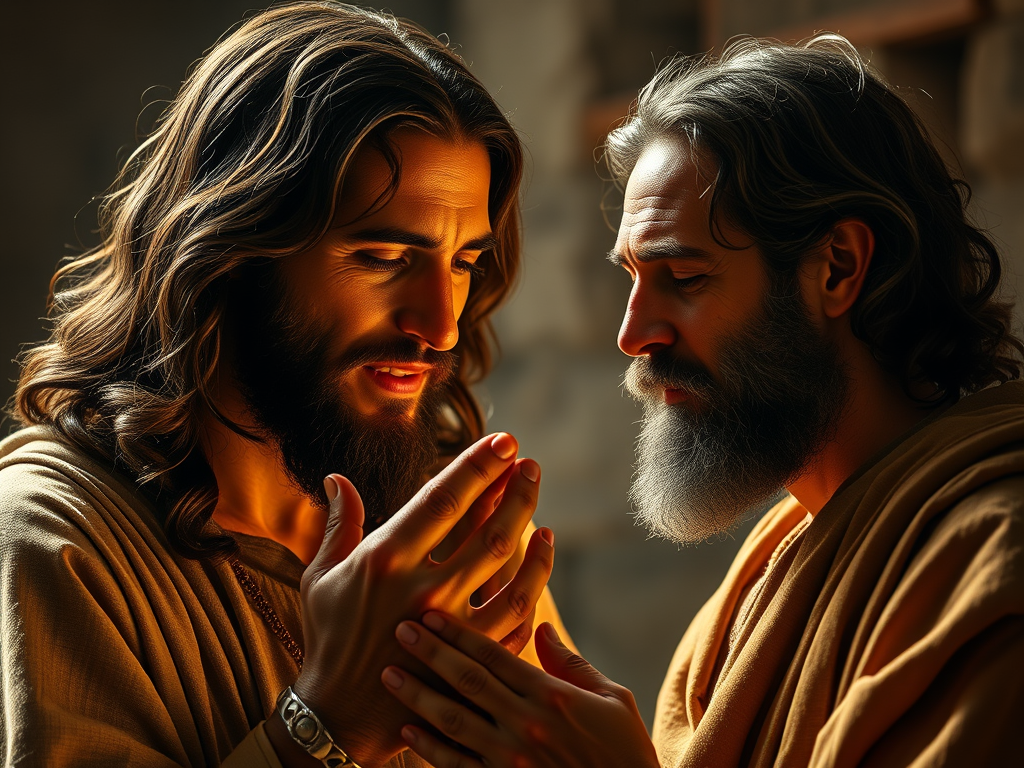
We read more than once in this week’s Gospel that the disciples find Jesus in their midst, even though they’re behind locked doors. It also stands out that Jesus greets the disciples by saying “Peace be with you” and by showing them his wounds.

What I’m saying (about the readings and beyond) this week:

About the Readings

It’s as if Jesus is saying,” Don’t be afraid. It’s me. I’m here with you, and nothing can stop me from being with you now. I’ve gone to battle with everything that pushes you away from me. I won. See these wounds? They’re an everlasting reminder of my victory over suffering and death. This victory gives new meaning to your suffering and death. United to mine, your suffering will transform you. Like me, you’ll be someone new. And you’ll be that someone because of what you went through — what we went through — before.”

And beyond

We’ve lost, in Pope Francis, someone I would call the world’s pastor. From what I’ve seen, this is true, to some extent among people of various beliefs.

And here we are in the Easter season. Face tells me that the Easter he is experiencing now is different from the one that I’m experiencing. And my Easter share similarities and differences with the Easter you’re experiencing. You may not be experiencing the emotions you think of when you think of Easter. I’m not. I’m sad and uncomfortable with the unknowns the Church and the world faces. I grieve because of the many forms of violence (greed and selfishness, for example) and loss in the world.

Last Sunday’s readings and this Sunday’s readings tell me the experiences of Jesus’ followers on the first Easter were no different. They tell me the cross and the resurrection are two sides of the same coin. And neither experience is something only Christ goes through. Rather, we all share in both experiences again and we can’t have one without the other. When we have both, nothing can separate us from each other and from God — no suffering — not even death.

Still, sometimes a living sense of communion is hard to perceive on the earthly side of life. Jesus and his first spiritual family members understand that as well as anyone.

What someone else is sharing about this week’s readings:

In Marissa Papula’s reflection for Divine Mercy Sunday, she explores how trauma and healing can coexist. She unpacks how the gospel passage for this week illustrates this coexistence.

This week’s prayer:

Jesus, help us to see You and to touch You in our midst despite any obstacles to being enlivened by Your presence. Renew us to do Your work in the world, and bring us to rest together with You and all Your beloved departed in eternity. Amen.

Works cited:

“Second Sunday of Easter, Sunday of Divine Mercy — Lectionary: 45.” Daily Readings, Lectionary for Mass for Use in the Dioceses of the United States, Confraternity of Christian Doctrine, 2nd typical ed, United States Conference of Catholic Bishops, 2025, https://bible.usccb.org/bible/readings/042725.cfm.

Read Full Post »

Image Generated by WordPress AI

Readings for the Resurrection of the Lord:

All in one place (well, almost):

https://bible.usccb.org/bible/readings/042025.cfm

In the context of each Bible book:

  1. Acts 10:34a, 37-43
  2. Psalm 118:1-2, 16-17, 22-23
  3. Colossians 3:1-4 or 1 Corinthians 5:6b-8
  4. John 20:1-9
  5. See also John 20:11-18

What stands out to me from this week’s readings:

Peter refers to himself as one of the few people chosen in advance to be witnesses to all Jesus did in his earthly life and after His resurrection. These few witnesses have been given the responsibility and the grace to “bear witness that everyone who believes in [Christ] will receive forgiveness through his name” (Acts 10:43).

“‘[The Lord’s] mercy endures forever'” (Psalm 118:2-4).

There are two choices of epistle readings. The second option tells us to “clear out the old yeast… of malice and wickedness” and “celebrate the feast” … with the unleavened bread sincerity and truth (1 Cor. 5:7-8).

In the gospel passage we’re given for Easter Sunday, Mary of Magdala doesn’t yet understand that Jesus is risen. She tells the disciples, “They have taken the Lord from the tomb, and we (the women who went to pay their respects at the tomb) or they put him” (John 20:2).

In response, Peter and another disciple run to the tomb, and the disciple who is not Peter gets there first, yet Peter goes into the tomb first. He sees the burial cloths but not the body of Jesus. We aren’t told much about what he makes of this discovery. We are told that the other disciple sees the burial cloths, which are apparently neatly set aside separately from each other, and believes. What the disciple believes we aren’t told. I find the question of what he believes even more perplexing because of the last sentence: “For they did not yet understand the Scripture that he had to rise from the dead” (John 20:9).

What I’m saying (about the readings and beyond) this week:

So if you’re wrestling with doubt and/or confusion this Easter, you’re in the company of more than one disciple.

If you’ve arrived at this Easter and are still clear[ing] out the old yeast of sins, habits and wounds, the second option for the epistle is a reminder that the journey to union with Christ and the members of his body is a lifelong one. It doesn’t end this Easter. Otherwise, we wouldn’t need the exhortation to “[c]lear out the old yeast” (1 Cor. 5:7).

If you’re bothered because the first reading refers to “witnesses chosen by God,” but the disciples in the Gospel passage for Easter Mass during the day don’t see the risen Lord, you’re not alone. I’m with you (Acts 10:41).

Now right after the Gospel excerpt for that Mass ends, Mary of Magdala does see and speak with Jesus, who is risen. The passage that describes this encounter is my favorite in the Bible. It’s more detailed than many passages. It’s easier with this passage than with many others to use my imagination to engage all five senses in the scene it describes. For me, it conveys confusion, grief, tenderness, and intimacy in a way that few other Gospel passages do. In the Gospel of John, it’s because of, or at least after, this encounter between Jesus and Mary Magdalene that other disciples become chosen witnesses of Christ’s resurrection. That’s why, although this encounter isn’t included in the lectionary until the Tuesday after Easter, I’ve linked to it at the top of this post. Several years ago, I also wrote this short story based on the passage.

What someone else is sharing about this week’s readings:

Dr. Cynthia Bailey Manns offers her own celebration of Mary Magdalene’s love for Jesus. She powerfully conveys the importance of this love in salvation history. I was particularly inspired by her reflections on the ways Mary expresses this love in the days leading up to the resurrection.

This week’s prayer:

Lord, help us to live in ways that reflect that You live and are with us in every circumstance of our lives. May our lives bring this truth to all of creation. Amen.

Works cited:

“Tuesday in the Octave of Easter” — Lectionary: 42.” Daily Readings, Lectionary for Mass for Use in the Dioceses of the United States, Confraternity of Christian Doctrine, 2nd typical ed, United States Conference of Catholic Bishops, 2025, https://bible.usccb.org/bible/readings/042025.cfm.

“The Resurrection of the Lord: The Mass of Easter Day”— Lectionary: 262.” Daily Readings, Lectionary for Mass for Use in the Dioceses of the United States, Confraternity of Christian Doctrine, 2nd typical ed, United States Conference of Catholic Bishops, 2025, https://bible.usccb.org/bible/readings/042225.cfm.

Read Full Post »

Image Generated by WordPress AI

Readings for April 13, 2025 — Palm Sunday of the Lord’s Passion:

All in one place:

https://bible.usccb.org/bible/readings/041325.cfm

In the context of each Bible book:

  1. Luke 19:28-40
  2. Isaiah 50:4-7
  3. Psalm 22:8-9, 17-18, 19-20, 23-24
  4. Philippians 2:6-11
  5. Luke 22:14—23:56

What I’m saying (about the readings and beyond) this week:

It’s daunting even considering writing a post about this week’s readings. They’re so well-known, and I’ve referred to events described this week in a general way in so many other posts. It’s hard to process the events described in them. It’s hard to take the events in on more than an intellectual level. I pray to be able to take some small part of them to heart.

What stands out to me from this week’s readings:

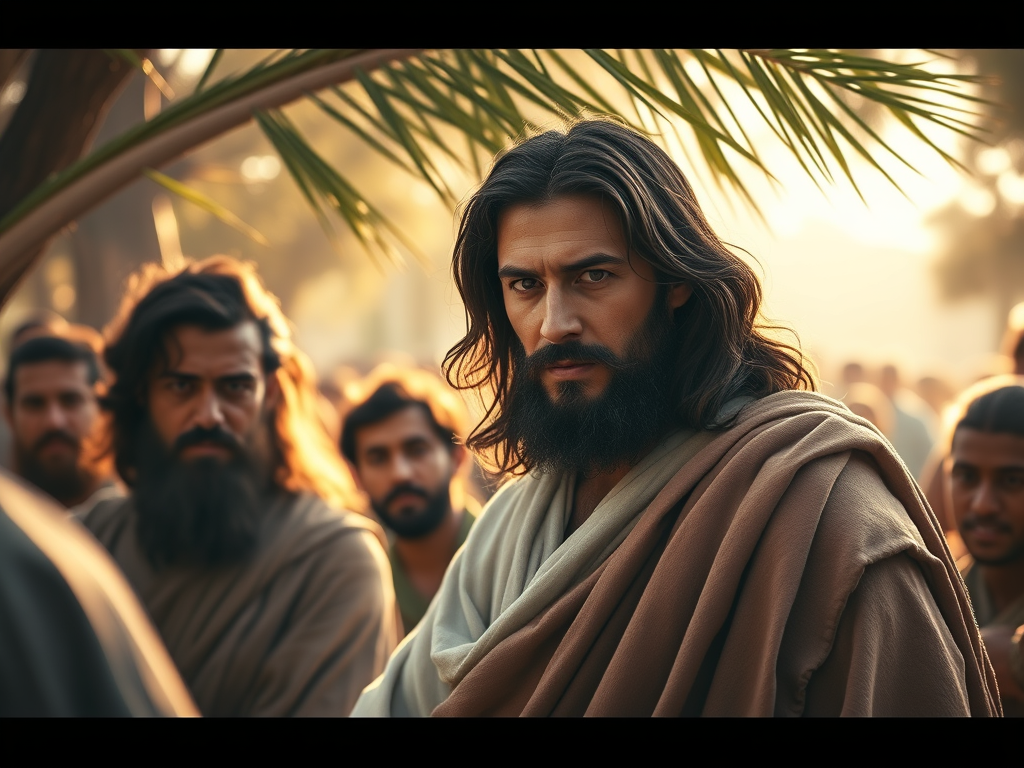
This week’s gospel recalls the past but signals the start of something new. To say that Christ’s Passion, the ultimate passage from the old to the new, will be painful is the epitome of an understatement. And yet it’s a passage that Christ and his disciples cannot avoid. It’s a passage filled with contrasts and contradictions, and it leads us to who Christ and his disciples are.

The following passages stand out to me:

[Peter] said to [Jesus], “Lord, I am prepared to go to prison and to die with you.” But he replied, “I tell you, Peter, before the cock crows this day, you will deny three times that you know me.”

Luke 22:33-34

[Jesus] said to the [apostles],
“When I sent you forth without a money bag or a sack or sandals,
were you in need of anything?”
“No, nothing, ” they replied.
He said to them,
“But now one who has a money bag should take it,
and likewise a sack . . . .
For I tell you that this Scripture must be fulfilled in me,
namely, He was counted among the wicked;
and indeed what is written about me is coming to fulfillment.”

Luke 22:35-37


Jesus said to him, “Judas, are you betraying the Son of Man with a kiss?”

Luke 22:48

When a maid saw him seated in the light,
she looked intently at him and said,
“This man too was with him.”
But he denied it saying,
“Woman, I do not know him.”

Luke 22:56-57

This week’s gospel also presents again and again questions related to identity.

The last quotation I included above is an exploration of both contradiction and identity. Here are some other explorations of identity that stand out to me:

“Blessed is the king who comes
in the name of the Lord.
Peace in heaven
and glory in the highest.”

Luke 19: 38

Then an argument broke out among them
about which of them should be regarded as the greatest.
[Jesus] said to them,
“The kings of the Gentiles lord it over them
and those in authority over them are addressed as ‘Benefactors’;
but among you it shall not be so.
Rather, let the greatest among you be as the youngest,
and the leader as the servant.

Luke 22:25-26

[The Sanhedrin] said, “If you are the Christ, tell us, “
but he replied to them, “If I tell you, you will not believe,
and if I question, you will not respond.
But from this time on the Son of Man will be seated
at the right hand of the power of God.”
They all asked, “Are you then the Son of God?”
He replied to them, “You say that I am.”

Luke 22:66-70

The centurion who witnessed what had happened glorified God and said,
“This man was innocent beyond doubt.”

Luke 23:47

What someone else is sharing about this week’s readings:

Anne Abrome, SSS presents the events of Holy Week as experiences that we go through with Christ and that Christ goes through with us.

This week’s prayer:

Lord, help us to remember Your presence in our joys and struggles this week. Grant us also the grace to experience Your joys and sorrows in our hearts. Help us to remember that the joys and sorrows of those around us are also Yours. Amen

Works cited:

Palm Sunday of the Lord’s Passion Lectionary: 37 and 38.” Daily Readings, Lectionary for Mass for Use in the Dioceses of the United States, Confraternity of Christian Doctrine, 2nd typical ed, United States Conference of Catholic Bishops, 2025, https://bible.usccb.org/bible/readings/033025-YearC.cfm.

Read Full Post »