Feeds:
Posts
Comments

Archive for March, 2025

April 6, 2025 Readings All in One Place:

https://bible.usccb.org/bible/readings/040625-YearC.cfm

Readings in the context of each Bible book:

  1. Isaiah 43:16-21
  2. Psalm 126:1-2, 2-3, 4-5, 6.
  3. Philippians 3:8-14
  4. John 8:1-11

What I’m saying (about the readings and beyond) this week:

I’d be a hypocrite if I wrote here as if the words of the epistle – any of them — could be my own. If there’s one thing it seems like I can never do, it’s “[forget] what lies behind [and strain] forward to what lies ahead” (Phil. 3:13).

So the approach I decided to take for this week is to focus on one passage. Meanwhile, the journaling prompts I responded to this morning me to consider my relationships. Wilderness asked me to return to the roots of what distorts my ability to reflect God. It prompted me to consider how those roots affect my relationships.

I responded that when I’m paralyzed and silenced by fear, I don’t give others the opportunity to receive grace from what I might contribute — regardless of whether my contribution is flawless. God is present in all circumstances, though two things are often true. The first is that God’s presence can be hard to recognize in the most painful circumstances. The second is that even if we recognize God in such circumstances, what we recognize may not take the form we’d like it to. We may not experience it in the way we’d like to.

When I’m paralyzed and silenced by fear, I also feel ashamed hypocritical, and frustrated by my invisible bindings, frustrated at not making myself seen and heard. I regret. Then I take my feelings out on the people around me, and the crack in the mirror through which I am meant to reflect gets God’s wider and longer.

What stands out to me from this week’s readings:

What stands out to me from this week’s readings is the gospel passage. What stands out to me within that passage is how little Jesus says to the woman who faces being stoned for being caught in adultery. I also notice how little the woman says to Jesus.

We also aren’t told whether Jesus knows that what the accusers say is true. We aren’t told that Jesus tells the woman he doesn’t condemn her because he knows she’ll heed his exhortation: “Go, and from now on do not sin any more” [sic] (John 8:11).

And yet we’re told elsewhere in Scripture Jesus knows things about people without those people revealing those things. The encounter with the woman at the well comes to mind as described in John 4:1-42. She tells everyone about him because, as she says, he “told [her] everything [she] [has] done (John 4:29). As is the case with the woman facing stoning, the text doesn’t tell us whether she ever went back to her previous life. Similarly, in the encounter in which Jesus promises to stay with the tax collector Zacchaeus, we don’t learn whether the tax collector keeps the promises he makes in public after he encounters Jesus (Luke 19:5).

But as I’ve written on this blog before, I heard somewhere that when a name is handed down through Scripture, it’s because the person was well-known to early Christians.

Fewer women are named in Scripture than men. But maybe the fact that the stories of the woman at the well and the woman caught in adultery have been handed down means that these women were well known within the Christian community.

Or maybe we have their stories, though not their names or more about what happened before or after these encounters because the primary lessons we’re meant to take from them aren’t meant to be based on what they do.

The story of the would-be stoning is as much about the men who threaten to inflict the punishment as it is about the woman who would have received it. After all, the passage tells us the authorities bring the women to Jesus because they want to “test him” (John 8:6). He takes this test as an opportunity to teach them about mercy.

The encounter takes me think of Luke 6: 41-42:

“Why do you notice the splinter in your brother’s eye, but do not perceive the wooden beam in your own? How can you say to your brother, ‘Brother, let me remove that splinter in your eye,’ when you do not even notice the wooden beam in your own eye? You hypocrite! Remove the wooden beam from your eye first; then you will see clearly to remove the splinter in your brother’s eye.”

It also calls to mind a line from the Lord’s Prayer: “Forgive us our trespasses as we forgive those who trespass against us.” The key to not being condemned is not to condemn others. Even as I repeat this familiar message, it makes me ask questions:

  • How many cries for justice reveal not only the injustice that’s being called out but also the injustices committed by the person or people whose sense of justice has been violated?
  • How can I ask God for justice without condemning the person or people who participate in injustice?
  • How can I treat myself and others with compassion and humility without making excuses for the harm my choices and the choices of others may cause?

The limited instruction and the few words this passage contains are both an answer to this question and not very much of one. Maybe passages like this invite us to wrestle with the questions, to answer them as best we can and apply the answers as best we can to the situations we encounter. When, whether in the midst of reaching those answers or later on, we decide they’re unsatisfying, maybe recognizing our limitations and our dependence on God’s grace is all we can do.

What someone else is sharing about this week’s readings:

This week’s prayer:

Lord, help me to offer to others what I’d like to receive from you — forgiveness, understanding, and empathy. Amen

Works cited:

Garrett, Sr. Josephine. Wilderness Within. Kindle version, e-book ed., Ave Maria Press, 2024, A Guided Lent Journal for Prayer and Meditation, Accessed 23 Feb. 2025.

“Fifth Sunday of Lent Year C— Lectionary: 36.” Daily Readings, Lectionary for Mass for Use in the Dioceses of the United States, Confraternity of Christian Doctrine, 2nd typical ed, United States Conference of Catholic Bishops, 2025, https://bible.https://bible.usccb.org/bible/readings/040625-YearC.cfm.

Read Full Post »

Image Generated by WordPress AI

Readings for March 30:

All in one place:

https://bible.usccb.org/bible/readings/033025-YearC.cfm

In the context of each Bible book:

  1. Joshua 5:9a, 10-12
  2. Psalm 34:2-3, 4-5, 6-7
  3. 2 Corinthians 5:17-21
  4. Luke 15:18

What stands out to me from this week’s readings:

At the end of the Old Testament reading, when manna is lost, “the yield of the land of Canaan” is gained (Josh. 5-12).

In the epistle, I read that:

“[W]hoever is in Christ is a new creation:
the old things have passed away;
behold, new things have come.

2 Corinthians 5:17

In the gospel passage, the younger son begins by finding what he thinks he wants and losing the satisfaction he gets from it. He responds by recognizing what he has lost — the experience of belonging to a family and being provided for by his father — and seeking to find these experiences again.

The father begins the passage by losing the portion of his possessions that he gives to his younger son as well as losing the presence of the younger son himself. But he never stops longing for that presence or loving his son. He rejoices in the son’s presence again when the son heads back to the father’s house.

Ironically, once the younger son comes back to the father, the return reveals distance between the father and the older son. By reasoning with the older son, the father does his part to find what has been lost between him and his first son.

What I’m saying (about the readings and beyond) this week:

I was away from the blog and from my journaling practice last week. My first impulse was to try to catch up this week so that I would finish all the journaling books by Easter. But I quickly realized I was getting further and further behind and that catching up catching this week was not a realistic goal. I also realized that if I managed to catch up this week, I might not reap the benefits of the prompts. I’d be focused on checking them off my list rather than on reflecting on what they invite me to reflect on.

So now my goal is to journal in the morning before anyone else gets up, for however long that amount of time is each day. Using this approach, I’m setting the intention of writing through my journaling books to their end, no matter how long it takes me to get there. I hate even to write “get there” because I don’t want to think of journaling as something I need to get done. I want it to help me grow in my relationship with myself, with God, and in my relationships with others. This isn’t a desire for one season. It’s the quest of a lifetime. I’ve let go of one idea and taken hold of another — lost one idea and found another.

This week, Wilderness Within invited readers to consider what sins they find themselves confessing over and over. What are the roots of these sins? Sister Josephine Garrett encourages readers not to respond with what they think is the correct theological answer. Describe the roots in your own words (91).

Here’s how I’d describe the primary root of choices I regret making: fear of discomfort, fear of rejection, fear of being alone. Fear.

Garrett also asks readers to consider how they feel before and after they sin. My answers are helpless and trapped and hypocritical. These are the opposite of liberated, open, and honest.

As I write these words, I’ve been tempted to end this section with my paraphrase of the prompt, but that feels like letting the roots grow deeper so that you don’t worry about me, attack me, or reject me. And letting the roots grow deeper isn’t what I sense is best for any of my relationships.

Also as I write these words, I feel nudged to allow a more relaxed publication scheduled for posts on this blog. Taking into consideration other writing-related activities I feel called to, I will publish this post and future posts whenever I finish them. This will probably make the posts less timely. Maybe I can figure out ways to make them less time-sensitive. Now I’ve written similar things in these posts before, so we’ll see what approach I ease into as I let go of another one.

What someone else is sharing about this week’s readings:

Sr. Lynn Marie Ralph, SBS, reimagines the “Parable of the Prodigal Son” as the “Parable of the Prodigal Daughter.”

This week’s prayer:

Lord, help me to discern what’s life-giving and lasting and to let go of what isn’t. Help me to seek and to find strength in you. Give me patience and perseverance amid the challenges of the moment. Help me to trust and to experience that You are the ultimate source of fulfillment. Help me to lay down fear and pick up faith. Amen.

Works cited:

Garrett, Sr. Josephine. Wilderness Within. Kindle version, e-book ed., Ave Maria Press, 2024, A Guided Lent Journal for Prayer and Meditation, Accessed 23 Feb. 2025.

“Fourth Sunday of Lent Year C— Lectionary: 33.” Daily Readings, Lectionary for Mass for Use in the Dioceses of the United States, Confraternity of Christian Doctrine, 2nd typical ed, United States Conference of Catholic Bishops, 2025, https://bible.usccb.org/bible/readings/033025-YearC.cfm.

Read Full Post »

Readings for March 16 and 23, 2025

All in one place — well, two, for this post:

March 16:

https://bible.usccb.org/bible/readings/031625.cfm

March 23:

https://bible.usccb.org/bible/readings/032325-YearC.cfm

In the context of each Bible book:

March 16:

  1. Genesis 15:5-12, 17-18
  2. Psalm 27:1, 7-8, 8-9, 13-14
  3. Philippians 3:17—4:1
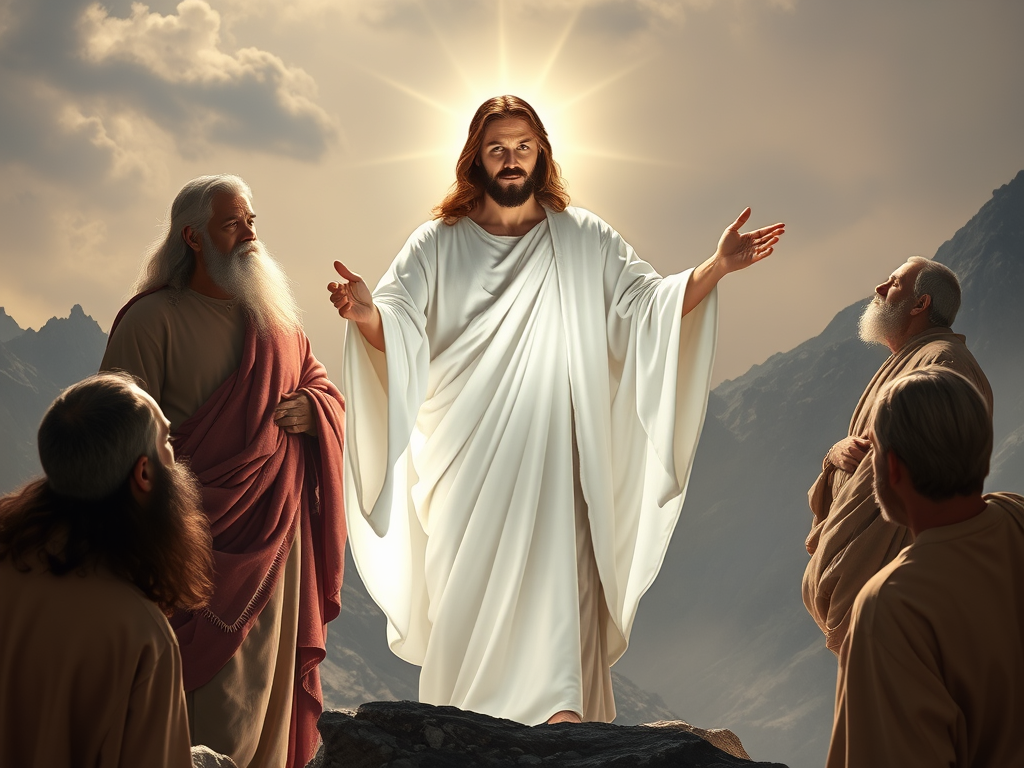
  4. Luke 9:28b-36

March 23:

  1. Genesis 15:5-12, 17-18
  2. Psalm 27:1, 7-8, 8-9, 13-14
  3. Philippians 3:17—4:1
  4. Luke 9:28b-36

What stands out to me from the readings for the next two weeks:

March 16th:

The Scripture passages for March 16th remind me that each of is born in a particular place and time. This was true for Abraham and Jesus as much as it’s true for each of us. Both Abraham and Jesus understood God had given them the earth’s resources to use wisely while they lived here. They also knew they belonged to God — not to God’s creation. Nothing created would offer lasting satisfaction. Only trusting in God would.

We, Abraham, Paul, and Jesus were given gifts to appreciate and work to do in the times and places we inhabit. In the course of our appreciation and our work, will get glimpses what lies beyond any time and place. As much as we might want to stay in these glimpses, we can’t hold onto them here, while we’re subject to the biological needs and psychological and spiritual pressures that tempt us.

Nevertheless, God invites us not to let these pressures dominate our lives. The March 16th readings promise that if we don’t give up on persevering in spite of these pressures, when we’re finished with life on earth, the challenges of that life won’t be able to keep us down. As the passage from Philippians says:

“[O]ur citizenship is in heaven,
and from it we also await a savior, the Lord Jesus Christ.
He will change our lowly body
to conform with his glorified body  
by the power that enables him also
to bring all things into subjection to himself

Philippians 3:20-21

March 23rd

Our understandings of God are works in progress. So is our ability to reflect God’s image without distortion. No one can be sure how or how long God will work to refine each of our reflections. Therefore, this week’s readings urge us to open our hearts to God so that God can clean and repair the mirrors of our souls now. Bringing ourselves to God for this cleansing and repair is what will allow us to become, like God, eternal presence. Each of us needs to undergo God’s cleansing and repair again and again. No one else can undergo this process for us, and the process looks somewhat different for each person. Each of us can only encourage each other to place ourselves in the hands of the One who makes and remakes our mirrors, and we can consider how to avoid what scratches, cracks, and shatters them.

What I’m saying (about the readings and beyond) this week:

My journaling this week keeps bringing me back to the idea of trust. Going back to this idea suggests to me that a fruit of trust is being grounded in the present, not needing to escape it. Trust means recognizing what I have the power to change and having the courage to work on changing it. Trust means recognizing that making change happen is a process. It requires being intentional, falling short of the intention, and then being intentional again and again. Trust means not losing hope, not losing faith that change that God wills will happen. It also means recognizing what isn’t mine to change and handing all that over to God, trusting that in the end, justice and mercy triumph.

In writing all this, I don’t mean to suggest that I’ve taken all of it to heart and have found an unshakable peace. I wish. I’m merely in a place of reminding myself of my intention to trust.

What someone else is sharing about the readings for the next two weeks:

Mayella Vasquez’s reflection on the readings for March 16th reminds me that part of trusting is listening. Her reflection also makes me consider that the Transfiguration isn’t just something that Peter, James, John and Jesus experienced. It’s something each of us can experience again and again if we look and listen for it

As I prepare to publish this post on Sitting with the Sacred, there’s no reflection for March 23rd posted on the Catholic Women Preach website.

This week’s prayer:

The Serenity Prayer, and Mark 9:24

Scripture Translations Used:

“Second Sunday of Lent — Lectionary: 27.” Daily Readings, Lectionary for Mass for Use in the Dioceses of the United States, Confraternity of Christian Doctrine, 2nd typical ed, United States Conference of Catholic Bishops, 2025, https://bible.usccb.org/bible/readings/031625.cfm.

“Second Sunday of Lent Year C— Lectionary: 30.” Daily Readings, Lectionary for Mass for Use in the Dioceses of the United States, Confraternity of Christian Doctrine, 2nd typical ed, United States Conference of Catholic Bishops, 2025, https://bible.usccb.org/bible/readings/032325-YearC.cfm.

Read Full Post »

Photo Generated by WordPress AI

Readings for March 9, 2025:

All in one place:

https://bible.usccb.org/bible/readings/030925.cfm

In the context of each Bible book:

  1. Deuteronomy 26:4-10
  2. Psalm 91:1-2, 10-11, 12-13, 14-15
  3. Romans 10:8-13
  4. Luke 4:1-13

What stands out to me from this week’s readings:

  • Most of the first reading is a reminder of how God led the people of Israel into the wilderness to deliver them from enslavement in Egypt. Moses reminds the people that because God freed them, everything they have comes from God. Therefore, a portion of whetver they have should be given back to God.
  • The verses from Psalm 91 provide further poetic reminders of God’s providence.
  • The epistle continues and expands theme from last week. Faith and the life that comes from it take root and grow in the heart.
  • In the Gospel passage, Jesus’ example teaches that life comes not from Him serving himself. Demonstrating power or sacrifice just for the sake of sacrifice or power isn’t holy. An offering made out of love is. It has much more potential to heal wounds.

What I’m saying (about the readings and beyond) this week:

It surprised me that God as provider and liberator stood out to me this week. As I got ready to draft this section, thinking about what had surprised me, I went back to the Gospel passage looking for the reference to angels ministering to Jesus. I thought that reference would be another lesson in God’s providence, and it is. But it’s not in this week’s gospel passage. It’s in Matthew 4:11, and it comes after the temptations. That chapter in Matthew begins telling us that “Jesus was led by the Spirit into the desert to be tempted by the devil” (1). But the Luke passage begins with “Filled with the Holy Spirit, Jesus returned from the Jordan and was led by the Spirit into the desert for forty days, to be tempted by the devil” (Luke 4:1). This is Luke’s way of telling readers and hearers that the Son of God is not entering alone into an unfamiliar, harsh environment. He won’t face temptation without providence from God.

Thoughts on my Tuesday journaling experience:

Outside of this week’s readings, I’ve begun the journaling I wrote about in this section last week. A couple of the books, rightly, I think, invite their readers to start the process of using the book before Lent begins. Doing this has given me a deeper appreciation of what the upcoming season is really about. Prompts have gotten me thinking about what actually stands in the way of my relationship with God and with others. Hint: it isn’t chocolate, and it is in the game or a TV show. Prompts have made me want to get begin practices that I’ll (hopefully) continue through Easter and beyond.

Thoughts on my Wednesday journaling experience:

While the journaling prompts in each book is different, each one has tended to draw a similar answer out of me. That’s helpful. It clarifies what I see the need to surrender. It also highlights the areas of my life where I’m seeking renewal. Answering similar questions that are asked in different ways is also beneficial. It lets me see my answers in a different light each time I record them. Maybe recording the same ideas multiple times in different ways will help habits that are spiritually healthier stick.

I’m setting an intention this Lent to see the season or as a continual process of turning toward God rather than away from what is not God. Yes, turning toward one thing often requires turning away from another. However, my desire is to make the acts of turning toward awareness my emphasis.

Thoughts on my Thursday journaling experience:

Try to keep an open mind and heart. Leave room for adjusting your plans. Be careful about not letting your plans take over your life so that they work against their intended purpose. Be careful that your plans don’t take away from the good you are already doing before you began them.

Mindfulness is a lot harder to maintain than the avoidance of chocolate. Distractions are everywhere, all the time, and they aren’t just external. Recommitting to mindfulness is something that happens over and over again throughout the day. It’s not something a person “gets right.” Returning to mindfulness again and again makes sense for Lent. Practicing mindfulness is just that — practicing. Practicing it is like falling and getting up again and again.

Thoughts on my Friday journaling experience:

Silence isn’t always empty or quiet. It can be filled with presence and sounds I rarely notice — like a variety of bird songs.

What someone else is sharing about this week’s readings:

Ana Gonzalez, OP relates this week’s readings to the suffering that goes on in the world around us. Her reflection reminds us of the spiritual purpose behind Lenten practices. They are meant to deepen our relationships with God. By doing so, they deepen our relationships with others.

This week’s prayer:

Lord, you did not make us to die in spiritual deserts. Help us not to wither this Lent but to grow instead. Help us to grow in relationship with you and in solidarity with others. Instill in us gratitude for the ways the natural world and spiritual realms provide for us.

Scripture translation used:

“First Sunday of Lent — Lectionary: 24.” Daily Readings, Lectionary for Mass for Use in the Dioceses of the United States, Confraternity of Christian Doctrine, 2nd typical ed, United States Conference of Catholic Bishops, 2025, https://bible.usccb.org/bible/readings/030925.cfm.

Read Full Post »