
Feeds:
Posts
Comments

Archive for February, 2025

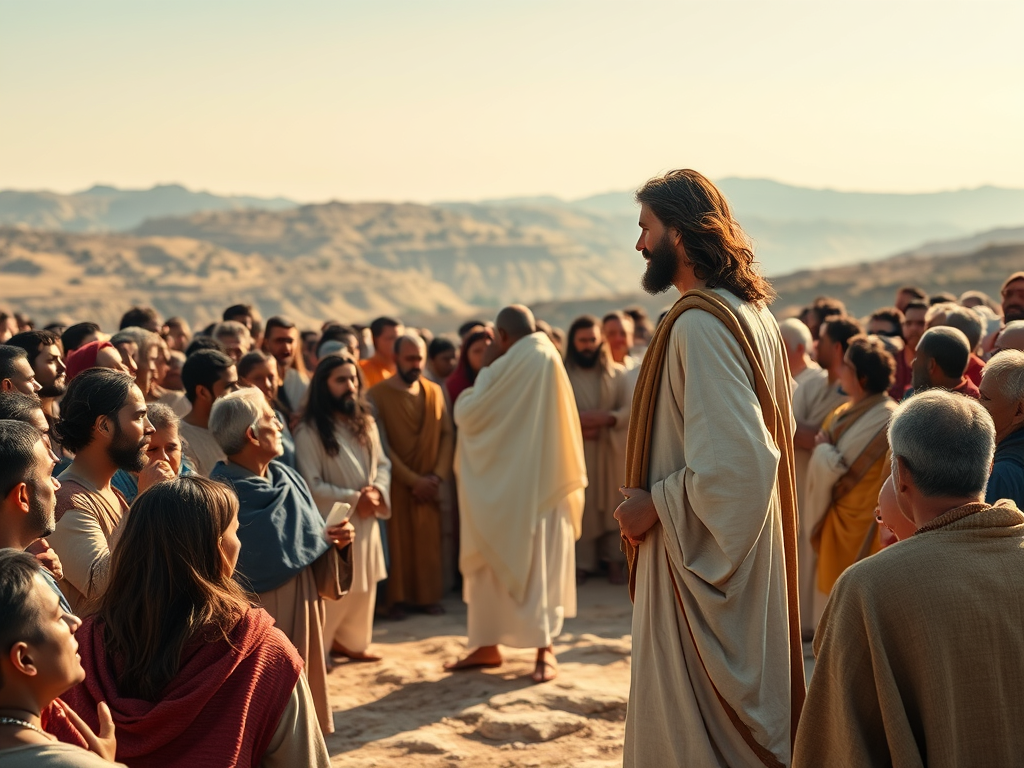
Photo Generated by WordPress AI

Readings for March 2, 2025:

All in one place:

https://bible.usccb.org/bible/readings/030225.cfm

In the context of each Bible book:

  1. Sirach 27:4-7
  2. Psalm 92:2-3, 13-14, 15-16
  3. 1 Corinthians 15:54-58
  4. Luke 6:39-45

What stands out to me from this week’s readings:

The Old Testament passage says to me that what a person says and does reveals what’s important to him or her. What a person does is even more revelatory than what she says. So is how a person responds to temptations and hardships.

The psalm passage says to me that to be just is to do more than praise God or say kind words to another person. It means rooting one’s perspective and actions in God. The first reading points to the potential for distance between appearance or words and what’s in a person’s heart. The psalm points to what results if there is no distance between what’s in the heart and the good a person speaks or shows to the world.

The epistle points to Christ and the Spirit that comes from Him as the relationship that closes the distance. God transforms hearts prone to frailty and wounded by sin through Christ. Christ transforms through the Spirit through day-to-day experiences, through sacraments, and by again and again, offering forgiveness for sins. His offering and act of solidarity on the cross makes it possible for us to receive all these other gifts. To paraphrase the last sentence of this week’s epistle, His giving of Himself in suffering, to the point of death, and beyond has the potential to make everything we do part of His healing mission. What we do becomes part of this mission when what we do is grounded in the Spirit He has given us to share with Him and with others.

But, the Gospel passage reminds us, we can share that Spirit only if we invite it to work in and through us again and again. We can help others see only if we allow the Spirit to help us see. The passage reinforces the message of the selection from the Old Testament. The effects of a person’s words and actions reveal a person’s true nature.

What someone else is sharing about this week’s readings:

Sr. Quincy Howard shares with us a reflection on this week’s readings. Her words offer an eye-opening look at the ways we grow our food. I never realized how the taste of fruit has changed over time until I read her reflection. After describing farming methods, she uses them to examine how we tend our souls and the souls of others.

What I’m saying (about the readings and beyond) this week:

Well-known Scripture passages can become overly familiar. Passages Christians turn to during Lent and Easter are no exception to this tendency. So this Lent, I thought exploring different reading materials might be helpful. These could provide journaling prompts, meditations, and reflections. This approach might help me see familiar words in new ways.

I’ve looked at some options and haven’t settled on just one or even two. Besides, I’m hesitant to follow one collection of reflections too closely on this blog because I want to encourage you to look into the books yourself. I invite you to see which one, if any, deepens your perspective and your relationships with God and others. I’m thinking of pulling a bit of inspiration for my Lenten posts from this book, and a bit from that one. Here are the titles I’m considering journaling or meditating with, in case you’d like to follow along with me:

I’ve listed the books in no particular order, but so far, the last one on the list intrigues me the most because the author, Sr. Josephine Garrett, in addition to having a religious vocation, is a trained mental health professional. A sample I read indicates that she brings all facets of her vocation into the book’s meditations, reflections, and prompts. I plan to start Lent by looking into each book in the list above, but I have a feeling I’ll end up following along with just one or two.

This week’s prayer:

Lord, enlighten my heart so that what comes from it participates in building Your kingdom of love. Amen.

Scripture Passage Source:

“Eighth Sunday in Ordinary Time — Lectionary: 84.” Daily Readings, Lectionary for Mass for Use in the Dioceses of the United States, Confraternity of Christian Doctrine, 2nd typical ed, United States Conference of Catholic Bishops, 2025, https://bible.usccb.org/bible/readings/030225.cfm.

Read Full Post »

Readings for February 23, 2025:

All in one place:

https://bible.usccb.org/bible/readings/022325.cfm

In Context:

  1. 1 Samuel 26:2, 7-9, 12-13, 22-23
  2. Psalm 103:1-2, 3-4, 8, 10, 12-13
  3. 1 Corinthians 15:45-49
  4. Luke 6:27-38

What’s the message I’m getting from this week’s readings:

. . . love your enemies and do good to them,
and lend expecting nothing back;
then your reward will be great
and you will be children of the Most High,
for he himself is kind to the ungrateful and the wicked.
Be merciful, just as your Father is merciful.

Luke 6:35

What I’m saying (about the readings and beyond) this week:

To the person who strikes you on one cheek,
offer the other one as well, and from the person who takes your cloak,
do not withhold even your tunic.

Luke 6:29

This verse stands out to me because, as I read it, I can’t help but think how it can be misused. It can be interpreted as telling someone got to protect him or herself from abuse. But I don’t think this is the intended message. The verse I chose to highlight in the first section is the intended message.

In the New Testament, Jesus sometimes uses figurative language and even hyperbole to make a point. Remember the instruction in Matthew 18:9. It tells us to pluck an eye out if it causes us to sin. Do we really think Jesus wants us to do this? I don’t think so. The point of those verses is to tell us to avoid what we know isn’t good for ourselves, others, and for our relationship with God.

Other ways to express this week’s message might be: Don’t retaliate. Don’t take revenge. Don’t take advantage of others. Don’t be selfish. Taking any of this advice is different from accepting abuse. David had the opportunity to retaliate in this week’s first reading. He didn’t because he wasn’t being attacked. If he been under attack, he’d have been within his rights to protect himself. He could defend himself and/or remove himself from the situation. People have a right to defend themselves and other vulnerable people in their care who are in danger. They also have the right to remove themselves and others from such situations.

This week’s readings remind us again of the difference between wants and needs. They advise us not to withhold from someone something he or she needs because we want it.

What someone else is sharing about this week’s readings:

Diana Macalintal’s reflection on the readings for February 23 is just what I need right now. I don’t think I’m alone in this assessment. She begins and ends her reflection with a personal story that involves her and her godson. I could picture the events unfolding as I read about them, and I found the little boy’s as well as Ms. Macalintal’s response so relatable. Click here to experience for yourself what I mean.

In Ms. Macalintal’s reflection, she also mentions details from the gospel accounts of Christ’s passion. These references remind me that I meant to wrestle with the events of the passion in the last section. I’ll just do that here instead of pretending I haven’t yet read her words.

So what do the events of Christ’s passion have to say about an individual who is having violence inflicted upon him? It’s an uncomfortable question because in the accounts of Jesus’ suffering and death, He doesn’t flee, and He doesn’t defend himself — not physically and not even verbally — at least not directly. I’m tempted to respond to these depictions with, “That’s because it was his mission and ministry to bear the consequences of our sins and weaknesses to the point of death so that these consequences might not have the final say in our lives and deaths. There’s only one Savior. To suffer and to die isn’t the mission of the rest of us.”

But isn’t it? At some point, in some way, just not in the same way Jesus did? No matter how much we try to avoid and resist it, life brings pain to us (along with pleasure) in many ways. Does this reality mean that to seek holiness is to seek pain? No, I think one understanding of what it means to be holy is to define it as being aware. To be holy means not pretending that what brings pain and what brings pleasure, what brings sorrow and what brings joy doesn’t exist. To be holy is to be awake, and to be awake is to be honest.

While I don’t have direct personal experience with the topic, it seems to me that forms of abuse are built on distorting who the people involved are. It seems to me that abusers operate under the illusion that they are entitled to more power than they actually are. It’s this sense of power that they crave. What gives them this sense power is making their victims believe their abusers have this power and making victims believe they deserve to be abused or that the abuse is somehow related to love.

In the passion accounts, Jesus never loses sight of who He is. He never agrees with what His abusers and attackers accuse Him of and say about Him. Rather, He asks His Father, to forgive them for what they do and for their blindness and ignorance as to what they are doing (Luke 23:34). He knows who really has the power during His crucifixion, even when he doesn’t feel that power accompanying him. Ultimately, He and the Father have that power.

When I think about the passion this way, I see it not as Him allowing himself to be robbed of his dignity and his life, but as Him giving us these two gifts freely. In His offering to us he shows the ultimate solidarity with every human frailty. He offers communion with Him to every human and to all of creation. I suppose having the freedom to do this is what gives Him the power to offer all the forms of surrender that Ms. Macalintal points to in her reflection.

This week’s prayer:

Lord, help us discern what we need and what we want we can better provide for others what they need. Also help us to pray for as we find it most difficult to pray for. Amen.

Scripture translation used:

“Seventh Sunday in Ordinary Time — Lectionary: 81.” Daily Readings, Lectionary for Mass for Use in the Dioceses of the United States, Confraternity of Christian Doctrine, 2nd typical ed, United States Conference of Catholic Bishops, 2025, https://bible.usccb.org/bible/readings/022325.cfm.

Read Full Post »

Image Generated by WordPress AI

Readings for February 16, 2025:

  1. Jeremiah 17:5-8
  2. Psalm 1:1-2, 3, 4 & 6
  3. 1 Corinthians 15:12, 16-20
  4. Luke 6:17, 20-26

What stands out to me from this week’s readings:

Contrasts stand out. I see contrasts between fertility and barrenness, between emptiness and fullness, and between sorrow and joy. The readings tell me that making room for God makes room for life and growth. In contrast, putting all one’s trust in the ways of human beings, especially in individual humans, is misleading. It prevents a person from being part of a circle that expands easily   so he she can grow and embrace life. It leads to dissatisfaction instead of openness and depth because no human is all-knowing or all-powerful.

What Someone Else Is Sharing about This Week’s Readings:

The readings for February 16 inspired Julia Murphy to reflect on the effect privilege can have on a person’s relationship with God. She reflects on this topic through the memory of a service immersion trip experience. She also points out that, regardless of how a person is or isn’t privileged, the Beatitudes aren’t telling the people who receive them to be passive. She reminds us that God calls us to wake up so we can tell the difference between wants and needs. Once we’ve discerned what’s needed, God calls us to cooperate with each other and with the prompting of the Holy Spirit to address our needs and the needs of others.

What I’m Saying:

Before I read Julia Murphy’s words, I didn’t know what to write in this section other than to repeat the themes of the text in different ways. The passages seem pretty self-explanatory, and especially in the case of the Beatitudes in the gospel passage, so familiar. What could I say about the Beatitudes that’s more than a list of “shoulds?” How does my gut react to the Beatitudes?

When I went back to this week’s gospel passage seeking answers to these questions, the passage reminded me of something that stood out when I first revisited it. The reading makes a point of telling us that when Jesus preached about the Beatitudes, he didn’t stand on a mountain or in a boat. He’s not depicted as looking down on the great crowd of his disciples. He’s not separated from them by the framework of a boat. Rather, we are told “he stood on a stretch of level ground” (Luke 6:17). I get the idea He was scanning the crowd as he spoke, meeting the eyes of this individual, then that one. I imagine Him seeming to each person as if he spoke only to him or her.

To anyone who sees him or herself in the blessed group, he offers encouragement. To anyone who recognizes him or herself in the opposite group, His warnings might imply questions:

If you’re rich, how did you get that way? Who helped you get there? Have they reaped the benefits as well? How can you show your appreciation? How can you share your more-than-enough with those who don’t have enough?

  • If you’re filled, what are you filled with? Does it take care of and treat kindly the body and mind God has given you? Where do you make room for God? For recognizing the injustice in your midst?
  • If you’re laughing now, what are you laughing at? Are you laughing at someone else’s expense? Someone else’s misfortune? Or can you laugh at your own frailty, imperfections, weaknesses? Can you left so that you don’t take them so seriously that you think God can’t work with you through them and despite them.

Many of us who can read these words might be rich by the standards of the much of the world. And yet lack of privilege can take different forms in different people’s lives at different times. Why? Because different factors contribute to each person’s sense of agency and independence. The truth is, a sense of independence isn’t permanent for anyone. We’re born needing others, and we die needing others. So many events in between lead us to ask God and one another for help. And that’s okay. That’s honest.

This Week’s Prayer:

Lord, grant us the grace to make room for You in our lives so we can see and hear as You do. Amen.

Scripture Translation Used:

Sixth Sunday in Ordinary Time — Lectionary: 78.” Daily Readings, Lectionary for Mass for Use in the Dioceses of the United States, Confraternity of Christian Doctrine, 2nd typical ed, United States Conference of Catholic Bishops, 2025, https://bible.usccb.org/bible/readings/021625.cfm.

Read Full Post »

Auto generated by WordPress AI

Readings for February 9, 2025:

  1. Isaiah 6:1-2a, 3-8
  2. Psalm 138:1-2, 2-3, 4-5, 7-8
  3. 1 Corinthians 15:1-11 or 1 Corinthians 15:3-8, 11
  4. Luke 5:1-11

What stands out to me from this week’s readings:

The following messages:

  • An encounter with God is more than reading about God or learning about God. An encounter with God is tangible. It’s personal and intimate.
  • An encounter with God changes how the person who has the encounter sees him or herself.
  • This new view of himself/herself and the tangible, personal encounter with God is uncomfortable, humbling and overwhelming. These feelings because the person to retreat and to cower.
  • God says, in different ways, “I don’t seek personal encounters with you just to make you uncomfortable. Take heart in My presence. Stand with me in this new perception of who you are. Let Me work through and in the midst of your anxieties and weaknesses. Let me heal your wounds and work through what you’ve learned from them. When you let Me, you can do for others what I do for you.”
  • God says, “If you’re having trouble encountering Me right now, look for those who have encountered Me. You’ll recognize the effects of those encounters. Companions changed by them will remind you of what you’re worth to me. I’ve died with you so you can live with Me.”

What I’m saying (to the readings and beyond) this week:

I had the most visceral reaction to the epistle for this week. It’s embarrassing to admit. Initially, I felt resistant to the passage. I didn’t know how to fit it into the theme I was discerning for this week’s post. The Old Testament passage and the Gospel passage describe profound, face-to-face encounters with God. We aren’t allowed as directly into such an encounter when we read the psalm excerpt. However, it seems to be the words of someone who has had a personal encounter with God. The narrator has experienced God’s providence.

Now St. Paul, the author of the letters to the Corinthians, has had this kind of encounter. But that blinding light through which Christ speaks is not what I read about in this week’s epistle. This passage isn’t where I can read about the details of that encounter. Instead, Paul mentions large number of people who encountered the risen Christ before he did. Then he points out that the risen Christ appeared to him last, “as to one born abnormally” (1 Cor. 15:8).

His assessment of himself bothered me. It’s one thing to feel humbled in the presence of God by becoming aware of the ways your choices fall short of self-giving love. But no one chooses when he or she is born. Why should characteristics a person doesn’t choose mean he or she is chosen last? I reminded myself that when the letter was written, perspectives on birth were very different. Views on disability and many other human experiences were also very different. Still, the phrase was jarring to read. What happened to “the last shall be first, and the first shall be last” (Matt. 20:16)? An answer to this question is that the verse from the Gospel of Matthew reflects a perspective gained later, from a memory recorded later. Matthew was written down after 1 Corinthians. But back to the passage from 1 Corinthians that we’re looking at this week.

The day after I first revisited the passage, I saw the note that accompanies 1 Corinthians 15:9. If I understand this note correctly, it says verses 8 and 9 reflect the attacks his opponents leveled at him. The note reminds me of an important question to ask when reading Scripture: how might the experiences of the human writer affect how the message is expressed? How might God work through the wounds revealed in the expression of the message?

Paul says he was chosen to be an apostle not thanks to his own merit but thanks to God’s grace. This message at the end of the passage means it actually does fit in with the theme I had discerned for the February 9 readings.

Nevertheless, in other ways it still doesn’t seem to fit as well as the other passages do. As I wrote above, the passage doesn’t include much of a recap of what Paul experienced on the road to Damascus. Instead, Paul says indirectly that happened. He says that because it happened, he came to believe and to preach what the other apostles had experienced with regard to Jesus’s resurrection. He seems to want the letter’s readers to persevere in faith based on his words and the words of the apostles. He seems to suggest that a personal encounter with God isn’t essential to a faith that perseveres in difficult times.

Or does he? He writes, “I am reminding you… of the gospel I preached to you, which you indeed received and in which you also stand” [emphasis mine] (1 Cor. 15:1). I usually associate receiving with something concrete coming into my possession. I don’t usually associate it with merely hearing. “Receiving” suggests something sinking in, settling. To me, receiving implies more than intellectual acceptance. Furthermore, it’s hard to imagine “stand[ing] in” something merely heard from someone else, even if that something heard comes from people who say they actually saw it. Maybe he’s suggesting that the experiences he’s had and the ones that have been shared with him open the door for the Corinthians to have their own personal encounters with God’s grace.

What someone else is sharing about this week’s readings:

Leah Sealey reflects on the readings for February 9, 2025. As she does so, she suggests ways to make encounters with Scripture personal encounters with God. Some of the approaches I’d heard of. Others I hadn’t, such as asking what a passage doesn’t say and imagining myself saying it to Jesus. Usually, I read the reflections from Catholic Women Preach after I’ve written the first section of that week’s post. But I wish I’d read Ms. Sealey’s reflection before I wrote my own this week.

This week’s prayer:

Lord, open the doors of my heart and soul to encounters with You. May I recognize encounters with others as encounters with You, and may others do the same when they meet me. Grant us the grace to experience encounters with You and with others as occasions to experience clarity and compassion. Amen.

Scripture Translation Used:

“Fifth Sunday in Ordinary Time — Lectionary: 75.” Daily Readings, Lectionary for Mass for Use in the Dioceses of the United States, Confraternity of Christian Doctrine, 2nd typical ed, United States Conference of Catholic Bishops, 2025, https://bible.usccb.org/bible/readings/020925.cfm

Read Full Post »