Feeds:
Posts
Comments

Archive for January, 2025

Photo Generated by WordPress AI

Readings for February 2, 2024:

  1. Malachi 3:1–4
  2. Psalm 24:7, 8, 9, 10
  3. Hebrews 2:14–18 
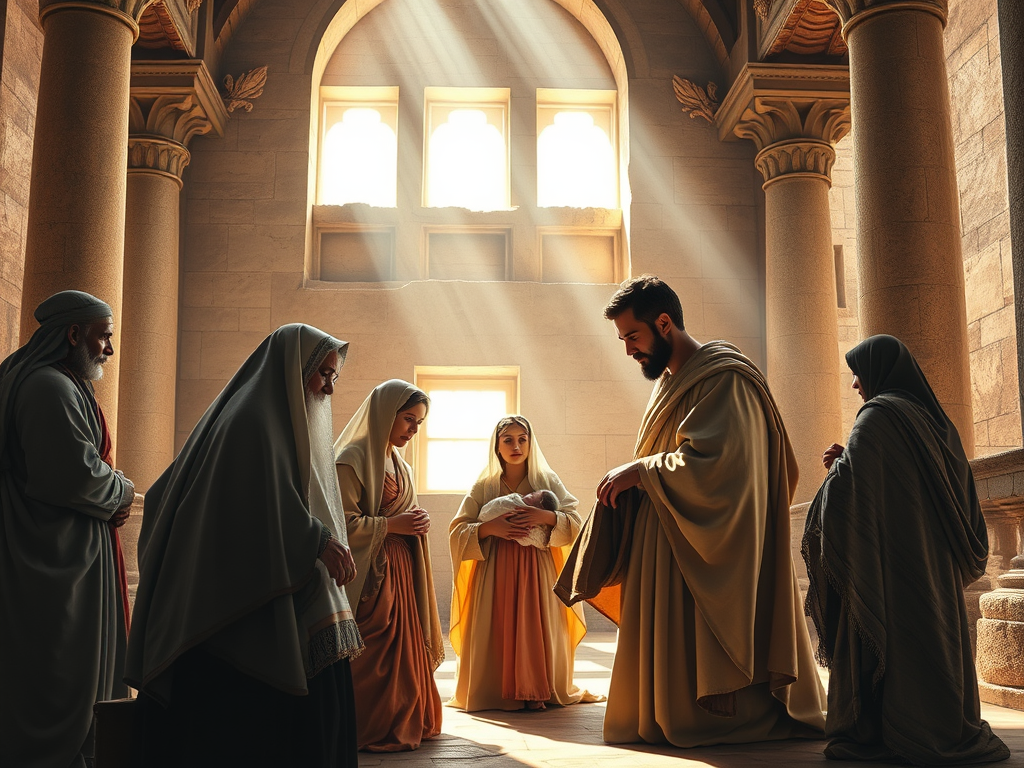
  4. Luke 2:22–40

What stands out to me from this week’s readings:

For he is like the refiner’s fire,
or like the fuller’s lye. . . .
Refining them like gold or like silver
that they may offer due sacrifice to the LORD

Malachi 3:2-3

Since the children share in blood and flesh, Jesus likewise shared in them, that through death he might destroy the one who has the power of death, that is, the Devil, and free those who through fear of death had been subject to slavery all their life.

Hebrews 2:14-15

. . . Simeon blessed them and said to Mary his mother, “Behold, this child is destined for the fall and rise of many in Israel, and to be a sign that will be contradicted  . . . .

Luke 2:33-34

She never left the temple, but worshiped night and day with fasting and prayer. And coming forward at that very time, she gave thanks to God and spoke about the child to all who were awaiting the redemption of Jerusalem.

Luke 2:37-38

What I’m saying (to the readings and beyond) this week:

When I first revisited the Scripture passages for February 2, the first quotation brought to mind the Kelly Clarkson song “Stronger” (What Doesn’t Kill You).” I actually felt that since Jesus took away the fear of death, as the epistle says, what else did I really have to be afraid of? The things people say can’t kill me. Neither the mistakes I make nor their consequences can kill me either, if I trust in the Lord and learn from those mistakes.

I tend to respond in one of two ways when someone disagrees with me:

  • Someone’s criticizing me. I must be in the wrong. I need to do what the critic expects.
  • I’m doing what Simeon said the “sign that [would] be contradicted” wants me to do. That’s why I’m being criticized. The backlash is a good sign.

I think I tend to respond the first way more than the second. But option one might be more accurate in one situation, while option two might be more accurate in another. I find consolation in the message that it’s the [R]efiner’s fire that allows me to “make due sacrifice to the Lord,” to choose what’s right regardless of what others think of my choices (Mal. 3:3). My refinement isn’t finished yet, and that’s okay, as long as I stay open to being refined.

Then last night, anxiety caught up with me, as if to counteract the freedom I’d felt listening to “Stronger (What Doesn’t Kill You).” Plenty of experiences don’t make me feel stronger or freer, even though they aren’t death.

I read in the Gospel passage for February 2 that the prophet Anna had lived a long time, especially for a first-century woman. She spent years not remarrying, as many women might have been expected to do or would have had to do to survive. She spent years fasting, and praying, and waiting. Then baby Jesus came into the temple, she told everyone she could about Him. Anna’s life couldn’t have been easy. But once she’d lived through her experiences, seen Jesus, and heard what Simeon said about Mary and her baby, she refused to be silenced.

We are all social creatures, but not all relationships we have the opportunity to take part in are healthy. The Kelly Clarkson song is about breaking free of a harmful relationship. Other relationships might be healthy but aren’t the right fit for us or aren’t right for right now. I wonder if the prophet Anna had experience with these realities. Were such experiences part of what made her open to those years of fasting, praying, waiting, and trusting in the temple?

What someone else is sharing about this week’s readings:

Anna Robertson explores insights we can gain from the prophet Anna’s appearance in the Gospel passage. She also points out that we may not hear about this prophet at Mass. Including her story in the Gospel passage for the Feast of the Presentation is optional.

This week’s prayer:

Lord, help us to persevere in even the most difficult times. Help us to maintain hope. Help us to discern what thoughts, words, and actions will do the most good in various situations. May we follow where discernment and wise advice leads. Help us to be a source of hope and truth for others. Thank you, Lord for giving us opportunities to be sources of hope, May we show love in concrete ways. Amen.

Scripture Translation Used:

“Feast of the Presentation of the Lord — Lectionary: 524.” Daily Readings, Lectionary for Mass for Use in the Dioceses of the United States, Confraternity of Christian Doctrine, 2nd typical ed, United States Conference of Catholic Bishops, 2025, https://bible.usccb.org/bible/readings/020225.cfm.

Read Full Post »

Image Generated by WordPress AI

Readings for January 26th:

  1. Nehemiah 8:2–4a, 5–6, 8–10
  2. Psalm 19:8, 9, 10, 15
  3. 1 Corinthians 12:12–30
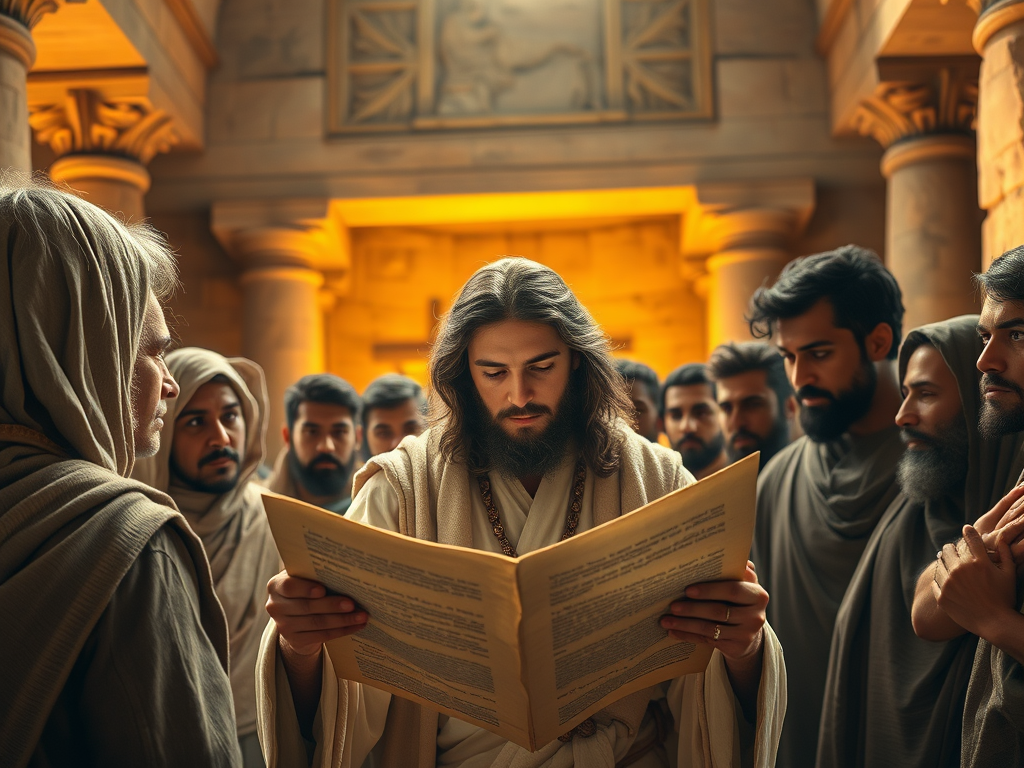
  4. Luke 1:1–4; 4:14–21

What stands out to me from this week’s readings:

In the first reading, the people in the temple don’t seem encouraged by hearing God’s law. They seem in awe of it. They seem to accept that it’s trustworthy, that it’s wise to obey it. At the same time, they seem bowed down by it. They seem to focus on how they fall short of fulfilling it. But Ezra, Nehemiah, and the Levites tell them, ““Today is holy to the LORD your God. Do not be sad, and do not weep” (Neh. 8:10).

The psalm reinforces that the law of the Lord “is trustworthy,” “refresh[es] the soul ” and is cause for “rejoicing” (Psalm 19: 8-9). The Lord’s words “are spirit and life” (John 6:63).

The epistle presents God as a life giver through the Spirit. The passage also highlights the human tendency to focus on the gifts we lack rather than the ones we have.

This focus affects how the people see who’ve grown up with Jesus see Him. The reaction of the listeners isn’t included in this week’s passage, but when I read past this week’s excerpt, I see that they say the following about what Jesus reads and says:

“. . . all spoke highly of him and were amazed at the gracious words that came from his mouth. They also asked, ‘Isn’t this the son of Joseph?'”

Luke 4:22

They can’t envision this son of Joseph, who trained to work with his hands, bringing “glad tidings to the poor,” “sight to the blind,” and “liberty to the captives” (Luke 4:18). Perhaps behind their questions is not only that Jesus isn’t prepared for the mission he tells them he’s on. Maybe the townspeople also remember that he was born too soon after Mary and Joseph’s marriage. Their vision of who Jesus is limited by their preconceived notions and biases.

What I’m saying (to the readings and beyond) this week:

Often, I don’t experience the law of the Lord as “refreshing” to the soul (P Psalm 8). l feel smug and indignant when I think of God’s commands and perceive myself as the one whose been wronged. I sometimes feel constrained when I’m tempted to do something that might not refresh my soul or someone else’s, something that could make my reflection less like God’s.

As I reflect on this reality of my experience, I think about what might change my feelings about God’s commandments. I remember something I once heard a priest say in a homily. I’ll paraphrase what he said like this: rephrase the commandments as statements about what we should do.

I don’t remember how he rephrased them, so I’m going to do that in my own words as follows:

  • Remember that the material world is passing away; hold onto and prioritize what isn’t.
  • Remember that you didn’t get where you are alone. Give back those who have given to you.
  • Recognize that a holy and healthy life is one with a routine that balances work and rest, activity and contemplation. Celebrate the resurrection and its message for all of us. Recognize that we all need community. When one of us suffers, we all suffer. This happens whether we realize it or not. When one of our community members is absent, we are all affected, whether we realize it or not. Live as if you know you are made to belong.
  • Take care of the life you’ve been given, and take care of the lives of those around you.
  • Make commitments and enjoy the security and stability of honoring them.
  • Be mindful of what you have. Be happy with others for what they have.
  • Respect others and what belongs to them.
  • Tell the truth with love.

As I read this week’s epistle, I see it can celebrate the beauty of differences. It can teach that the Spirit makes individuals members of Christ’s body. It teaches that these members are indispensable to the function of Christ’s body, no matter how different the gifts of one member may be from another member’s. It can be used as an antidote against envy and resentment.

Still, I can’t help but think how it can be used to justify never speaking out against inequities, never considering change to be necessary. It could be used to justify rigid social structures. It could be used to justify unjust discrimination and the perpetuation of stereotypes. It could be used to confirm biases and preconceived notions. “What? You don’t feel your voice is being heard, I can hear someone with more authority and/or education asking someone with less. What? You don’t feel seen? You don’t feel your gifts are being appreciated to the fullest?” Don’t worry. Jesus uses them fully even if you don’t feel like the Church, or your work, or your family, or the organization you volunteer with does. You’ll know this someday. You’re important to your communities even though you don’t and can’t have high-profile roles in them. Your communities need you to do work their leaders aren’t doing while they’re busy doing other, more visible, things. You’re essential. Be content and at peace with this. “

I think to myself, “What if Jesus had believed He couldn’t fulfill his mission because of who Joseph was? What if Jesus had thought the fact that Joseph was a carpenter meant that the Spirit wasn’t calling Him to His ministry?

Let’s not underestimate the value of contributions that go unnoticed. Let’s look more closely, deeper, for the gifts in ourselves and those around us. Let’s respect the Spirit’s freedom of movement in us and around us.

What someone else is sharing about this week’s readings:

Find out what role a colorful beach towel plays in Pilar Siman’s reflection on the readings for January 26th.

This week’s prayer:

Lord help us to see in ourselves the gifts that others may or may not see in us. Help us to be open-minded and creative in how we use the gifts You give to care for Your creation. Help us to trust that when our gifts are employed by cooperate with Your spirit, they will accomplish what You had in mind when You gave them to us. Help us to experience Your commandments as gifts to us. Amen.

Work cited:

The New American Bible Revised Edition, Kindle edition, Fairbrother, 2011.

Read Full Post »

Readings for January 19th:

  1. Isaiah 62:1–5
  2. Psalm 96:1–2, 2–3, 7–8, 9–10
  3. 1 Corinthians 12:4–11
  4. John 2:1–11

What stands out to me from this week’s readings:

Today’s readings remind me that God’s nature is relationship – not just relationship between the Persons of the Trinity but with creation. God creates because God’s nature is relationship, and a relationship isn’t something that happens to one person. It’s a bond between at least two.

Today’s readings are about an intimate bond, the most intimate bond, the bond between God and God’s people. The readings characterize this bond as a bond between a bride and a groom. They paint an idealized picture of the bond between newlyweds. In the Old Testament reading, God is the groom who “delight[s]” and “rejoice[s]” in his bride (Isa. 62:4-5). Yes, the bride and groom exchange vows him, but the first reading makes it clear that more than vows, expectations, and a legal bond joins the bride and groom. It’s not a bond that’s imposed. It’s a bond that forms and grows. So is the relationship between God and a person who loves God.

The psalm says the royal groom gives the bride cause to sing His praises and get dressed up. Why? Because the groom is a just and heroic leader who escorts His previously captive, deceived, and abused bride to freedom. When I look at this week’s epistle through the lens of a marriage between an individual and God, the passage says to me that the relationship between God and each person is unique. It comes with pleasant experiences, less pleasant ones, challenges, and surprises. Each person’s relationship with God is unique. Each one of these relationships offers distinct gifts to the world.

Fittingly, given the marriage metaphor developed in the first reading, this week’s gospel passage takes place at a wedding. What stood out to me as I revisited the passage this time was the role of surprise in it. Based on what we find in the New Testament, Jesus knows how his earthly ministry will end, but He’s surprised by encounters He has during it. Maybe he doesn’t know everything all at once. The stories about his infancy and childhood suggest this.

And then His mother comes to Him at a wedding and says the host is out of wine. He seems to wonder what this problem has to do with his ministry and mission. Yet I imagine he knows that any good he does can serve that mission. He also knows relationship is the source and goal of the mission. Interaction between two living beings creates that relationship. So his mother’s request plays a key part in his work on this occasion.

He’s not the only person surprised in the passage. The head waiter is surprised, too, by how much better the second batch of wine, the one Jesus changed from water, is than the first.

And why wouldn’t surprise have an important role in the passage? Continuing to be pleasantly surprised keeps a relationship interesting. Furthermore, being able to accept unexpected developments is crucial in a healthy relationship. Responding to these developments in authentically helpful ways is also essential.

I would think having a basis in more than routine and ritual is also important. When I think about this, it seems significant that Jesus uses jars meant for ceremonial washings. He fills them with the water that will become wine. He takes vessels used for ritual and for external purposes and uses them to provide for the needs of the guests.

A lot of water wasn’t safe for drinking for centuries. Water was for spiritual and practical cleansing, in many cases. According to this source, wine mixed with water was for drinking. So not providing guests with enough wine wouldn’t just have been a serious social faux pas. It was likely also health concern.

Therefore, by making sure the host has more wine, Jesus is providing for those present physically and emotionally. He hasn’t made sure they have more wine so they merely survive. As a good spouse cares, He cares about how the guests feel and wants them to thrive. This passage reminds me of when Jesus says, “I came so that they might have life and have it more abundantly” (John 10:10) Like the jars for ceremonial washing, he wants the guests “filled to the brim” with what they need. It’s not enough just to keep the jars – us — from being empty.

What someone else is sharing about this week’s readings:

Claire Erlenborn turns to this week’s readings for help with reflecting on what makes “change for the good” happen.

This week’s prayer:

Jesus, I want to fall in love with You. Help me grow in my relationship with you so our relationship can take part in bringing good change to the world. Amen.

Work cited (but Not Linked to):

The New American Bible Revised Edition, Kindle edition, Fairbrother, 2011.

Read Full Post »

Image Generated by WordPress AI

Readings for January 12th:

  1. Isaiah 40:1–5, 9–11 or Isaiah 42:1–4, 6–7
  2. Psalm 28(29):1-4,9-10 or Psalm 104:1b–2, 3–4, 24–25, 27–28, 29–30
  3. Acts 10:34–38 or Titus 2:11–14; 3:4–7
  4. Luke 3:15–16, 21–22

What stands out to me from this week’s readings:

The feast we celebrate today commemorates a turning point. Today is the last day of the liturgical Christmas season. It’s the end of the beginning.

In today’s gospel passage, we see that Jesus has grown into a man. And yet the message of today’s readings is still the message of Christmas. That message is that God is with us. One of the ways God is with us is by being one of us.

In all the gospel passages associated with Christmas, including today’s, most people don’t understand who Jesus is until God reveals the identity of the only begotten Son in unusual ways. These unusual ways include an announcement from an angel, the radiance of a star, and, in the case of today’s story, a disembodied voice.

But the heavens don’t open, and that voice doesn’t speak until Jesus places himself among sinners — this time in a more conscious and open way than ever before. He’s no longer the infant visited by shepherds and astrologers. His ministry is no longer that of a carpenter in a single village. He’s a man now, free to go where He will without making his mother worry that she’s let God down.

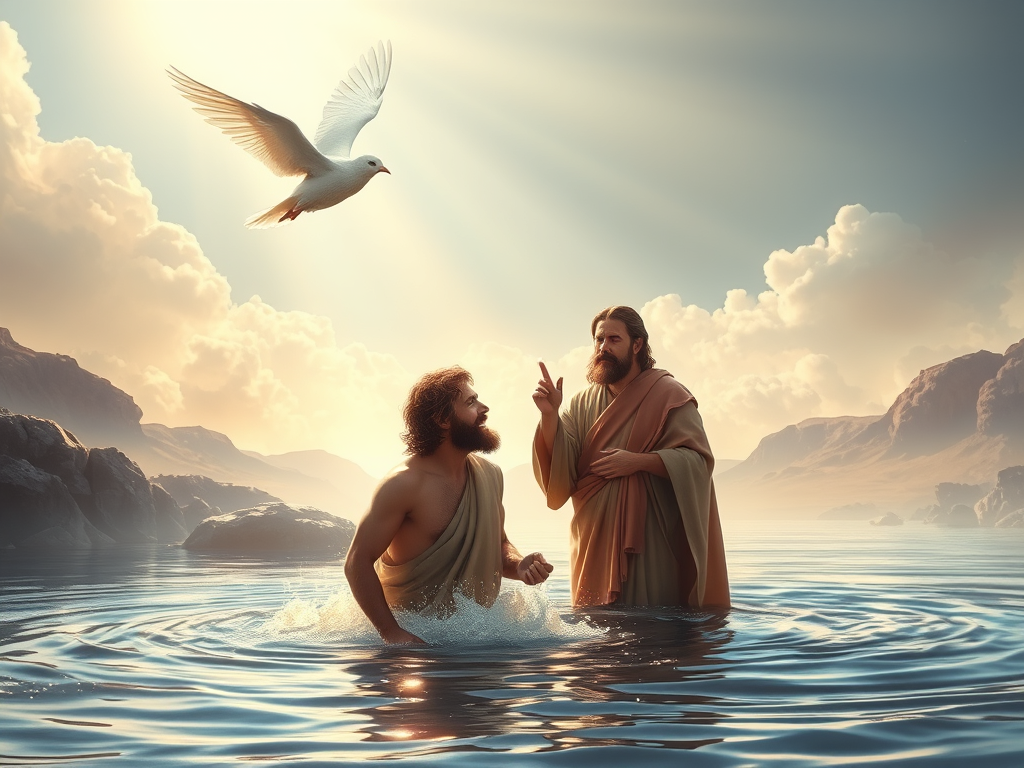
Where He goes is to John. He goes to John to model repentance. He models of the death of the old self and the birth of a new one. His coming to John for baptism foreshadows His death and Resurrection that made ours possible. As part of His baptism, He allows Himself to be submerged in the Jordan River. He then lets the Holy Spirit, in the form of a dove, come to rest on Him. He offers himself to unite the natural world with God. He teaches that all of this world points to God. It points to God for those who are willing and able to follow where it leads.

All the options for this week’s readings do the same. They point to God being in our midst everywhere, at all times if we know how to look.

This week’s prayer:

Lord, help us. You call all people your beloved children. Guide us to treat ourselves and others the way You call us to. Amen.

Read Full Post »

Image Generated by WordPress AI

Readings for January 5th:

  1. Isaiah 60:1–6
  2. Psalm 72:1–2, 7–8, 10–11, 12–13
  3. Ephesians 3:2–3a, 5–6
  4. Matthew 2:1–12

What stands out to me from this week’s readings:

Then you shall be radiant at what you see,
your heart shall throb and overflow . . .

Isaiah 60:5

The Old Testament passage for January 5 describes God’s light drawing the members of the tribes of Israel together and to itself. The verse above, particularly its second line, is what stands out to me from the passage and from this week’s readings.

It doesn’t surprise me that this verse is the one that jumps out at me from all the ones chosen for this week. Romantic themes and imagery are what resonate with me. I watch, read, and write stories about what it means to love.

When I think about the feast we celebrate today, I think of a brilliant light leading wise men who are not Hebrews to baby Jesus. I think of how the magi bring him gifts that don’t seem appropriate for a baby.

Nonetheless, these gifts teach Jesus’ spiritual family members about who He is and what His mission is. I think of how, while what the New Testament passage calls a star leads the wise men from afar to Jesus, the magi don’t tell Herod where to find Jesus. In other words, I engage my mind and its ears and eyes in the story.

But when I read the second line of Isaiah 60:5 this time around, the story of the Magi seeking the infant Jesus took on a new dimension for me. Or at least I received the story’s message in a new way. I imagined the Incarnation of Christ as a physical sensation within me. It

Isaiah 60:5 says the experience of Christ in the flesh cannot be contained in any way, not even within a single time period, space, or culture. And yet it is tangible everywhere.

It reminds me I’m called not just to follow the Light but to let the pain and pleasure of it in. I’m to be a vessel as much as the next person, and the next. The Light has the weight and power of water as much light. It is as much like a swollen river as it is an astronomical occurrence that makes night like day.

What someone else is sharing about this week’s readings:

The “Hark!” podcast from America Media explores the history and messages of various Christmas carols. (If you can’t access the link in this section without subscribing to America, I encourage you to search for the podcast and the “We Three Kings” episode in particular in the podcast player of your choice.) Each episode is named for the title of the carol featured in it. This episode about “We Three Kings” discusses the familiar components and interpretations of this week’s gospel passage. It also offers some insights I’d never heard before. Here’s a teaser: maybe the gifts of the magi were for Mary too.

This week’s prayer:

Lord, open the eyes of my soul so I can follow Your light. Make me “be radiant at what [I] see” (Isa. 60:5). Make my heart “throb and overflow” (Isa. 60:5). Amen.

Work cited (but Not Linked to):

Confraternity of Christian Doctrine, Inc. “The Epiphany of the Lord – Mass of the Day Sunday 5 January 2025: Readings at Mass.” The New American Bible, 2001. Universalis for Windows, Version 2.198, Universalis Publishing Ltd., 13 Dec. 2024, https://universalis.com/n-app-windows.htm.

Read Full Post »