
Feeds:
Posts
Comments

Archive for March, 2024

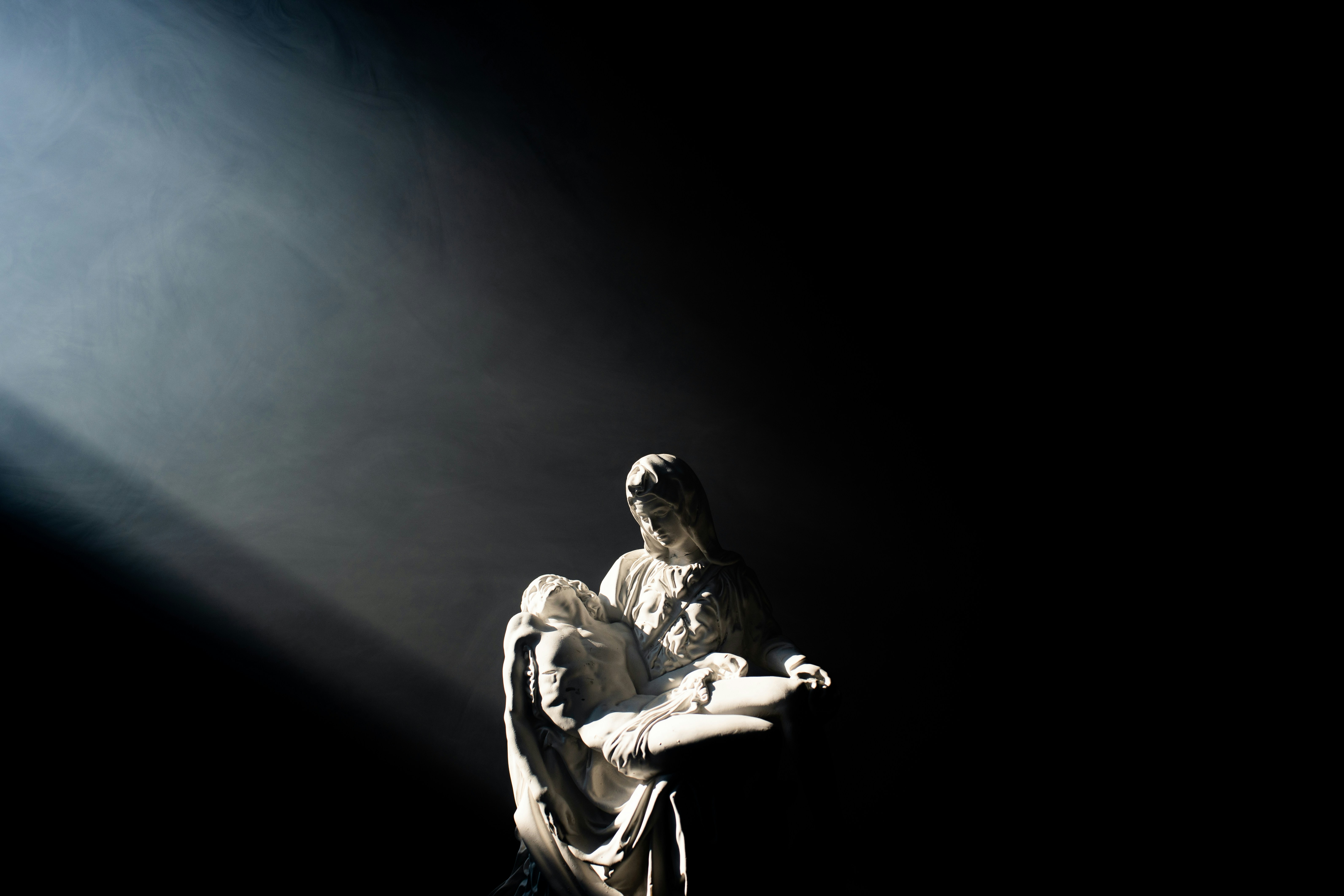
Photo by Bruno van der Kraan on Unsplash

This week’s readings:

  1. Acts 10:34a, 37–43
  2. Psalm 118:1–2, 16–17, 22–23
  3. Colossians 3:1–4 
  4. John 20:1–9

What this week’s readings say to me:

Happy Easter! This week’s readings present me with contrasts. The contrast I find in the first reading is that Jesus came to minister, to suffer, to die and to rise so that “everyone who believes in him will receive forgiveness through his name ” (Acts 10:43). Yet relatively few people had the privilege of being witnesses to His ministry, His suffering, His death and His resurrection. Yet the small group chosen for this purpose was “commissioned to preach to the people and testify that [Jesus is] the one appointed by God as judge of the living and the dead (Acts 10:42).

The third reading says:

Brothers and sisters: If then you were raised with Christ, seek what is above, where Christ is seated at the right hand of God. Think of what is above, not of what is on earth. For you have died, and your life is hidden with Christ in God.

Colossians 3:1-3

It sets up a contrast between what’s above and what’s below.

The Easter Gospel reading and that the contrast between what Jesus’ first followers thought the disappearance of his body from the tomb meant — having Jesus taken from them — and what they later came to understand the disappearance of his body from the tomb— having Jesus restored to them in His glory. The third reading testifies to the greater understanding of the events of Easter morning that Jesus’ followers came to over time.

At the same time, I think the contrasts presented in the third reading point to how understandings of Jesus’ mission for us have developed since the third reading was committed to paper. It’s my understanding that the first recipients of the third passage assumed Christ’s return was imminent. I think I’d be a lot less inclined to worry about what’s going on around me if I thought I was about to be taken out of those circumstances.

This is not the only scripture passage that tells Christians what not to worry about. For example, Jesus tells us not to worry about what to wear and what to eat (Matt. 6:31-32). But when looked at alongside other teachings of Jesus and of Paul, I don’t think either person was advising us to be passive and wait for what we need and what others need to materialize from Heaven. 2 Thessalonians 3:10 says “… we instructed you that if anyone was unwilling to work, neither should that one eat.” (As an aside, this verse is often used as a political weapon, so I’d like first to make a distinction between someone who cannot work enough to support him or herself and someone who could but doesn’t. A person on the outside of an individual’s situation is unlikely to have enough information to assess with perfect clarity whether a person is doing all he or she can to support him or herself. Secondly, I’d like to offer that a person who supports others doesn’t necessarily get income from that work with which to feed him or herself. This reality doesn’t mean the person is lazy.) Jesus says, “If anyone wants to go to law with you over your tunic, hand him your cloak as well” (Matt 5: 40). In these examples, Paul and Jesus are concerned with the challenges of life here on earth. They aren’t focused on a future reality where these challenges don’t exist.

So I propose that the lesson of the third reading is not “Think only about God, angels and saints rather than what’s going on around you. Instead, the lesson is to look at what’s around us and what we have and don’t have through eyes of faith. Perhaps the third reading offers a different way of bringing us back to the message we received at the start of Lent. Perhaps we are being reminded that only God is eternal. We are eternal when we unite ourselves to God by trusting Jesus and doing as He does. What we celebrate today reminds us of that promise and that reality.

Some aspects of life are gifts from God — and we can recognize them as such – but aren’t eternal. Other aspects of life aren’t welcome, and the promise that they aren’t eternal is good news. For both cases, perhaps this week’s passage from Colossians is a reminder to discern what’s eternal — the qualities of God — and not to treat what’s not eternal as if it were.

What someone else is sharing about this week’s readings:

Dr. C. Vanessa White invites us on this Easter Sunday to be to the world around us what Mary Magdalene was for the apostles on the first Easter Sunday.

Beyond this week’s readings:

Here it is, Easter Sunday. Do I feel or think I’ve moved any closer to God than I was at the beginning of Lent? I wish I could say I do, but I don’t. But what I decided to offer to God this Lent did teach me. It taught me how important my favorite free-time activities are in my life and how much they feel like additional ways to express myself. They make me grateful for the many forms beauty takes in this world.

I’m also grateful that taking time away from these activities made me appreciate them more and helped me be more present to what’s happening around me and not to rush to these activities rather than expressing myself through writing first. Still, letting myself be bored and/or uncomfortable, and struggle with practicing the discipline of focus has been a strain.

I think that during these weeks of Lent, I’ve gotten used to making time for ways of expressing myself that have greater potential to serve others than my favorite hobbies do so that now I can continue benefiting from these flexible practices every day while reintroducing other hobbies.

Learning from and living with Jesus changed the lives of those who walked with him on Earth. But experiencing life with Jesus didn’t erase the pasts of His spiritual brothers and sisters, their personalities, or all their concerns. Instead, sharing life with Jesus changed how his disciples saw the other components of their lives. Experiences with Jesus planted the seeds of being open again and again to changes in circumstance and perspective.

The understanding Jesus’ followers had of the significance of the empty tomb and how it related to their mission evolved over time. Similarly, I hope that as time goes by, I’ll recognize that greater spiritual growth and significance came out of this Lent then I can recognize today.

Open my heart to the significance of the empty tomb, Lord. You have left the tomb. Come and fill my heart to overflowing so that I can’t help but share Your love. Amen.

Work cited

The New American Bible Revised Edition, Kindle edition, Fairbrother, 2011.
Read Full Post »

Photo by Grant Whitty on Unsplash

This week’s readings:

  1. Mark 11:1–10 John 12:12–16
  2. Isaiah 50:4–7
  3. Psalm 22:8–9, 17–18, 19–20, 23–24
  4. Philippians 2:6–11
  5. Mark 14:1—15:47

What this week’s readings say to me:

As I sit with these passages again this year, I find myself paraphrasing something my pastor said. It was in 2021, I think. He said that at various moments in our lives, we are every character in the passion story. I’ve been many of them. I’ve been open about my faith when I was in a crowd who made it easy to be open because they were being just as open. I’ve been silent about my faith when being open felt threatening — even just socially. I’ve asked God to get me out of a difficult situation, and God didn’t. I’ve said, “Thy will be done,” though I doubt I’ve ever been able to mean it without reservation as Jesus did.

Simon of Cyrene was “pressed into service” to help Jesus carry the cross (Mark 15:21). At most, I’ve been volunteered for some tasks I wouldn’t have chosen to do on my own. They were a lot less strenuous and my circumstances a lot less dangerous, yet I doubt I allow myself to be changed for the better as much as Simon must have allowed himself to be for his name to be remembered in accounts of Jesus’ passion (Matt.27:32; Mark 15:21; Luke 23:26). I’ve betrayed people in my life and been betrayed by them. I’ve thought that if God is real and cares about His children and His creation, why doesn’t He save them from harm in easily recognizable ways all the time? Why would he allow them to suffer? I’ve also been asked the same questions when I’ve undertaken something or accepted a circumstance, and someone else didn’t understand why. I’ve asked now and then why God has abandoned me.

I’ve never been accused and/or sentenced unjustly by anyone charged with enforcing laws, but too many people have been. So many others have stood by someone unjustly sentenced and/or condemned, just as the people at the foot of the cross did for Jesus.

In this week’s readings shows the power of knowing who we are and what our purpose is in pursuing a purpose, regardless of the cost of doing so. The path of learning who we are, of fulfilling that purpose, of sacrificing for it looks different for everyone.

For Jesus, this path meant giving of Himself again and again in prayer, teaching, feeding, and healing. The darkest part of his journey brought him every kind of suffering brought him death. Why did He surrender to suffering and death? Not because God required His suffering and death to save us, but because we required his suffering and death to bring us back into union with God. We walk away from that relationship. God doesn’t. In fact, He never stops pursuing a relationship with us. The cross was the ultimate example of that pursuit, of going after us as we are — in all our fears, doubts, greed, fickleness, cruelty, violence, and even in our mortality.

What someone else is sharing about this week’s readings:

Sheila Leocádia Pires reflects on Palm Sunday and the holy days that follow it.

Beyond this week’s readings:

Another reflection, “Jesus Did Not Die to Appease an Angry God,” even though it was published as a reflection on earlier Lenten readings, helps me make sense of this week’s readings in light of one core belief that’s been handed on to me — that God is love.

In the last few years, I’ve made my own the prospective on atonement and on the crucifixion that Fr. Terrance Klein expresses in the previous paragraph’s link. It’s been more than a week now since I first read his reflection, but I may have used some of his words in my reflection without realizing it. He explains so well, in my opinion, what I’ve wanted to communicate on this blog, but I never thought my way of communicating it made as much sense.

I hope you can access Fr. Klein’s reflection. I came across it on the website of America Magazine. I think viewing a certain number of articles on that website is free each month before the website invites visitors to subscribe to read more. I’ve tried to put this perspective into my own words at the end of the first section in case you are unable to read Fr. Klein’s words, but I hope you’ll be able to. If you are able to, I encourage you to do so. Fr Klein isn’t the only person I’ve encountered who offers this perspective or a similar one on atonement and the crucifixion, but his article is the one I have most recently encountered on the subject.

This perspective is important because it has the potential to recast who we say God is, what God does, and how God sees us. This perspective helps me see God as a rescuer and a healer, someone who wants to save us from what our own distorted vision, weaknesses and injustices do to us, rather than someone who punishes out of anger, jealousy, or a desire to exact revenge upon us for our lack of obedience. It’s a perspective on the relationship between God and humanity that has taken humanity time to develop. By using the word “develop,” I don’t tend to suggest that humans came up with it, but that each of us is on an ongoing journey to understand reality more fully and thus to know God better.

I also don’t mean to suggest that sins don’t matter to God. I think they matter to God precisely because God understands better than we do how sin hurts the sinner and others affected by the sin. It’s precisely because of this supreme understanding that God goes to battle with all of sin’s damage in the generations before Christ and during Christ’s conception, hidden life, ministry, and passion. God wills restorative justice.


Thank you, Lord for coming to rescue us by living a human life so You could be an example for us and could heal us through Your Divinity, Your human relationships with others, Your ministry, Your intercession, Your suffering, and Your death. Amen.

Work cited (but not linked to)

The New American Bible Revised Edition, Kindle edition, Fairbrother, 2011.

Read Full Post »

Photo by Nathan Dumlao on Unsplash

This week’s readings:

  1. Jeremiah 31:31–34 
  2. Psalm 51:3–4, 12–13, 14–15
  3. Hebrews 5:7–9
  4. John 12:20–33

What this week’s readings say to me:

This week’s readings show me from different angles about how to start fresh, how to find renewal, how to be restored. The first reading echoes the message of last week’s third reading — that Christ is the source of renewal in God. This week’s first reading promises the renewal, the reunion with God that the events of Holy Thursday, Good Friday, Holy Saturday, and Easter Sunday will offer.

The psalm says to me that I might as well be its narrator. “A clean heart” and “a steadfast spirit” are precisely what I long for. As a person who experiences anxiety, has an anxious nature even, the request for “a steadfast spirit” particularly resonates with me (Psalm 51: 12-13).

The third reading urges me to persevere in making the requests I highlighted in the second reading. It also reminds me that receiving that “clean heart,” that “steadfast spirit” will mean facing my fears and in doing so, standing up to my desire to let the comforts of self-preservation and the status quo rule my life (Psalm 51: 12-13). To imitate Jesus, to cooperate with God’s will, to live, is to die to the instincts to preserve a distorted idea of myself and to maintain the status quo. The Gospel passage presents the same message in a different way.

I don’t mean to suggest that this message is telling us that rules are meant to be broken and that systems are meant to be dismantled, or that following a routine should be dispensed with entirely — only that we need to be open always to evaluating how our systems are working, who they are working for, and who they aren’t, and how they need to be reformed, adapted, or adjusted to work better. They can’t work better if they don’t support growth, which means more than being alive, it means living, which means being able to share material, spiritual, and intellectual gifts. It means being able to connect with and care for the world around us.

What someone else is sharing about this week’s readings:

Susan Nchubiri, MM draws a challenging invitation from this week’s readings to offer to others what God offers us.

Beyond this week’s readings:

God calls us to forgive and forget.

Susan Nchubiri, MM

My immediate reaction to this statement was to push back, partly because of sermons, homilies and other reflections. I’ve often heard that God’s forgiveness doesn’t excuse what’s being forgiven; forgiveness of harm doesn’t erase the harm. And wouldn’t forgetting mean erasing the harm from individual and collective memories? And how can an all-knowing God forget?

I’ve read that Jesus retained His wounds after the resurrection. For many others having, the reality of their wounds and what caused those wounds acknowledged is an important part of the healing process. And yet, too often, societies and individuals have behaved as if healing could be found by pretending harm never occurred.

Maybe we don’t have accurate words for how God sees us and our sins. An all-knowing, all-powerful, all loving God can see in each of us the special ways reflect the Divine Nature if we don’t distort this reflection with sin, or if we allow God to restore the clarity of the reflection by handing over our sin and frailty to Him God knows that, by ourselves, we can’t be completely undistorted mirrors of holiness. Perhaps God also doesn’t unknow each of our sins. But God does transform them into opportunities to receive and to share grace, opportunities to recognize that we need God and others, and that others need us in return. Showing our wounds lets others know him they can uncover theirs as well. Wounds exposed to light, air, disinfectants, and other treatments can close. Them closing doesn’t mean they won’t leave behind scars. It just means they won’t hamper our growth, our very life, as they did when they bled under bandages.

Lord, give us the courage to acknowledge our wounds before you and others, just as you have not hidden your wounds from us. Lord, clean our wounded spirits and restore them to steadfastness. Transform scars into reminders that strength can be found in the vulnerability of openness. Help us not to let whatever we’d rather forget weigh us down. Transform our memories, whether painful or joyful, into means of connection to You through everything that is. We thank You that everything is able to serve this purpose because You came to live, die, and rise among us. Amen

Confraternity of Christian Doctrine, Inc. “5th Sunday of Lent, Sunday 17 February 2024: Readings at Mass.” The New American Bible, 2001. Universalis for Windows, Version 2.186, Universalis Publishing Ltd., 8 Feb. 2024, https://universalis.com/n-app-windows.htm.

Read Full Post »

Photo by I.am_nah on Unsplash

This week’s readings:

  1. 2 Chronicles 36:14–16, 19–23
  2. Psalm 137:1–2, 3, 4–5, 6
  3. Ephesians 2:4–10
  4. John 3:14–21

What this week’s readings say to me:

This week’s readings are about being in exile — far from home, the place where one belongs. The first reading and the psalm teach that God can work, even through those in exile — perhaps especially through the exiled, provided that those in exile don’t lose sight of who they are and where they come from. God works through those in exile precisely because while they hopefully can live in harmony with the people native to the place they now find themselves, they stand out. They can use their visibility to be examples of authenticity and charity. Humility is necessary for authenticity, and authenticity makes room for charity, which is service toward and cooperation with others.

The third reading teaches that we can be neither authentic nor humble if we’re under the illusion that anything we are or anything we do comes from us alone. Setting aside any environmental factors that contribute to who each of us is, none of us would exist without the combined DNA of other people, and none of the people who make up who we are would exist without God’s life giving, sustaining, and restoring love. All that is exists to magnify and to be a channel for that love.

Unfortunately, the magnifying glass or prism that each of us is meant to be gets clouded by things we get tricked into thinking are God. These idols block our ability to see God’s light, to feel its warmth, through and beyond them. Blockers of God’s light that come to my mind are fear, shame, anger, and envy.

This week’s Gospel reading reassures us that Jesus didn’t come into the world to condemn us for the very human experiences that I just listed. He came into the world to bear the weight of all our sins, our weaknesses and our pain, to surrender himself entirely to these, going so far as to engage with death itself so that He could neutralize its power and along with it, the power of every other human frailty. The key to experiencing that, as evidenced by His victory over death, He’s stronger than every idol is to hand over the imposters to His custody so they don’t take custody of us. This handing over is so much harder to do than the writing about it was. The imposters still feel powerful, no matter how many times we hear that God has rescued us from them. We let ourselves get trapped by them into believing we should hide from the light because we belong to the seemingly stronger darkness, and that we’ll be set adrift and alone if we come into the light’s embrace and expose the distortions darkness creates as the illusions they are.

What someone else is sharing about this week’s readings:

Click here to find out how Ogechi Akalegebere sees connections between this week’s readings and the work of Thea Bowman.

Beyond this week’s readings:

It’s one thing to write about not hiding from the light and instead moving forward into its healing rays. It’s another matter to take the risk of coming out of hiding and to trust. One step toward allowing God to embrace me in my weakness and with all the I’m ashamed of is to bring what I’m tempted to hide to God in prayer. Doing this feels like coming to God and asking God to put a spotlight on me. In this situation, I may confront what I’d rather hide, even from myself. But I’ve also been known in times like this to be confused about what God wants me to bring to light. These tendencies are the reason why I need at least one other person to help me lift to God what I’d rather not acknowledge. The first three readings support my need for healing to have a relational component I can perceive with my physical senses.

And yet it’s so hard to seek this help, to put into words what fear warns me keep silent. After all, everyone else is imperfect too, and no one has the unlimited perspective of God. Will my frailty, my failings be understood if I share them? Will they be judged? Can I even put them into words? Will doing so ever bring me closer to spiritual wellness? After years of struggling in the same ways, believing I can be spiritually free and comfortable in the light is so difficult.

Nonetheless, “I do believe,” Lord, [H]elp my unbelief. (Mark 9-24). Help me not to carry burdens you are waiting to take from me. Grant me the grace to seek and to find refuge in Your light along with and in the sight of all your children. Amen.

Work cited

The New American Bible Revised Edition, Kindle edition, Fairbrother, 2011.

Read Full Post »

Photo by Daria Nepriakhina 🇺🇦 on Unsplash

This week’s readings:

  1. Exodus 20:1–17
  2. Psalm 19:8, 9, 10, 11
  3. 1 Corinthians 1:22–25
  4. John 2:13–25

What this week’s readings say to me:

This week’s readings give specific examples of what wisdom looks like. In general, the readings tell me that wisdom appreciates healthy boundaries and relationships. The Ten Commandments, which are listed in the first reading, help us maintain healthy boundaries and relationships. The psalm celebrates the wisdom God offers us. The third reading acknowledges that humans often don’t recognize God’s wisdom, even though the psalm praises it. The third reading points out that God’s wisdom asks us to do more than accept a set of ideas, aspire to a set of ideals, or simply beg for God to act and then wait for the action.

The Gospel shows Jesus exemplifying that having faith is more than an intellectual activity, and it isn’t a passive activity. either. This week’s fourth reading also exemplifies that living a life of faith means seeking a healthy relationship with God. And a healthy relationship with God is more than a transactional relationship. It means more than going to a specific place and/or performing. Living a life of faith requires the cooperation of the whole person — body and spirit — and the offering of everything he or she has to God.

What someone else is sharing about this week’s readings:

Vickey McBride reminds me of the importance of being sensitive to the difficulties in the lives of people I come into contact with. She reminds me to be attentive when others share their difficulties. She also acknowledges how challenging attentiveness can be in these circumstances and relates Jesus’ actions in the Gospel passage to the challenge of this part of the human experience. Click here to find out how.

Beyond this week’s readings:

It’s important that I begin this section by revisiting my response to last week’s readings. I learned from my pastor’s homily about last week’s Old Testament reading that the story of the almost-sacrifice occurs at a place in the timeline when Isaac isn’t a child. My pastor said that in the passage, Isaac is a grown man who knows what’s expected of a man in his culture. As a man in his prime, he also could overpower his much, much older father, but he doesn’t. He trusts in the promises God made to his father, so he does what the situation seems to require of him and waits to see how God will work within the situation. He chooses to trust that God is good, even if the circumstances in which he finds himself make it tempting to think otherwise. Another homily about the same reading, this homily from Fr. Mike Schmidt, goes so far as to specify that Isaac would be around the same age Jesus was when he died. (Free podcast episodes of Fr. Mike’s Sunday homilies are also available from your favorite podcast player and Ascension Media.) So there are stronger parallels between Isaac’s almost-sacrifice and Jesus’ sacrifice than I had previously realized.

Feeling called to pursue other projects has led me to focus less of my preparation for these posts on research and more of time on what the readings are saying to me and on how I feel when I read them. It turns out this approach removes some richness from reflecting on the readings because the amount of knowledge I have about the context in which a passage appears affects my response to it.

At the same time, I don’t want to make this blog another place to find commentaries from Scripture scholars. As I’ve written before, I’m not a Scripture scholar. And commentaries are insightful but accessible in many ways. You don’t need my blog to find them. In many cases, you can find them in the introductions to Bible books and in the footnotes within those books, to name just a couple study aids. Rather than seeing this blog a place to find those introductions and footnotes, I’ve always envisioned it primarily as a spiritual journal. Nevertheless, I’d like to do a better job from here on out of putting the readings into their cultural and chronological context as I pray about them by writing here.

With this intention in mind, I’ll start with my gut reactions and my experience with the Gospel passage, and once I’ve laid these out, I’ll bring in some context from someone with a lot more expertise on the topic than I have. I guess my main experience with and response to this passage is to have questions:

  • How often would Jesus have cause to act similarly as He does in the passage if He walked into churches today?
  • If someone were to walk into a place of worship today and behave similarly to how Jesus does in the passage, would we be willing to consider that the person whom many would call a vandal has a point? It’s easy when we recognize the instigator as Jesus to look for righteousness behind the actions. Could we do the same if we weren’t told the instigator was Jesus?
  • How comfortable are we, really, with the reality that Christianity is about worshiping by imitating a person? Believing that God has a body also means that our bodies and spirits are places of worship. We are the church. If the Spirit of God — love — isn’t obviously at work in our actions, the places we worship might be little more than marketplaces — or perhaps worse — they might be just buildings, idols to human achievement or aspirations, vessels that might hold a healing balm but don’t.
  • How well do we think we know God and God’s will? How will we respond if what we think we know or what we’re used to gets challenged?

Like the writer of this post, I’ve heard this week’s Gospel passage explained in terms of the money changers taking advantage of poor worshipers for profit. But according to the perspective on the passage offered by the blog, the money changers may not have been behaving unethically. Jesus’ actions may be less about who the money changers are and more about who He is and who we can become through relationship with Him.

Lord, help me recognize Your presence in my life, even when You’re present in ways I don’t expect You to be and don’t seem present in ways I do expect. Help me magnify Your presence. Help me also to recognize Your presence in those around me, especially when others don’t do what I expect or what I think is best. Amen.

Read Full Post »