What follows is a new continuation of the story I posted last week. Like last week’s story, it uses fiction writing techniques to engage with Scripture. It is based mostly on John 20:17-28 with a few verses from elsewhere in the Gospels mixed in as indicated.
In a way I couldn’t explain, Jesus wasn’t just alive again. He looked and felt more alive than ever before. More alive than I was. And yet I felt as if seeing him like this, touching him like this had transferred some of that life, that energy, to me. It filled me and overflowed, compelling me to run back to where the eleven disciples still living hid behind locked doors.
I came up against the locked doors sooner than I expected to. I could neither recall all the turns I’d taken, nor did I remember climbing the stairs that led to them. It was as if the doors had come to me.
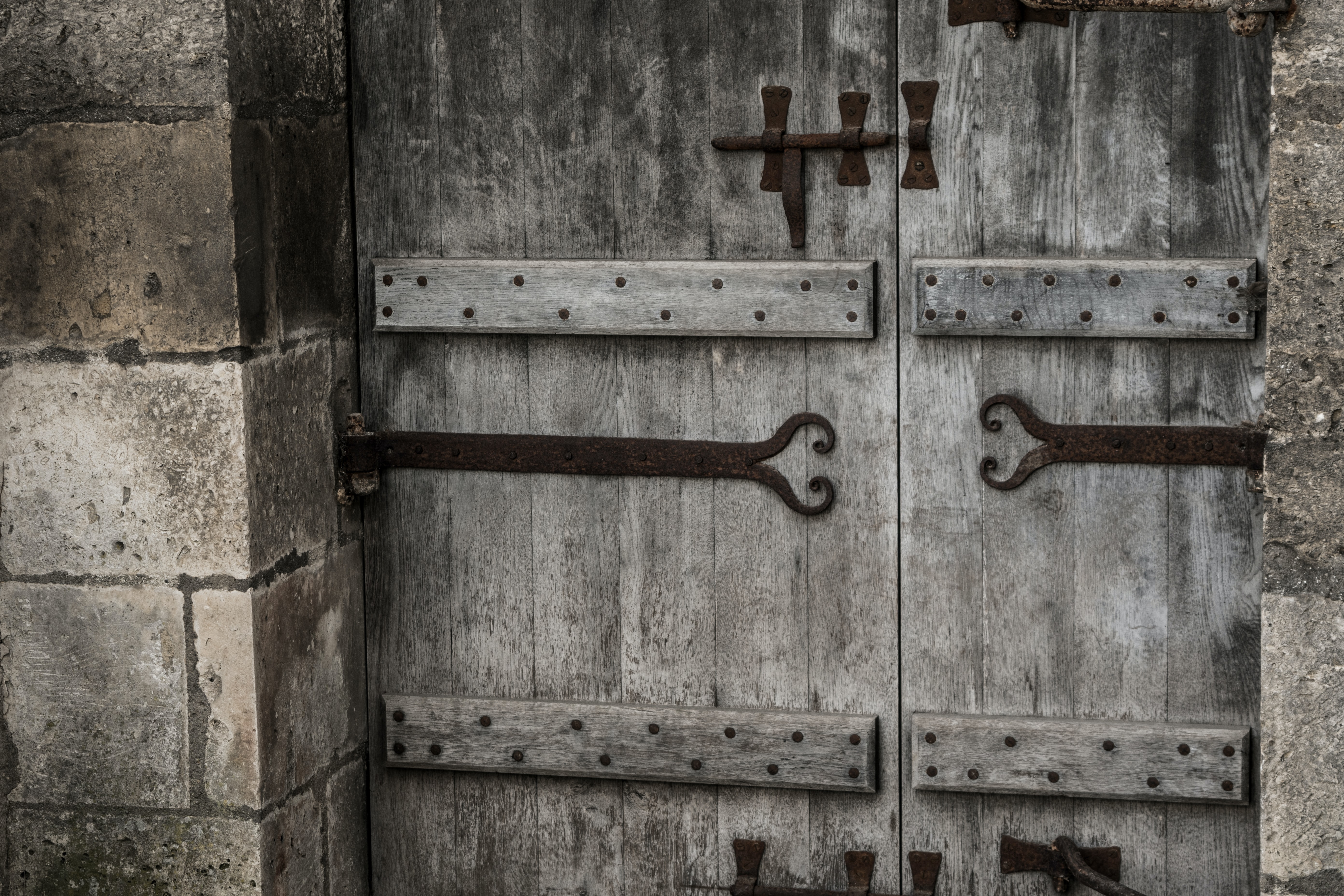
I glanced around, peering into every shadow and raised my hand to knock the signal that only the followers knew. I hesitated, surprising myself. Though I was thrilled to have received a new purpose directly from the Teacher and eager to fulfill it, it was precisely because of this mission that I didn’t want the doors to swallow me again. The encounter had dissolved my fear. The Lord’s power was stronger even than death. What else could I fear? Why should only the followers huddling behind the locked doors get the message? Nevertheless, I trusted there was a reason the Teacher had instructed me to him tell only the brothers.
So I told them “I have seen the Lord. I’ve embraced his feet, and he told me to tell you this: ‘I am going to my Father and your Father, to my God and your God’ (John 20:17-18).
I received looks of confusion and suspicion in reply with, perhaps, astonishment mixed in.
“Why would he appear and speak to you?” John asked.
“He spoke to the Samaritan woman at the well, to the woman with a hemorrhage, and to the woman about to be stoned for adultery. And don’t forget Mary and Martha in Bethany.”
“Yes, but that was before he was crucified,” Peter said.
How could he speak as if I didn’t know this?
I was soothed a little when he continued. “No doubt things we don’t understand are happening. Grave robbers would never take the time to separate the burial cloths and fold them neatly, but even if what you say is true, what does it mean for us? What are we to do?”
I opened my mouth, No words came out for far too long before I was able to admit, “He didn’t tell me that.” Had I run away too quickly? Surely he would have called after me if I had. “But he’s told us this, so he’ll tell us more when the time is right.”
“You’re suggesting we should wait here,” Thomas said. We’ve already been doing that for two days. Your news changes nothing. We’ll be discovered eventually and suffer the same fate as the teacher. Surely we cannot return the way he has. Why delay the end that’s God’s will? In the meantime, I can pray out there just as well, and I will.” He strode toward the doors before turning to face us. “May the Lord be with you, brothers and sisters. He didn’t slam the doors behind him, but part of me wished he would and hoped, somehow, the sound would result in a visit from the Teacher and instructions about what to do next. If he did, perhaps he would tell us that Thomas acted rightly despite his unbelief. Jesus hadn’t told me to tell the brothers to stay behind the locked doors.
The Teacher did visit us, but not until hours later, when I was helping to prepare the evening meal. I didn’t hear the secret knock and, apparently, neither did anyone else because what I did hear was a collective gasp.
When I looked up to see what happened, I saw the Lord. The ten remaining brothers saw him too. They lay facedown on the floor.
“Peace be with you,” Jesus said.
Gazes lifted one by one.
Touching his wounds told them he was as substantial as he had been before Passover, that he wasn’t a spirit or only a vision.
The men began to talk over each other as they praised God and asked what to do next and what was to become of them.
Jesus replied by repeating, “Peace be with you,” and he added, “As the father sent me, so I send you . . “. (21). Then he breathed like he was blowing out a dozen candles at once and said that in doing this, he was giving them the power to share the Abba’s forgiveness with whomever confessed their sins and seemed sincere in their desire to let go of what was not of God.
For a moment after Jesus spoke these words and gave the disciples this gift, we were all silent. In the midst of our silence Jesus vanished, even though the doors were still locked.
The men began to murmur amongst themselves. Who would believe that after everything that happened the previous week, they had the authority to speak for God, to call people to repentance and to tell those who repented that God had forgiven them?
“Supper is ready.” I called to them over the cacophony of their spoken unanswered questions.
Peter said that hearing me made him aware, once again, of the weakness of his faith.
“Please forgive me for doubting what you told us. I confess it’s so easy to forget so much of what the rabbi has taught us, but now I remember that he said that in the kingdom of God, the last would be first and the first would be last” (Matt. 20:16).
For a moment, my pride resented the implication that I was one of “the last.” I never felt that way when Jesus’ eyes met mine or when he spoke to me. But I Jesus had chosen me as a disciple by name the way the original twelve had. I had begun following Jesus after he freed me from invisible torments that had plagued me since I began to turn from a girl to a woman.
Furthermore, women were not disciples. And now Jesus had asked his disciples to take on a new kind of priesthood, to assure repentant people that God forgave them. Priests were not women.
Yet Peter was asking me for forgiveness. The Holy Spirit was indeed mighty. I dared not presume too much, but I didn’t think it would be doing so to remind the others of something else Jesus had said. “I remember too his words about what the kingdom would be like. And I remember that when he taught us how to pray, he said the Father would forgive us if we forgave those who wronged us (Luke 11:4). I don’t blame you now for your suspicion, given that I saw him die myself and given my troubled past. However, I confess that at first my pride enjoyed that Jesus said come to me at the tomb, and my pride was hurt by your questions. I was wrong. I see that now, and I will do my best to serve my brothers and sisters as Jesus did.”
“In the name of Jesus, my sister, I forgive you of all your sins, and I ask my brothers to forgive me of mine.”
John spoke for the brothers and for the Father in offering Peter forgiveness, and then he confessed his own sins, among which was doubting the truth of my proclamation, and Peter and I forgave him. All of us followed John’s example in seeking forgiveness and offering it.
Then we all sat down to discuss what else we remembered from Jesus’s teachings. We also wondered if Thomas and Judas needed to be replaced. It seemed there needed to be twelve leaders, one representing each tribe. We knew Judas had taken his own life, but what would become of Thomas? And how would the remaining disciples know who should be appointed to replace the ones who were no longer with the group?
It was in the midst of these questions that the familiar knock sounded on the other side of the doors. It might be Thomas, it might be someone else who had discovered our location and method of entering it, or it might be Thomas having betrayed us for his own gain. After all, Judas had done no different just a few days before.
“I’m going to open them,” Peter announced without hesitation. “We’ve seen that no betrayal, no darkness has the last word unless we believe it does and give ourselves totally to that belief. God is distant only if we push Him away.”
The moan of the doors seemed unusually loud as Peter unlocked them and pulled them apart.
“May I come in? Thomas asked. He didn’t look up, and his shoulders slumped.
“What can I do except sit here among friends and wait? I can’t teach the people after everything that’s happened. What he taught us seems like empty promises now. And I can’t go back to the life I had before he called my name. I’m a different man now. I’m not sure I’m a better one, but I know I’m a different one.”
Peter put a hand on Thomas’s shoulder. “Straighten your back, and look up, Brother.” And Peter told Thomas about everything that had happened while he was away.
“Unless I see the mark of the nails in his hands and put my finger into the nailmarks and put my hand into his side, I will not believe” (25).
A chorus of protests went up in response to Thomas’s declaration. When these left Thomas unmoved, the protests turned to prayers. Prayers continued over the breaking of the bread for several days. Whenever we broke bread we also sang Psalms, and each of us did our best to recall a different lesson learned from Jesus.
Seven days passed. Then suddenly, though, as before, no one had unlocked the doors, Jesus stood before us, saying, “Peace be with you. Then he said to Thomas, ‘Put your finger here and see my hands, and bring your hand and put it into my side, and do not be unbelieving, but believe'” (26-28).
Thomas did what Jesus had invited him to do, and he said, “my Lord and my God.”
I was grateful for these words. They reminded us who Jesus was and that he would still show us the way to Abba. Our challenge was to follow him there by living as he had shown us by example. And what a challenge it was.
When Thomas had expressed his refusal to believe without proof that he could touch, I’d had two reactions. First was anger. That was before I realized that we all might have said the same. We’d had the same disbelief. We had simply expressed it in different ways. Second, I’d feared the wrath of God for him and for all of us — more, I realized, than I had feared any Roman soldier or high priest.
But destruction had not rained down upon us. Instead, Jesus had given Thomas what he had needed.
Still, since the teacher had begun returning to us, he had never seemed to be able to stay for very long. I wondered if our sphere couldn’t contain him now the death couldn’t defeat him. I wondered if there would come a time soon when we couldn’t touch him or see him the way we’d been doing for the past week. If so, would we have to rely on what he’d already given us to keep the doors of our hearts open to the faith that he was still alive and still with us?
Suffering and the fear of it had made it so easy to forget all that Jesus had given us. But Jesus understood this. After all, he had called out to God from the cross asking why he had been abandoned (Matt. 27:46). Yet he had still had the faith to ask why.
Maybe that kind of faith — one that keeps asking while the senses and the mind don’t believe or understand — the faith that keeps asking even when it seems pointless — maybe that’s the one that keeps the doors of the heart from locking Abba and His children out.
Work cited
The Bible. The New American Bible Revised Edition, Kindle edition, Fairbrother, 2011.


 Sitting with the Sacred