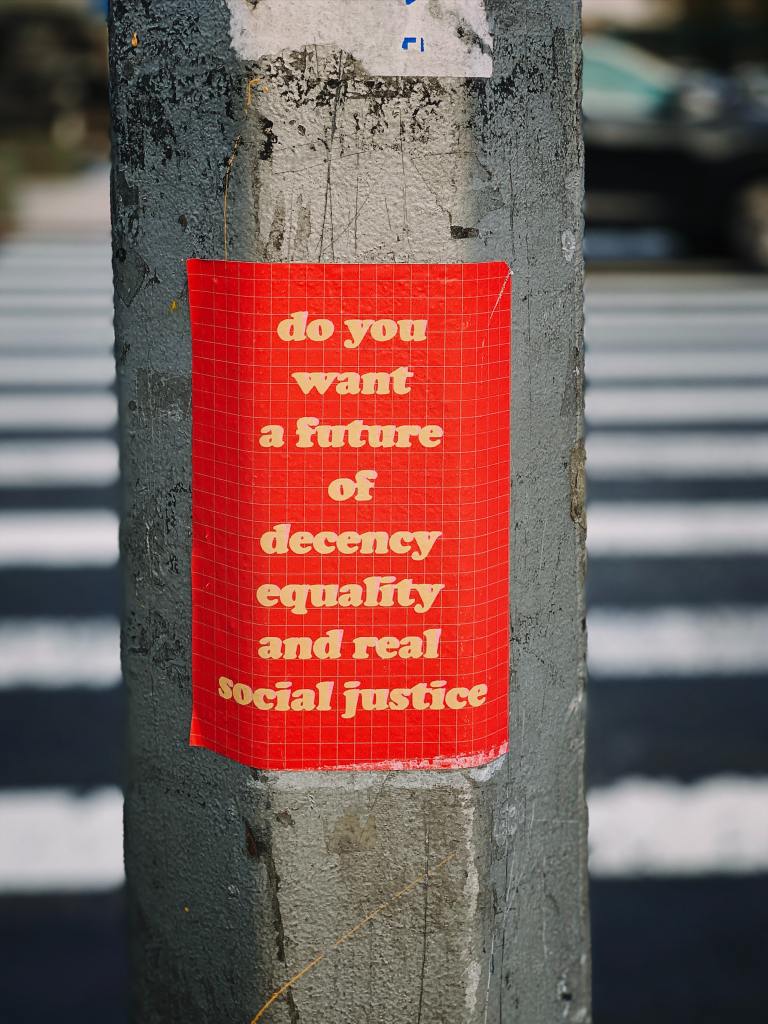
“The Spirit of the Lord is upon me,
because he has anointed me
to bring glad tidings to the poor.
He has sent me to proclaim liberty to captives
and recovery of sight to the blind,
to let the oppressed go free . . . .
— Luke 4:18, quoting Isaiah
I don’t know about you, but I want the world described in the picture and the world described in the Scripture passage from the Gospel reading for January 23.
Or do I?
The homily at a parish I visited this weekend. led me to ask myself this question. The pastor gave me the unexpected perspective on Scripture that I use to approach this blog. He pointed out to the congregation that, like me, the people who, listened to Jesus read these words from Isaiah liked what they heard from Jesus. To quote Luke directly, “. . .”all spoke highly of him . . .” (4:22). But, the pastor warned, the people are going to turn on Jesus very quickly, as quickly as that same day — within moments of praising him, perhaps.
Sure enough, when I opened to Luke 4 and read past verse 22 two days later, I was reminded that the people responded to His reading by asking “Isn’t this the son of Joseph”(Luke 4:22). He is recorded as responding “Surely you will quote me this proverb, ‘physician, cure yourself'” (Luke 4:23). As I reread this response, I’m think that it’s as if he’s saying to them, “All of you think I’m crazy for making this proclamation and that I’m the one who needs recovery. You want me to do here what I’ve done in other places, but I can’t because you don’t see that I can, so you won’t follow me and do your part to make the vision from Isaiah a reality. You can’t yet envision a kingdom of equality, of sharing, and of freedom that offers more than what seems possible for your neighbor, the carpenter’s son whose beginnings are whispered about among you.” The people are so angry Jesus won’t do what they’ve heard He’s done in other places that they “[lead] him to the brow of the hill on which their town [has] been built, to hurl him down headlong” (Luke 4:29).
Planning to throw Jesus off a cliff seems like an overreaction, but if I’m being honest, (and my goal is to be real on this blog), I understand their anger upon learning that he isn’t going to work miracles for the people He’s grew up with. Doesn’t His refusal to do so contradict the passage He just read and his announcement that “Today this scripture passage is fulfilled in your hearing.” (Luke 4:21)?
In response to my honest question, I imagine Jesus asking me, “Can you look at what you lack through My eyes so that I can bring you “glad tidings”? What if you don’t need what you think you need? Have you thought about what you do have that you don’t need but others do?”
This weekend, the pastor wondered what “bring[ing] glad tidings to the poor” might mean for those who were already comfortable (Luke 4:18)?
If I imagine myself a “captive” wanting “liberty” to be “proclaim[ed]” to me, am I able to ease my grip on whatever dominates my life? Can I let persistent thoughts drift by without getting trapped in them? Is there a certain comfort in clinging to the behavior and thoughts that take hold of me? Is the idea of finding greater freedom more than a little anxiety-inducing? I answer “yes” to these questions.
What would having greater freedom ask of me? Could I measure up to what it asks of me?
I want to. Beyond that, I remind myself that God knows my weaknesses and my needs and I ask God to help me trust in Infinite’s Love’s ability to work with, in, through, and despite them.
Can I recognize that everyone else desires freedom, too, and allowing others freedom may not always feel or look like freedom to me? Can I deal with the unpredictability of freedom?
I want to deal with it, but I’m not the type of person who usually enjoys surprises.

If people asked for clarity and received receive “recovery of sight,” would I like what they see (Luke 4:18)? Would I like what they see in me? Not entirely.
Do I wear blinders? No doubt, I do, but I don’t know at the moment what they are keeping me from seeing because — well — they’re blinders. Would I feel uneasy if they were removed? To say I would feel uneasy is probably putting it far too lightly. Do I avoid looking at what I don’t want to see. Sometimes, definitely.
What would society look like if the oppressed were freed? What would lifting oppression look and feel like for those who had been in power? the pastor asked this weekend.
The changes would be uncomfortable, certainly, for those accustomed different levels of power, but not only for them — for those who had been oppressed as well. The scars of oppression won’t disappear, but I ask to recognize what has led to such brutality and for the knowledge, ability, and courage necessary to oppose it.
Transformation is challenging. Freedom is challenging.
But if the promises of Luke 4:18 are true — and I believe they are—transformation and freedom are God’s plan for creation, and because they are part of the plan, they will come to pass — though I can’t make out all the details of how right now. And if I’m honest, I’m often anxious about what the coming to pass will look like.
But that’s okay. God can work with my anxiety. God will take my hand, even though it trembles.
Work cited
The Bible. The New American Bible Revised Edition, Kindle edition, Fairbrother, 2011.
 Sitting with the Sacred
Leave a comment