Feeds:
Posts
Comments

Archive for January, 2022

Jeremiah 1:4-5, 17-19
1 Corinthians 12:31-13:13
Luke 4:21-30

These readings are about God knowing us and about us needing each other to know God, It’s about how even though we all exist in a web of connections between ourselves and others, it’s still difficult for us to know God so that we can see everything the way God sees it. In one translation of verse 17 in the first chapter of Jeremiah, God tells the prophet:

Before I formed you in the womb I knew you,

before you were born I dedicated you,

a prophet to the nations I appointed you.

Jermiah Chapter 1, Verses 4 and 5

“Before I formed you in the womb I knew you / before you were born I dedicated you / a prophet to the nations I appointed you” (Jer. 1: 4-5).

But what does it mean to be a prophet?

My pastor said the word “prophet” comes from the Hebrew word for “spokesperson.” Who is a prophet spokesperson for? God, he said, and he reminded us that God is love.

The second reading describes what that love is like. In the famous words attributed to St. Paul:


Photo by Tim Marshall on Unsplash

“Love is patient, love is kind. It is not jealous, it is not pompous, it is not inflated, it is not quick-tempered, it does not brood over injury, it does not rejoice over wrongdoing but rejoices with the truth , it bears all things, believes all things, hopes all things, endures all things.”

Love never fails.

— 1 Corinthians, Verses 4-8

“Love is patient, love is kind. It is not jealous, it is not pompous, it is not inflated, it is not quick-tempered, it does not brood over injury, it does not rejoice over wrongdoing but rejoices with the truth , it bears all things, believes all things, hopes all things, endures all things.

Love never fails” (1 Cor. 4-8).

Like Luke Chapter 4, verse 18 that I posted about last week, this is another passage that, at first, feels nothing but encouraging to read. It feels wonderful to think of myself as receiving Divine Love that has the qualities described above.

But I’ve written before about how you, and I, and everyone else, reflects and receives that love so that we can return it, share it, and expand its reach. I wrote last week about how allowing the reach of that love to expand can be uncomfortable for all of us in a lot of different ways. It might mean seeing, and hearing and giving things that I might not be in a hurry to see, or hear, or give because seeing, or hearing, or giving what I haven’t previously means losing some metaphorical blinders, earplugs, and blankets that keep me comfortable and keep me from feeling, not only other people’s pain, but also the reality that others have something to share that I lack.

And I don’t know about you, but I don’t particularly enjoy recognizing the idea that I lack anything or that anyone else does either. It’s daunting that I’m called to work with God, humbly and patiently, to participate in addressing both of these situations. What do I give up and what do I accept when I acknowledge that I need both to give and to receive? What do I give and receive when I acknowledge that the love described in Corinthians has the greatest reach when it moves, not just on the proverbial two-way street but on a highway that has more lanes going in both directions than I can imagine?

Why do we need so many love lanes connecting all members of the human family and God? Because, as I’ve written in previous posts, every one of us is created in the image of God (1 Gen. 26). As such, every one of us has gifts that the world needs (1 Cor. 12: 4-11). But in every one of us, the reach of those gifts gets limited — at least in so far as we can see in our lifetimes — by circumstances beyond our control, by our weaknesses, and by by doubt-and fear-fueled resistance to what receiving and sharing God’s love really means for all of us.

The wounds in our natures are why God warns Jeremiah that “the whole land… kings and princes… priests and people “…. will fight against” the message God gives them to share (Jer. 1:19).

From my perspective, as I wrote last week, these wounds are also the reason for the conflict between Jesus and the people he grew up with (See Luke 4: 22-30).

They are the reason that “[a]t present we see indistinctly… and “know partially” (1 Cor. 13:12). The Good News is that the more we choose faith, hope, and love, the better we’ll be able to see, and the more faith and hope we’ll have that when we’re not bound by a our current bodies, we will “know fully, as [we are] fully known” (1 Cor. 13:12).

Work cited

The Bible. The New American Bible Revised Edition, Kindle edition, Fairbrother, 2011.

Read Full Post »


Photo by Jon Tyson on Unsplash

“The Spirit of the Lord is upon me,

because he has anointed me

to bring glad tidings to the poor.

He has sent me to proclaim liberty to captives

and recovery of sight to the blind,

to let the oppressed go free . . . .

— Luke 4:18, quoting Isaiah

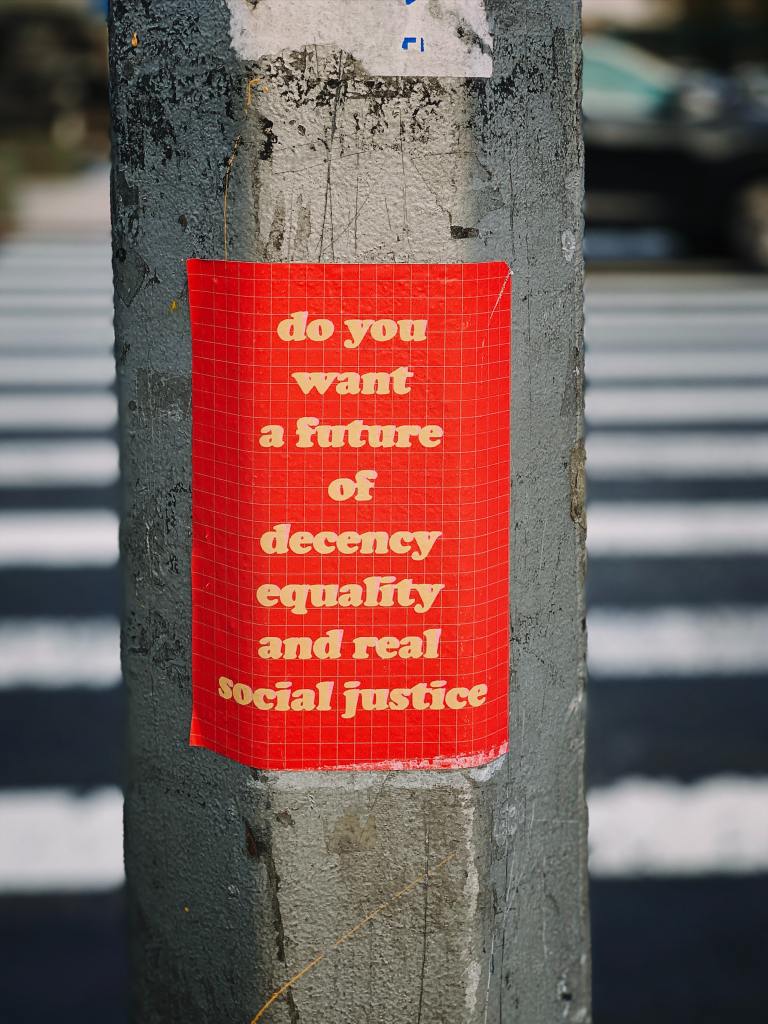
I don’t know about you, but I want the world described in the picture and the world described in the Scripture passage from the Gospel reading for January 23.

Or do I?

The homily at a parish I visited this weekend. led me to ask myself this question. The pastor gave me the unexpected perspective on Scripture that I use to approach this blog. He pointed out to the congregation that, like me, the people who, listened to Jesus read these words from Isaiah liked what they heard from Jesus. To quote Luke directly, “. . .”all spoke highly of him . . .” (4:22). But, the pastor warned, the people are going to turn on Jesus very quickly, as quickly as that same day — within moments of praising him, perhaps.

Sure enough, when I opened to Luke 4 and read past verse 22 two days later, I was reminded that the people responded to His reading by asking “Isn’t this the son of Joseph”(Luke 4:22). He is recorded as responding “Surely you will quote me this proverb, ‘physician, cure yourself'” (Luke 4:23). As I reread this response, I’m think that it’s as if he’s saying to them, “All of you think I’m crazy for making this proclamation and that I’m the one who needs recovery. You want me to do here what I’ve done in other places, but I can’t because you don’t see that I can, so you won’t follow me and do your part to make the vision from Isaiah a reality. You can’t yet envision a kingdom of equality, of sharing, and of freedom that offers more than what seems possible for your neighbor, the carpenter’s son whose beginnings are whispered about among you.” The people are so angry Jesus won’t do what they’ve heard He’s done in other places that they “[lead] him to the brow of the hill on which their town [has] been built, to hurl him down headlong” (Luke 4:29).

Planning to throw Jesus off a cliff seems like an overreaction, but if I’m being honest, (and my goal is to be real on this blog), I understand their anger upon learning that he isn’t going to work miracles for the people He’s grew up with. Doesn’t His refusal to do so contradict the passage He just read and his announcement that “Today this scripture passage is fulfilled in your hearing.” (Luke 4:21)?

In response to my honest question, I imagine Jesus asking me, “Can you look at what you lack through My eyes so that I can bring you “glad tidings”? What if you don’t need what you think you need? Have you thought about what you do have that you don’t need but others do?”

This weekend, the pastor wondered what “bring[ing] glad tidings to the poor” might mean for those who were already comfortable (Luke 4:18)?

If I imagine myself a “captive” wanting “liberty” to be “proclaim[ed]” to me, am I able to ease my grip on whatever dominates my life? Can I let persistent thoughts drift by without getting trapped in them? Is there a certain comfort in clinging to the behavior and thoughts that take hold of me? Is the idea of finding greater freedom more than a little anxiety-inducing? I answer “yes” to these questions.

What would having greater freedom ask of me? Could I measure up to what it asks of me?

I want to. Beyond that, I remind myself that God knows my weaknesses and my needs and I ask God to help me trust in Infinite’s Love’s ability to work with, in, through, and despite them.

Can I recognize that everyone else desires freedom, too, and allowing others freedom may not always feel or look like freedom to me? Can I deal with the unpredictability of freedom?

I want to deal with it, but I’m not the type of person who usually enjoys surprises.

Photo by Emma on Unsplash

If people asked for clarity and received receive “recovery of sight,” would I like what they see (Luke 4:18)? Would I like what they see in me? Not entirely.

Do I wear blinders? No doubt, I do, but I don’t know at the moment what they are keeping me from seeing because — well — they’re blinders. Would I feel uneasy if they were removed? To say I would feel uneasy is probably putting it far too lightly. Do I avoid looking at what I don’t want to see. Sometimes, definitely.

What would society look like if the oppressed were freed? What would lifting oppression look and feel like for those who had been in power? the pastor asked this weekend.

The changes would be uncomfortable, certainly, for those accustomed different levels of power, but not only for them — for those who had been oppressed as well. The scars of oppression won’t disappear, but I ask to recognize what has led to such brutality and for the knowledge, ability, and courage necessary to oppose it.

Transformation is challenging. Freedom is challenging.

But if the promises of Luke 4:18 are true — and I believe they are—transformation and freedom are God’s plan for creation, and because they are part of the plan, they will come to pass — though I can’t make out all the details of how right now. And if I’m honest, I’m often anxious about what the coming to pass will look like.

But that’s okay. God can work with my anxiety. God will take my hand, even though it trembles.

Work cited

The Bible. The New American Bible Revised Edition, Kindle edition, Fairbrother, 2011.

Read Full Post »

Surprising Words

Readings for January 16:

Isaiah 62:1-5
Psalm 96:1-3, 7-10
1 Corinthians 12:4-11
John 2:1-11

When I think of a prophet, I think of someone who foretells punishment and doom unless a person doesn’t change his or her ways. I think of someone who tells people what they should do.

But that’s not what the above verses from Isaiah do. Instead, they focus on what God does. Isaiah begins the passage by saying he won’t be quiet until God “vindicates” Zion (62:1). The Bing.com dictionary defines vindication as “clearing someone from blame or suspicion” The prophet will not “keep still until her vindication shines forth like the dawn” (Isa. 62: 1) Later Isaiah addresses God’s people directly, saying No more shall you be called ‘Forsaken'” (62 4). Instead, he says “you shall be called . . . ‘Espoused.’ . . . “your Builder shall marry you” (Isa. 62:4). The intimate partners of God won’t be known by the times they didn’t have the same goals as God. They’ll be praised for the ways they reflect God’s nature. They will be God’s”[d]elight” (Isa. 62:4).

How reassuring.


“There are kinds of different spiritual gifts but the same Spirit; there are different workings but the same God produces all of them in everyone.”

— 1 Corinthians 4-6

It’s not just the words from Isaiah that surprise me. A word in the passage from the first letter to the Corinthians does, too. The reminder that “[t]here are kinds of different spiritual gifts but the same Spirit; there are different workings but the same God produces all of them in everyone” is familiar, as is the list of gifts that follows it: “to one is given the expression of wisdom . . . to another . . . healing,” but there’s a gift in this list that I hadn’t remembered being there—”faith” (1 Cor. 12: 4-9). The construction of this passage indicates that some people are given faith, while others are not. Faith is a gift from God. It’s not something I achieve on my own, something I make happen, nor is it something that can be forced on someone else. Like any gift, it isn’t earned; it’s given freely, and is most beneficial if received with gratitude and then shared. A gift — faith included — isn’t something to be lorded over someone who doesn’t have it. Why should a gift be used as a mark of superiority over someone else when everyone—the passage actually says everyone — receives gifts from the Spirit whether he or she has faith or not? Each individual is given “the manifestation of the Spirit,” whether that manifestation is faith or not “. . . for some benefit” (1 Cor. 7). I can manifest the Spirit even in times of struggle and doubt.

How reassuring.

The story of the wedding in Cana also says to me that the Spirit manifests and often unexpected ways. In this story, even Jesus doesn’t seem to be expecting to do the work of God in that place, at that time. After all, when his mother tells him, “They have no wine,” he responds with, “Woman, how does your concern affect me? My hour has not yet come” (John 2: 4). This response unsettles me whenever I come across it. However, understanding Jesus as human—albeit a human who cooperates fully with the Spirit — gives me some perspective on the exchange. Just because He is one with the Spirit doesn’t mean that while he was in a human body He always knew when and how the Spirit was going to work through Him and others.

I imagine Him having been told by His mother what she’d been told about Him before and after He was born — that He was the “Messiah” and that “[H]e would save His people from their sins” (Luke 2: 11; Matt. 1:21). Is finding some more wine a messianic action? Could this action be part of saving people from their sins? This wine problem seems like one the host could have avoided and could solve himself, Besides, Jesus had been looking forward to relaxing and having fun with family and old friends and new friends on this day. The Spirit reminds Him what he really has never forgotten. He just wasn’t thinking about it earlier that day— that Abba works in all circumstances through everyone, including His mother and the servers at the wedding. He thinks to Himself that wine, like everything else is a gift from the Father, so the Father works through it. Yes, there are many problems people can avoid, not the least of which are sins. He has come to help them bear the consequences of sin with and for them so they can share in the His oneness with the Father. He tells the servers what the Spirit tells Him to tell them. The result of the miracle that follows, I learned from the end of the passage is that “[H]is disciples began to believe in [H]im” (John 2:11). This bit of information implies that not everyone at the wedding began to believe in Him. In fact, earlier in the passage, I’m told that only “the servers who had drawn the water knew” where the new supply of wine had come from (John 2:9). Most people at the wedding don’t seem to know what Jesus has done. Most of the guests are simply appreciative of the wine they are drinking (John 2:10).

From the passage, I don’t get any sense of blame for what most of the wedding guests don’t know yet or don’t believe yet. On the contrary, this reading of the passage tells me what the psalm and the epistle tell me – that God is patient beyond my understanding, that God “vindicates,” and God uses all of us, with our unique roles and combinations of gifts to share the gift of vindication to anyone open to receiving it Isa. (61.1).

How reassuring.

Work cited

The Bible. The New American Bible Revised Edition, Kindle edition, Fairbrother, 2011.

Read Full Post »

When setting up this blog, I chose one of the templates available in WordPress, and I kept the default cover photo associated with the theme called MistyLook. It’s a name that fits character of my spiritual experiences, most of our spiritual experiences this side of death, actually. Most of the time, we get only misty looks at God and at the path that lies before us, hence the misty photo with the winding path flanked by numerous trees that remind me of all those times I couldn’t see the proverbial forest through them.

But the readings for The Baptism of the Lord are not about those misty looks at God that we usually get. They’re about God working in human experience in bodily form and announcing that that’s what’s going on. Jesus comes to the Jordan to be baptized, just as all the other people waiting on the banks had been, and when he comes up from the water, the Holy Spirit came down “in bodily form, like a dove” and everyone present hears a voice that says, you are my beloved Son in whom I am well pleased” (Luke 3:21-22). Many people on the banks and early readers of this account would recognize that “with whom I am pleased” is a phrase used in Isaiah to describe the Messiah, but it stands out to me that the voice says, “You are my beloved son in whom I am well pleased”[emphasis mine] (Isa. 42:1). This verse stands out because it doesn’t say what the voice says in the Transfiguration scene later in the Scriptures. It doesn’t say, “This is my chosen Son; Listen to him” (Luke 9: 35). The onlookers are privy to a declaration of love and approval from a parent to a child. There is intimacy in being present for such an affirmation, made concrete, not only through a voice, but through touch, the touch of a dove. Yes, the dove is a symbol of peace. The people of Jesus’ time and place would have known this too. But God could have just sent a rainbow to signal the same thing. Except Jesus wouldn’t feel it the way He would feel a dove landing on Him.

Photo by Emiliano Orduña on Unsplash

It’s a dove that prepares Jesus for what lies ahead and definitely points him out to the crowds on the banks, but is the affirmation meant only for him? More than one person more knowledgeable about theology and Scripture than I am says no, that this voice speaks to other children of God as well. Here’s an example of this understanding of the scene. The reflection I just linked to parallels the baptism of Jesus and the baptism of a follower of Jesus. Meanwhile, Pope Francis goes so far is to remind us that the love between the Father and the Son is “imprinted” on us the moment we come into existence. This meditation from Professor Heidi Russell includes a quotation from the pope about this subject. What I take away from these sources is that we don’t have to be baptized to be loved by God. We get baptized to receive the grace to love ourselves, other people, and indeed, all of creation the way God does.

With these insights in mind, it stands out to me that, unlike in the Transfiguration scene, even though everyone present seems meant to hear what the voice has to say, no direct instruction, no “Listen to Him” is included. This moment of baptism is all about affirming who Jesus is and who the onlookers — we— are.

What does Jesus do with the affirmation, and the “Holy Spirit and power” He receives from His baptism (Acts 10:38)? Acts tells us that “he went about doing good and healing all those oppressed by the devil” (10: 38). “Doing good and healing.” These are active words that convey having a positive impact on the lives of people as they are at a given time, not just in a future context that the people can’t describe. These words also tell me that no one is his or her wounds or the ways he or she distorts the unique combination of positive qualities that he or she has the potential to reflect. These are the qualities of God, who, to paraphrase the Rev. Father Richard Rohr, is love as a verb, love as in “pour[ing]” into someone or something else.

A hand reaching up into mist.
Photo by Xiaolong Wong on Unsplash

No matter who we are or what we struggle with, we are created in the image of God (Gen. 1-26). I find it helpful to think of my struggles and of the ways I’ve fallen short of reflecting God as injuries and grime that may make it harder for me and for others to recognize the ways I reflect God. These grimy wounds need to be brought to God for washing and healing. Who knows how long the washing and healing will take? It is a process that I believe began when I was conceived and won’t be complete when my soul separates from my body. Over and over again, I will “forget” who I am, as the Rev. Father Terrence Klein writes, and I won’t— at least not as clearly as I would like—reflect the qualities of God that I have. This distortion of my true image, while beloved, will shape how people see me as will the imperfections they carry when they look at me, and over and over again, I’ll have to acknowledge how my frailty and choices have contributed to the distortion of my true image, and this acknowledgment will help me heal and grow more into the person I’m meant to be.

While I go through growing pains, I take comfort in having faith in a God who helped people carry wounds by living a human life, a life that included, we are told in the Gospels, taking part in a baptism of repentance that He didn’t need. That means that everything the people baptized before Him carried—sins and everything else—was in that water when he went into it. Everything the people would like to dispense with touched him, as it did throughout his life and would most violently on the cross. I know I’m not the first person to see this in his baptism, but I don’t remember where I encountered this insight first.

His humanness also meant that he didn’t heal everyone with his physical presence. That happening depended on a lot of factors — a person having the courage to approach him, to name just one factor. Some people had the opportunity to approach him; others didn’t. There were times when people wanted him to stay and help, but he moved on to the next town. (See Mark 1:35-39 for an example.) Because I’m a human being, who wants concrete solutions and would prefer to receive them now, I won’t pretend to fully understand and accept this response — even though I’m getting the message that His mission was to spread the spiritual wealth. Still, faith tells me that He always cared about the people he left “looking for” Him during his ministry (Mark 1:37). He always cares about whatever mars the beautiful images of his brothers and sisters, whatever makes it more difficult for them to feel connected to and by Love — so much so that he took upon himself —to the point of torture and death —everything that isn’t light, peace, community, and dignity. I believe that when he did so, he experienced in ways I cannot comprehend every form of human suffering, whether physical, mental, or spiritual.

But none of it could defeat him. And because it couldn’t, He is no longer limited by the confines of his human life and is able to accompany anyone of us who reach out to him, as generation after generation, new hands, and feet, and hearts heal and do good in heaven and on earth. I recognize and have gratitude for daily glimpses of beauty and love. Yet as I write this, more than one mass shooting, genocide, famine, and natural disaster comes to mind. I long for the world he saved from these, and I don’t know when salvation from these sufferings will come or precisely what it will look like. However, not knowing is better than not believing this kind of salvation will ever come. And while I journey down this misty and tree-obscured path of life, not knowing so much, I relish the “ordinary” gifts, and I trust that God, wounded by living all of our sufferings, is beside me, here and now.

Works cited (but not linked)

The Bible. The New American Bible Revised Edition, Kindle edition, Fairbrother, 2011.

Read Full Post »

Varying Visitations

What stands out to me in the different components of the Christmas story is that God touches different lives in different ways at different times. The Magi find God by being observant and by investigating further into an unusual astronomical occurrence. The shepherds encounter God through a group of God’s messengers, and the shepherds themselves are in a group when messengers of heaven greet them. Mary, however, is alone when she is greeted by a single angel, and Elizabeth finds God in the curiosity and concern of a relative, and Joseph encounters God as an unexpected challenge before he gets his own reassurance in a dream.

My first reaction as I read each of these stories is that as much as I’d like to think I’d go as far to work with God as these people did, I can’t imagine myself doing what they did. Would I risk being ostracized? If my past choices are any indication, no. Would I choose to make a long journey on a donkey, or a camel, or on foot? Nope. God didn’t make me capable of using any of the previous modes of transportation.

 Then I remember a couple of things.

The events I just mentioned aren’t presented the way I’d present them.

  1. If the characters’ emotions are described at all, they are mentioned using, at most, one adjective, and one adverb, such as “greatly troubled” (New American Bible Revised Edition, Lk. 29).  In other words, Scripture translations use a phrase that doesn’t make me feel what the characters in the scene might have felt.
  2. The scenes recount very little of any conflict or obstacles the protagonists likely encountered after God entered their lives in unique ways. Some later New Testament narratives aren’t as selective in their focus, but the infancy narratives are. I suppose the point of Scripture is to focus on what God does and how we should respond. That’s all well and good. I’m glad that God makes a series of announcements in the infancy narratives and that the receivers, though initially freaked out by what they experience, do what God tells them to do and they find what they’re promised they will.

But I’d like to know: What gossip got repeated about Mary when the news spread that she was pregnant but couldn’t have lawfully consummated her marriage to Joseph? Mary and Joseph had to have been whispered about. Surely the couple uttered a few sighs and shed a few tears before and during the journey to Bethlehem. I’d like to hear about these. If I did, I think I could more easily trust that I could follow their examples.

And the shepherds — did they feel gross after standing in the pasture for hours? To what would they have compared the throbbing of their feet before they ever even went in search of the stable? Did they question whether they were all sharing an exhaustion-fueled hallucination before they set off on their journey? How long did their trek take? And what about the quest of the Magi? If the Scriptures gave me more details about the hardships involved in these journeys, I’d feel a teensy bit better about my own journey to closer union with God taking as many twists and turns as it does.

Despite what the accounts don’t tell me, I’m comforted by the thought these human characters in God’s story encountered God in sights and sounds that must be impossible to describe adequately. The incomparable beauty of these sights and sounds must have helped these seekers along their often-harrowing journeys.  The fact that they eventually found what Heaven’s messengers had promised had to helped, too. So did the fact that they encountered God, not only later in some indescribable afterlife, but also into their present lives, in ways that they could see, and hear, and touch, in huge, indescribable ways —messages from angels or from the solar system — and in the small, ordinary ones —a visit from a loved one and a visit to a baby boy whose parents who had little.

Photo by Matt Howard on Unsplash

I don’t know what it’s like to meet God face-to-face at the end of a difficult journey, but I do know — come to think of it — that I’m on a journey. My journey isn’t exactly the same as anyone else’s because I’m not exactly the same as anyone else. To make this journey is the reason I exist, regardless of how much I resist parts of it. It’s a journey to the gifts of hope, peace, love, and the gift of relationships that share in these gifts, gifts I’ll find as long as I seek them. And I do seek them. And I’m not alone as I do. For even though I sometimes forget — God is already with me — in the big moments and the small ones. I just need to invite the Spirit to help me remember this.

                                                 Work cited

The Bible. The New American Bible Revised Edition, Kindle edition, Fairbrother, 2011.

Read Full Post »